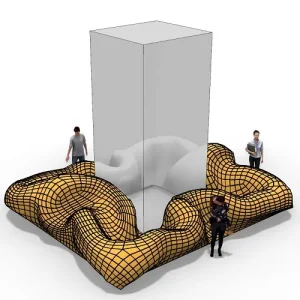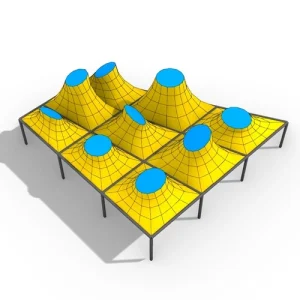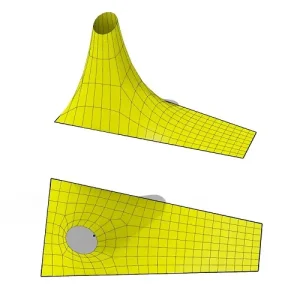

Parametric Design furniture
Michaela Crie Stone lives and works in Rockport, Maine, where she creates pieces that push the parameters of function by blurring the lines between art, craft, and design.
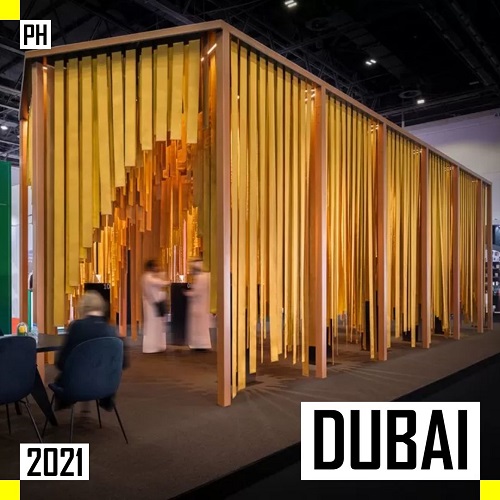
Luminescents Pavilion
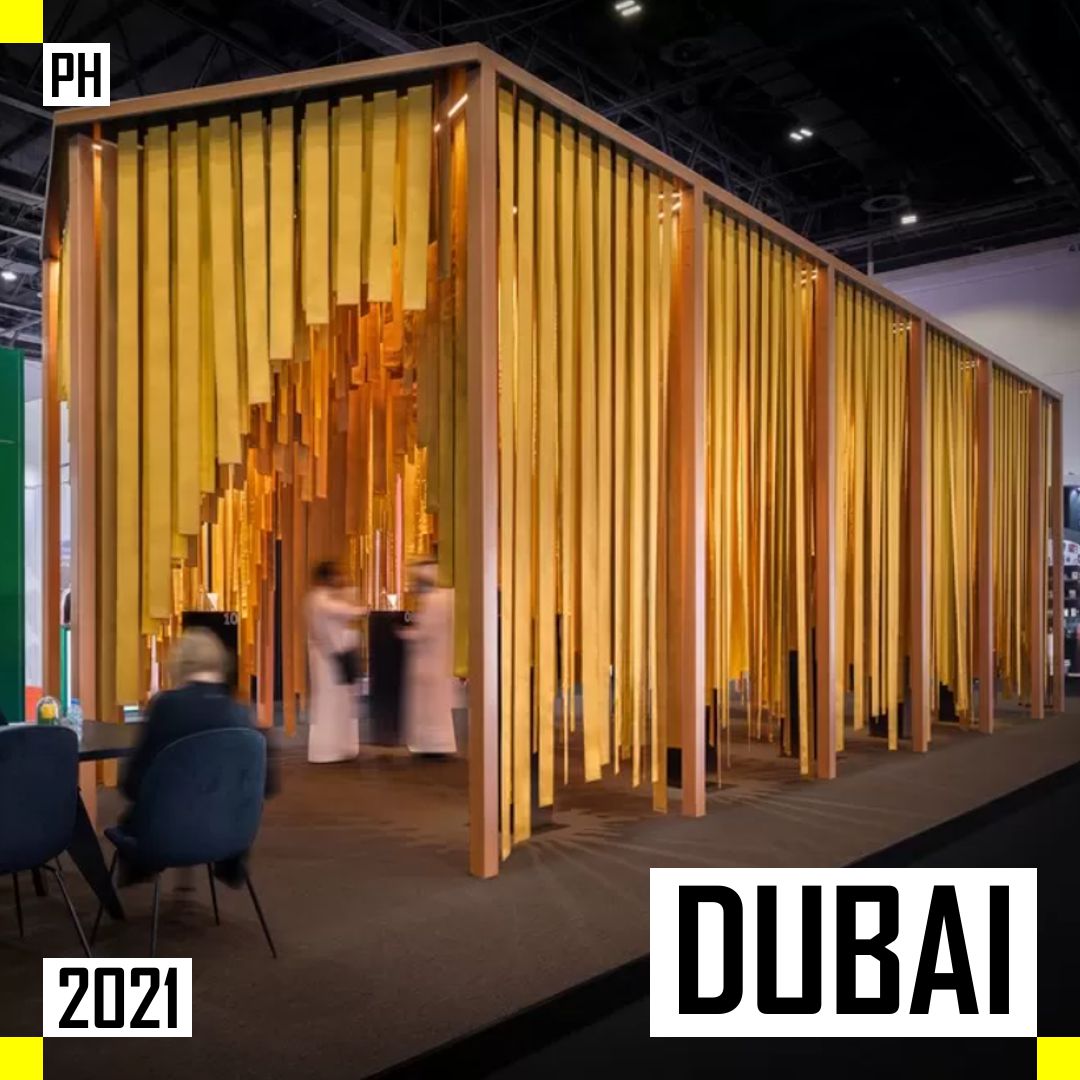 MANE, a pioneering French group and one of the worldwide leaders of the Fragrance industry, commissioned MEAN* Middle East Architecture Network to design a temporary pop-up at Dubai’s World Trade Center.
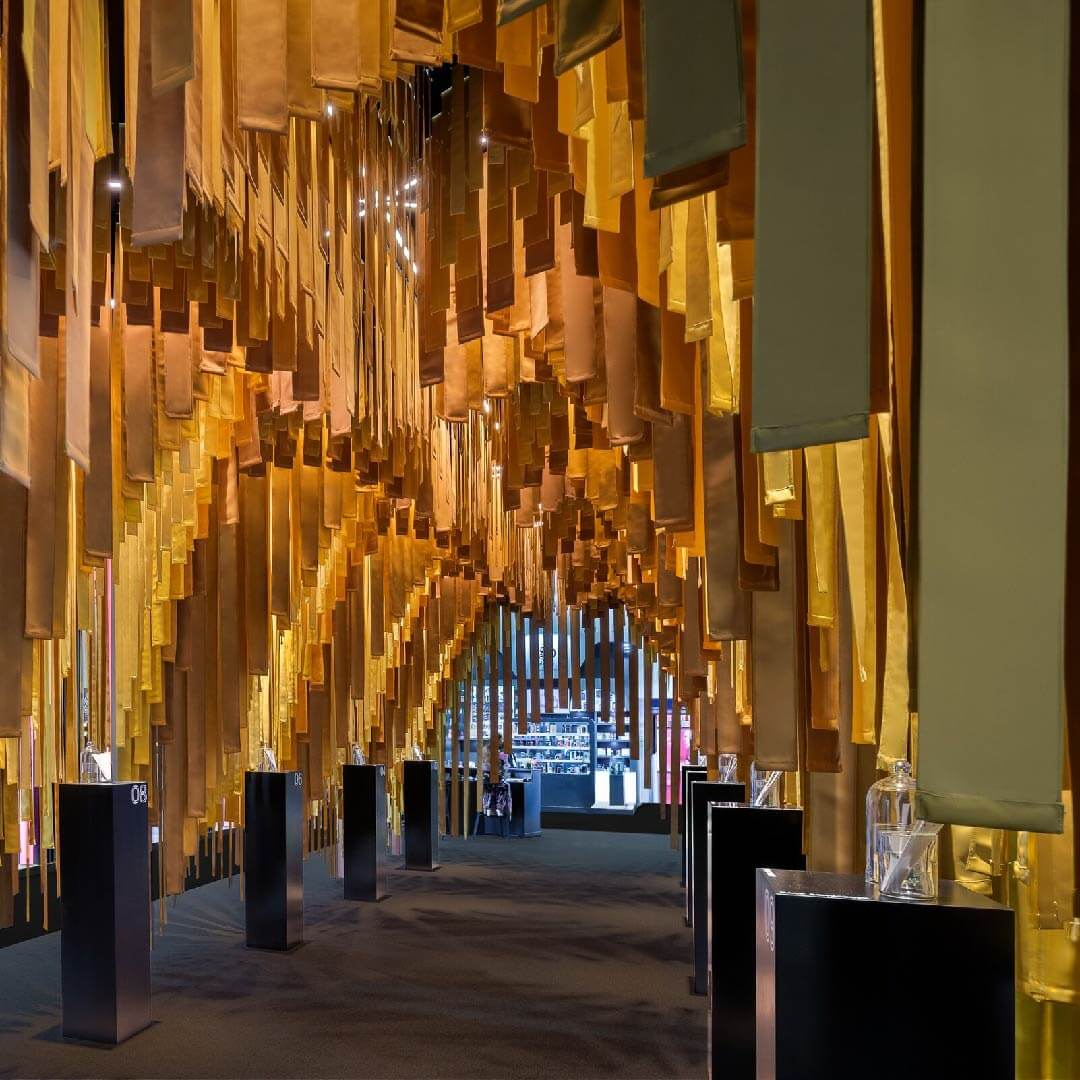 The pavilion’s primary purpose is to represent the ethos of innovation, sustainability, and collaboration at a global, Dubai-based industry convention.
‘Luminescents Pavilion’ is a structure hosting ten scents crafted by ten expert Perfumers, taking the visitor on a multi-sensorial journey.
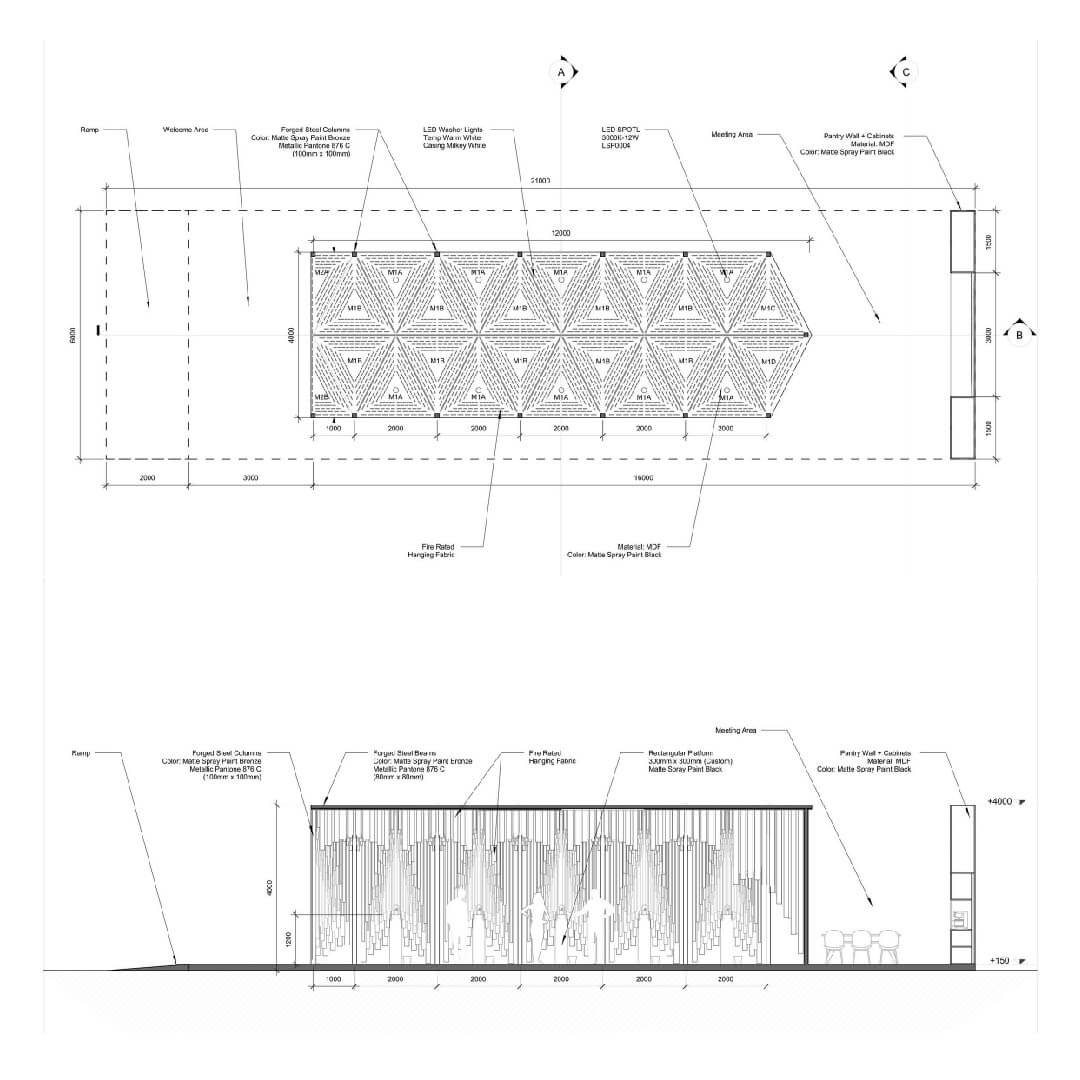
 The floor plan of the structure is symmetrical. The circulation directs the visitor in a zig-zag-like motion through the space to experience the different scents.[1]
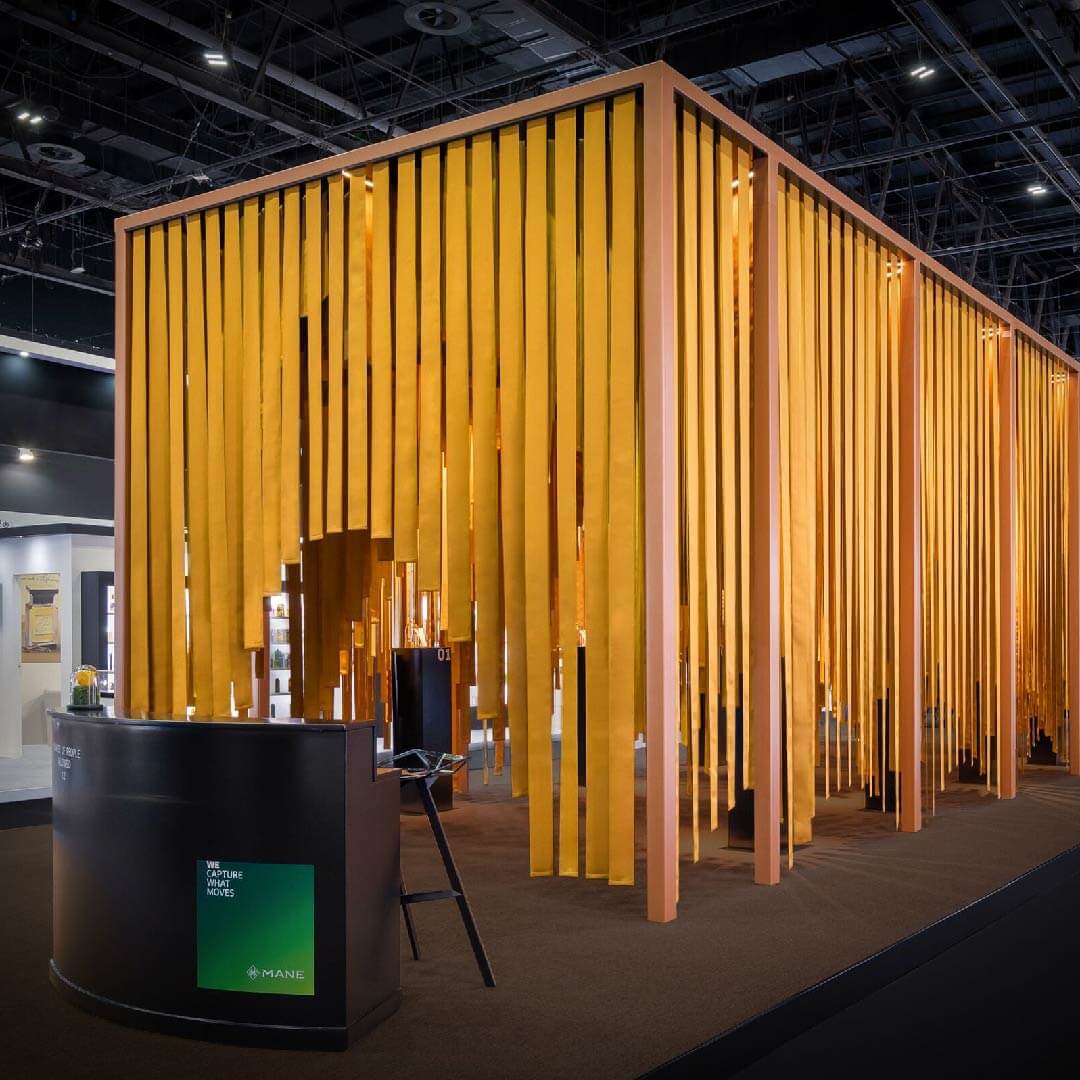 As opposed to the austere and monolithic exterior, the interior space is composed of ephemeral and lightweight fabric strips due to its minimal ecological impact.
Different tones of yellow, the color of hope, were chosen for the fabric. Each module had a gradual transition of color from a dark shade to a light shade.
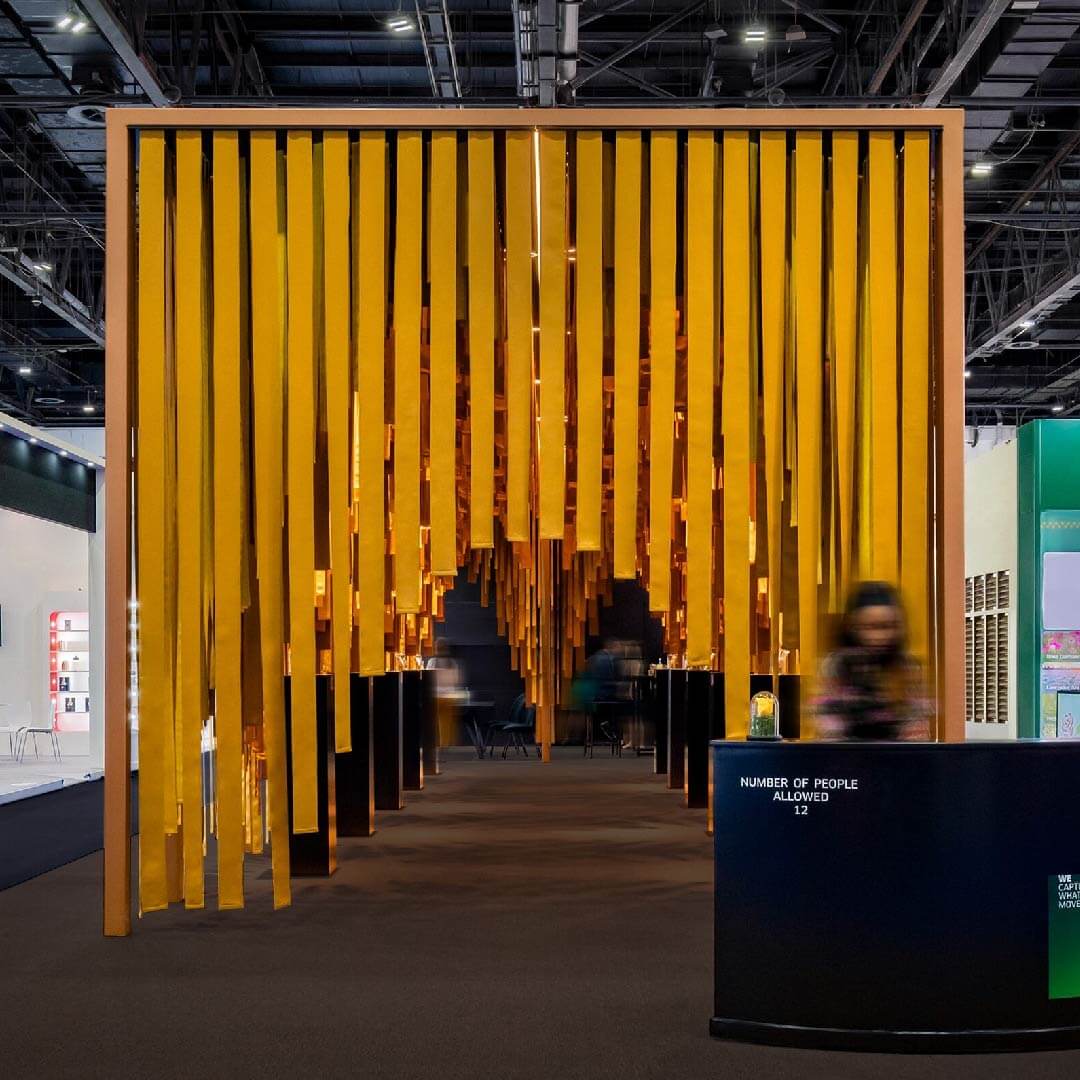 The lightest shade of yellow is ‘Pantone Illuminating Yellow,’ the color of the year 2021, which surrounds the black pedestals that host each of the fragrances.[2]
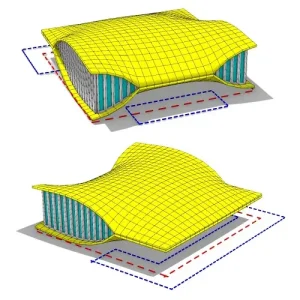
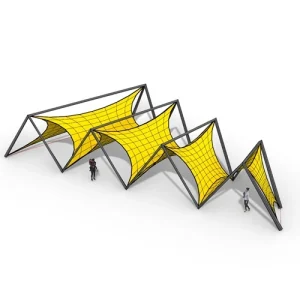
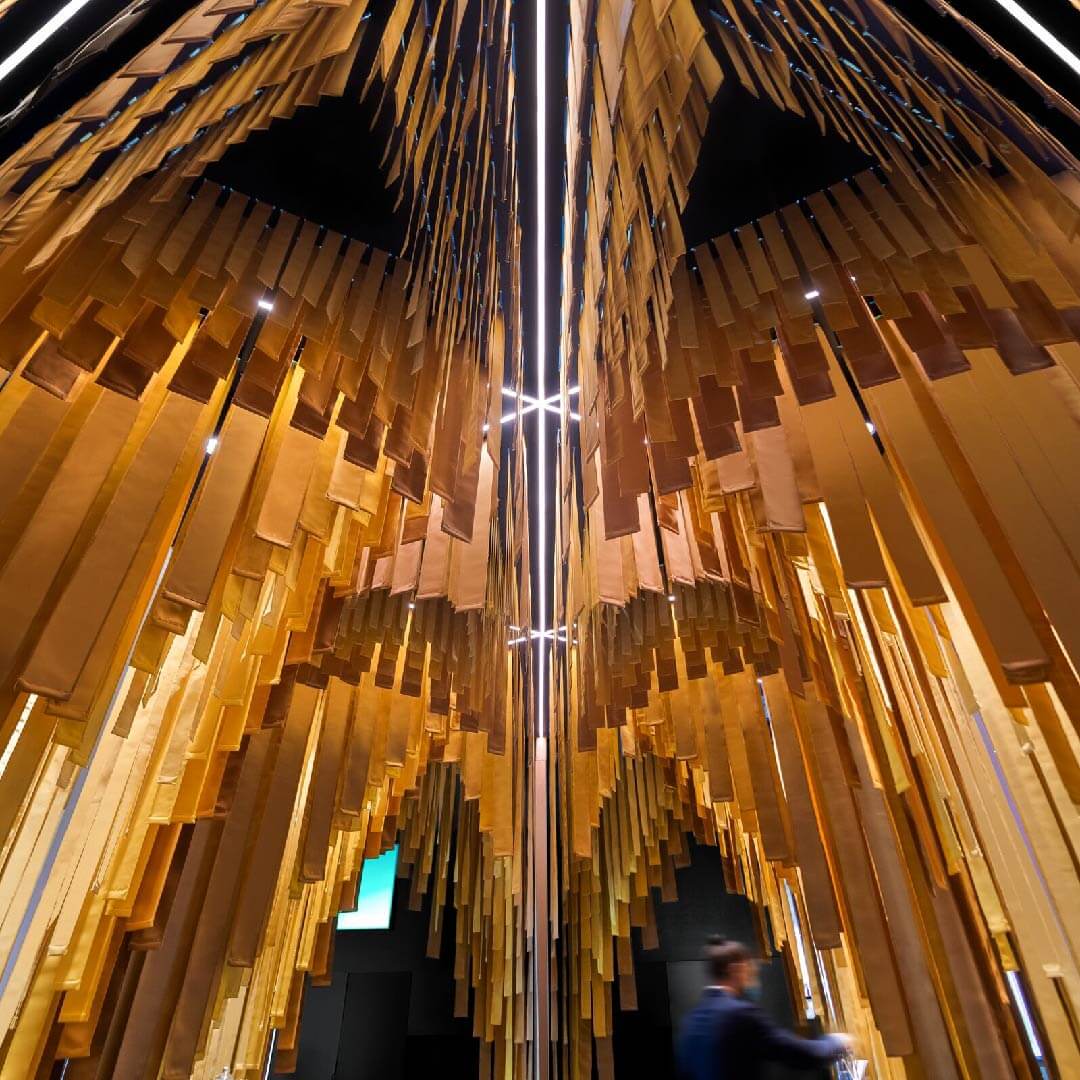
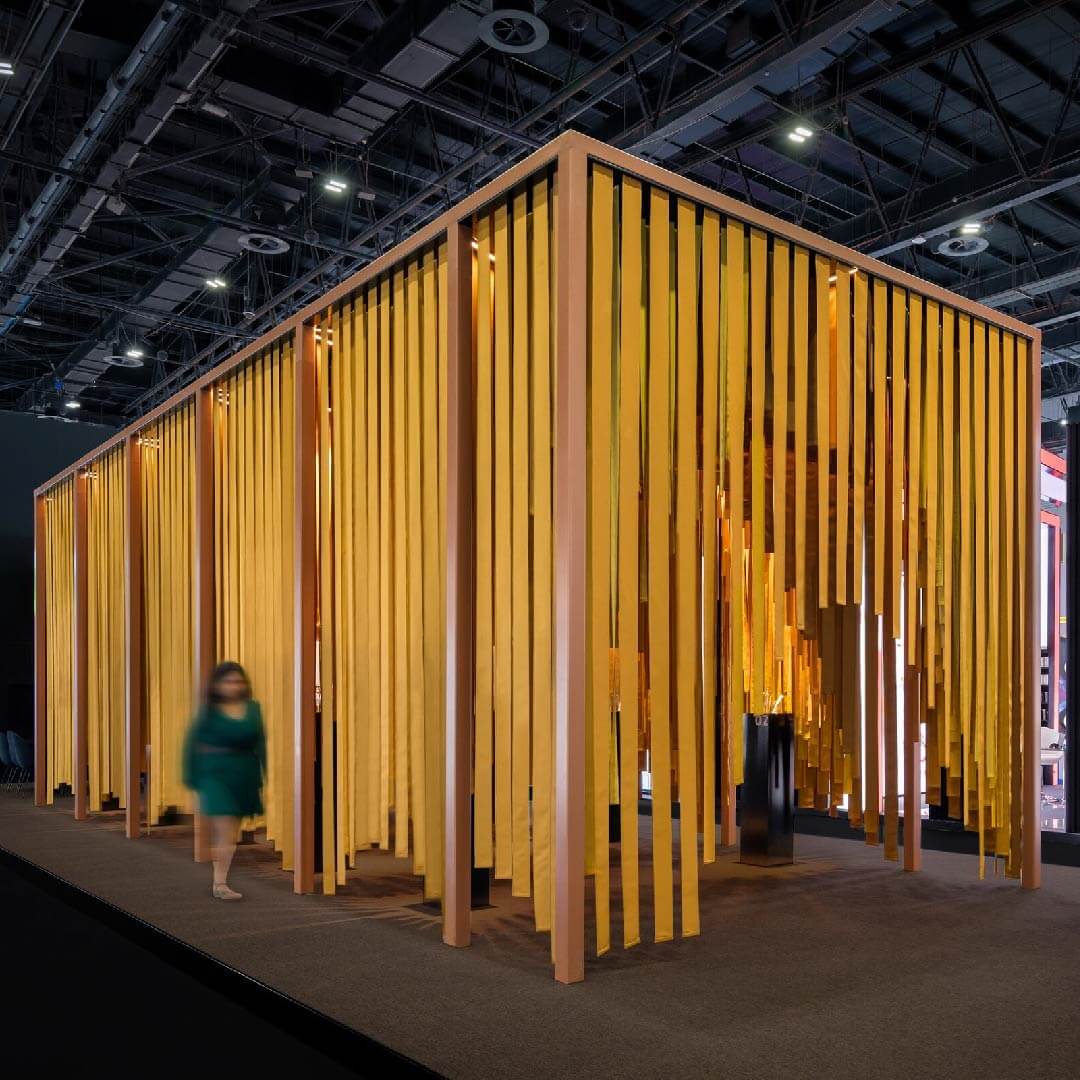 ‘Luminescents Pavilion’ is composed of 24 modules, with only six unique types. The unassuming exterior takes the visitor into a ‘dramatic sanctuary’ Each module highlights one of the fragrances below.
 The design of the modules was to explicitly enclose the structure from the sides while also keeping a sense of ambiguity from the entrance, reducing the visitor’s vision; the cascading fabric creates discrete arched enclosures.[3]
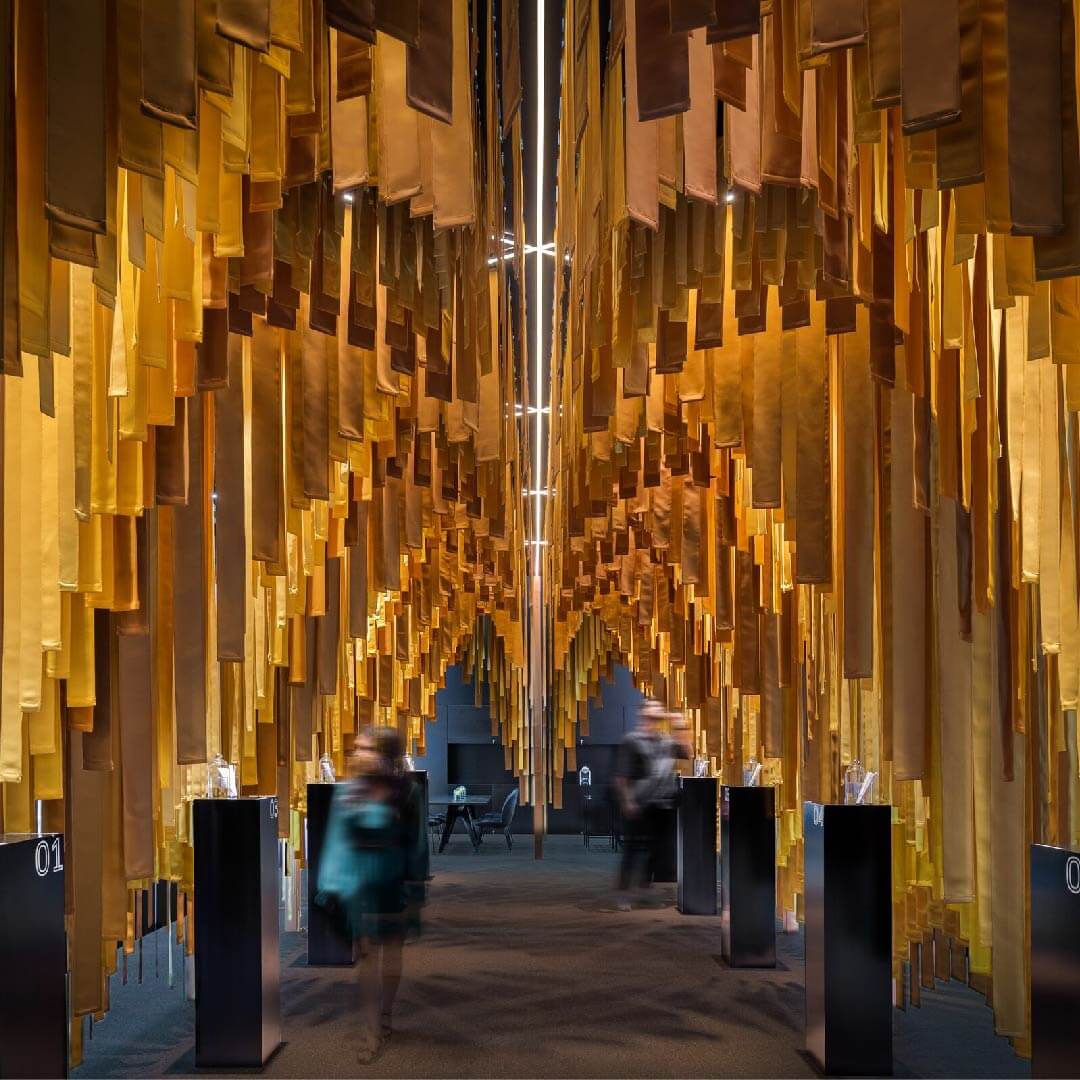 Each module hosts 150 pieces of fabric that vary in width and height; with the aid of computational design and digital fabrication, each piece of fabric was tagged with a unique identifier to assist in the building process.
 The modules are triangular, with longer and wider pieces of fabric at the periphery, and smaller pieces of fabric at the center, generating a gradient in color and size.
The implementation of this strategy was to minimize the amount of material used to achieve the spatial effect.
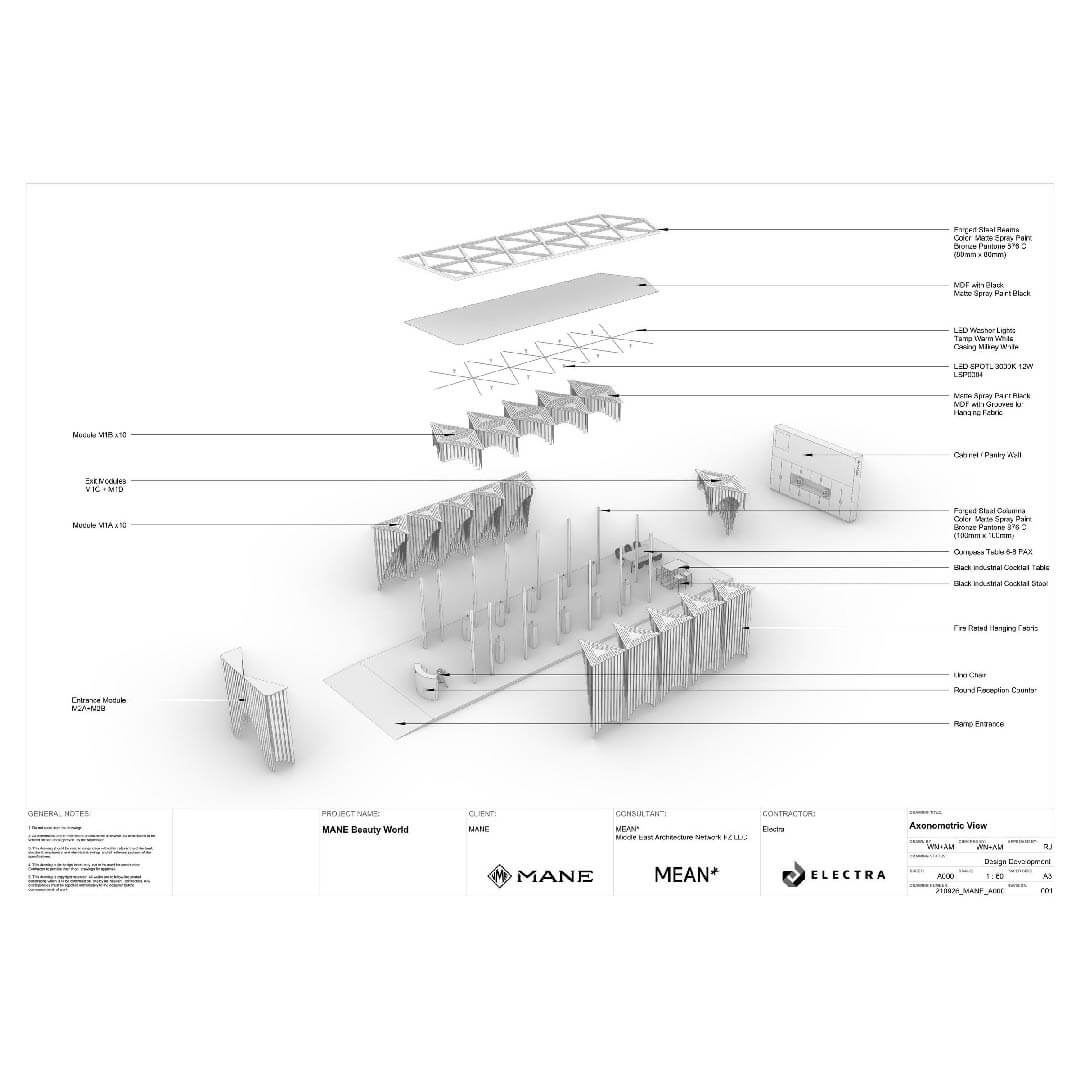 The steel structure hosting the modules is composed of a truss-like triangulated roof supported by fifteen columns.
The number of unique modules is kept to a minimum to avoid complications during manufacturing and installation while achieving a complex interior.[4]
 Luminescents Pavilion / https://archello.com/project/luminescents-pavilion ↑
Michaela Crie Stone lives and works in Rockport, Maine, where she creates pieces that push the parameters of function by blurring the lines between art, craft, and design.

in this video, you can look at different parametric towers with parametric designs.

Drone based technology is the solution to overcome the limitation of surface road capacity in cities.

Augmented reality (AR) is the integration of digital information with the user’s environment in real-time.