Reaction Diffusion

Reaction Diffusion

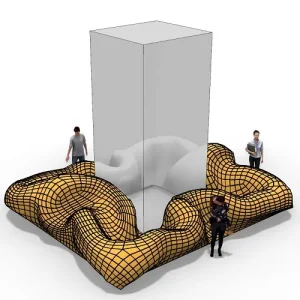
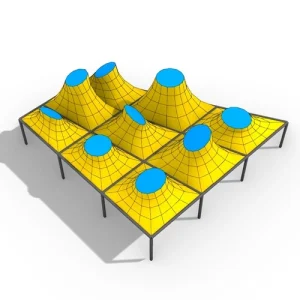
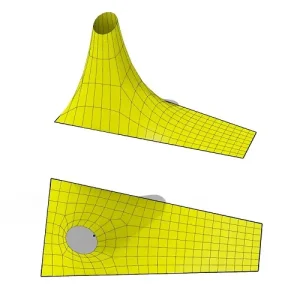
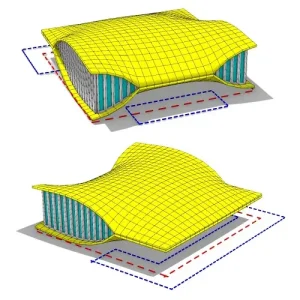
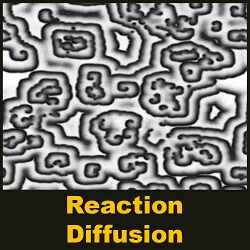
This parametric design video is about reaction-diffusion. Reaction-diffusion (RD) is a canonical example of complex behavior that emerges from a simple set of rules. RD models a set of substances that are diffusing, or spreading; these substances also react with one another to create new substances.

Table of Contents

This parametric design video is about reaction-diffusion. Reaction-diffusion (RD) is a canonical example of complex behavior that emerges from a simple set of rules. RD models a set of substances that are diffusing, or spreading; these substances also react with one another to create new substances. This simple idea has been suggested as a model for a diverse set of biological phenomena.

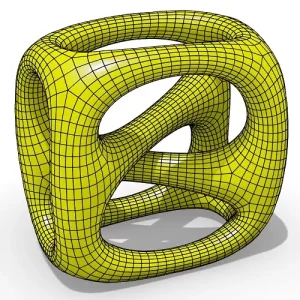
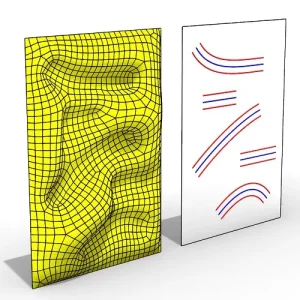
One of the intriguing aspects of reaction-diffusion is how a simple chemical system can produce a variety of patterns through small changes. Nervous System’s reaction diffusion experiments use the Gray-Scott model. This describes a system of two chemicals, often referred to as U and V, where U and V combine in a reaction to form more of V. Additionally, chemical U is produced at a certain rate, while chemical V naturally decays at a fixed rate. Changing just these rates of production and decay results in patterns of dots, lines, holes, or spirals. By working with multiple scales, varying parameters, and using anisotropic diffusion (in which chemicals flow more easily in one direction than another), it is possible to sculpt reaction-diffusion patterns.

Leave a Reply

Related Post

Parametric Design

Parametric Design furniture

Michaela Crie Stone lives and works in Rockport, Maine, where she creates pieces that push the parameters of function by blurring the lines between art, craft, and design.
Read More »