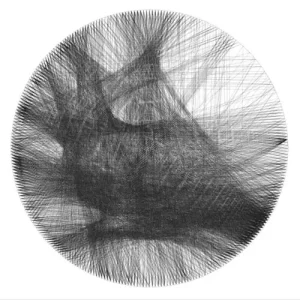
String Art Generator
String Art Generator by Yiran is a grasshopper plugin which generates a string art sequence based on an input image. You can
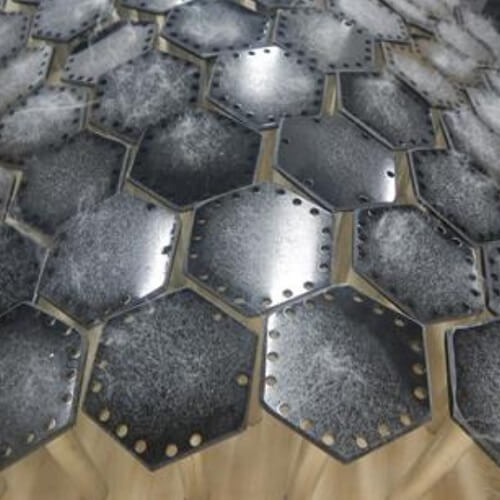
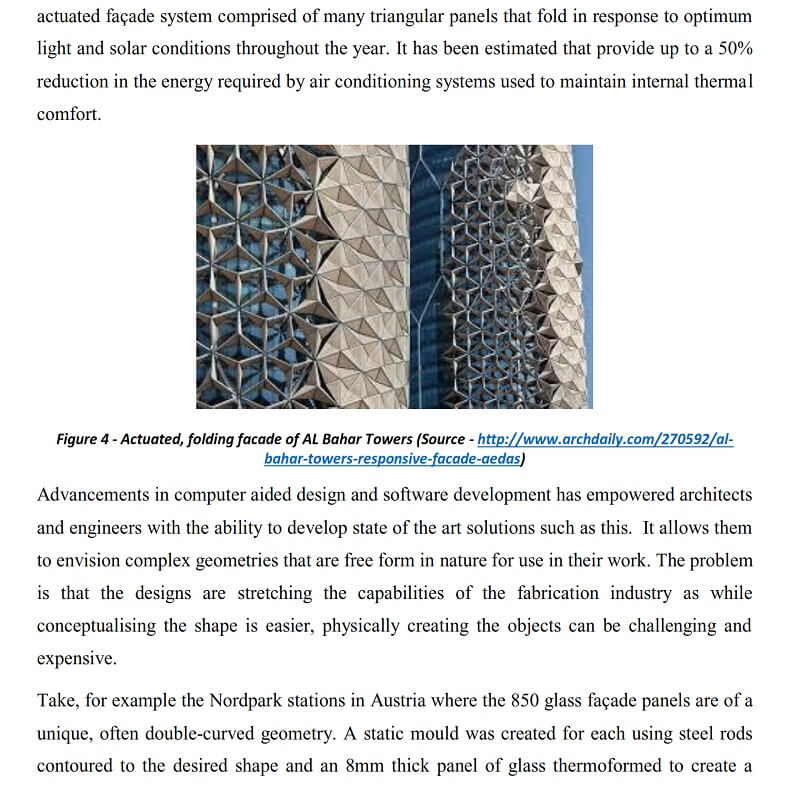
The buildings we inhabit consume a considerable amount of the energy each year however there is currently a global movement towards minimising the impact human society has on the environment. This is driving the demand for more complex, and even intelligent façade systems to reduce the requirements of air conditioning and lighting while maintaining comfort.
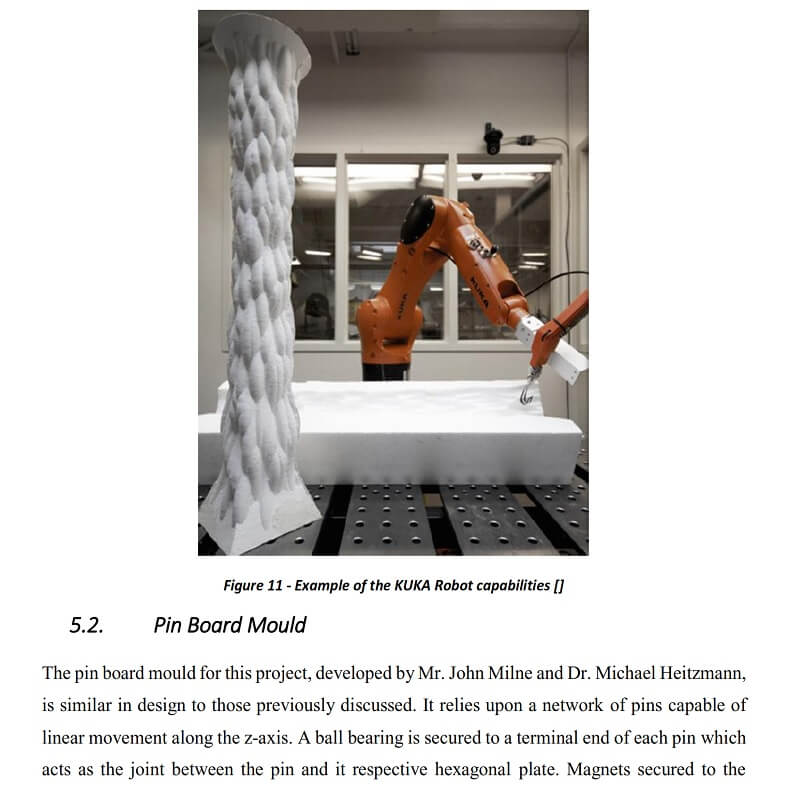
Through the development of 3D modelling and analysis software, architects and engineers have the ability to digitally produce innovative solutions. However, when complex, double curved geometries are proposed, the costs and difficulty associated with conventional fabrication techniques often make the transition to reality impractical.
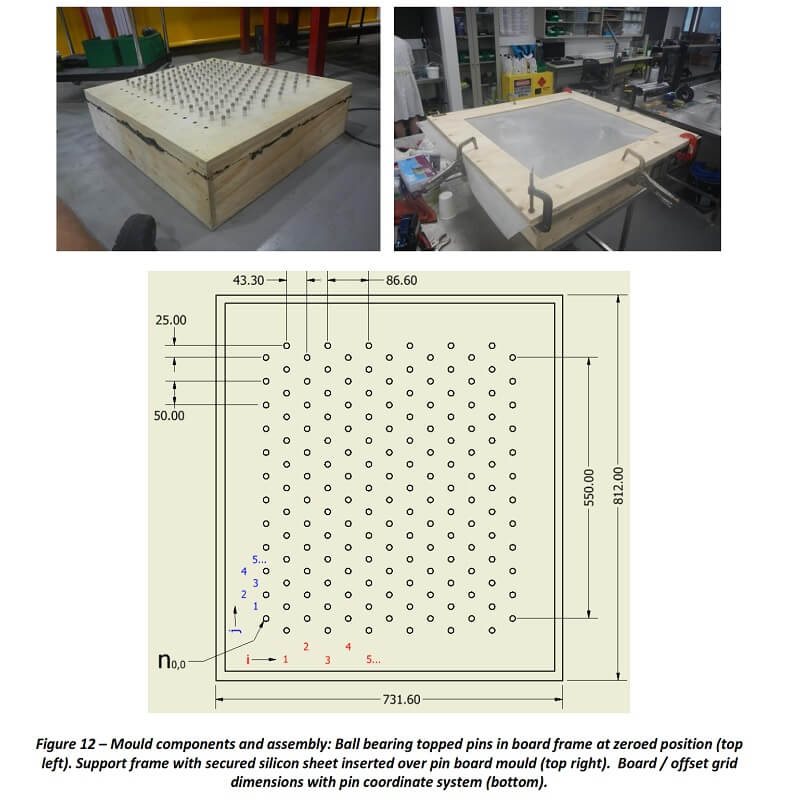
Detailed within this paper by Judah Hook, is the investigation and development of an alternative fabrication concept that utilises an inexpensive, reusable “pin board” mold that is autonomously set to various CAD derived surface geometries by a 6-axis robotic arm manipulator.
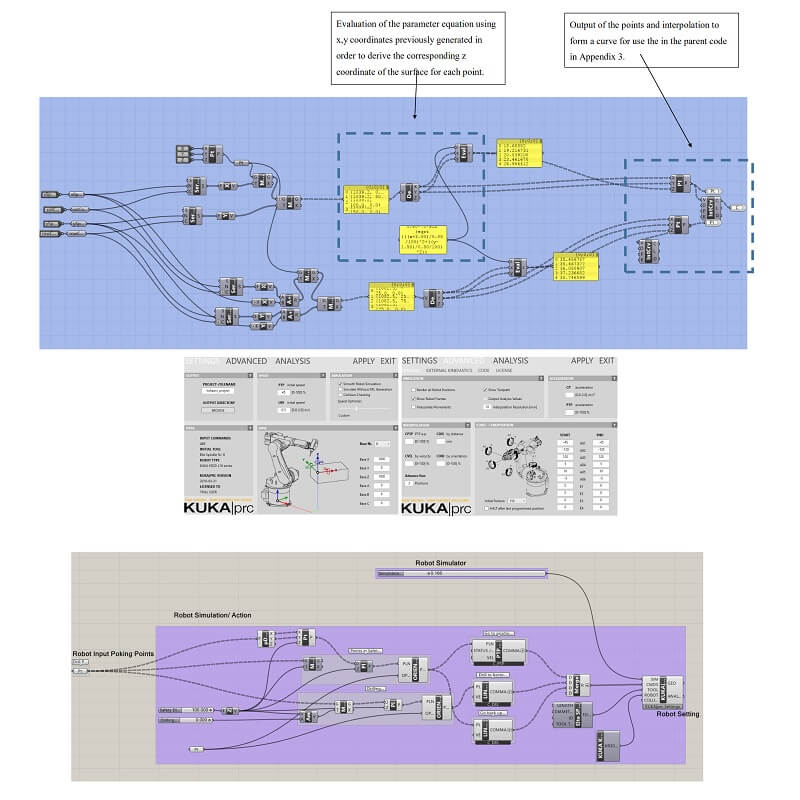
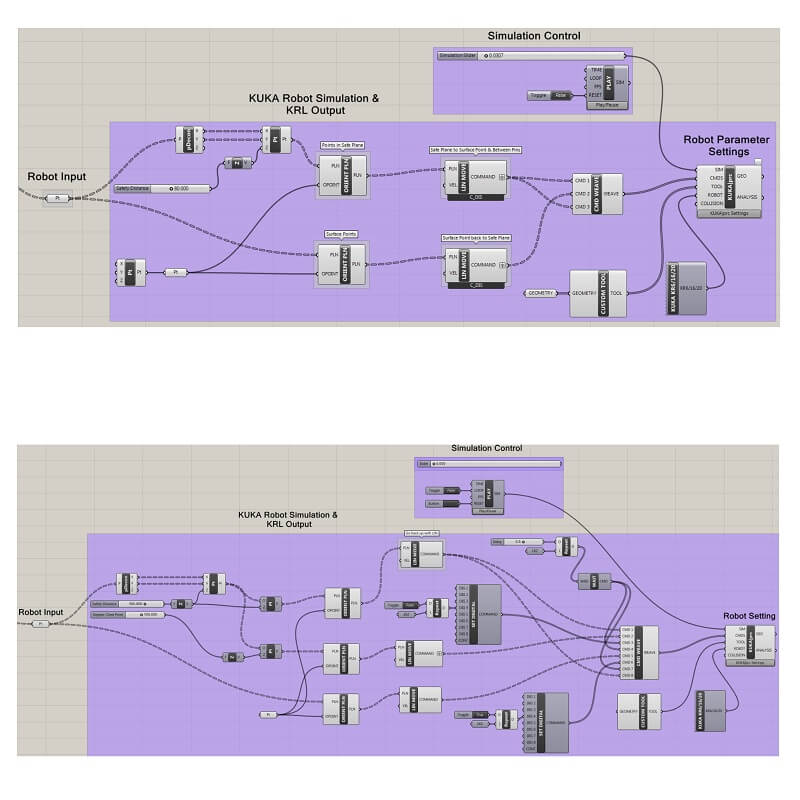
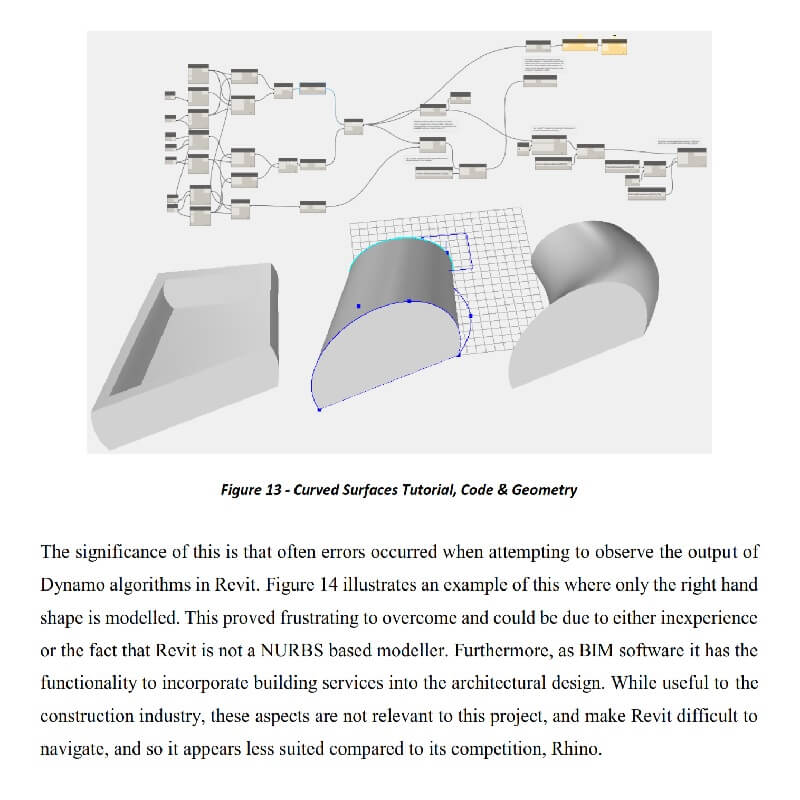 A digital algorithm models a double curved test façade, subdivides it into manageable panels based on the dimensional parameters of the mold, creates a robotic toolpath simulation to map the surface geometry and generates the required machine-driving code.
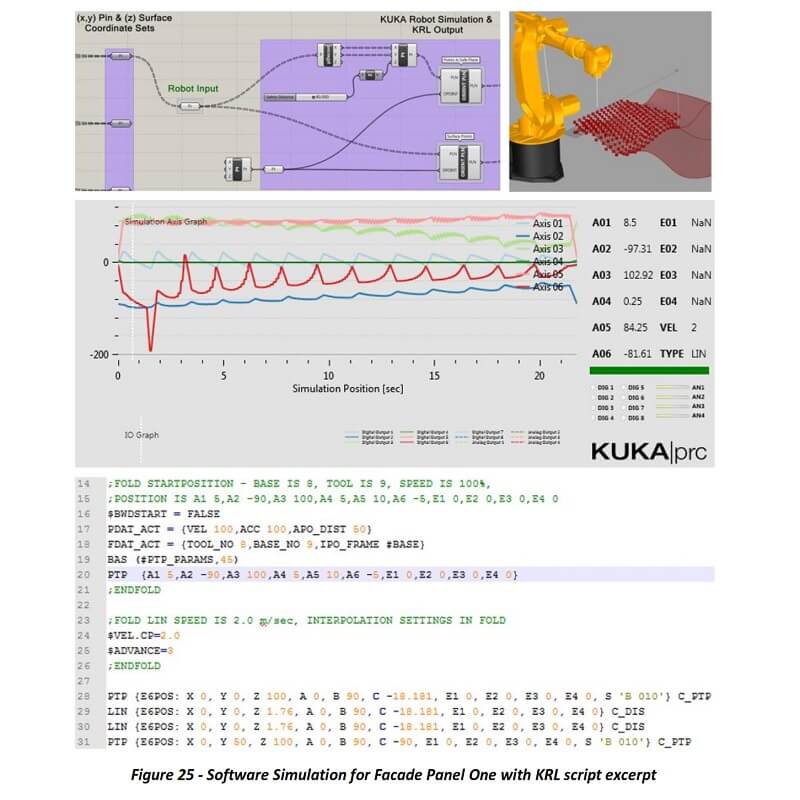
Active trails successfully set the pins of the mold to within 0.6mm of the analytically predicted coordinate. At fully operational speeds, this process is estimated to take less than 2 minutes. To establish a proof of concept, automated setting of the mold was conducted for two neighbouring panels of the façade with unique but respective geometries.
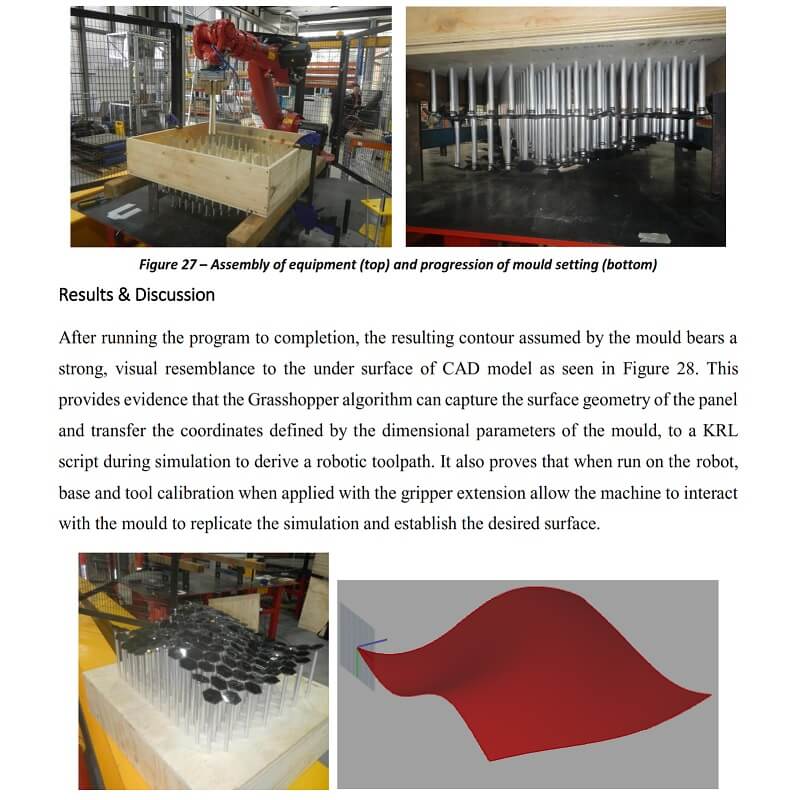 Under its design intent conditions, the set mold was used to fabricate samples of the digitally designed panels out of composite materials to assess the concepts strengths and weaknesses. This resulted in geometries that adequately resembled the curvature of the CAD model, however preliminary samples exhibited considerable surface and structural defects.
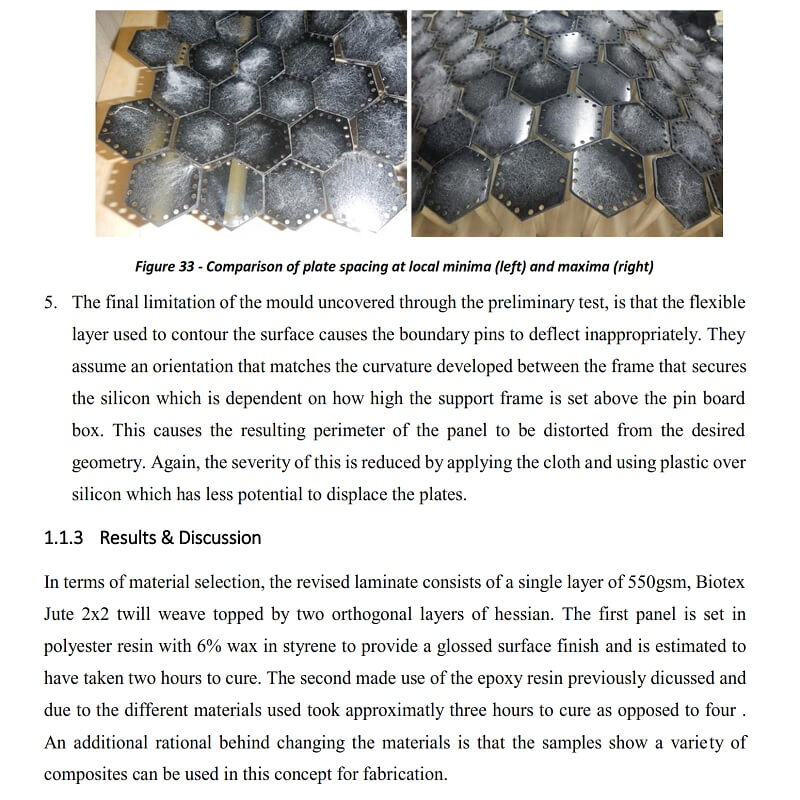 Alteration of composite material selection and minor mold modifications refined subsequent panels sufficiently to allow for their assembly. While imperfections still exist, the continuation of curvature from one panel to its neighbour exhibits good correlation and the assembled façade section can easily be identified from the digital surface.
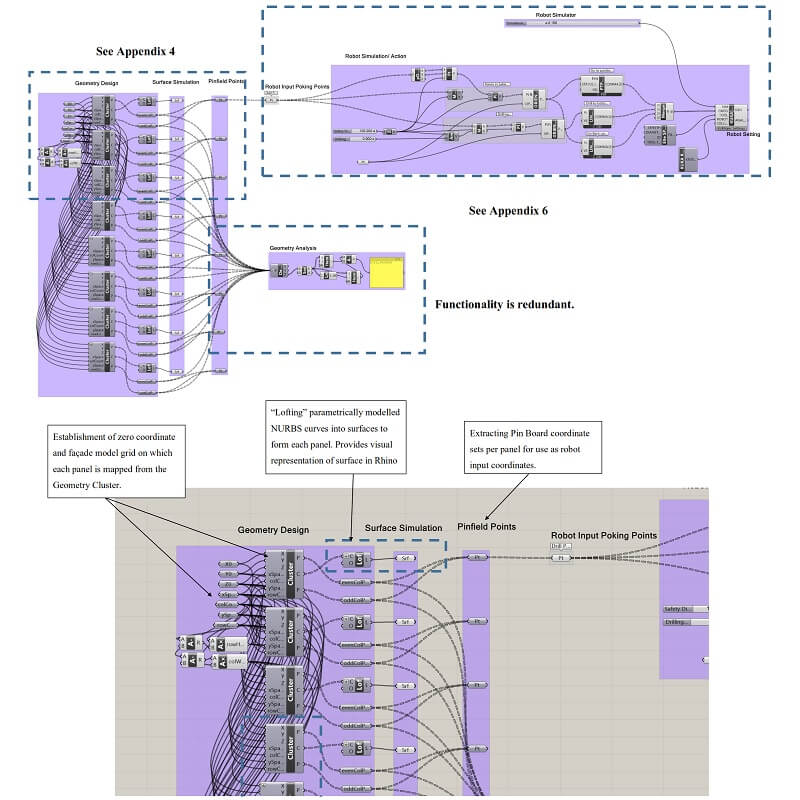
At all stages of experimentally testing the concept, limitations were identified and addressed as far as practically possible. For those remaining, solutions are detailed such as design modifications and algorithm improvements, that if implemented in future works will aid the development of the automated fabrication concept, potentially towards a full-scale composite façade fabrication method that permits complex geometries while remaining cost effective.
String Art Generator by Yiran is a grasshopper plugin which generates a string art sequence based on an input image. You can

This paper by Alessandro Liuti, Sofia Colabella, and Alberto Pugnale, presents the construction of Airshell, a small timber gridshell prototype erected by employing a pneumatic formwork.

In this paper by Gregory Charles Quinn, Chris J K Williams, and Christoph Gengnagel, a detailed comparison is carried out between established as well as novel erection methods for strained grid shells by means of FE simulations and a 3D-scanned scaled physical model in order to evaluate key performance criteria such as bending stresses during erection and the distance between shell nodes and their spatial target geometry.

In this paper by Frederic Tayeb, Olivier Baverel, Jean-François Caron, Lionel du Peloux, ductility aspects of a light-weight composite gridshell are developed.