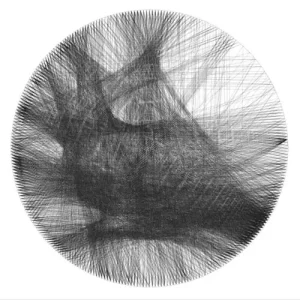
String Art Generator
String Art Generator by Yiran is a grasshopper plugin which generates a string art sequence based on an input image. You can

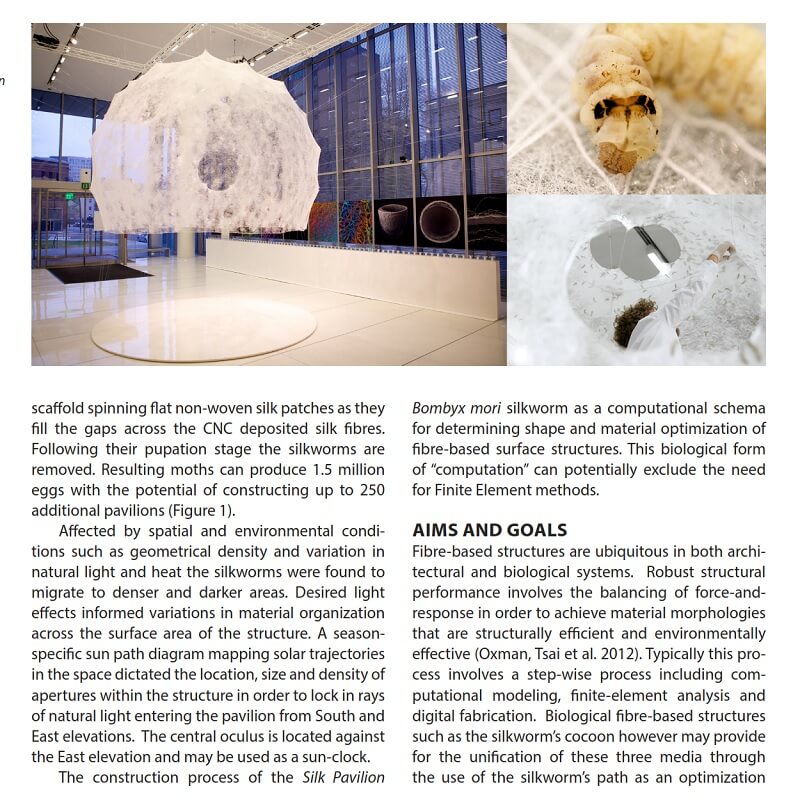
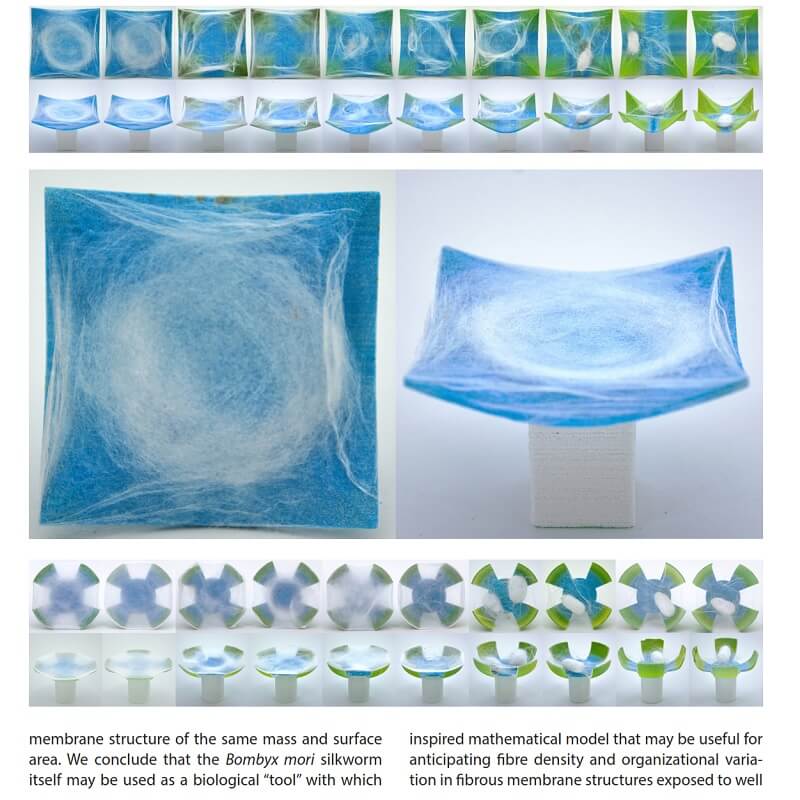
In this paper by Neri Oxman, Jared Laucks, Markus Kayser, Carlos David Gonzalez Uribe and Jorge Duro-Royo, the formation of non-woven fibre structures generated by the Bombyx mori silkworm is explored as a computational approach for shape and material optimization.
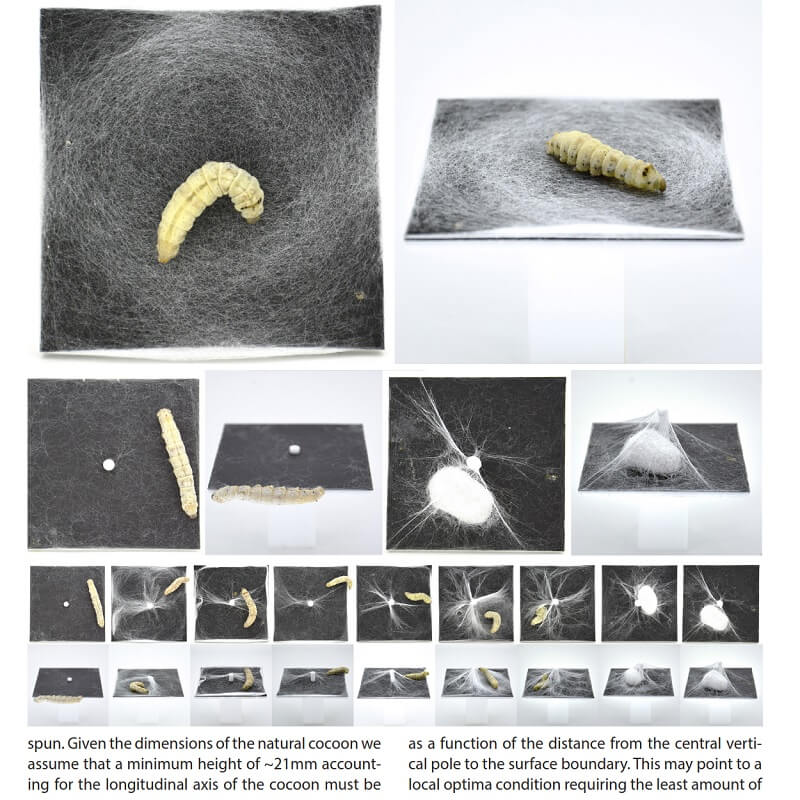 Biological case studies are presented and a design approach for the use of silkworms as entities that can “compute” fibrous material organization is given in the context of an architectural design installation. Authors demonstrate that in the absence of vertical axes the silkworm can spin flat silk patches of variable shape and density.
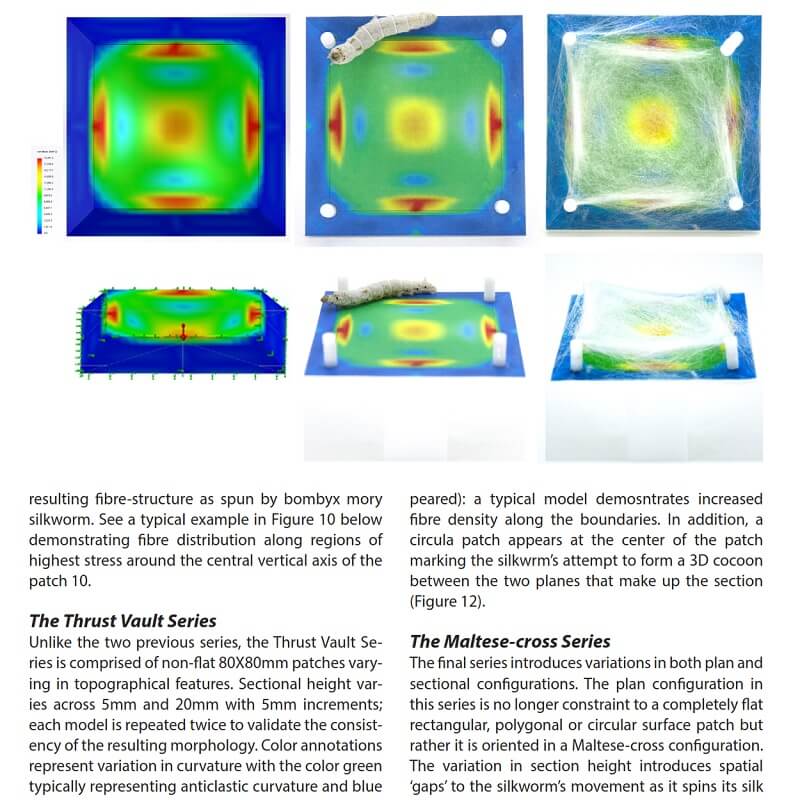 They present experiments suggesting sufficient correlation between topographical surface features, spinning geometry and fibre density. The research represents a scalable approach for optimization-driven fibre-based structural design and suggests a biology-driven strategy for material computation.
String Art Generator by Yiran is a grasshopper plugin which generates a string art sequence based on an input image. You can

This paper by Alessandro Liuti, Sofia Colabella, and Alberto Pugnale, presents the construction of Airshell, a small timber gridshell prototype erected by employing a pneumatic formwork.

In this paper by Gregory Charles Quinn, Chris J K Williams, and Christoph Gengnagel, a detailed comparison is carried out between established as well as novel erection methods for strained grid shells by means of FE simulations and a 3D-scanned scaled physical model in order to evaluate key performance criteria such as bending stresses during erection and the distance between shell nodes and their spatial target geometry.

In this paper by Frederic Tayeb, Olivier Baverel, Jean-François Caron, Lionel du Peloux, ductility aspects of a light-weight composite gridshell are developed.