Smart Passive Building
This research by Tessa Rouwenhorst is aiming to extend the period in which the passive systems are used within the building management system in order to minimize the energy consumption while improving the comfort conditions.
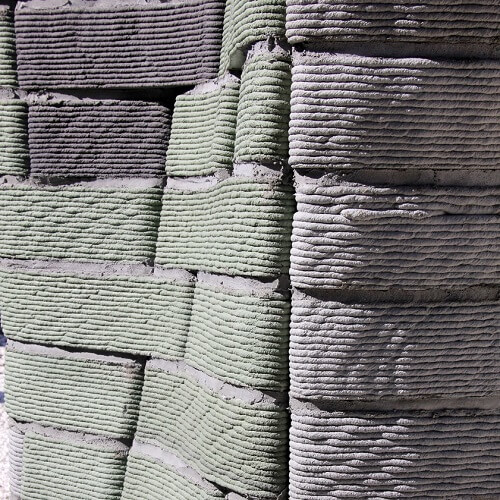
This work by Isak Worre Foged and Mads Brath Jensen develops, implements and tests a method and model for the distribution of material in relation to thermal performances through robot based extrusion of concrete.
Rooster by forest hell is a plugin useful for extracting curves from images; a process commonly known as Vectorization of an image. The Rooster component is present under the ‘Params’ tab in the ‘Utils’ sub-category.
In this research by Shani Sharif, Varun Agrawal and Larry Sweet, authors present a system to allow designers to adaptively control an industrial robot from within a 3D modeling environment, for the purpose of real time feedback.
The presented research by Helena Luísa Freitas Martinho aims to develop a unified AD and analysis workflow for the energy performance assessment of adaptive façades.
The thesis by Herman Enger Aas and Kristian Mathias Eick uses parametric design software tools to investigate relevant structural aspects to be used for development of a conceptual design phase of a footbridge.
This paper by Alireza Borhani and Negar Kalantar is part of a body of research developing an exploratory dialogue between the built form and the environment, via experimentation with performative geometry and material.
The main aim of this thesis by Sam Bouten is to provide insight in the design of transformable structures on an architectural scale.
Mesh Mirror Cut a plugin by Michael Pryor which now is a part of Pufferfish, is inspired by Autodesk Maya’s Mirror Cut tool, which is great for creating symmetry.
This paper by John Harding investigates an interactive evolution of visual programs currently used in popular parametric modelling software.
GRay by Friedrich Söllner is a Parametric Material Generator for the Rhino Render Plugin V-Ray, with a flexible and easy to use interface for single renderings as well as animation.
This paper by Sebastian Białkowski and Anetta Kępczyńska-Walczak discusses teaching parametric design as a supportive method of introducing design logic. Two case studies have been described, analysed and concluded.
Animation is a lightweight plug-in by dbddqy that helps designers to make better animations with less effort.
This dissertation by Pirouz Nourian reports a PhD research on mathematical-computational models, methods, and techniques for analysis, synthesis, and evaluation of spatial configurations in architecture and urban design.
This study by Mads Brath Mads Brath and Avishek Das investigates the technological and methodological challenges in establishing an indeterministic approach to robotic fabrication that allows for a collaborative and creative design/fabrication process.
This project by Po-Hung Chiu is a study of a methodology for the parametric design and fabrication of the bionic structure.
The aim of this paper by Parag Sarwate and Akshay Patil is to understand and explore the application of generative modeling based on biomimicry principles to architectural design.
Retrospects on the original purpose of architecture, despite all those form-versus-function disputations, clarify us that the simple essence of a building is just to satisfy the basic human need, for us to fullfill our daily activities.
This study by William Suyoto, Aswin Indraprastha and Heru W. Purbo offers discrete method in parametric design to solve problems during design process (programming, site planning, massing, structure planning, and facade planning).
The goal of this research by Florian Chéraud is to introduce, within the Grasshopper environment, a tensile parameter, the Young Modulus, into the Kangaroo model.