Stone Pavilion
-
By
Admin
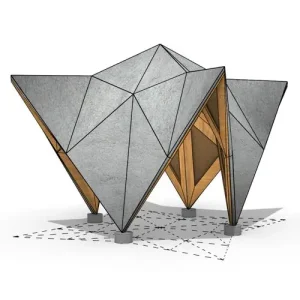
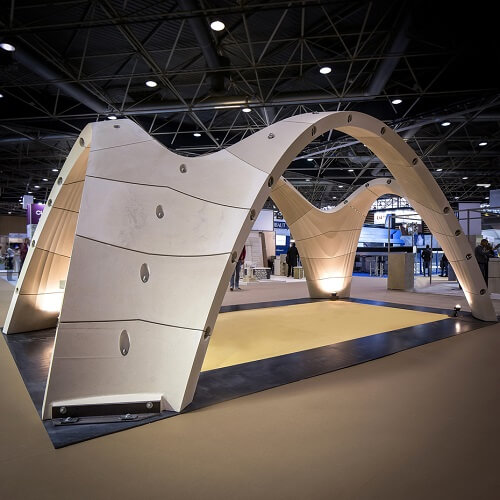
New Fundamentals Research Group, in partnership with S.N.B.R., designed and fabricated a stone vaulted pavilion for Rocalia, a natural stone fair held in Lyon. The structure’s foundation is a network of catenary curves which inform the vaults.
Programmed Column 2
-
By
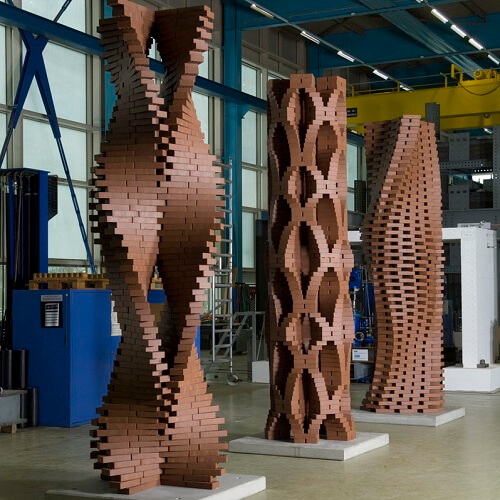
Based on the findings of the elective course “The Programmed Column 1”,the students of Gramazio Kohler Research at ETH Zurich were challenged to design and fabricate 3 prototypical brick columns of 4m height each within a 4 week workshop.
3D Printed Panels
-
By
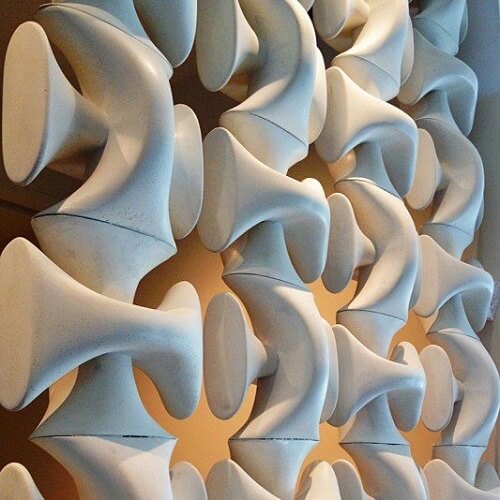
Interior architect Michelle Wempe of Zumahoo discovered the technical capabilities of the company Concretworks and with it how to create a three-dimensional architectural panel, creating a semi-opaque divider.
Focus Lamps
-
By
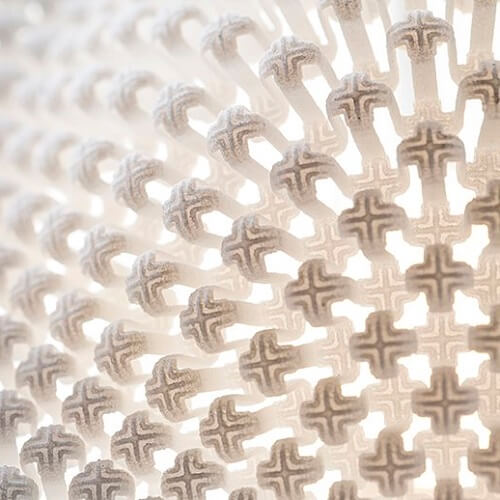
Cozi studio debuts with textural 3D printed focus lamps. Selective laser sintering is an additive 3D printing process that uses a high-power laser to sinter powdered material — typically plastic or metal — into a three-dimensional form.
Steampunk Pavilion
-
By
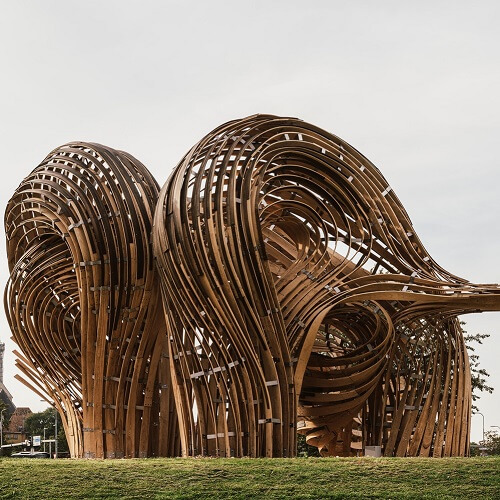
Steampunk is a pavilion constructed from hardwood using hand tools augmented with the precision of intelligent holographic guides. Designed by Gwyllim Jahn, Cameron Newnham (Fologram), Soomeen Hahm Design and Igor Pantic with Format Engineers.
Spring Wood Chair
-
By
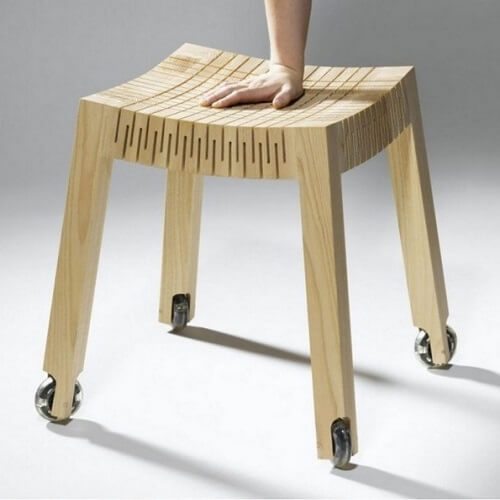
Created by designer Carolien Laro, the seating chattels are really made from wood and they will really flex when you sit on them.
Asymptotic Gridshell
-
By
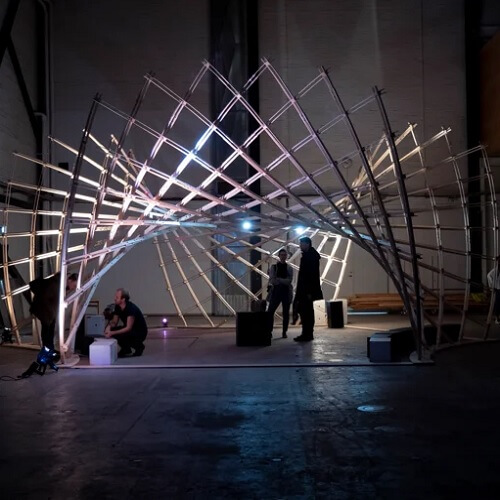
Timelapse from a workshop building an asymptotic timber gridshell in the shape of an Enneper surface. It was organised in the course Digital Tools – Parametric Design for students at the program Architecture and Engineering at Chalmers University.

Space Chain Mail
-
By
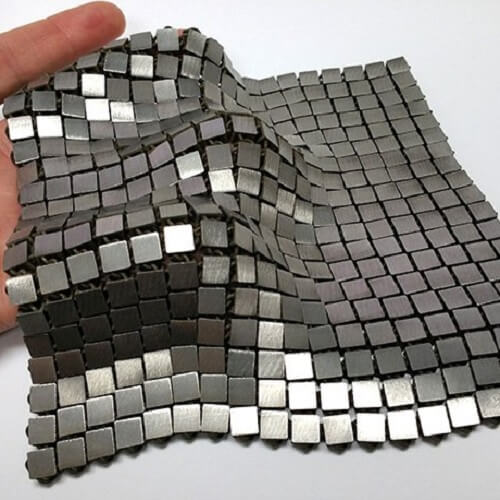
NASA are stepping straight into the future of textiles with their 4D printed ‘space fabric’—a metallic material intended to be used like ‘chain mail’ to protect astronauts and spacecraft alike during their missions.
Mobius Nautilus
-
By
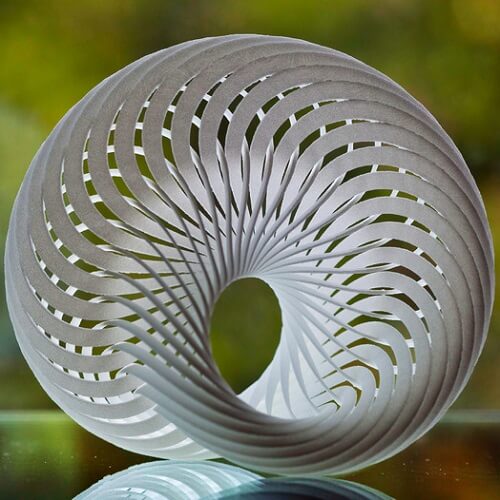
Mobius Nautilus by Joaquin Baldwin is a compound mobius strip created out of 36 interlocking mobius strips. They weave and interlock perfectly through the spaces left between them.
Articulated Timber Ground
-
By
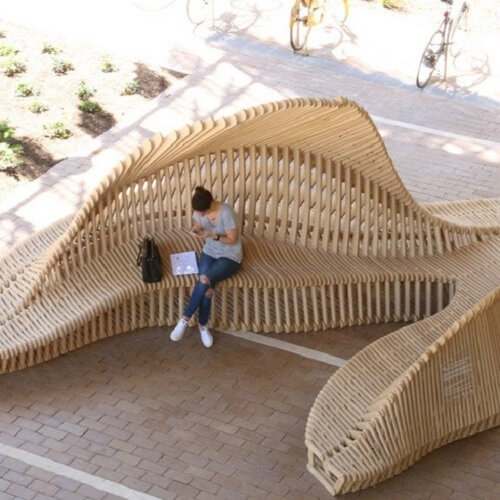
Articulated Timber Ground is a public pavilion designed and built by a group of Master in Architecture students at the University of Melbourne. Consisting of 1,752 components, the pavilion changes its form throughout the sections.

F2 Pavilion
-
By
The F2 Pavilion was designed and fabricated by University of Texas San Antonio (UTSA) College of Architecture’s graduate students under the direction of Andrew Kudless, Director of Matsys.

Vessel Forms
-
By
Designer Julia Ibbini is interested in human and machine collaboration in a traverse of analog and digital to create work with highly detailed machined precision, but which remains distinctly human in origin.
Project EGG
-
By
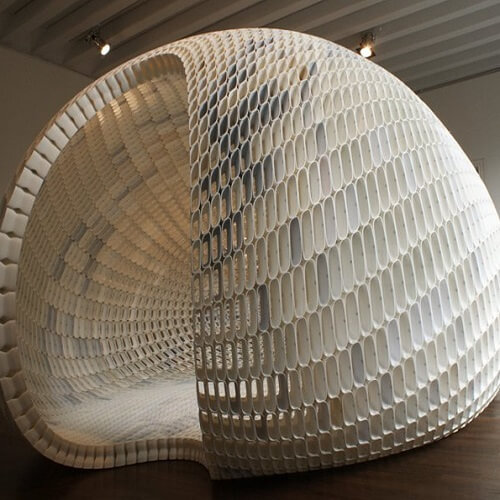
Project EGG is made from 4,760 individuated pieces, which have been made by hundreds of desktop 3D-printers from all over the world. Conceived and organized by furniture designer Michiel Van Der Kley, the irregular ellipsoid form measures roughly 5 x 4 x 3 meters.
Bloom Pavilion
-
By
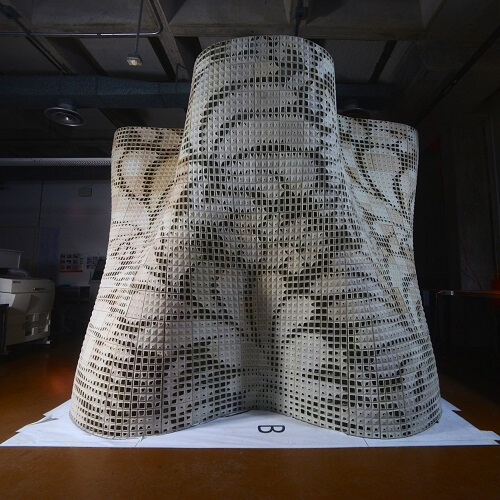
The California-based Emerging Objects team has created Bloom, a pavilion constructed from 840 unique blocks 3-D printed from portland cement. The 9-foot (2.7 meter) tall pavilion is cruciform in plan, morphing as it rises to become the same cruciform shape twisted by 45 degrees.
Boolean Operator Pavilion
-
By
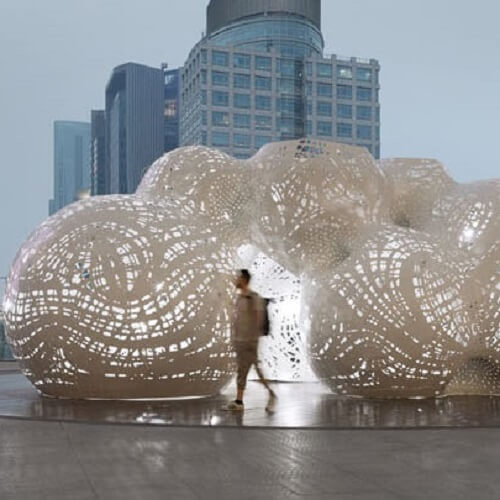
Marc Fornes / The Very Many designed a large-scale sculptural outdoor pavilion on the elevated plaza of the Suzhou Center in China, as part of the Jinji Lake Biennial. Named ‘Boolean Operator’, the installation has been crafted from white aluminum.
Trabeculae Pavilion
-
By
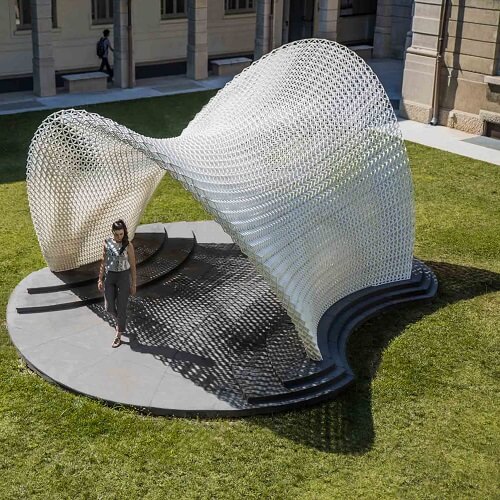
Trabeculae Pavilion by WASP is a lightweight architecture completely 3D printed that fuses advancements in 3D printing with bio-inspired computational design. The synergy of design, material and manufacturing technologies allowed the conceptualization of an innovative construction technique.
Minimal Complexity
-
By
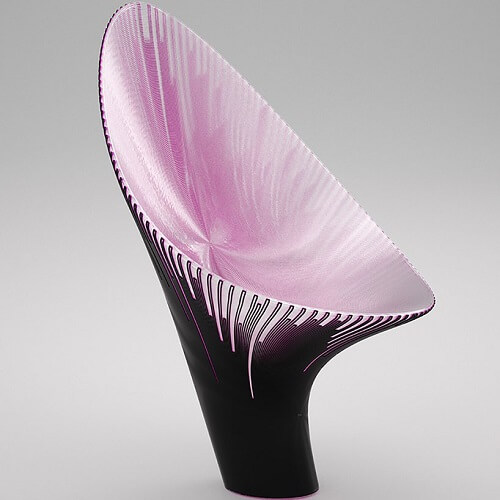
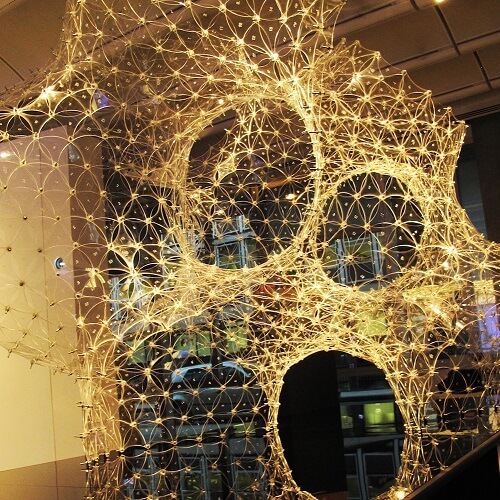
Romanian architect Vlad Tenu was awarded for his project ‘Minimal Complexity’ which along with its aesthetic beauty, technical superiority and elegance of detailing, the proposal was chosen because it employs structural robustness, material efficiency and an inherent logic of assembly.