String Art Generator
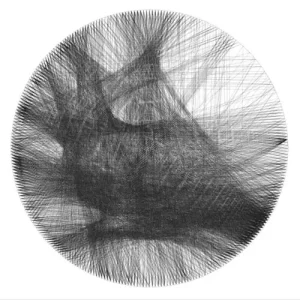
String Art Generator by Yiran is a grasshopper plugin which generates a string art sequence based on an input image. You can
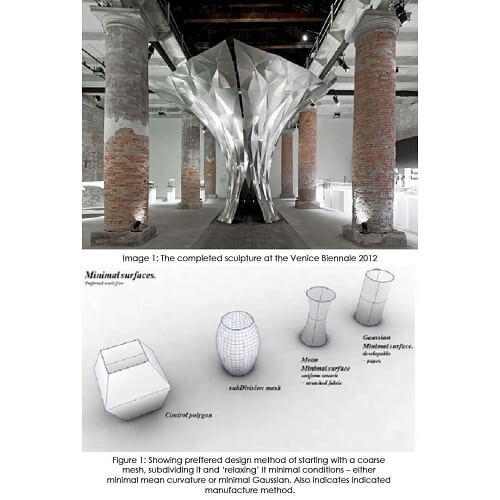
Applying dynamic relaxation techniques to form-find and manufacture curve-crease folded panels
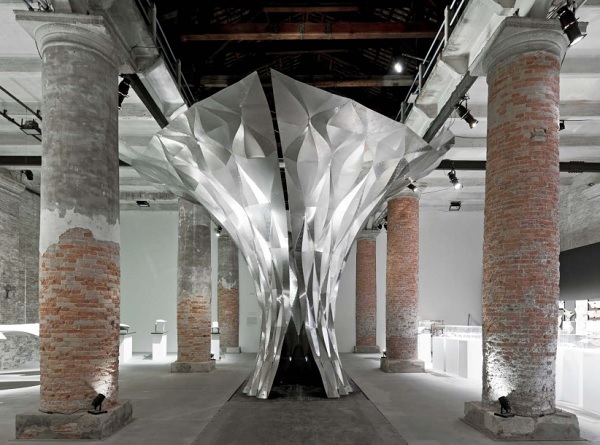
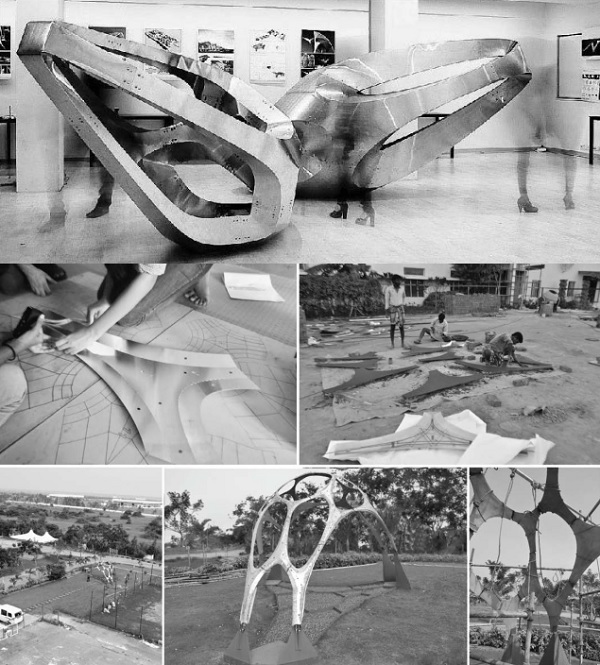
The research incorporated in the paper stems from the design and fabrication of a self-supporting, multi-panel installation for the Venice Biennale 2012 and operates against the backdrop of the exciting potentials that the field of curved-crease folding offers in the development of curved surfaces that can be manufactured from sheet material.
The two main challenges were developing an intuitive design strategy and production of information adhering to manufacturing constraints.
The essential contribution of the paper is a proposed interactive form-finding method for curve-crease geometries that could negotiate the multiple objectives of ease of use in exploratory design, and manufacturing constraints of their architectural scale assemblies.
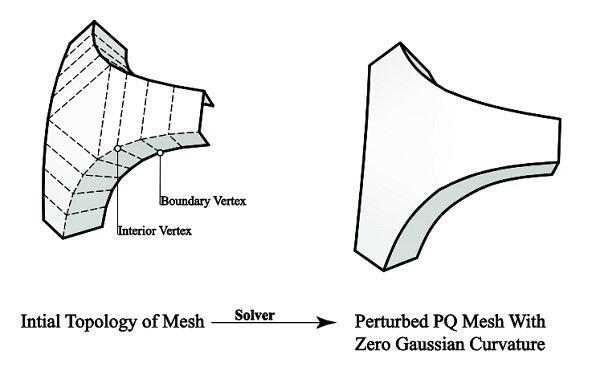
The research stems from the design and fabrication of a self-supporting, multi-panel installation for the Venice Biennale 2012 and operates against the backdrop of the exciting potentials that the field of curved-crease folding offers in the development of curved surfaces that can be manufactured from sheet material.
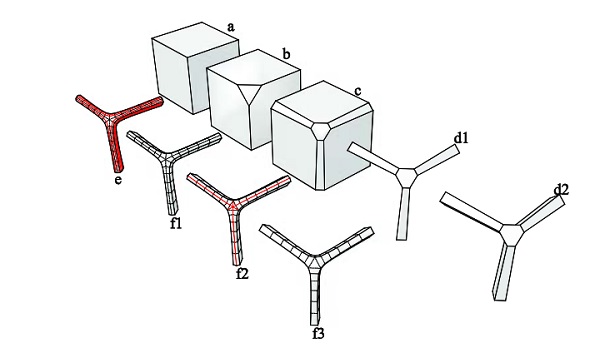
The two main challenges were developing an intuitive design strategy and production of information adhering to manufacturing constraints.
The essential contribution of the paper is a proposed form-finding method for curve-crease geometries that could negotiate the multiple objectives of ease of use in exploratory design, and manufacturing constraints of their architectural-scale assemblies.
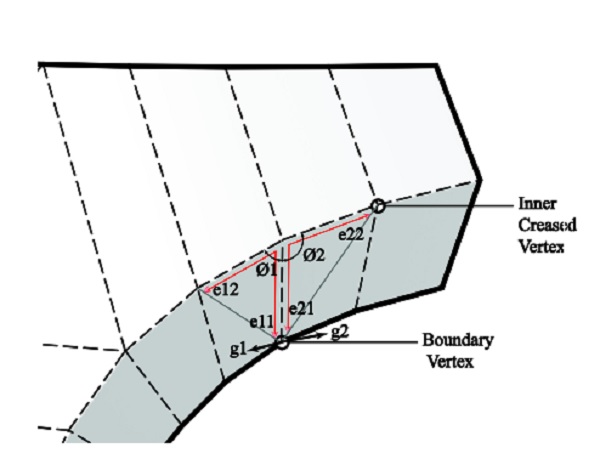
There are several seminal design and art precedents within this field – Richard Sweeney, David Huffman, Erik Demaine etc. Most of the precedents projects and available literature on design methods highlight the difficulty in developing an intuitive, exploratory digital-design method to generate feasible 3D geometries.
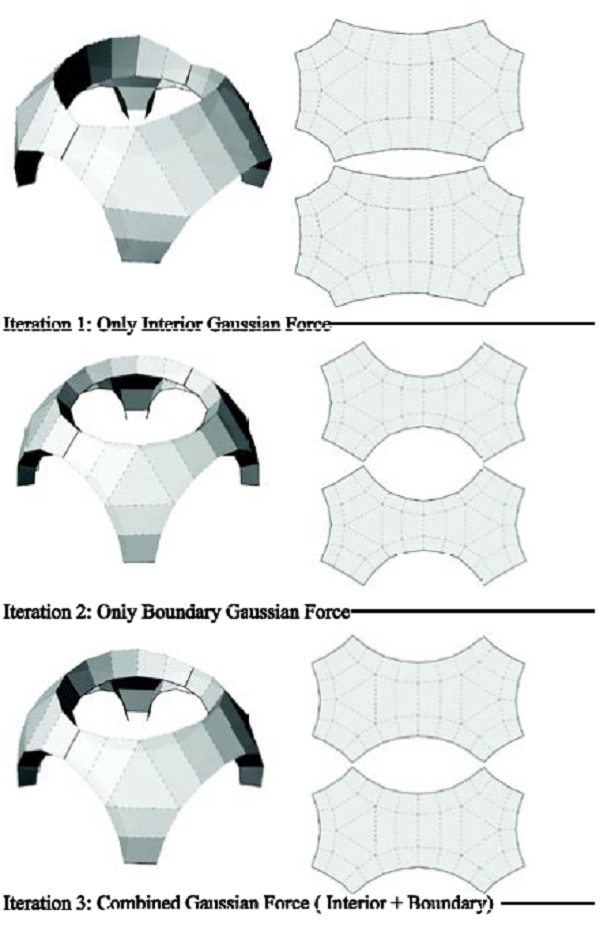
Our initial survey of methods included both the simple and common method – the method of reflection – and the involved Planar-Quadmeshes and optimization-based method.
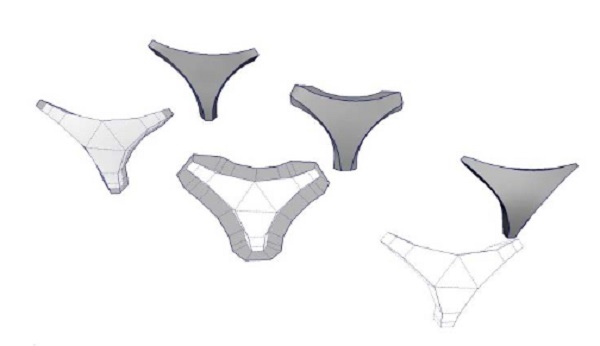
Most methods, including the two above, presented difficulties towards incorporation within an intuitive, edit-and-observe method of design; The first one proving difficult to explore variety of generalized solutions free of prior assumptions and the second one being elaborate involving scanning of physical paper models, proprietary optimization algorithms etc.
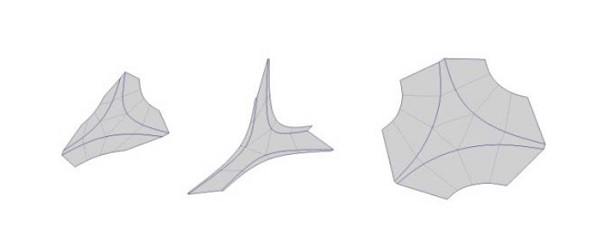
For an extensive overview on the precedents, and computational methods related to curved crease folding, we refer the reader to a survey. Further, we were particularly interested in the recent developments of physicallybased, interactive tools that operate on user-specified coarse linear piecewise complexes that are iteratively subdivided and perturbed to produce feasible solutions via energy minimization methods.
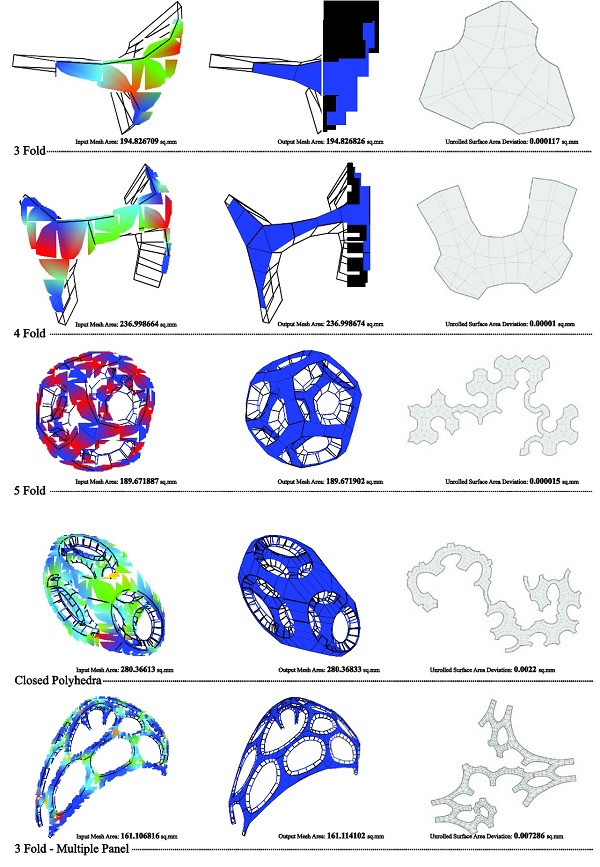
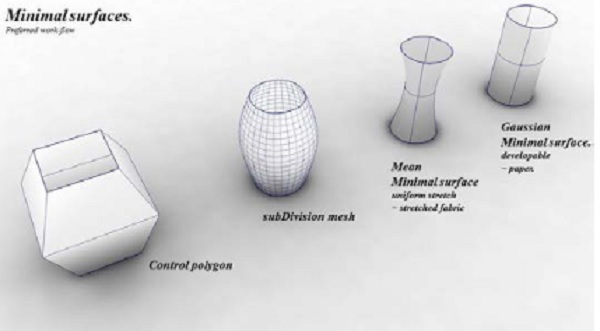
This is in alignment with established benefits of subdivision surface based modeling paradigm in architectural form-finding, and the application of dynamic relaxation techniques on subdivision surfaces to design and fabricate minimal mean curvature surfaces – so called minimal surfaces.
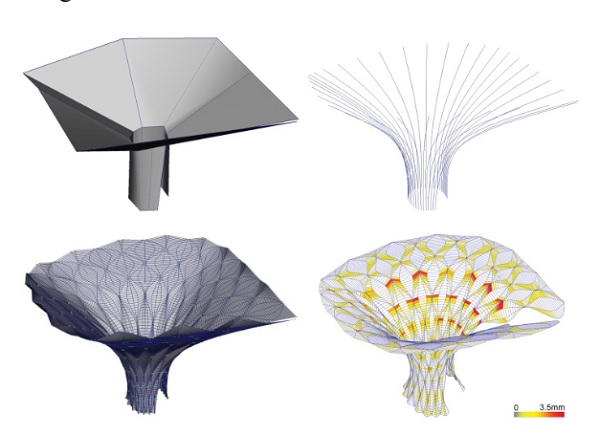
The method proposed in this paper follows from these observations, and an explicit intention to perturb input 3D geometries to find feasible geometry as opposed to finding the folded state of a 2D input mesh.
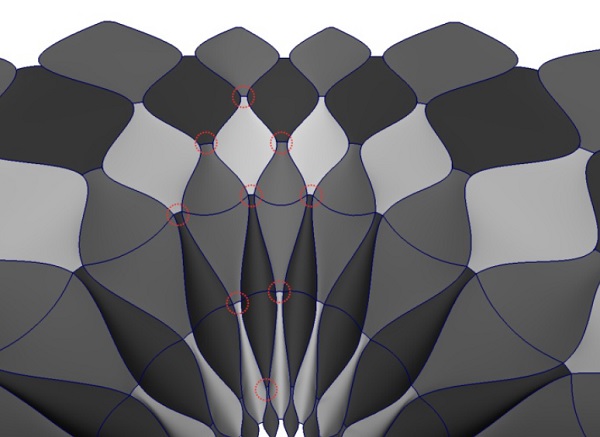
It may be noted that the optimization-based method proposed by does in fact solve this problem, albeit it is more difficult to implement. Our method is easier to implement and extend. However, unlike their method relies on the designer to provide an initial mesh with appropriate topology.
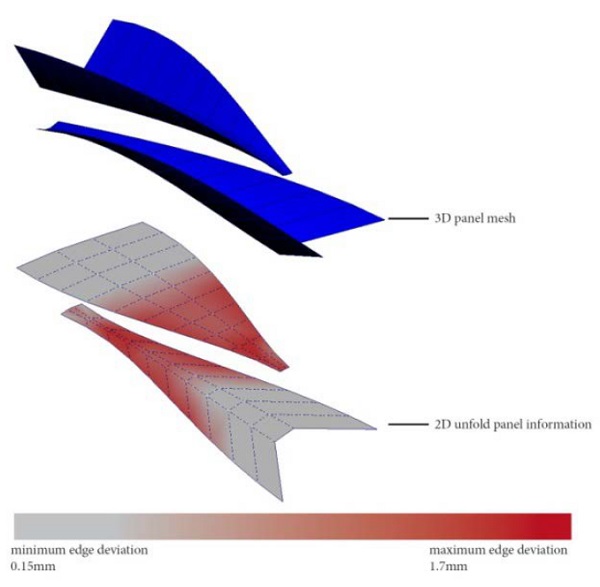
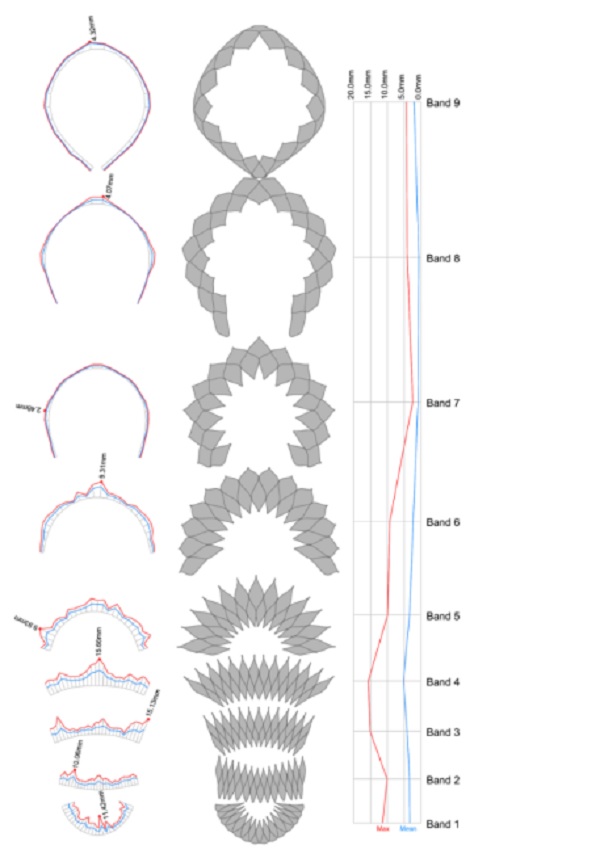
We show simple procedural methods involving known meshoperations that can be used to produce the initial mesh and the subsequent use of dynamic relaxation (DR) techniques to iteratively perturb the surface towards minimal Gaussian curvature and local planarity.
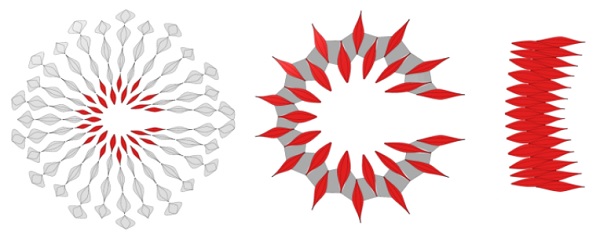
The paper will proceed by describing key discoveries made in applying DR to design individual panels with a few crease folds , and the subsequent incorporation of those discoveries in the design and manufacture of selfsupporting, multiple-panel configurations.
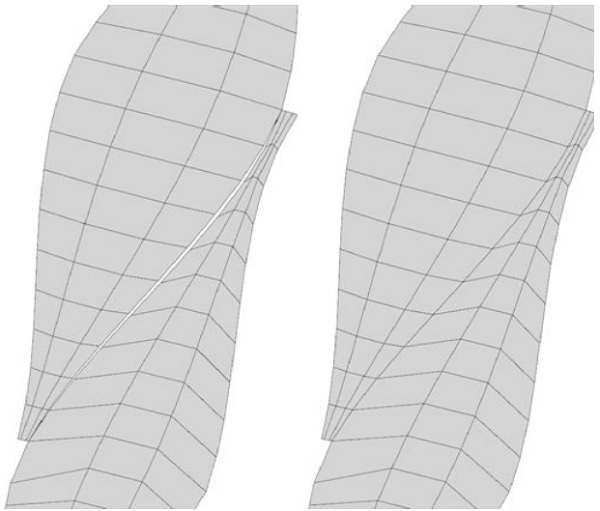
The various caveats and limitations of the proposed method are noted in the previous section. As a proof-of concept, the proposed method was successfully employed to design and fabricate a self-supporting structure composed on folded panels, in relatively short span of time – design to completion in 3 months.
Further the proposed method was found to be designer-friendly in that it utilisizes popular mesh modeling procedures, thereby easing the assimilation into established contemporary design workflows.
The method also allows for multiple possibilities of feedback and iteration within the various steps of the process, thus allowing for multiple collaborative inputs to be assimilated during the process of design. In short, the method allows for integration into a general interactive and iterative form-finding framework that can be employed for finding minimal surfaces – both Gaussian-curvature minimal and mean-curvature minimal – along with their planar developments, allowing for their manufacture from sheet material – paper / metal and stretched fabric.
String Art Generator by Yiran is a grasshopper plugin which generates a string art sequence based on an input image. You can

This paper by Alessandro Liuti, Sofia Colabella, and Alberto Pugnale, presents the construction of Airshell, a small timber gridshell prototype erected by employing a pneumatic formwork.

In this paper by Gregory Charles Quinn, Chris J K Williams, and Christoph Gengnagel, a detailed comparison is carried out between established as well as novel erection methods for strained grid shells by means of FE simulations and a 3D-scanned scaled physical model in order to evaluate key performance criteria such as bending stresses during erection and the distance between shell nodes and their spatial target geometry.

In this paper by Frederic Tayeb, Olivier Baverel, Jean-François Caron, Lionel du Peloux, ductility aspects of a light-weight composite gridshell are developed.