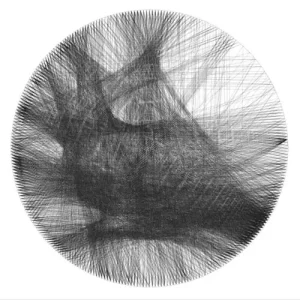
String Art Generator
String Art Generator by Yiran is a grasshopper plugin which generates a string art sequence based on an input image. You can
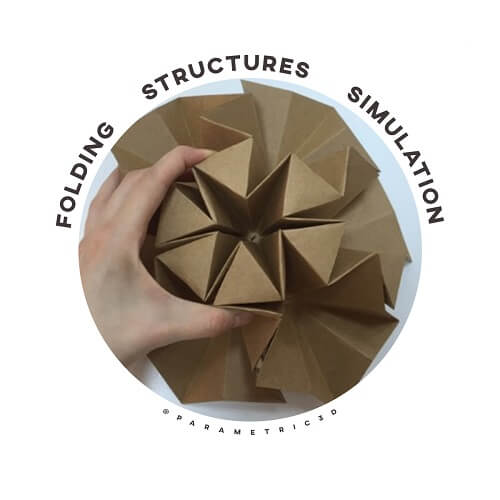
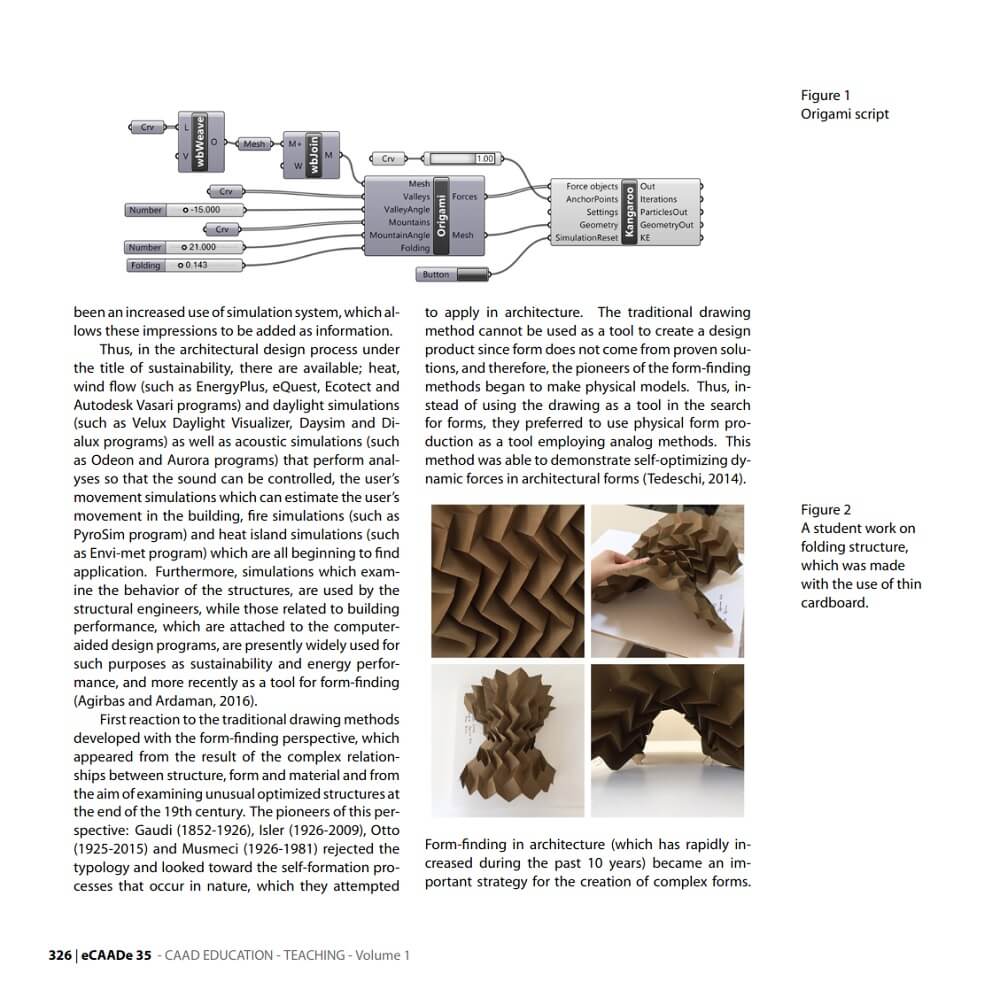
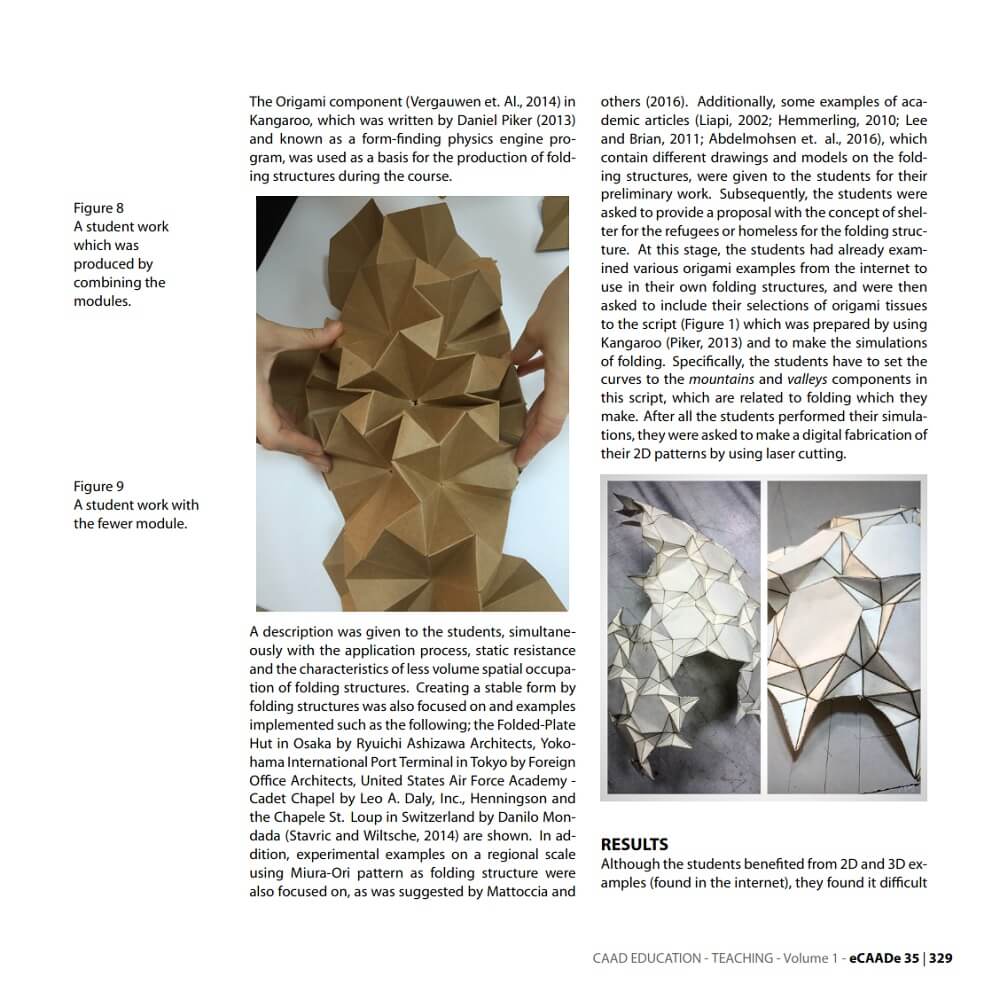
In architectural education, the demand for creating forms with a non-Euclidean geometry, which can only be achieved by using the computer-aided design tools, is increasing. The teaching of this subject is a great challenge for both students and instructors, because of the intensive nature of architecture undergraduate programs. Therefore, for the creation of those forms with a non-Euclidean geometry, experimental work was carried out in an elective course based on the learning visual programming language. The creation of folding structures with form-finding by simulation was chosen as the subject of the design production which would be done as part of the content of the course.
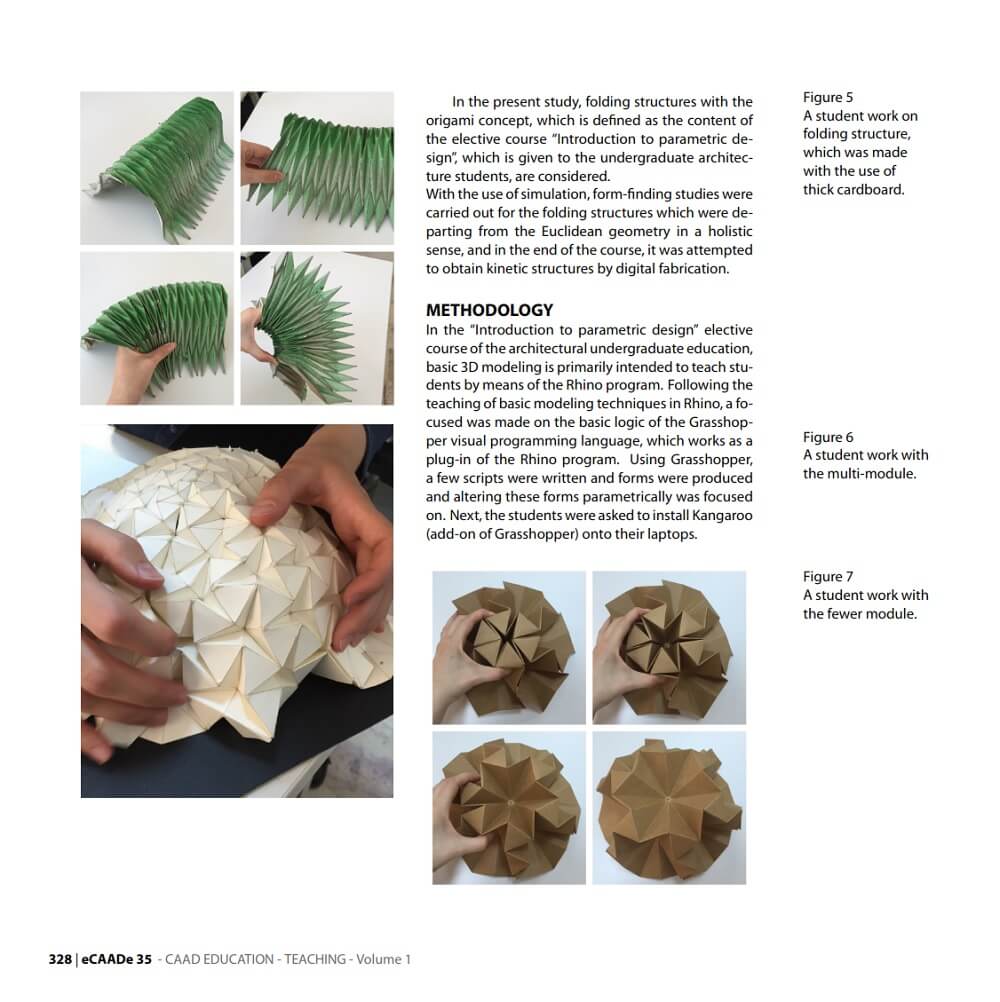
In this particular course presented by Asli Agirbas, it was intended that all stages should be experienced, from the modeling in the virtual environment to the digital fabrication. Hence, in their early years of architectural education, the students were able to learn versatile thinking by experiencing, simultaneously, the use of simulation in the environment of visual programming language, the forming space by using folding structures, the material-based thinking and the creation of their designs suitable to the digital fabrication.
String Art Generator by Yiran is a grasshopper plugin which generates a string art sequence based on an input image. You can

This paper by Alessandro Liuti, Sofia Colabella, and Alberto Pugnale, presents the construction of Airshell, a small timber gridshell prototype erected by employing a pneumatic formwork.

In this paper by Gregory Charles Quinn, Chris J K Williams, and Christoph Gengnagel, a detailed comparison is carried out between established as well as novel erection methods for strained grid shells by means of FE simulations and a 3D-scanned scaled physical model in order to evaluate key performance criteria such as bending stresses during erection and the distance between shell nodes and their spatial target geometry.

In this paper by Frederic Tayeb, Olivier Baverel, Jean-François Caron, Lionel du Peloux, ductility aspects of a light-weight composite gridshell are developed.