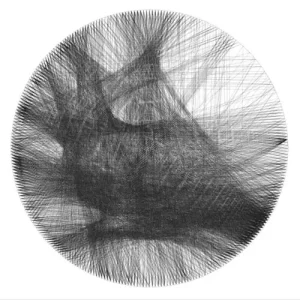
String Art Generator
String Art Generator by Yiran is a grasshopper plugin which generates a string art sequence based on an input image. You can

The rapid development of computational capacity in recent years has expanded the possibilities of digital modelling in architectural design. Parametric design has emerged from these possibilities with a capacity to generate complex geometries which call for advanced structural systems. Especially for form found structures, where the geometry is deter- mined by structural mechanics, collaboration between architects and structural engineers is crucial in early design.
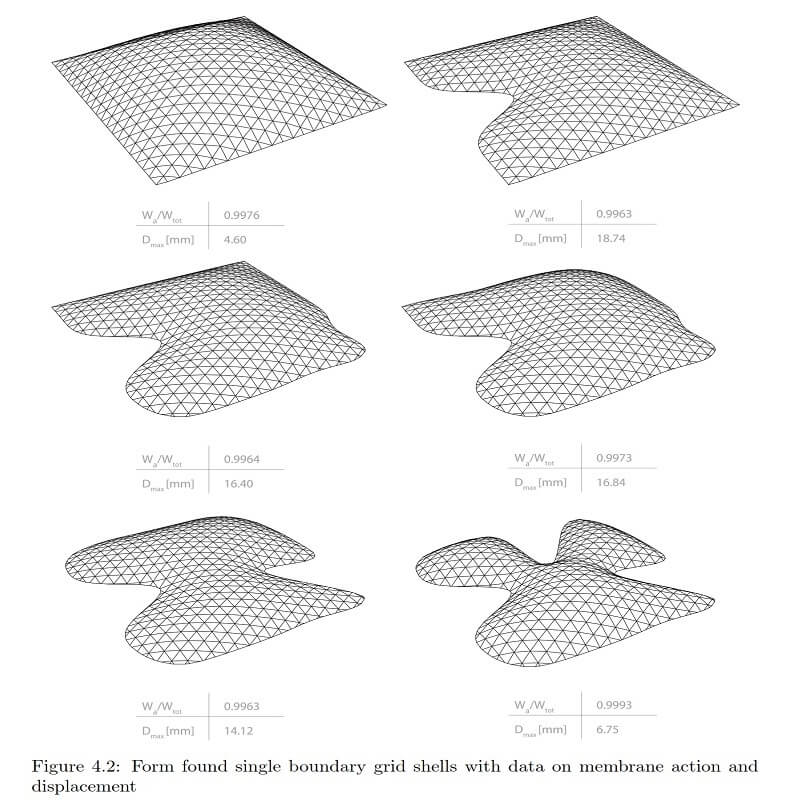
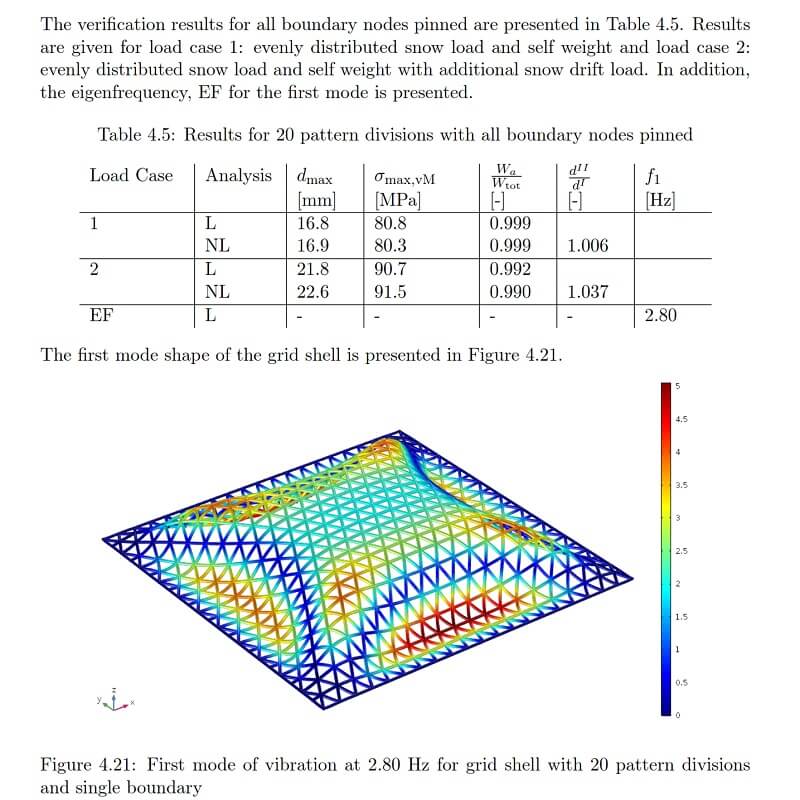
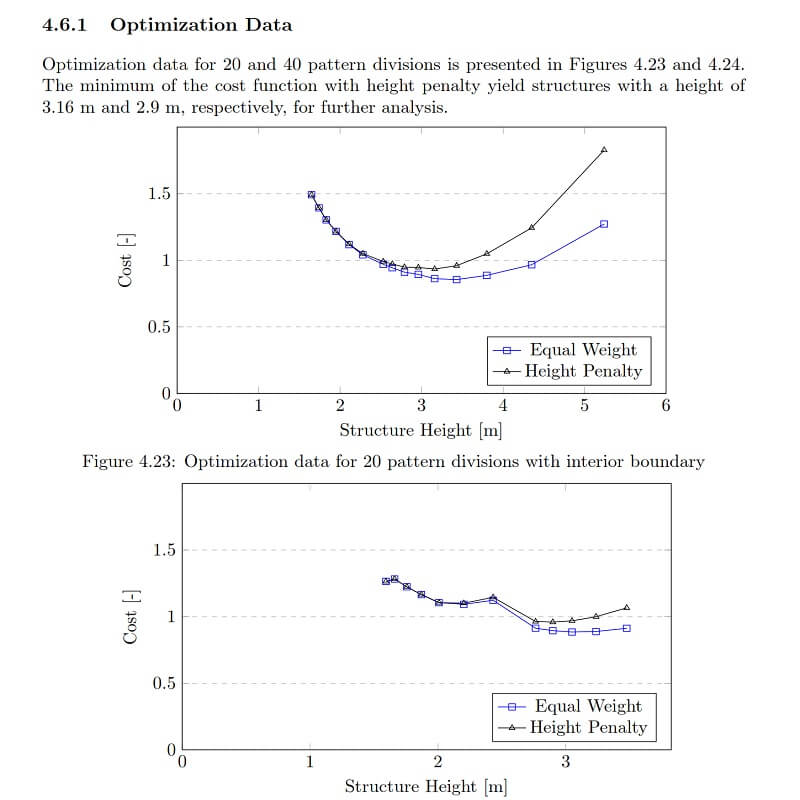
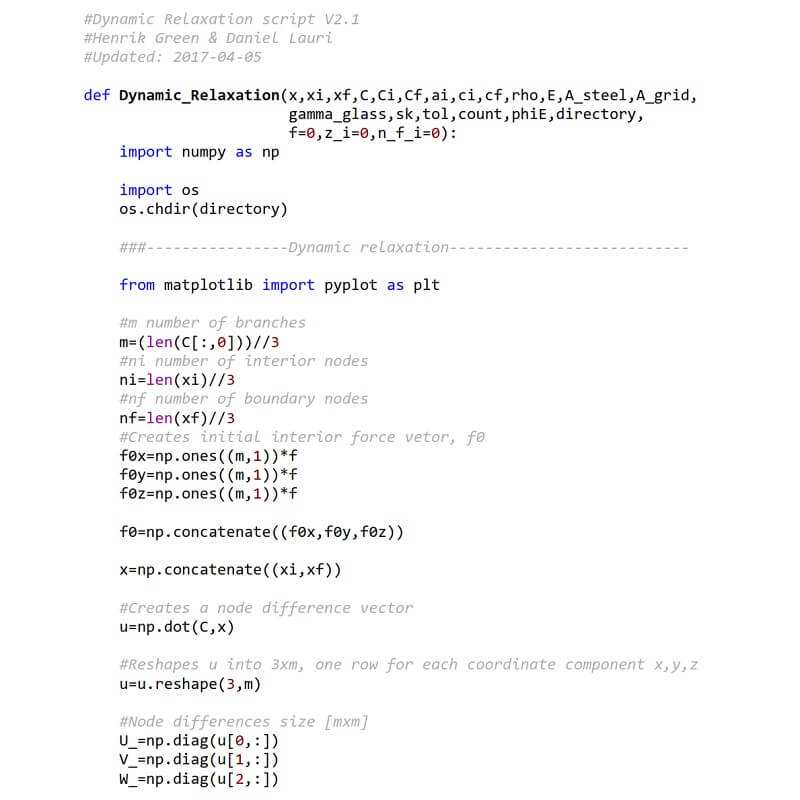
In this master thesis by Henrik Green & Daniel Lauri a form finding algorithm for grid shells has been developed. The algorithm is based on dynamic relaxation with kinetic damping coupled with a structural evaluation by the finite element method. The algorithm is applied to steel and glass grid shells, first with arbitrary boundary geometry and then in case studies where two shells are analysed in greater detail.
The algorithm is capable to form find grid shells with arbitrary boundary geometry. Convergence of dynamic relaxation is studied to ensure that a structure with a high degree of membrane action is found. Verification of the case study forms show that the algorithm produces grid shells with sufficient structural performance as long as the grid is sparse.
However, the algorithm fails to provide structural stability for denser grid patterns, as shown by geometrically nonlinear analysis. Deviations from the conditions used to form find the grid shells are shown to adversely affect structural performance. Finally, an attempt to reduce the number of unique elements in grid shells is made using prescriptive dynamic relaxation. This is shown to be a difficult task for the case of complex geometry.
Structurally meaningful geometry can be achieved by a parametric modelling approach where constraints limit the solution space even if multiple parameters are included. The direct link between computational procedures and software commonly used in architectural design enables successful collaboration between architect and structural engineer.
String Art Generator by Yiran is a grasshopper plugin which generates a string art sequence based on an input image. You can

This paper by Alessandro Liuti, Sofia Colabella, and Alberto Pugnale, presents the construction of Airshell, a small timber gridshell prototype erected by employing a pneumatic formwork.

In this paper by Gregory Charles Quinn, Chris J K Williams, and Christoph Gengnagel, a detailed comparison is carried out between established as well as novel erection methods for strained grid shells by means of FE simulations and a 3D-scanned scaled physical model in order to evaluate key performance criteria such as bending stresses during erection and the distance between shell nodes and their spatial target geometry.

In this paper by Frederic Tayeb, Olivier Baverel, Jean-François Caron, Lionel du Peloux, ductility aspects of a light-weight composite gridshell are developed.