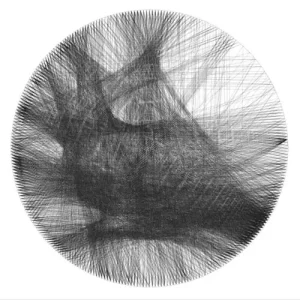
String Art Generator
String Art Generator by Yiran is a grasshopper plugin which generates a string art sequence based on an input image. You can
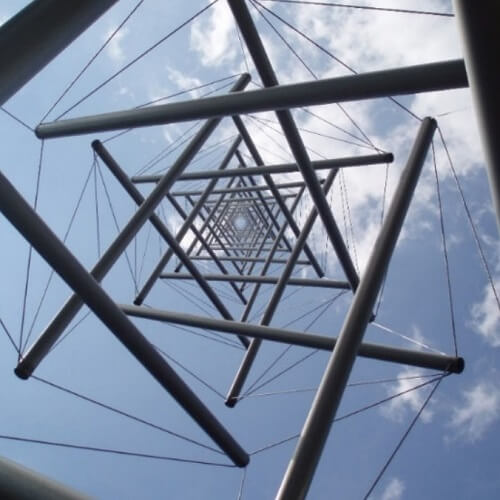
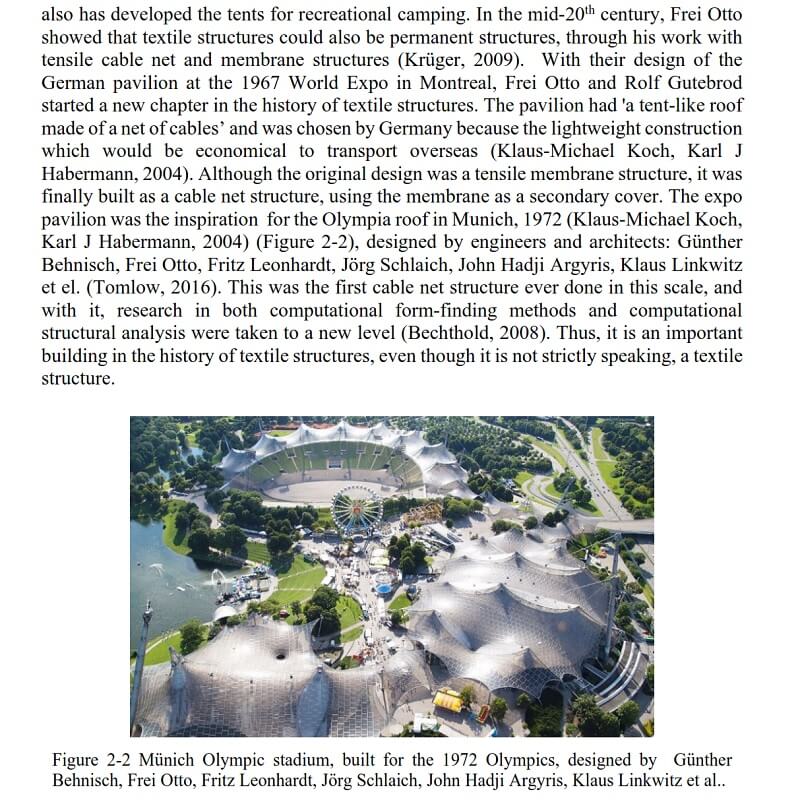
Textiles in architecture is a field of great potential, which are worth to explore further. This thesis by Erica Horteborn aims to show that the flexibility of the textile material could be better included in the architectural design, allowing it to adapt to forces, such as the wind, and viewing motion as a positive design feature.
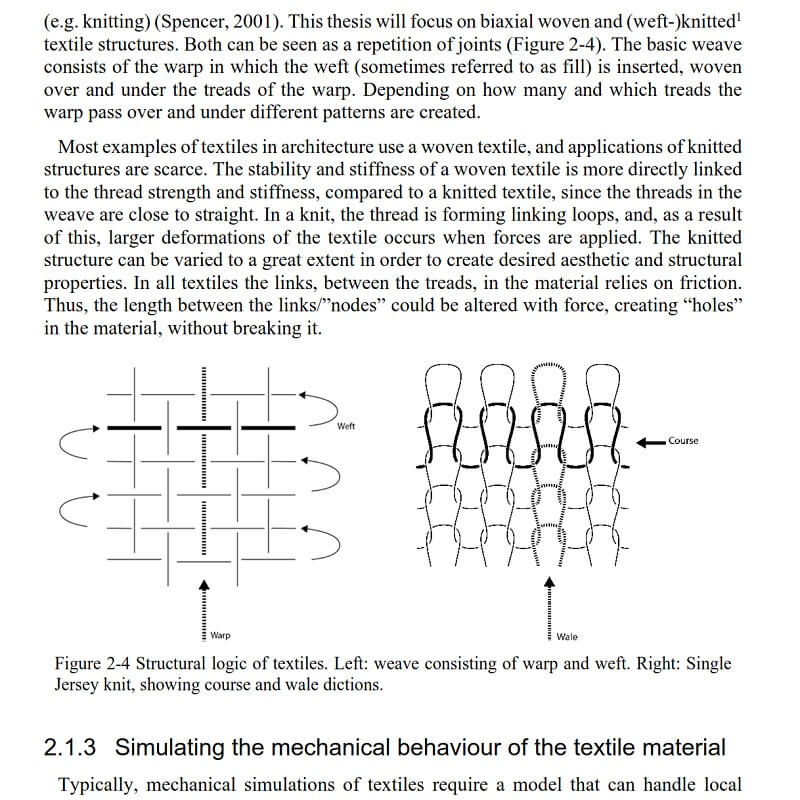
The main methods for this were a literature study and design investigations, using physical as well as digital prototypes, with extra focus on the material flexibility and knitted textiles. The field textile architecture informed by wind is defined through three main components: the textile material, the lightweight structure, and the wind.
Textiles are, here, seen as a material with structural and aesthetical flexibility and diversity that can adapt to as well as carry applied loads. Lightweight structures are concepts for material efficiency and structural elegance.
 And, wind informed architecture is the concept of including the phenomena of wind in the architectural design, as a free source of energy or force that could be used, absorbed, or directed to create beauty and to form a more comfortable environment.
The core of the thesis lies in the overlap of these three components. Results from this thesis indicate, firstly, that the field of textile architecture informed by wind is relatively uncharted territory. Knowledge and inspiration can, however, be found outside the field of architecture, such as performing arts, art installations, sailing, and fashion.
Secondly, opportunities for supporting the, often complicated, design process of textile architecture are demonstrated through the use of a combination of digital models and physical prototypes, in the presented examples.
String Art Generator by Yiran is a grasshopper plugin which generates a string art sequence based on an input image. You can

This paper by Alessandro Liuti, Sofia Colabella, and Alberto Pugnale, presents the construction of Airshell, a small timber gridshell prototype erected by employing a pneumatic formwork.

In this paper by Gregory Charles Quinn, Chris J K Williams, and Christoph Gengnagel, a detailed comparison is carried out between established as well as novel erection methods for strained grid shells by means of FE simulations and a 3D-scanned scaled physical model in order to evaluate key performance criteria such as bending stresses during erection and the distance between shell nodes and their spatial target geometry.

In this paper by Frederic Tayeb, Olivier Baverel, Jean-François Caron, Lionel du Peloux, ductility aspects of a light-weight composite gridshell are developed.