String Art Generator
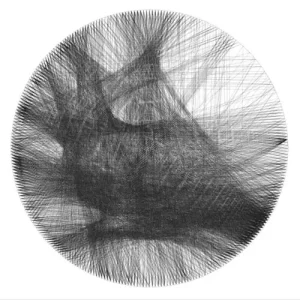
String Art Generator by Yiran is a grasshopper plugin which generates a string art sequence based on an input image. You can
Lumen
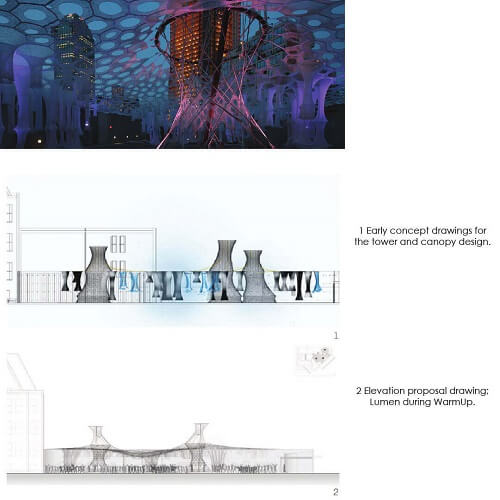
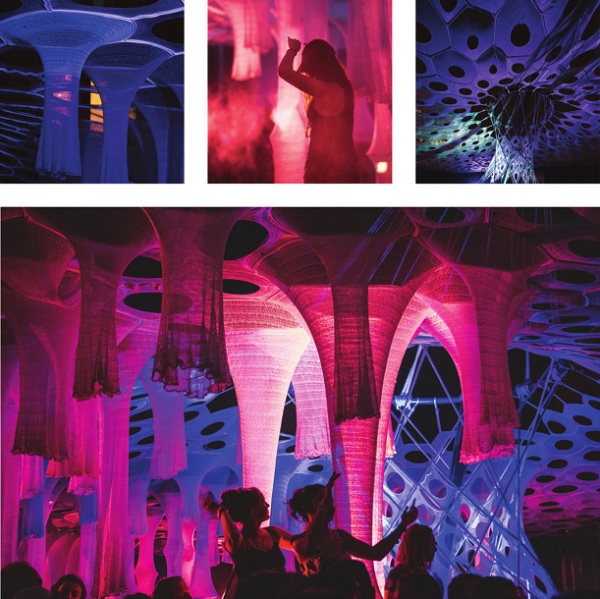
This paper documents the computational design methods, digital fabrication strategies, and generative design process for Lumen, winner of MoMA & MoMA PS1’s 2017 Young Architects Program. The project was installed in the courtyard at MoMA PS1 in Long Island City, New York, during the summer of 2017.
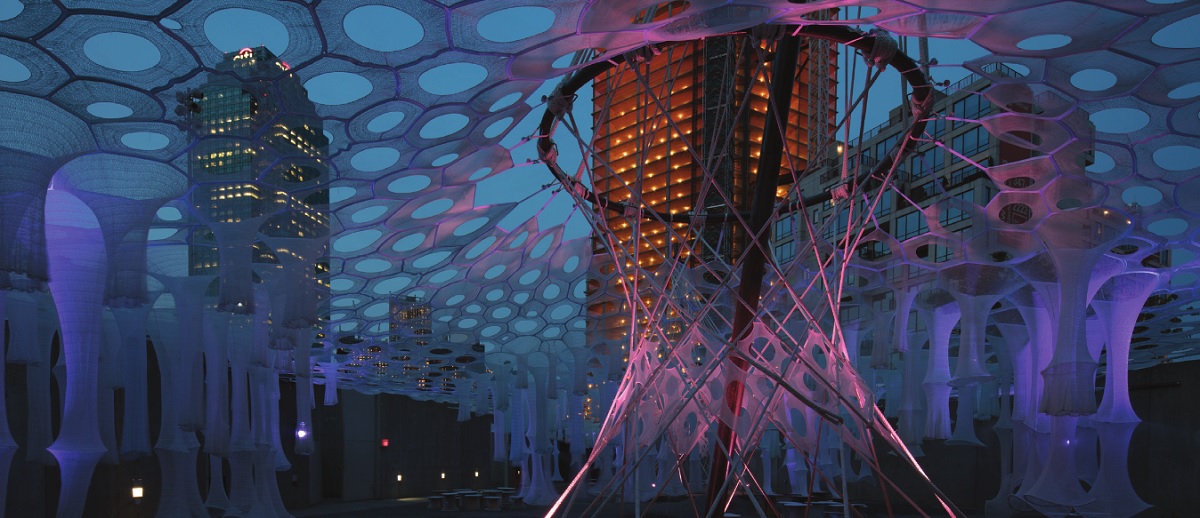
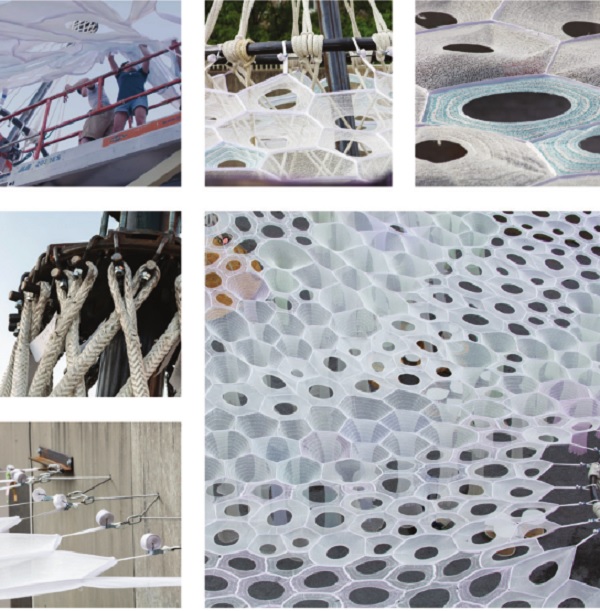
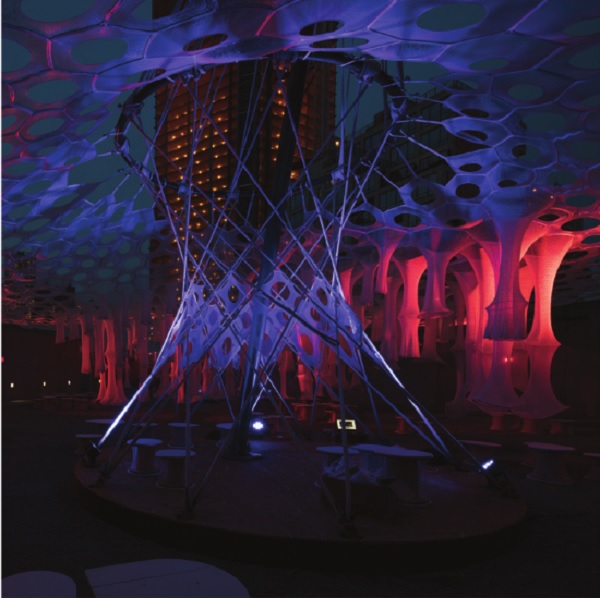
Two lightweight 3D digitally knitted fabric canopy structures composed of responsive tubular and cellular components employ recycled textiles, photo-luminescent and solar active yarns that absorb and store UV energy, change color, and emit light.
This environment offers spaces of respite, exchange, and engagement as a 150 x 75 foot misting system responds to visitors’ proximity, activating fabric stalactites that produce a refreshing micro-climate. Families of robotically prototyped and woven recycled spool chairs provide seating throughout the courtyard.
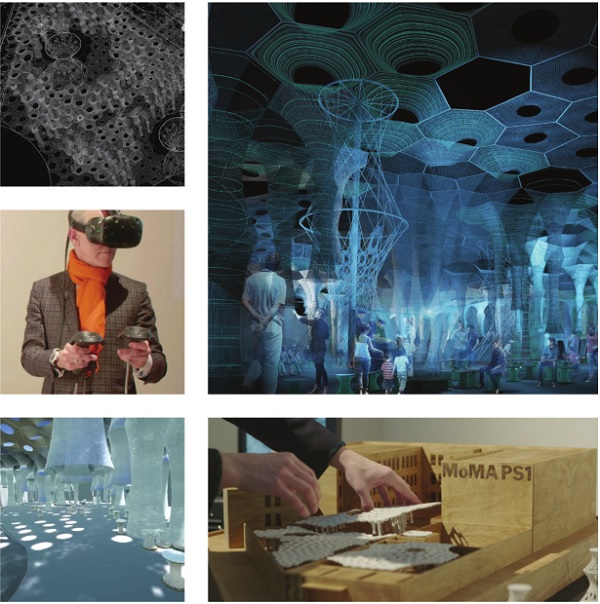
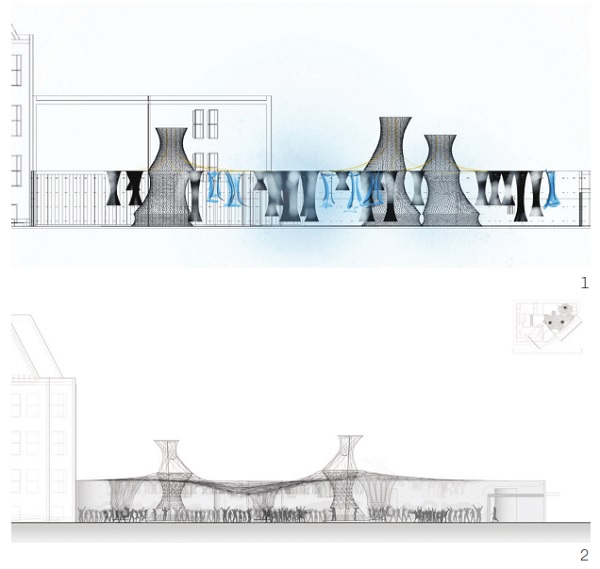
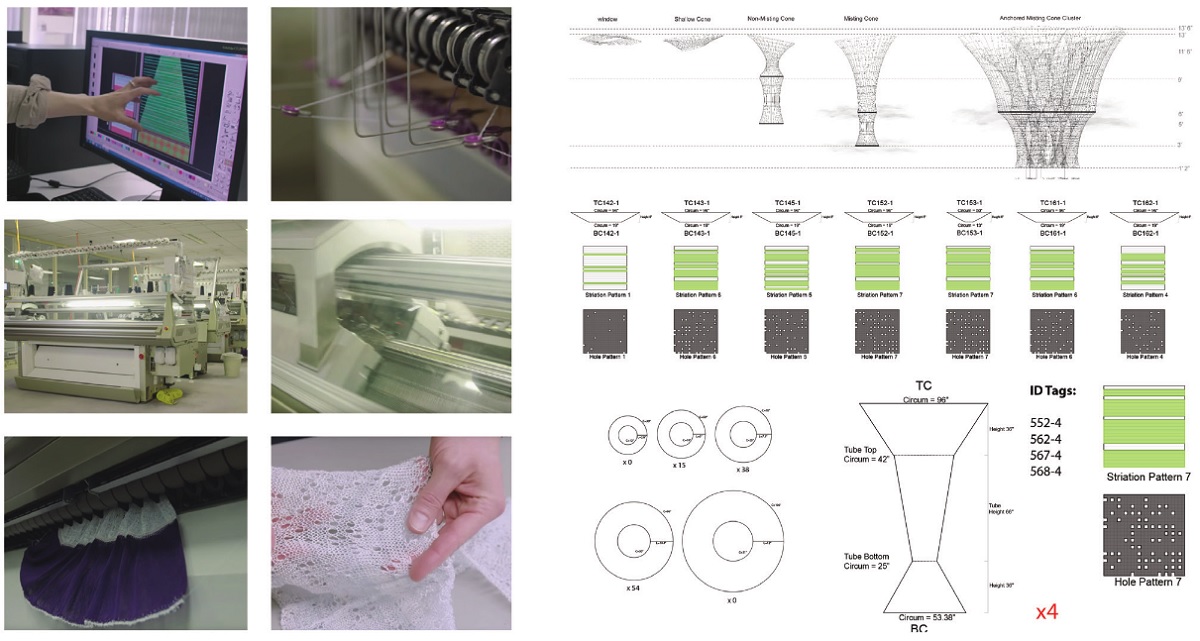
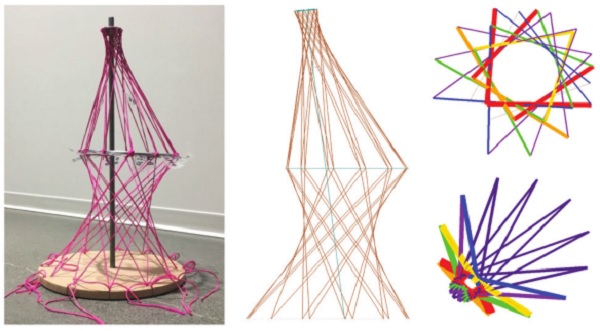
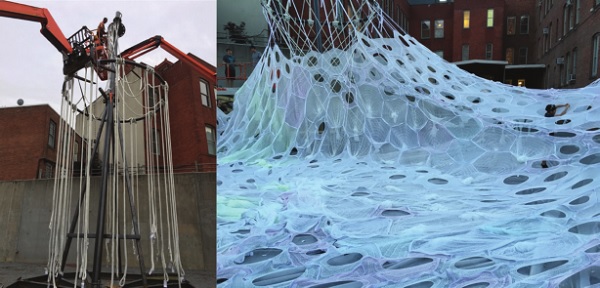
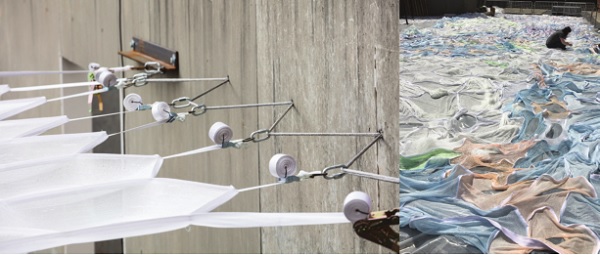
The canopies are digitally fabricated with over 1,000,000 yards of high tech, responsive yarn and are supported by three over 40 foot tensegrity towers and the surrounding matrix of courtyard walls. Material responses to sunlight as well as physical participation are integral parts of our exploratory approach to the 2017 YAP brief.
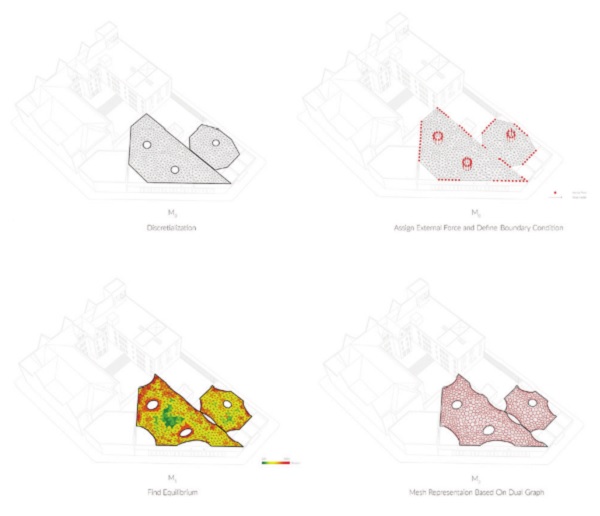
The project is mathematically generated through form-finding simulations informed by the sun, site, materials, program, and the material morphology of knitted cellular components. Resisting a biomimetic approach, Lumen employs an analogic design process where complex material behavior and processes are integrated with personal engagement and diverse programs.
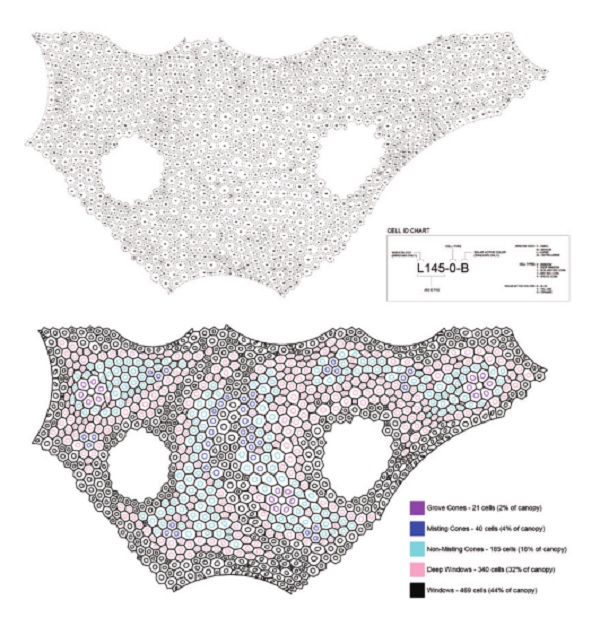
The comprehensive installation was designed by Jenny Sabin Studio and fabricated by Shima Seiki WHOLEGARMENT, Jacobsson Carruthers, and Dazian with structural engineering by Arup and lighting by Focus Lighting.

Held in tension within the PS1 courtyard matrix of walls, Lumen applies insights and theories synthesized from 13 years of collaborative work across disciplines including biology, materials science, mathematics, and engineering.
Lumen, the largest knitted architectural installation ever erected and composed of over 1,000,000 yards of yarn, undertakes rigorous interdisciplinary experimentation to produce a multi-sensory environment that is full of delight, inspiring collective levity, play, and interaction as the structure and materials transform throughout the day and night. Lumen is a socially and environmentally responsive structure that adapts to the densities of bodies, heat, and sunlight.
The Young Architects Program (YAP) is an internationally acclaimed annual competition hosted by MoMA and MoMA PS1. The project brief calls for a comprehensive installation to serve as a backdrop to summer events held in the PS1 courtyard, including WarmUp.
The winning project must provide shade, water, seating, and incorporate materials and design strategies that address sustainability and recycling. In addition to these requirements, the 2017 YAP brief encouraged projects to address the topics of transformation and materiality in architecture.
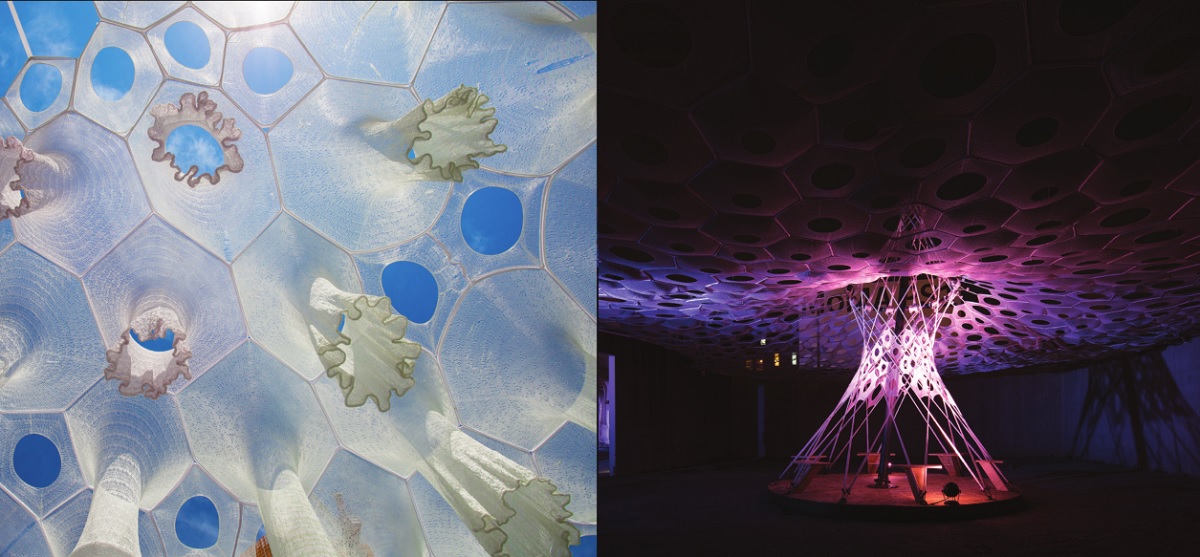
Responding to the PS1 YAP brief as well as the highly constrained nature of the courtyard site, Lumen materializes ideas of performance and adaptation at all scales of the project and specifically through seamless 3D digitally knit and textile-based fabrication processes.
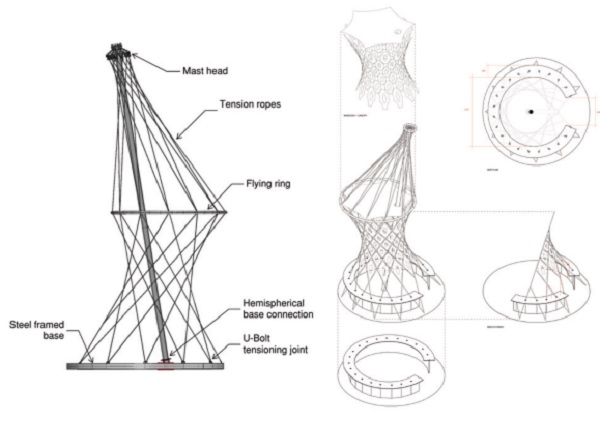
11 Tower elevation and components.
Drawing synergies with current work at the intersection of computation, knit structures, and textile architecture, Lumen celebrates and shares topical themes of responsivity, variation, and material performance as can also be seen in the work by Ahlquist, CITA, and Scott.
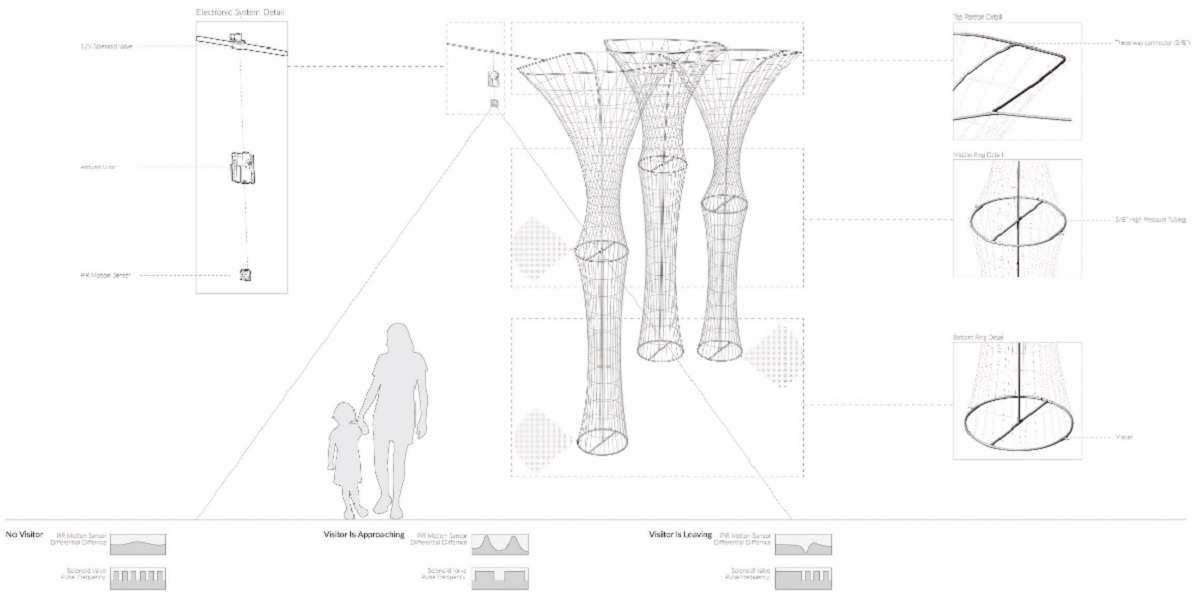
Having designed, fabricated, and built five previous projects featuring responsive structural fabrics composed of individually digitally knit cellular components, we felt confident that the material system was ready to be pushed to the scale of the MoMA PS1 courtyards and an outdoor environment enjoyed by thousands of people. Although Lumen was not designed or engineered for permanent installation, the project weathered extreme summer rain and flooding and the most well-attended WarmUp events on record at MoMA PS1.
Together with Arup, we were able to move from a pavilion scale to a large outdoor tensile installation capable of housing over 7,000 people. Although locally delicate, Lumen’s spatial and material systems are inherently variable, adaptive, globally strong, and interactive and are poised to be designed and assembled as permanent inhabitable structures.
Currently, we are researching and developing three areas that will allow permanent installation of future projects like Lumen, including: 1) Finer scale manipulation of the responsive yarn to create tunable actuators within the programmed material; 2) coatings of the yarn to protect larger knitted components from extreme weather conditions such as heat, wind, and sand storms in a desert climate; and 3) stress tests with larger gauge yarn (increased to 1500 Denier) to generate more robust parts. Permanent commissions in Abu Dhabi, Portland, and New York are allowing for these new refinements and future installments.
String Art Generator by Yiran is a grasshopper plugin which generates a string art sequence based on an input image. You can

This paper by Alessandro Liuti, Sofia Colabella, and Alberto Pugnale, presents the construction of Airshell, a small timber gridshell prototype erected by employing a pneumatic formwork.

In this paper by Gregory Charles Quinn, Chris J K Williams, and Christoph Gengnagel, a detailed comparison is carried out between established as well as novel erection methods for strained grid shells by means of FE simulations and a 3D-scanned scaled physical model in order to evaluate key performance criteria such as bending stresses during erection and the distance between shell nodes and their spatial target geometry.

In this paper by Frederic Tayeb, Olivier Baverel, Jean-François Caron, Lionel du Peloux, ductility aspects of a light-weight composite gridshell are developed.