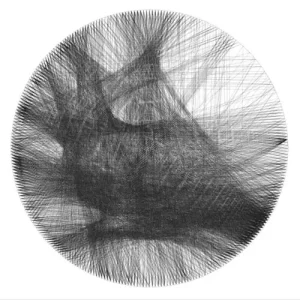
String Art Generator
String Art Generator by Yiran is a grasshopper plugin which generates a string art sequence based on an input image. You can
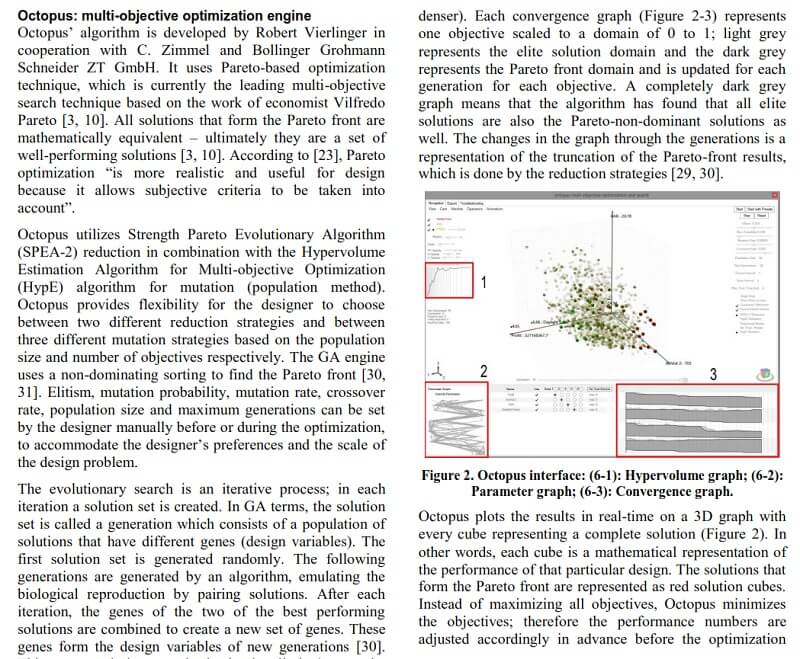
Designers will always face the challenge of designing well- performing buildings using what are often conflicting and competing objectives. Early stage design decisions influence significantly the final performance of a building and designers are often unable to explore large numbers of design alternatives with respect to the performative criteria set for the project. This research by Yassin Ashour and Branko Kolarevic outlines a “creative optimization workflow” using a Multi-Objective Optimization (MOO) engine called Octopus that runs within Grasshopper3D, a parametric modeling tool, and simulation software DIVA for daylight factor analysis.
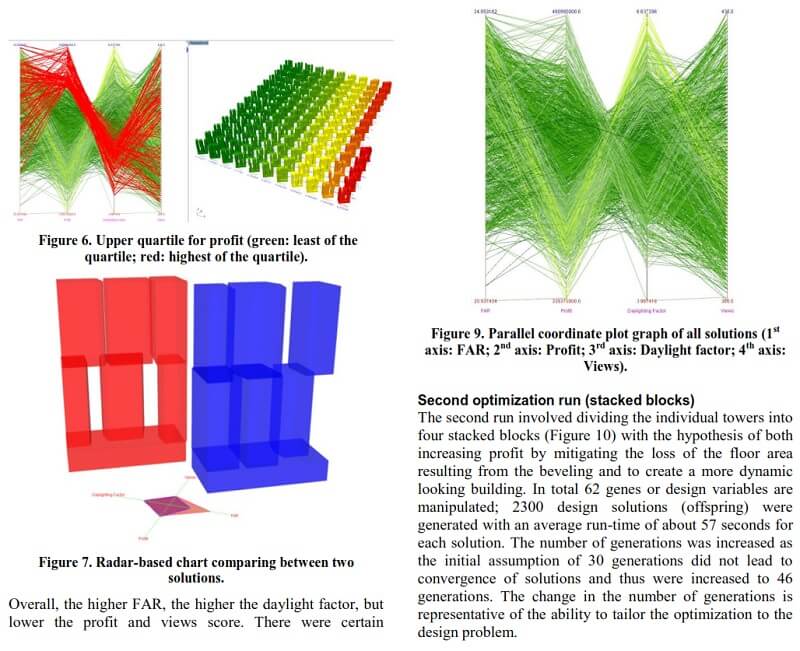
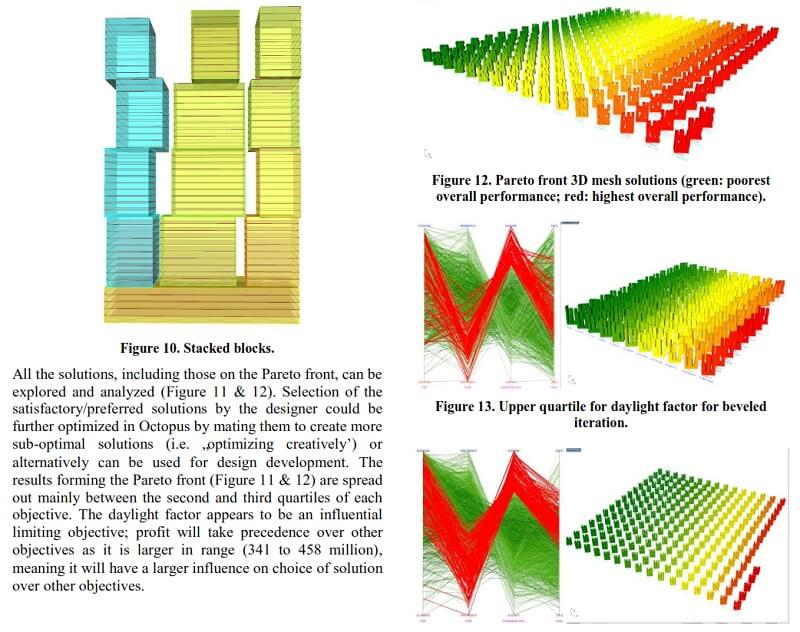
The workflow utilizes a “creative optimization tool” which allows the designer to explore, sort and filter solutions, and analyze both quantitatively and qualitatively the trade-offs of the resultant design solution space. It enables the designer to visually compare alternative solutions in a gallery and subsequently analyze trade-offs through a radar- based chart, parallel coordinate plot graphs and conditional domain searches. This feedback tools allows the designer to quickly and efficiently identify potential solutions for either design development or to select preferred solutions for further optimization, i.e. “optimizing creatively”.
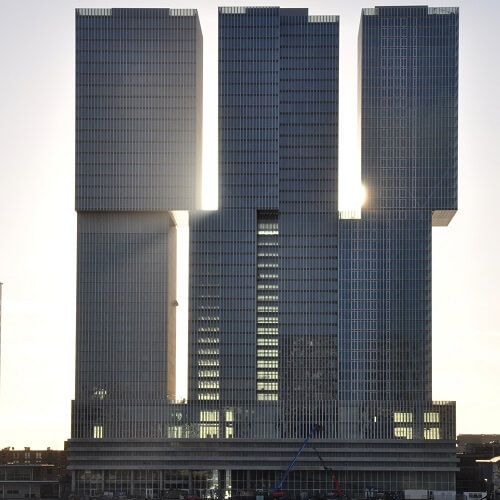
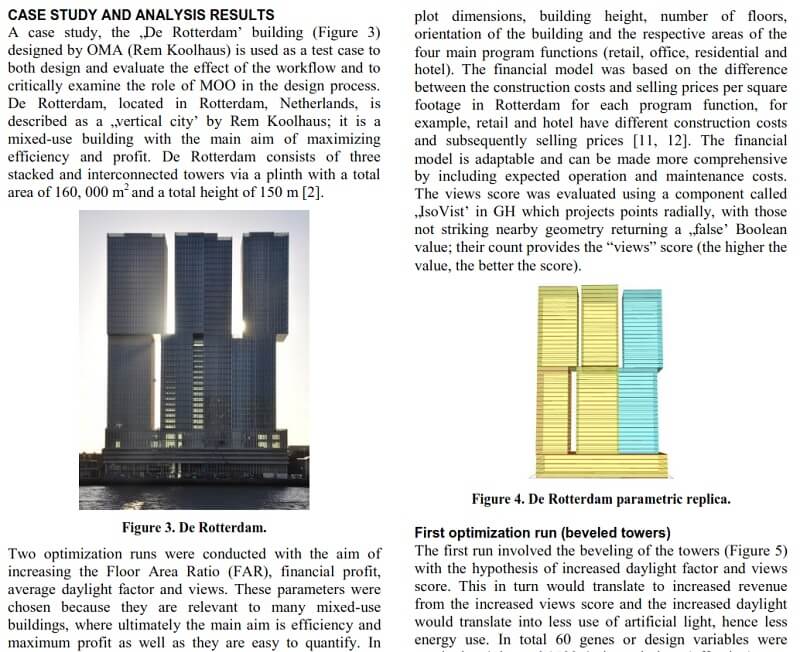
A retrospective design case study, the “De Rotterdam” building, is used to demonstrate the application of the tools. The workflow demonstrates the ability to reduce design latency and to allow for better understanding of design solutions. Additional research is needed to better understand the application of MOO in the early stages of design; and the further improvement of the creative optimization tools to accommodate the designer’s need for a more dynamic and synergistic process.
String Art Generator by Yiran is a grasshopper plugin which generates a string art sequence based on an input image. You can

This paper by Alessandro Liuti, Sofia Colabella, and Alberto Pugnale, presents the construction of Airshell, a small timber gridshell prototype erected by employing a pneumatic formwork.

In this paper by Gregory Charles Quinn, Chris J K Williams, and Christoph Gengnagel, a detailed comparison is carried out between established as well as novel erection methods for strained grid shells by means of FE simulations and a 3D-scanned scaled physical model in order to evaluate key performance criteria such as bending stresses during erection and the distance between shell nodes and their spatial target geometry.

In this paper by Frederic Tayeb, Olivier Baverel, Jean-François Caron, Lionel du Peloux, ductility aspects of a light-weight composite gridshell are developed.