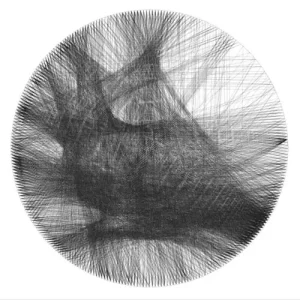
String Art Generator
String Art Generator by Yiran is a grasshopper plugin which generates a string art sequence based on an input image. You can
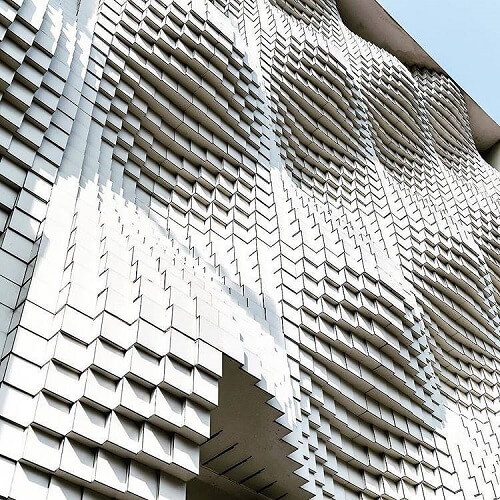
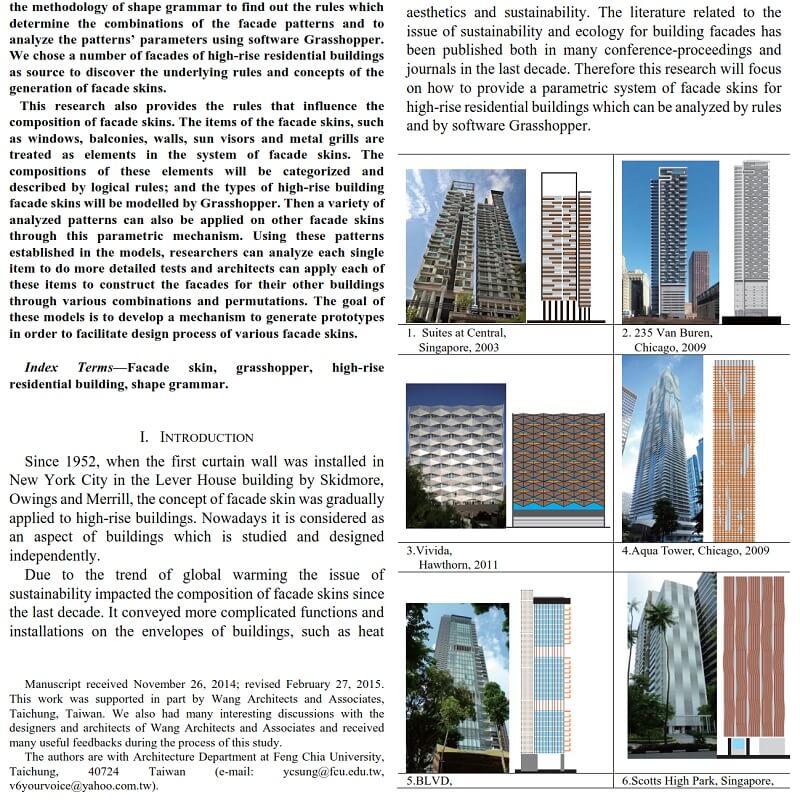
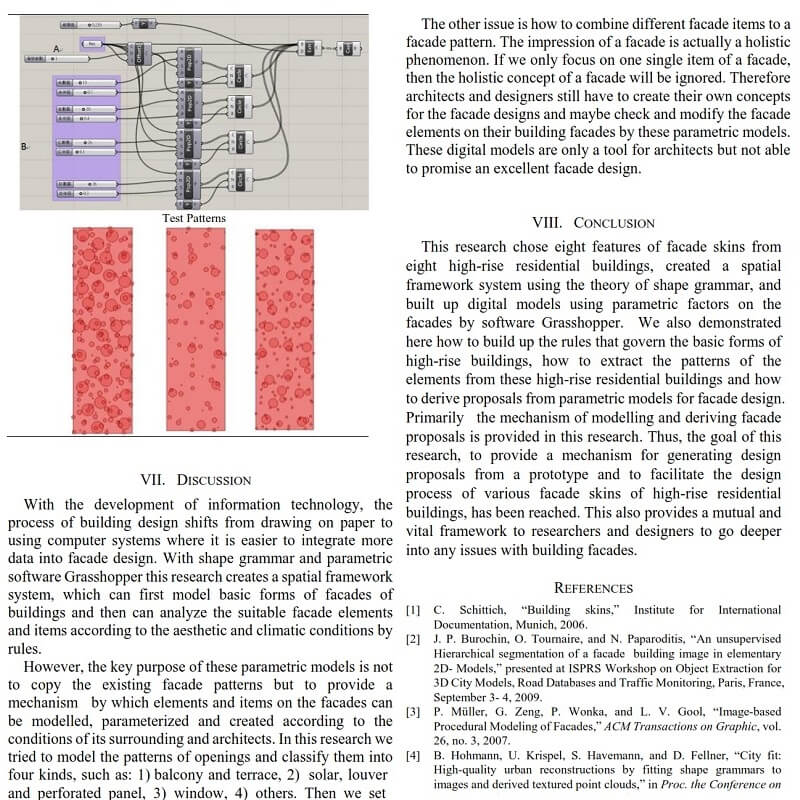
High-rise residential buildings have become the most mainstream housing pattern in the world’s metropolises under the current trend of urbanization. The facades of high-rise buildings are essential elements of the urban landscape. The skins of these facades are important media between the interior and exterior of high- rise buildings. They not only connect between users and environments, but also play an important functional and aesthetic role. This research by Yuchen Sharon Sung and Yingjui Tseng involves a study of skins of high-rise residential buildings using the methodology of shape grammar to find out the rules which determine the combinations of the facade patterns and to analyze the patterns’ parameters using software Grasshopper.
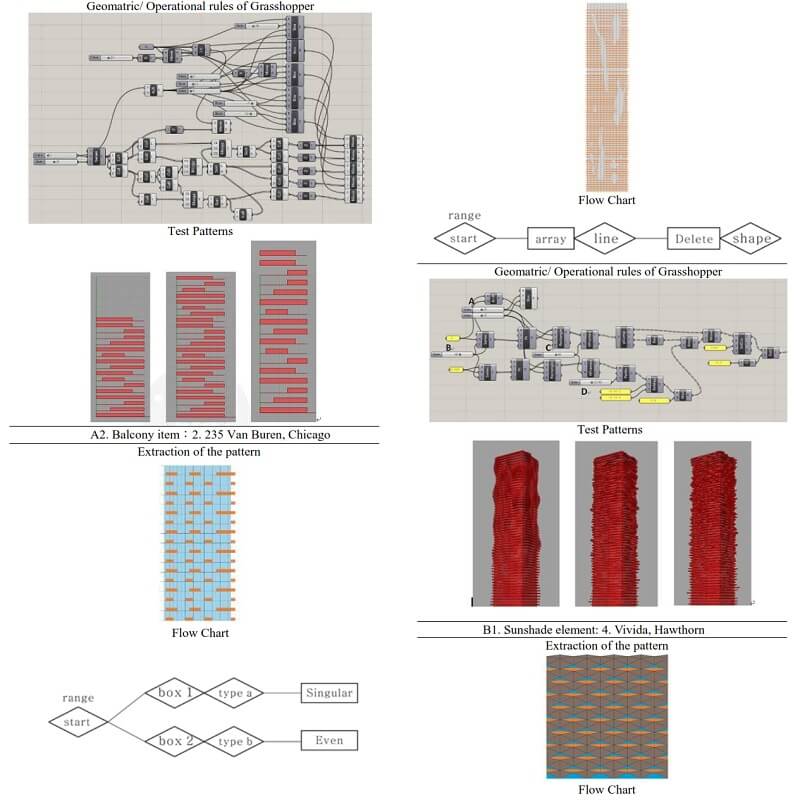
Authors chose a number of facades of high-rise residential buildings as source to discover the underlying rules and concepts of the generation of facade skins. This research also provides the rules that influence the composition of facade skins. The items of the facade skins, such as windows, balconies, walls, sun visors and metal grills are treated as elements in the system of facade skins. The compositions of these elements will be categorized and described by logical rules; and the types of high-rise building facade skins will be modelled by Grasshopper.
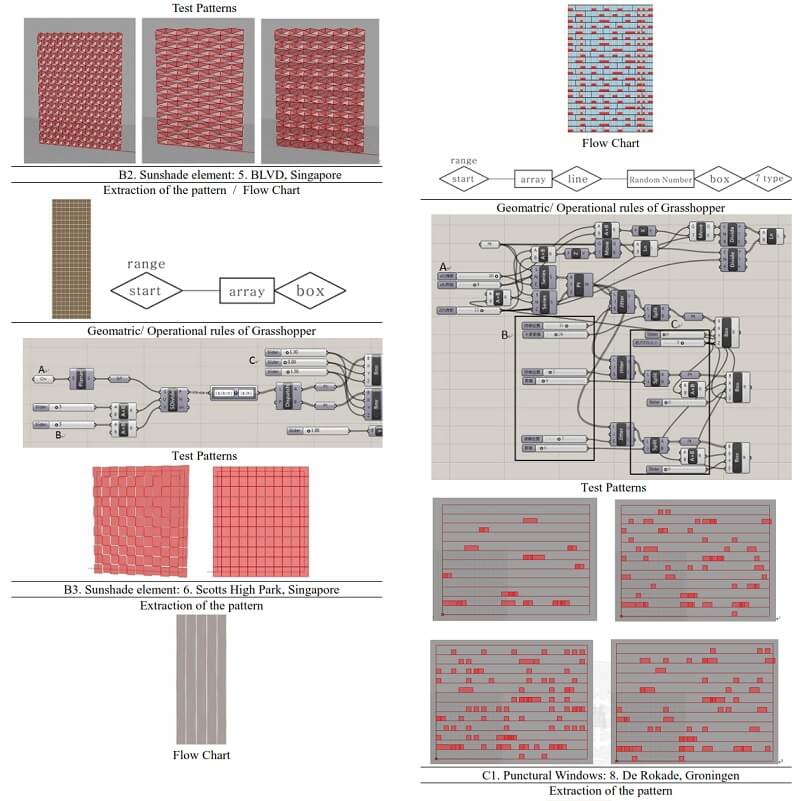
Then a variety of analyzed patterns can also be applied on other facade skins through this parametric mechanism. Using these patterns established in the models, researchers can analyze each single item to do more detailed tests and architects can apply each of these items to construct the facades for their other buildings through various combinations and permutations. The goal of these models is to develop a mechanism to generate prototypes in order to facilitate design process of various facade skins.
String Art Generator by Yiran is a grasshopper plugin which generates a string art sequence based on an input image. You can

This paper by Alessandro Liuti, Sofia Colabella, and Alberto Pugnale, presents the construction of Airshell, a small timber gridshell prototype erected by employing a pneumatic formwork.

In this paper by Gregory Charles Quinn, Chris J K Williams, and Christoph Gengnagel, a detailed comparison is carried out between established as well as novel erection methods for strained grid shells by means of FE simulations and a 3D-scanned scaled physical model in order to evaluate key performance criteria such as bending stresses during erection and the distance between shell nodes and their spatial target geometry.

In this paper by Frederic Tayeb, Olivier Baverel, Jean-François Caron, Lionel du Peloux, ductility aspects of a light-weight composite gridshell are developed.