String Art Generator
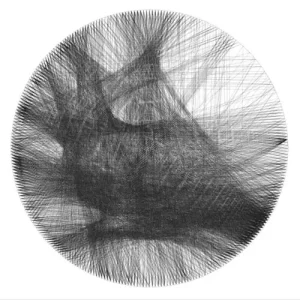
String Art Generator by Yiran is a grasshopper plugin which generates a string art sequence based on an input image. You can
USING SMART MATERIALS TO MIMIC NATURE IN ARCHITECTURE
The reason for choosing this theme is the growing architectural and social concern for using evolutions in the field of bio-inspiration and smart materials to find new solutions for the increasing global environmental and social problems in terms of energy conservation and ecological design.
The availability of various types of smart materials have great prospect for utilization in the field of architecture.
In this context, thinking about using smart materials as a tool to mimic nature is a controversial area for research, opening the door to exceptional approaches for concept generation and optimization in the field of architecture, building, and construction.
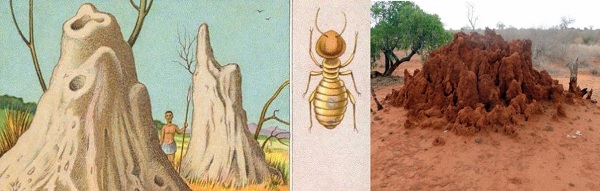
This thesis is an endeavor to link between innovative smart materials and bio inspiration through exploratory and analytical research, by focusing on the literature review of smart materials and bio-inspiration development, starting with exploring the taxonomy of smart materials, their types and characteristics, a set of selected properties and types is extracted, that could be used to imitate nature.
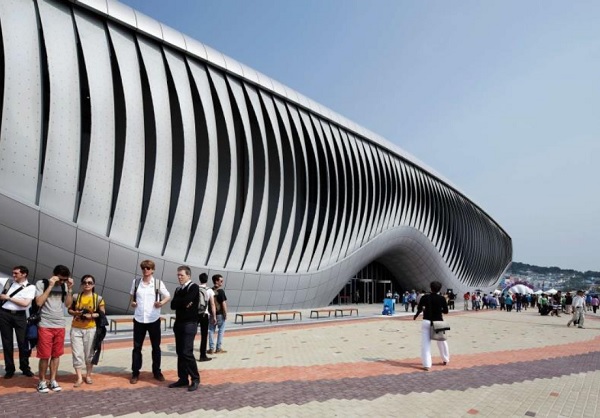
Bio inspiration and methods of abstraction from biological systems are then studied, and linked with the extracted properties from smart materials, then after with comparative analysis, various crossovers from nature were explored.
Case studies are then analyzed in order to evaluate the application of such an approach on current and future architecture.
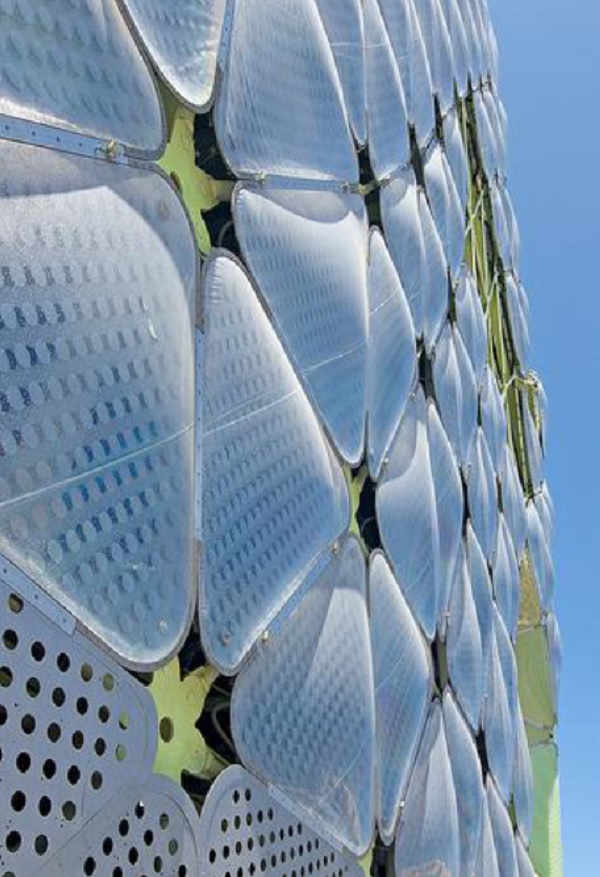
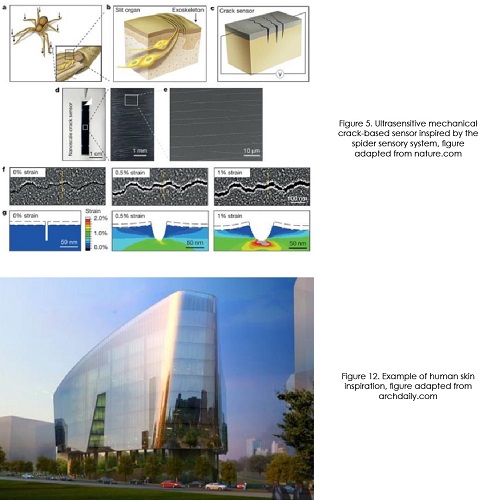
Smart materials are defined to be designed reactive materials; their properties can be changed by exposure to stimuli, such as electric and magnetic fields, stress, moisture and temperature.
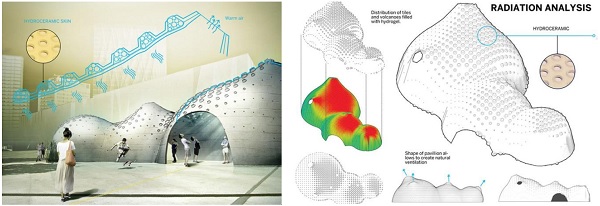
As the terminology suggests, the difference between bio-mimicry and bio-inspiration is that the first one is defined to be direct copying from nature, while the second is where and idea is taken from nature and improved to serve a certain purpose, bio-inspiration is the area involved in this study.
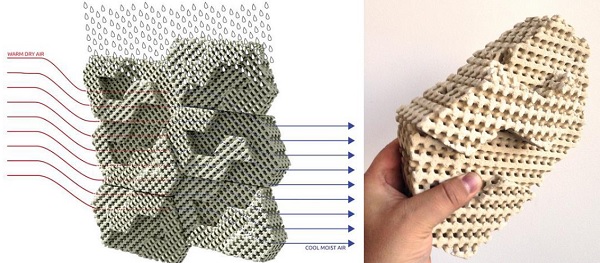
The conclusions drawn from the comparative analysis of the case studies showed that. The case studies based on inspiration from biological systems such as, adaptivity of human cells and Homeostasis function in biological systems, are all in prototype stage, thus further mean that, inspiration from plant movement such as, Bird of the paradise flower pollination mechanism and wood cones, have more tendency for technical and architectural application rather than biological systems.
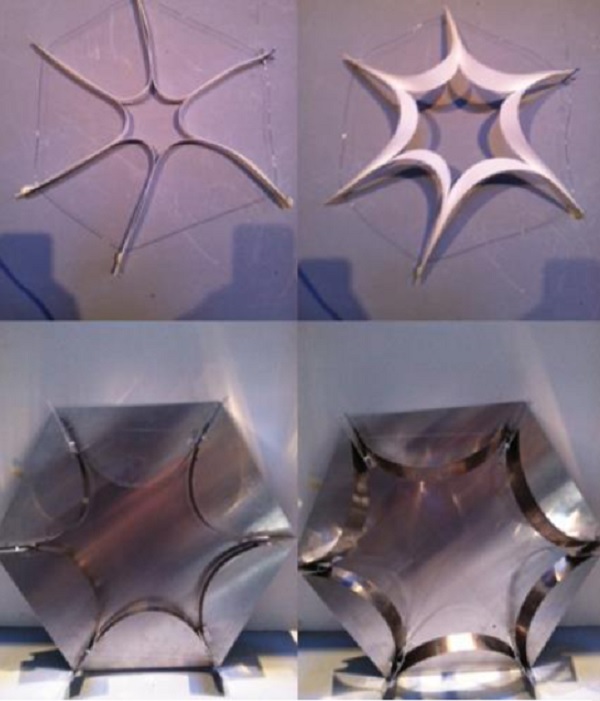
It can also be inferred that the most common stimuli in architectural applications are solar radiation, temperature change and relative humidity.
While in terms of energy conservation qualities, solar radiation control and optimized energy harvesting comes at the first place and then maintaining moister level in equilibrium with the surrounding relative humidity.
The built environment is increasing held accountable for global environmental and social problems with the generated proportions of waste, material and energy use and greenhouse gas emitted in to the atmosphere. It is becoming increasingly clear that a change must be made in our environment.
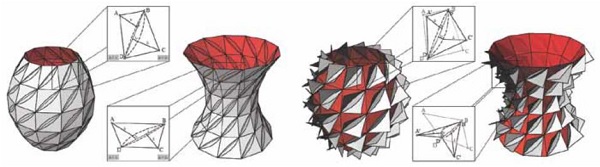
This thesis is the outcome of integration between smart materials investigation and studying of bio-inspiration approach. Linking the two parts reveals a promising conceptual approach for architectural design.
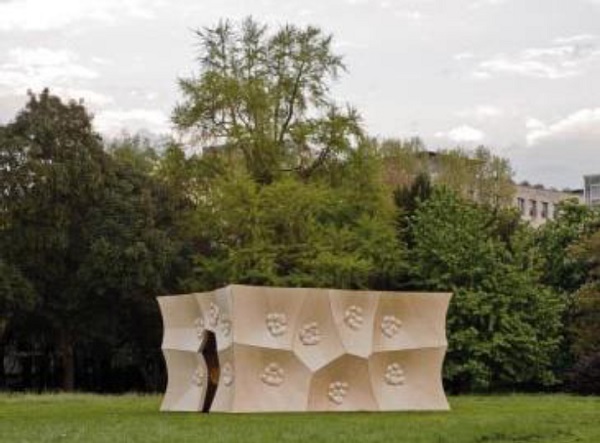
Although nature and architecture seems distinct, both are commonly based on material and system issues. Moreover, with the rapid development of smart and Nano-scale materials, more approaches are exposed, connecting nature with architecture.
Accordingly, massive changes will occur in the field of architecture and construction. That shall dramatically change our perception of buildings.
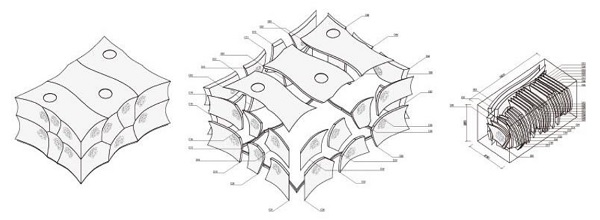
This thesis started with exploring the taxonomy of smart materials; their properties, attributes and relevant applications, then understanding the link between building characteristics and different materials.
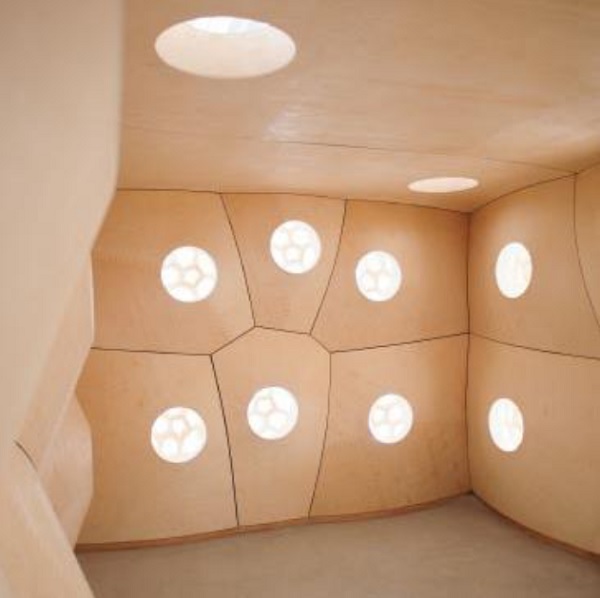
Analogy between building behavior and biological systems are then discussed in chapter 3, introducing conceptual study for a selection of smart materials focusing on their characteristics and discussing theoretically how these materials can be used as a tool for conceptual inspiration from nature, following these with a strategy for abstraction from biological systems and sample instances for inspiration from nature.
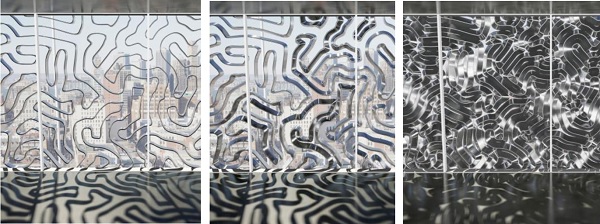
A comprehensive table is consequently presented linking conceptual inspiration from natural functions and relevant smart materials. The case studies was elaborated in chapter 4, presenting 5 selected cases for bio-inspiration and their architectural applications.
By doing a comparative analysis between different aspects of the presented case studies, a set of promising conclusions was extracted showing the potential of the thesis scope within the context of architectural design and building performance.
String Art Generator by Yiran is a grasshopper plugin which generates a string art sequence based on an input image. You can

This paper by Alessandro Liuti, Sofia Colabella, and Alberto Pugnale, presents the construction of Airshell, a small timber gridshell prototype erected by employing a pneumatic formwork.

In this paper by Gregory Charles Quinn, Chris J K Williams, and Christoph Gengnagel, a detailed comparison is carried out between established as well as novel erection methods for strained grid shells by means of FE simulations and a 3D-scanned scaled physical model in order to evaluate key performance criteria such as bending stresses during erection and the distance between shell nodes and their spatial target geometry.

In this paper by Frederic Tayeb, Olivier Baverel, Jean-François Caron, Lionel du Peloux, ductility aspects of a light-weight composite gridshell are developed.