Material Geometry
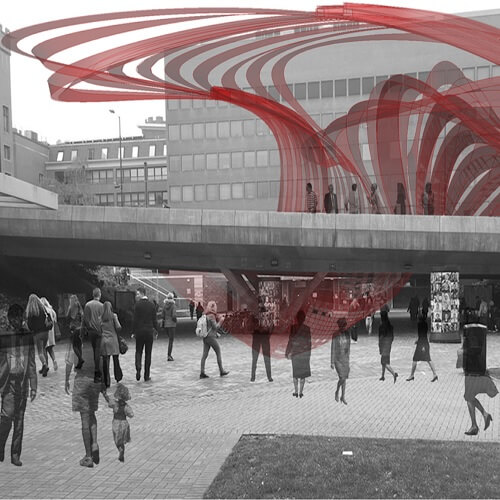
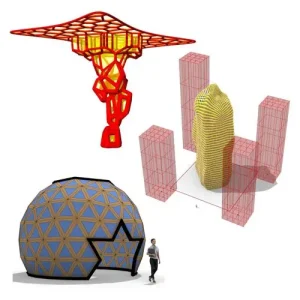
This paper by Alireza Borhani and Negar Kalantar is part of a body of research developing an exploratory dialogue between the built form and the environment, via experimentation with performative geometry and material.
This paper by John Harding investigates an interactive evolution of visual programs currently used in popular parametric modelling software.
This paper by Sebastian Białkowski and Anetta Kępczyńska-Walczak discusses teaching parametric design as a supportive method of introducing design logic. Two case studies have been described, analysed and concluded.
This study by Mads Brath Mads Brath and Avishek Das investigates the technological and methodological challenges in establishing an indeterministic approach to robotic fabrication that allows for a collaborative and creative design/fabrication process.
The aim of this paper by Parag Sarwate and Akshay Patil is to understand and explore the application of generative modeling based on biomimicry principles to architectural design.
This study by William Suyoto, Aswin Indraprastha and Heru W. Purbo offers discrete method in parametric design to solve problems during design process (programming, site planning, massing, structure planning, and facade planning).
The goal of this research by Florian Chéraud is to introduce, within the Grasshopper environment, a tensile parameter, the Young Modulus, into the Kangaroo model.
In this paper, author propose taking the use of computers in aiding architectural design one step further; information and data should INFORM the project, driving the creation of a building FORM enabling it to PERFORM at higher levels than traditional design.
This paper by HAO ZHENG, BARRAK DARWEESH, HEEWON LEE and LI YANG presents a framework that makes full use of three degrees of freedom of Computer Numerically Controlled (CNC) machines through the generation of Gcode in the Rhino and Grasshopper environment.
This paper by Sherif M. Abdelmohsen explores incorporating context in the process of designing using generative systems from ideation to fabrication, and explores the relationship between the emergent nature of generative design and the situated act of designing while using generative design tools.
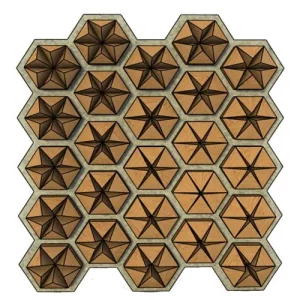
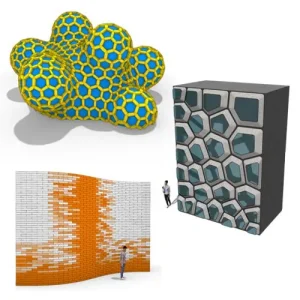
This paper presents the main challenges and outcomes achieved during the process of design and production of a vault cover system. Based on the discretization of a vault in hexagonal blocks, this system intends to control solar incidence by its adaptive inner structure.
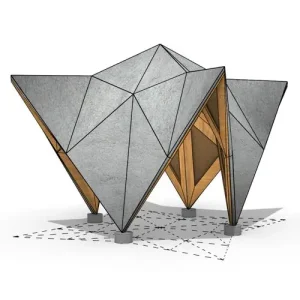
To investigate the links between parametric form-making and outdoor comfort, a workshop at the Royal Danish Academy – aimed at the design of shelters – combined Parametric and Environmental Simulation Tools (ESTs) with the use of the most recent Grasshopper’s plug-ins.
This paper by Clay Odom uses two recently completed projects to outline an approach to overcoming tendency to separate the objective and subjective. It describes an approach which is positioned within contemporary theory and explored through processes, methods and outcomes.
Robotic assembly technologies have been introduced in the field of architecture, opening new design and construction possibilities. This paper by Rui Oliveira and Jose Pedro Sousa intends to examine their application by examining how they can be used to connect with the traditions in brick construction.
This paper by Amr Elesawy, Stefan Caranovic, Justin Zarb, Prageeth Jayathissa and Arno Schlueter presents HIVE, a new open source design toolbox, which focuses on teaching concepts of Energy and Climate Systems integration in buildings.
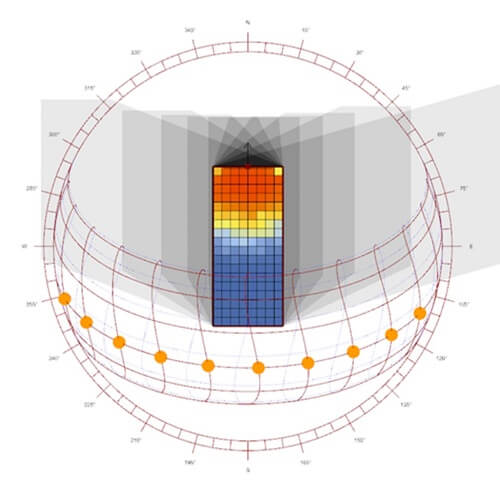
This paper by Mohammed Ayoub and Magdi Wissa aims to investigate techniques to mitigate the under-lit indoor environment for a group of buildings with variable heights and orientations, with regard to the urban façades parameters.
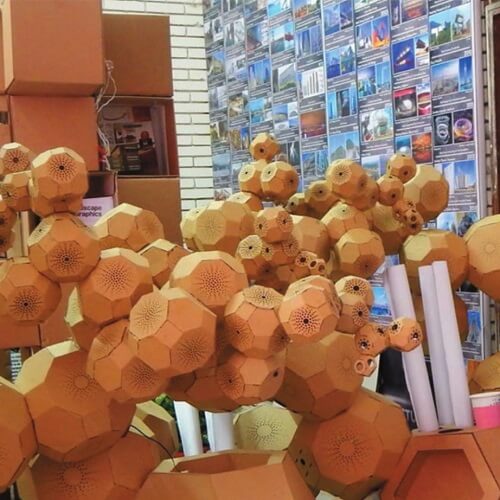
This paper by Chenjun Liu, Tsung-Hsien Wang, Mark Meagher and Chengzhi Peng presents the development of an interactive installation intended as a prototype of experimental affective architecture connected with social media data processing.
In this paper by António Leitão, Luís Santos and José Lopes, authors reconsider the role of TPLs in the design process and they present a comparative study of VPLs and modern TPLs. Their findings show that modern TPLs can be more productive than VPLs.
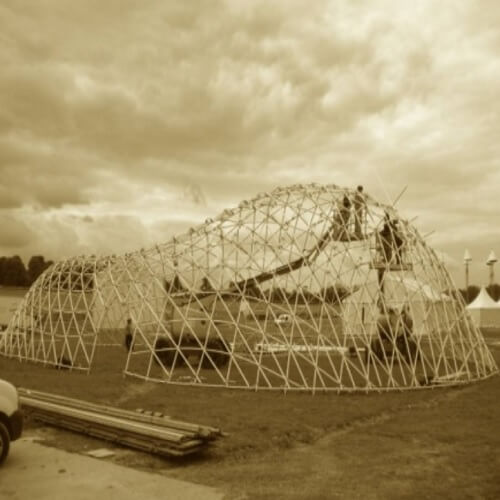
This paper by Lionel Du Peloux, Olivier Baverel, Jean-François Caron and Frédéric Tayeb introduces and explains the design process of a gridshell in composite materials built in Paris in 2011 for the festival Soliday. A brief introduction presents the structural concept and the erection methodology employed.
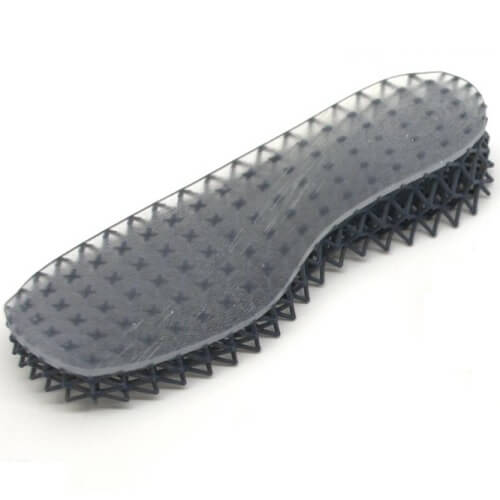
This article presents a digital design and manufacturing approach for soft lattices structures subject to large deformations and instabilities, for which applications in soft robotics, healthcare, personal protection, energy absorption, fashion and design are rapidly emerging.