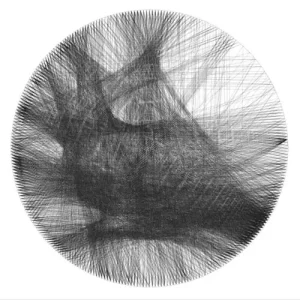
String Art Generator
String Art Generator by Yiran is a grasshopper plugin which generates a string art sequence based on an input image. You can
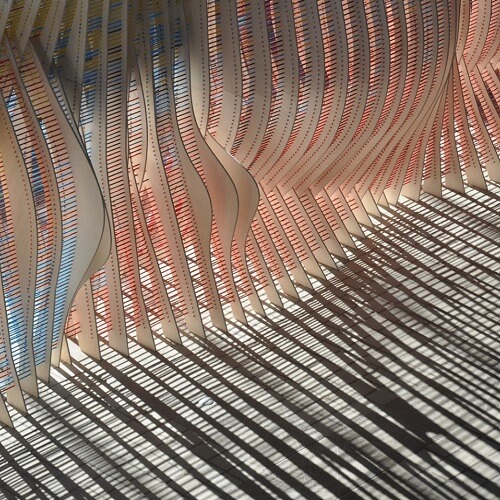
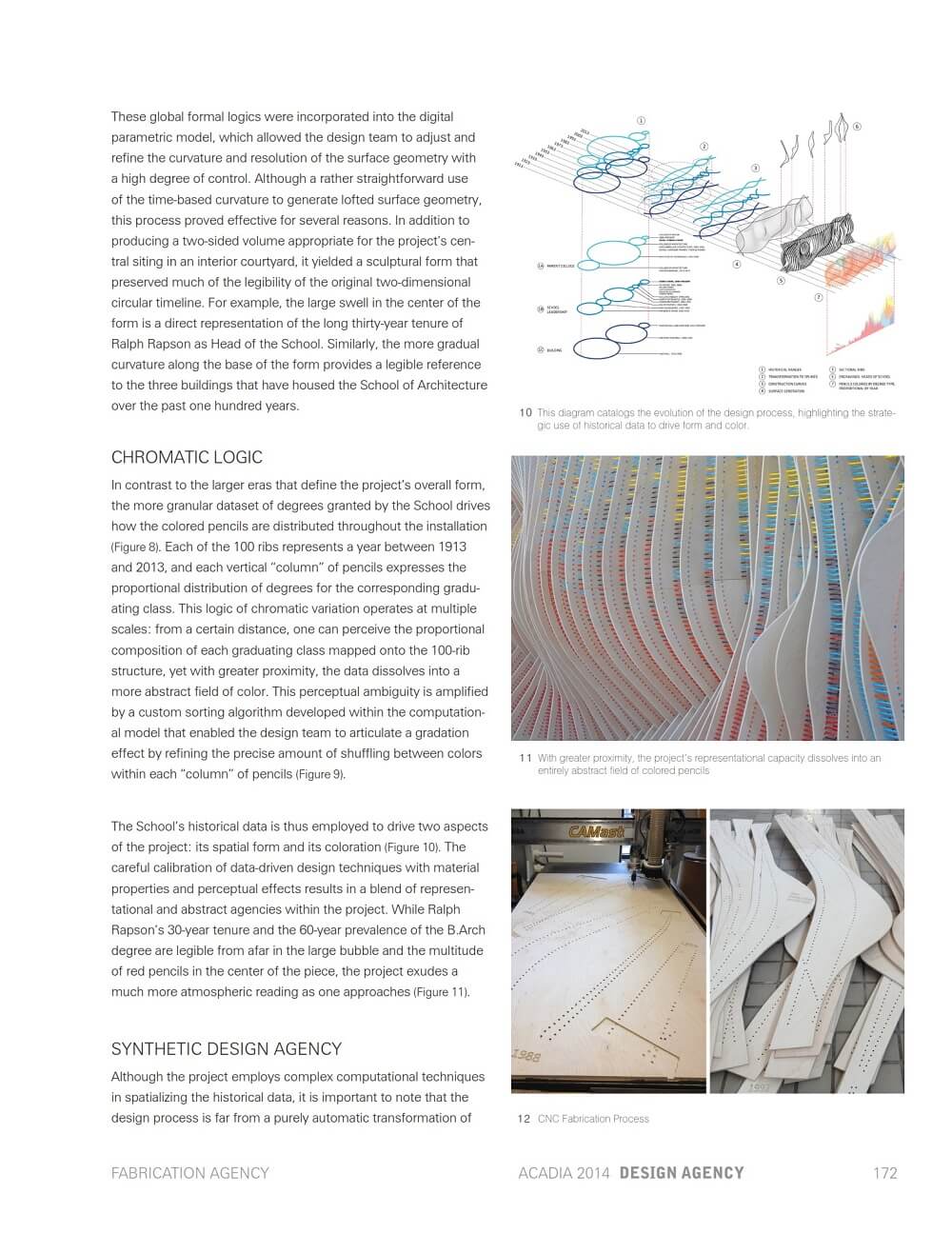
This paper by Adam Marcus describes the design, fabrication, and assembly process of Centennial Chromagraph: a large-scale installation recently constructed for the centennial anniversary of the University of Minnesota School of Architecture. The project is an exercise in data spatialization; using computational design tools to generate formal and spatial constructions with large quantities of information.
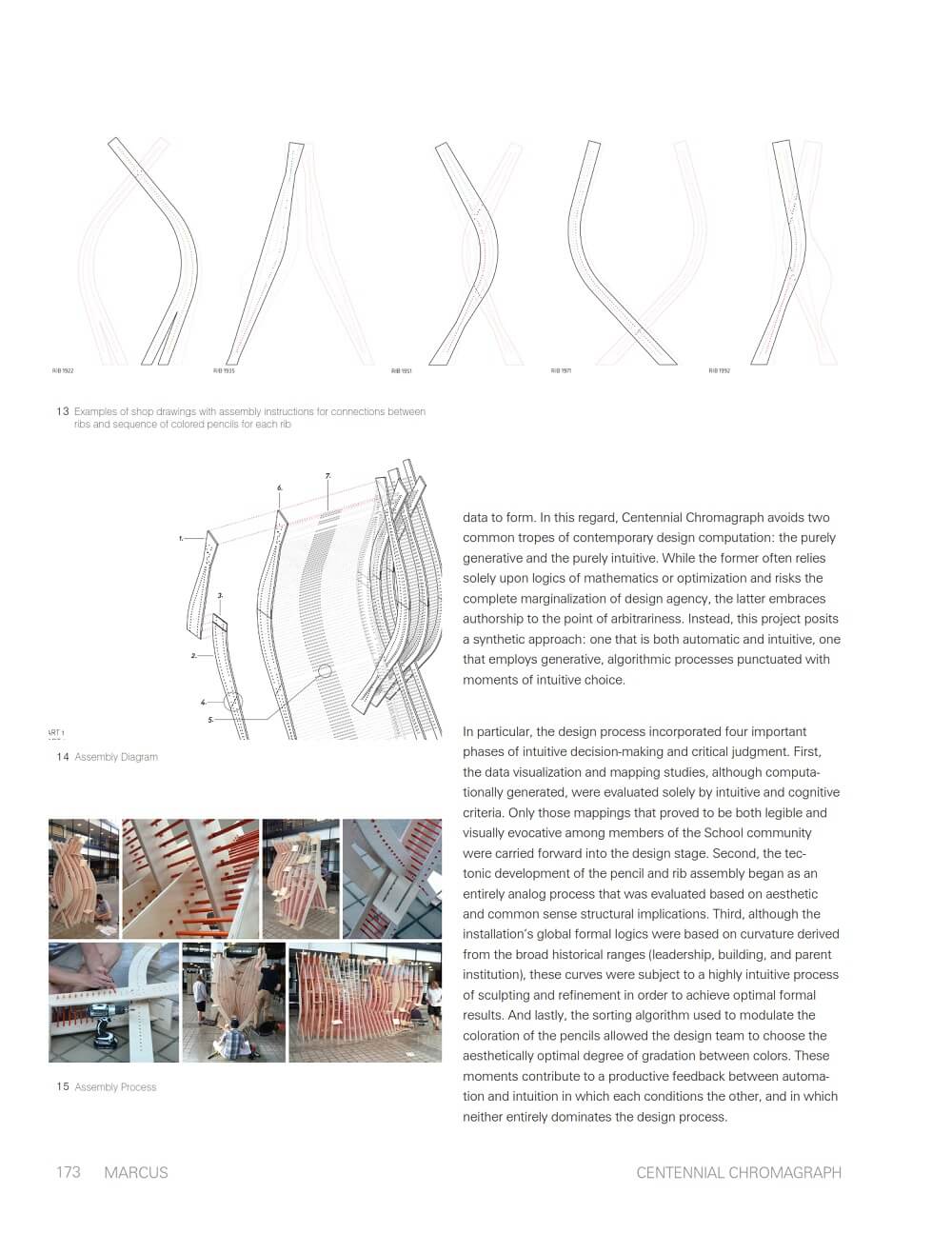
Built from 100 plywood ribs and 8,080 colorful No. 2 pencils, the project oscillates between representational and atmospheric readings, serving both as a sculptural installation and as a communicative visualization of the School’s history. In this regard, it represents an alternative approach to notions of “Big Data” within contemporary design practice—one in which the powerful quantitative techniques of computation are leveraged to reveal new qualitative, aesthetic, spatial, and communicative possibilities for architecture.
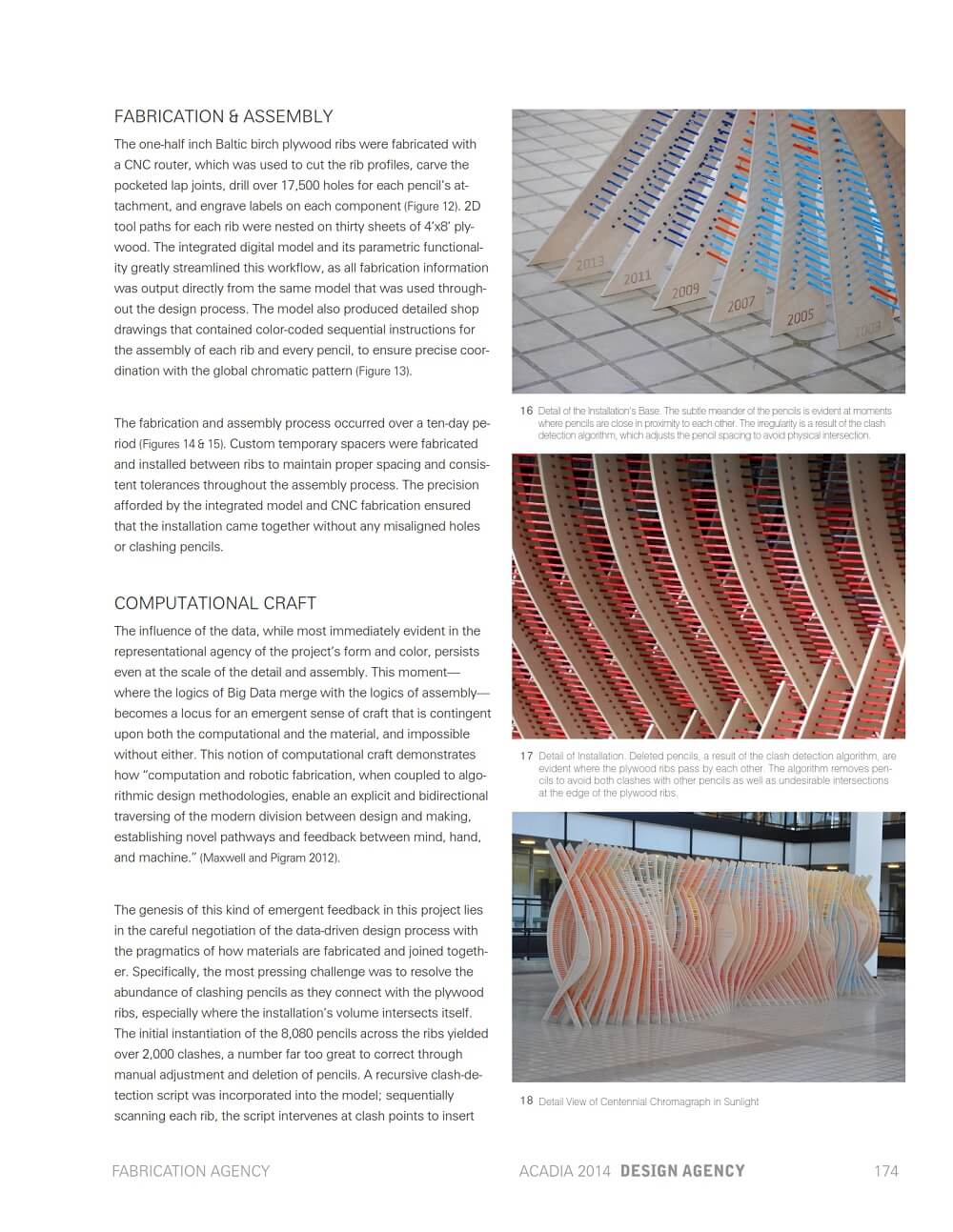
The paper reviews initial analog research, digital mapping and visualization studies, and the development of tectonic and spatial logics that proved effective both representationally and atmospherically. The project stakes a claim for a new sense of computational craft, in which the techniques of Big Data and the artifacts of the algorithm yield surprising and unexpected tectonic qualities that are contingent upon both the computational and the material. In doing so, it offers a model for contemporary design computation to engage explicitly with age-old architecture notions of detail, ornament, pattern, and effect.
String Art Generator by Yiran is a grasshopper plugin which generates a string art sequence based on an input image. You can

This paper by Alessandro Liuti, Sofia Colabella, and Alberto Pugnale, presents the construction of Airshell, a small timber gridshell prototype erected by employing a pneumatic formwork.

In this paper by Gregory Charles Quinn, Chris J K Williams, and Christoph Gengnagel, a detailed comparison is carried out between established as well as novel erection methods for strained grid shells by means of FE simulations and a 3D-scanned scaled physical model in order to evaluate key performance criteria such as bending stresses during erection and the distance between shell nodes and their spatial target geometry.

In this paper by Frederic Tayeb, Olivier Baverel, Jean-François Caron, Lionel du Peloux, ductility aspects of a light-weight composite gridshell are developed.