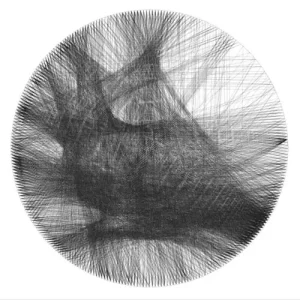
String Art Generator
String Art Generator by Yiran is a grasshopper plugin which generates a string art sequence based on an input image. You can
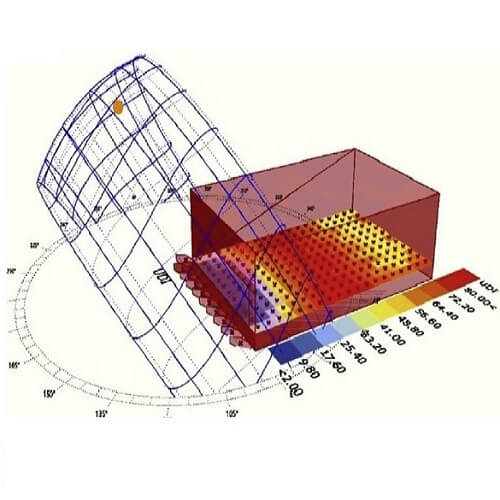
Parametric architecture can be used to improve design quality by integrating and coordinating design components, and any change in one parameter affects the final design. Daylight is a crucial parameter in designing energy-efficient buildings.
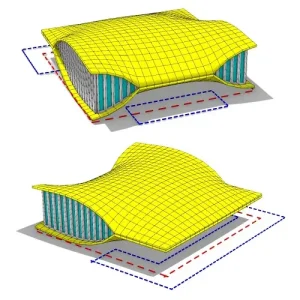
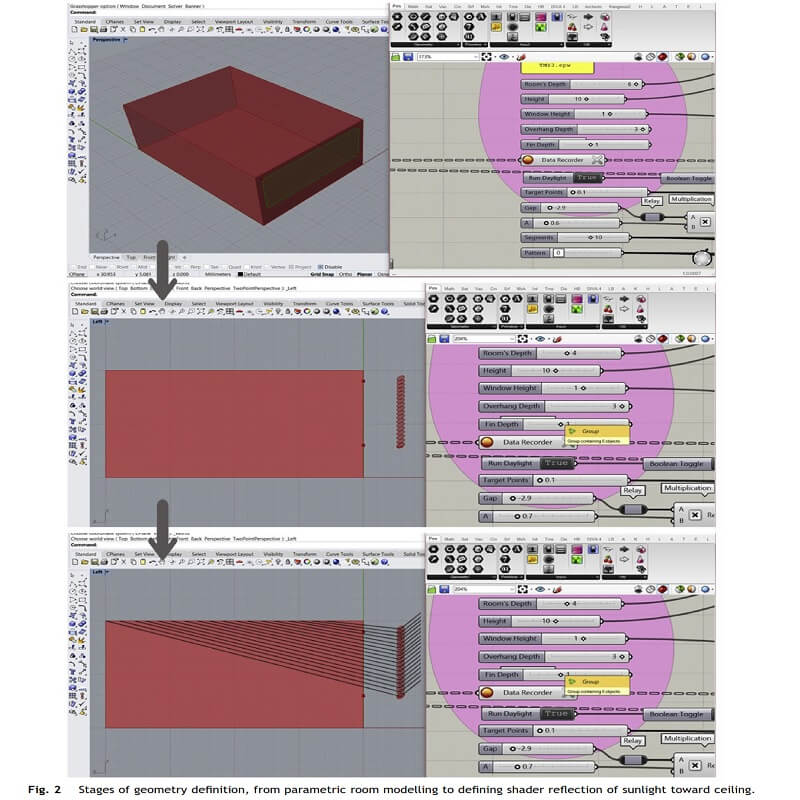
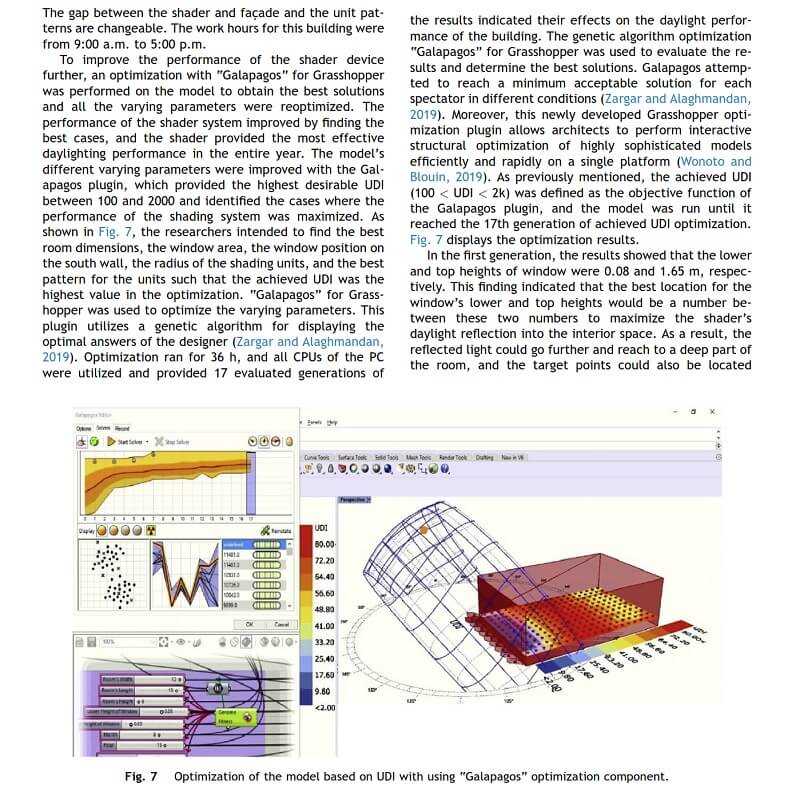
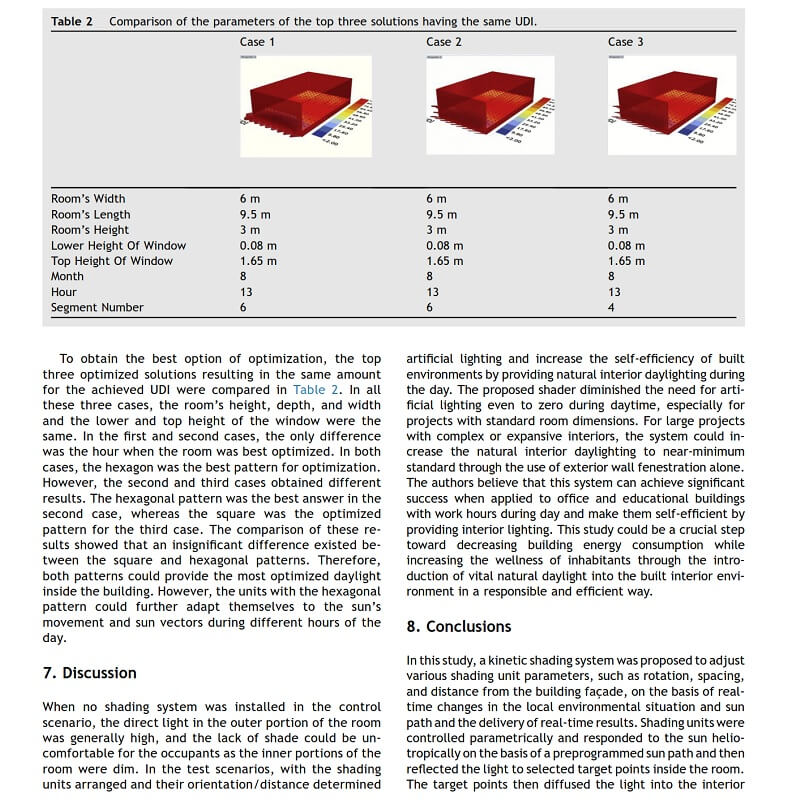
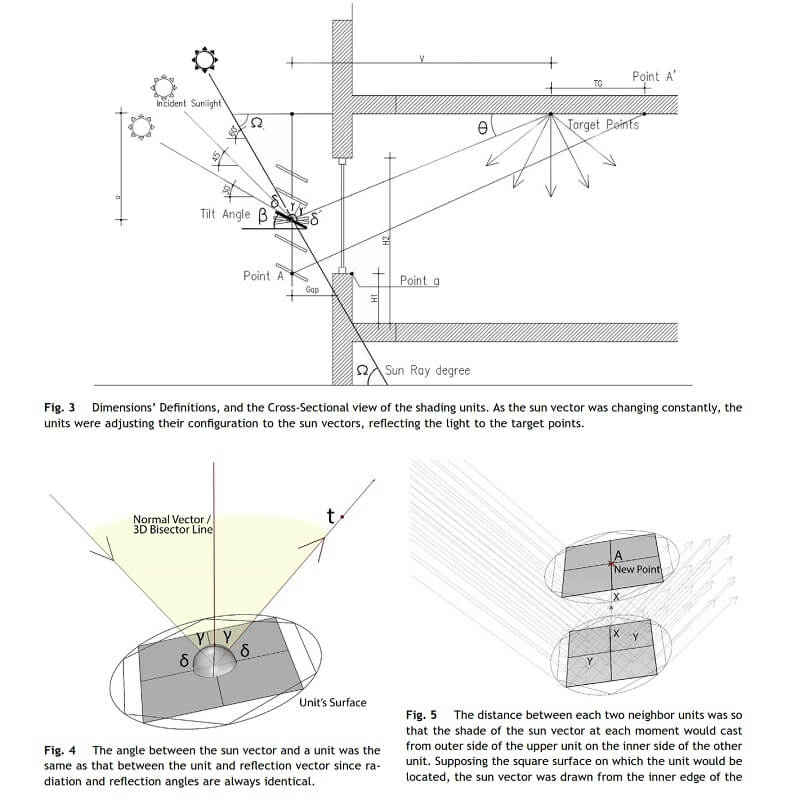 In this research by Sahba Samadi, Esmatullah Noorzai, Liliana O. Beltran and Saman Abbasi, daylight inside a building was improved by designing a kinetic shading system with independent units parametrically responding to sunlight through 3D rotation (around the centers of the units) and 2D movement (on the surface of the shading system).
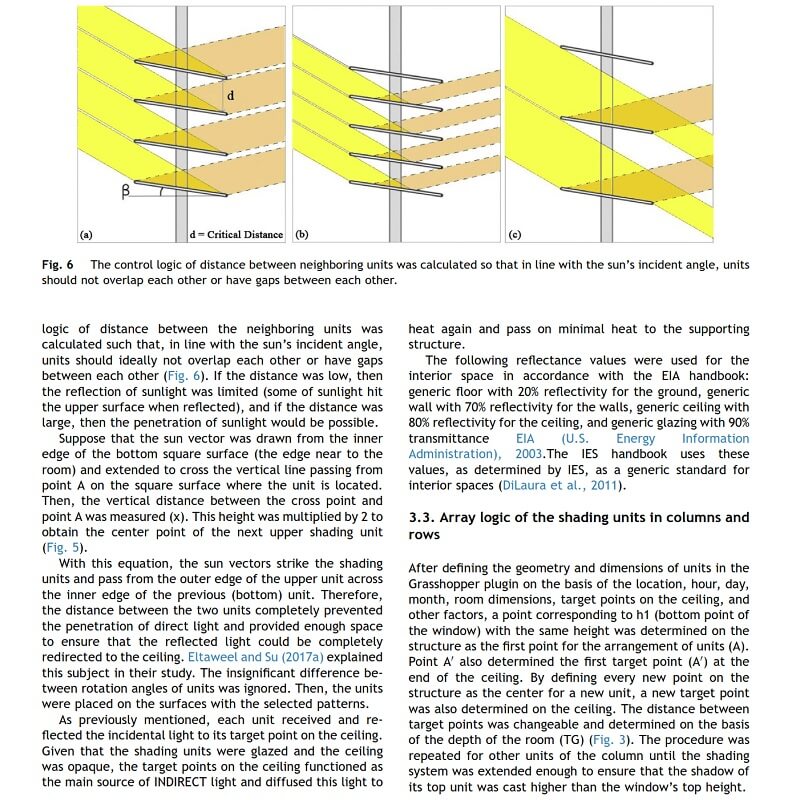 Various patterns were determined to create the unit’s basic form and allow the designer to have a wide range of options. The units were defined with the plugin “Grasshopper.” Their rotation was parametrically controlled on the basis of sun path and weather data by using “Honeybee” and “Ladybug” plugins to pro- vide constant optimized daylighting inside the building. Results showed that the use of such a shading system in optimal situations can greatly increase the efficiency of indoor daylight.
String Art Generator by Yiran is a grasshopper plugin which generates a string art sequence based on an input image. You can

This paper by Alessandro Liuti, Sofia Colabella, and Alberto Pugnale, presents the construction of Airshell, a small timber gridshell prototype erected by employing a pneumatic formwork.

In this paper by Gregory Charles Quinn, Chris J K Williams, and Christoph Gengnagel, a detailed comparison is carried out between established as well as novel erection methods for strained grid shells by means of FE simulations and a 3D-scanned scaled physical model in order to evaluate key performance criteria such as bending stresses during erection and the distance between shell nodes and their spatial target geometry.

In this paper by Frederic Tayeb, Olivier Baverel, Jean-François Caron, Lionel du Peloux, ductility aspects of a light-weight composite gridshell are developed.