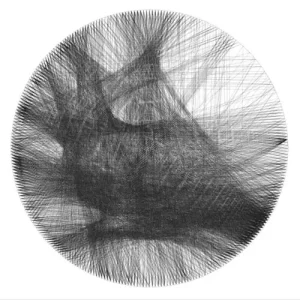
String Art Generator
String Art Generator by Yiran is a grasshopper plugin which generates a string art sequence based on an input image. You can
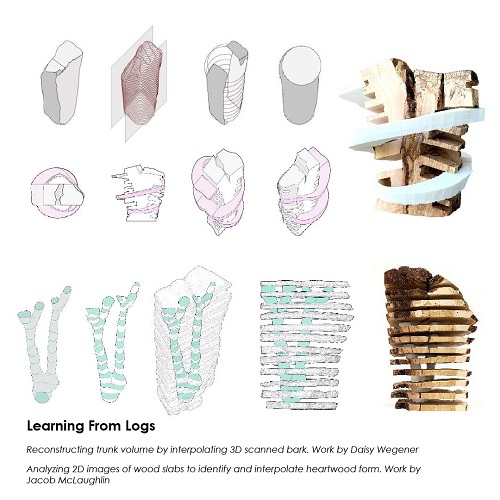
Learning from Logs
Advanced computational visioning, modeling and fabrication technologies are becoming increasingly accessible to nonexpert users, allowing designers to engage complex forms and materials with increasing control and precision.
Nonetheless, beginning designers often struggle to maintain authorship when mastering new software, resulting in designs shaped by the biases of the digital tools at hand.
The act of translation between physical and digital poses particular difficulty. This paper presents a sequential pedagogy in which students are introduced to both manual and digital analytical and fabrication processes with the goal of understanding, analyzing, and addressing material irregularity.
Techniques and tools employed include digital modeling in Rhinoceros, 3D scanning, computational analysis in Grasshopper, traditional woodshop tools, 3D printing, laser cutting, and CNC routing.
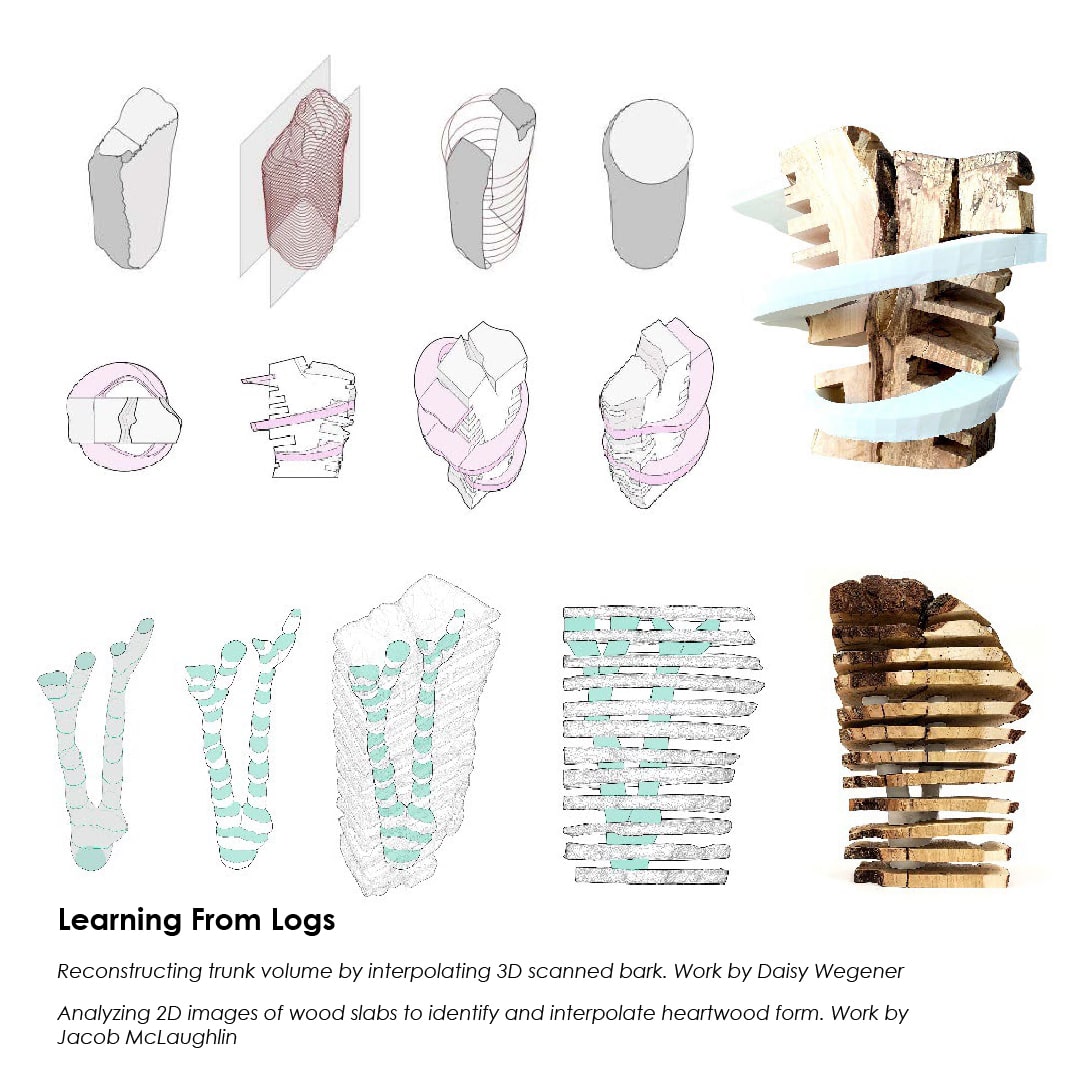 The outcomes and criteria for evaluating student projects are discussed: in particular, the learning opportunities afforded by using irregularly sized and shaped material that allowed students to develop creative ways of working with standard woodworking and digital fabrication tools.
Additional challenges due to virtual teaching and financial considerations are addressed through salvaged materials and democratized technologies.
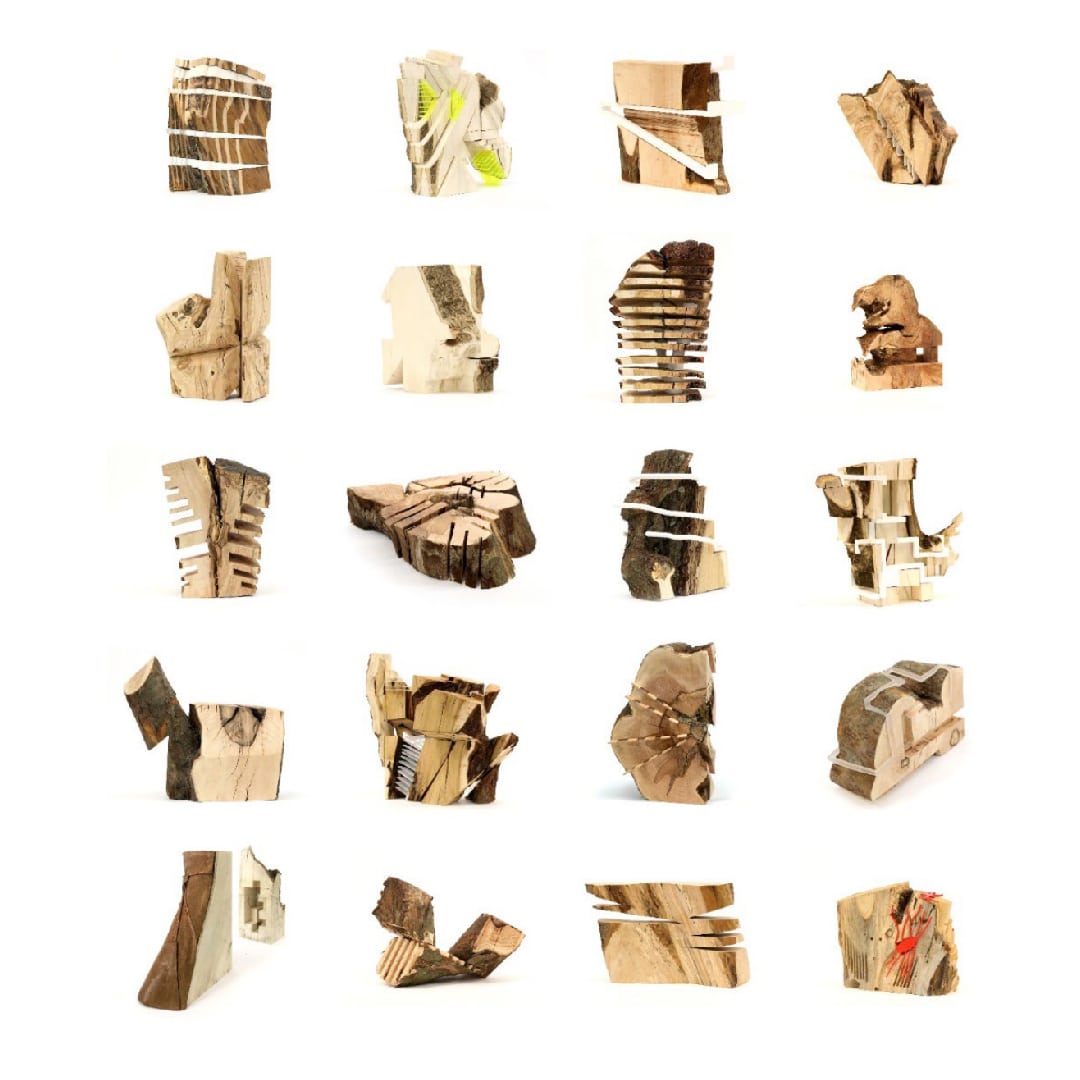 This paper presents a sequence of introductory pedagogical exercises prescribed to undergraduate architecture students aimed at rapid skill development in analog and digital workflows.
With a focus on analysis and translation, the methods preference accessibility and democratization by using industry standard tools and consumer-grade software and minimizing material cost.
Irregular material, harvested from fallen trees on campus, functions as a complex generator containing information on form, age, structure, texture, and more.
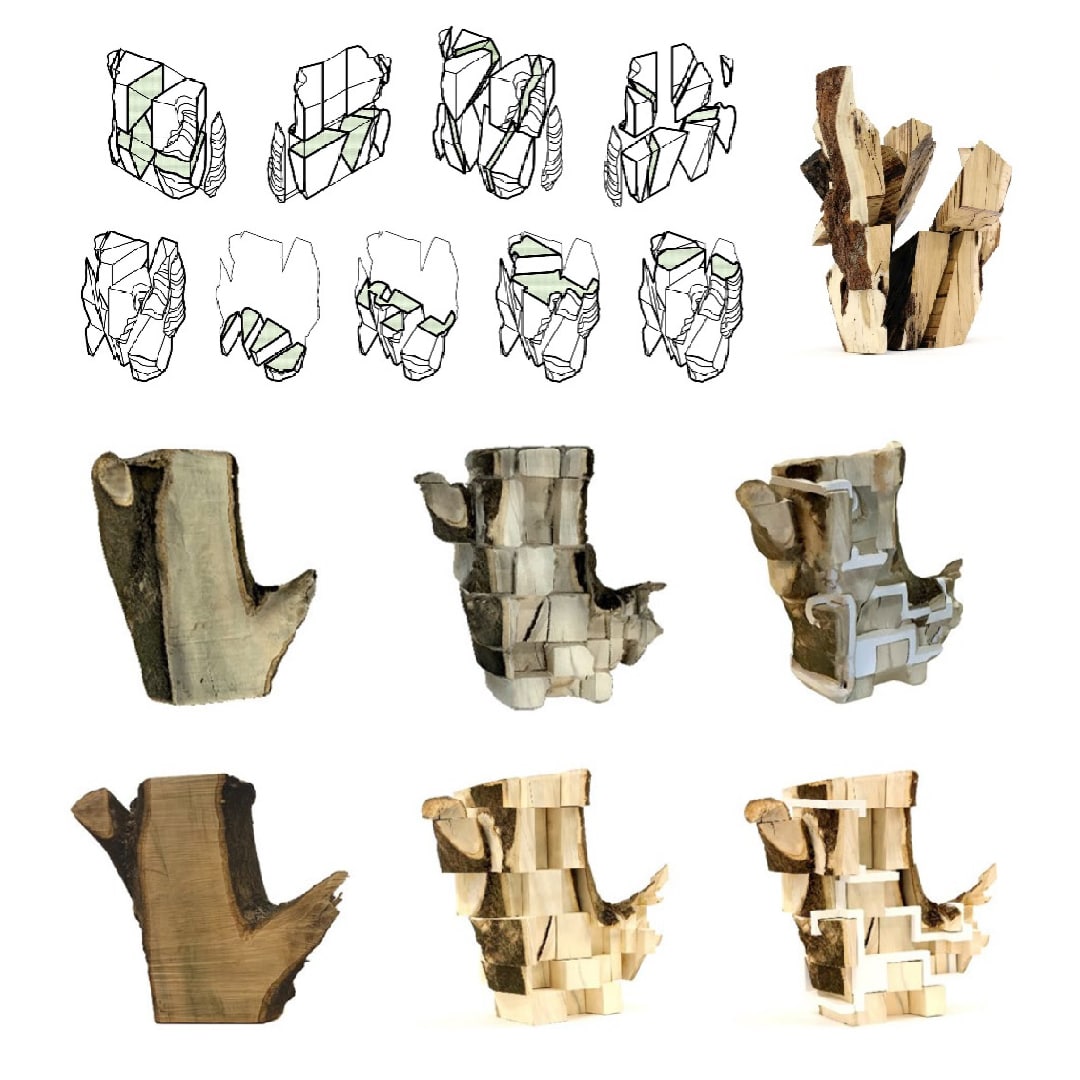 The students are enrolled in the third year of a non-professional, undergraduate, four-year architecture program. The students were previously introduced to woodshop tools in their first year, but due to the COVID-19 pandemic and a shift to virtual learning, time had elapsed since these means of production were engaged.
This sequence of assignments served to reintroduce students to these tools and forge a link between analog and digital fabrication through the introduction of advanced computational tools.
 In particular, the relationship between digital and physical is investigated within a rapidly developing scholarly area in which digital design processes optimize natural form in varying capacities.
Many of the processes introduced and skills developed in this set of exercises were applied to longer-term fabrication projects later in the semester.
String Art Generator by Yiran is a grasshopper plugin which generates a string art sequence based on an input image. You can

This paper by Alessandro Liuti, Sofia Colabella, and Alberto Pugnale, presents the construction of Airshell, a small timber gridshell prototype erected by employing a pneumatic formwork.

In this paper by Gregory Charles Quinn, Chris J K Williams, and Christoph Gengnagel, a detailed comparison is carried out between established as well as novel erection methods for strained grid shells by means of FE simulations and a 3D-scanned scaled physical model in order to evaluate key performance criteria such as bending stresses during erection and the distance between shell nodes and their spatial target geometry.

In this paper by Frederic Tayeb, Olivier Baverel, Jean-François Caron, Lionel du Peloux, ductility aspects of a light-weight composite gridshell are developed.