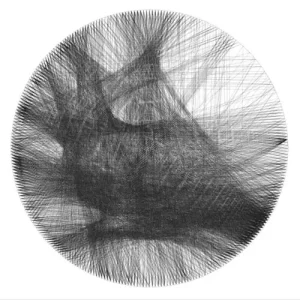
String Art Generator
String Art Generator by Yiran is a grasshopper plugin which generates a string art sequence based on an input image. You can
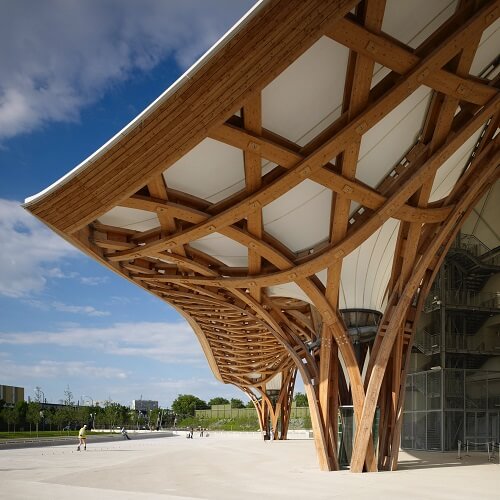
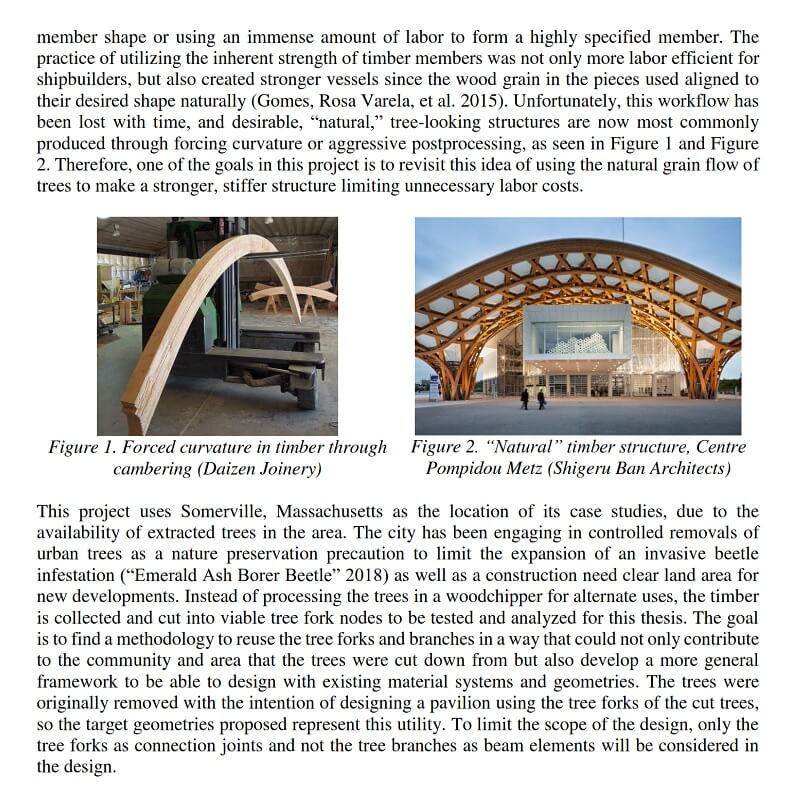
Timber structures have seen a resurgence in structural design in recent years due to a desire to reduce embodied carbon in the built environment. While many of these structures use standardized or regular elements, the recent revolution in digital fabrication has resulted in a variety of more complex and irregular timber forms, usually achieved through milling or other machine-driven production processes.
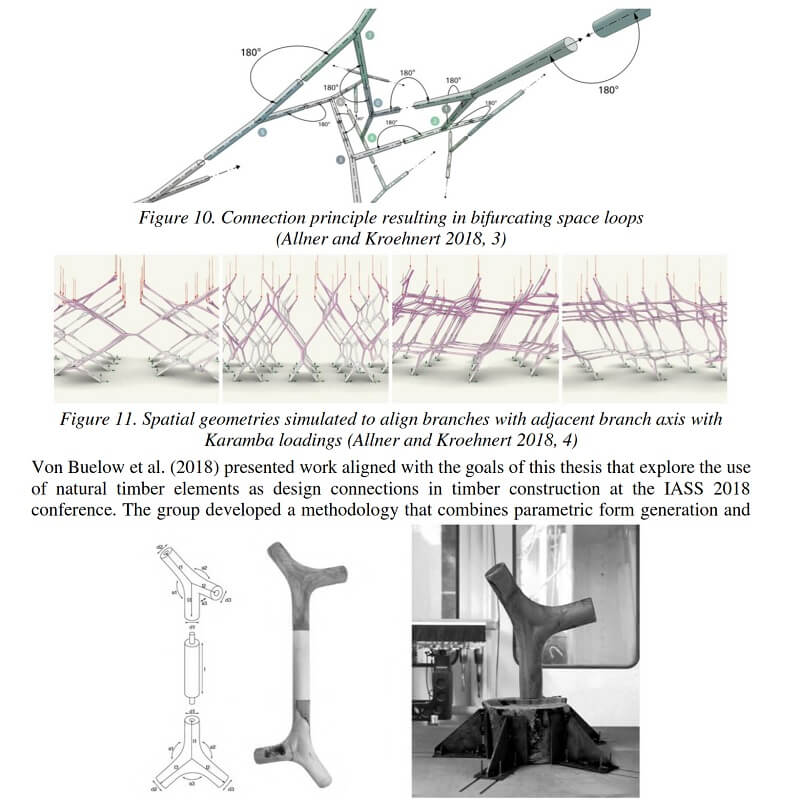 However, the organic nature of wood has also inspired architects and engineers to harness naturally occurring formal variation, for example, in the geometries of tree forks and branches, to produce designs that are more directly responsive to their constitutive materials. Compared to conventional fabrication processes for timber, in which the material is often processed several times to achieve characteristics that are present in the original material, this approach embodies little waste in material and effort.
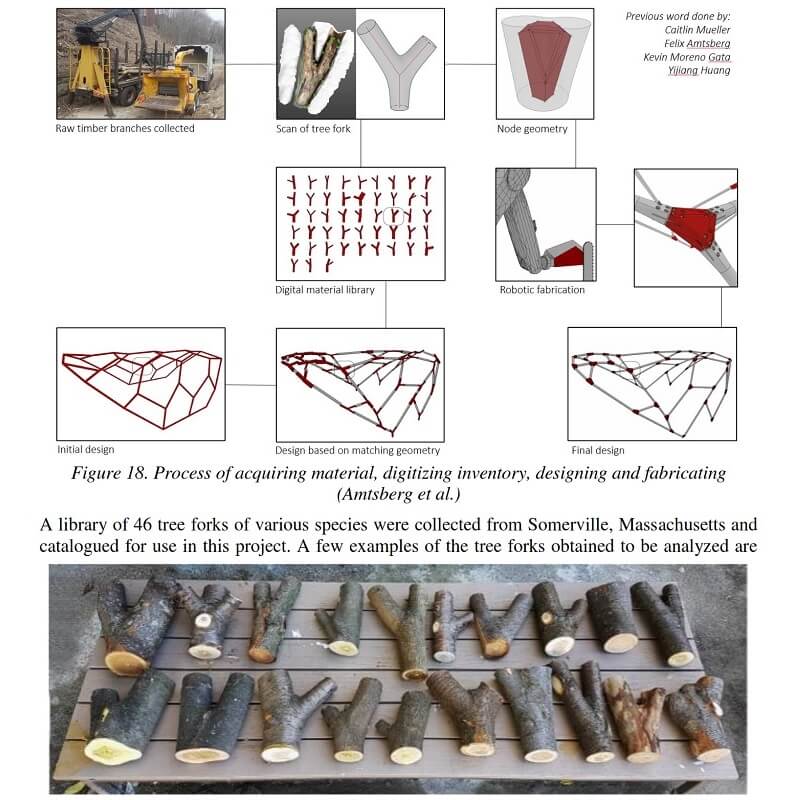
Naturally occurring branching tree forks seem to exhibit outstanding strength and material efficiency as a natural moment connection, which underpins previous research investigating their use in design. This thesis by Ishani Desai advances the use of tree forks as a natural connection in structures through two specific contributions.
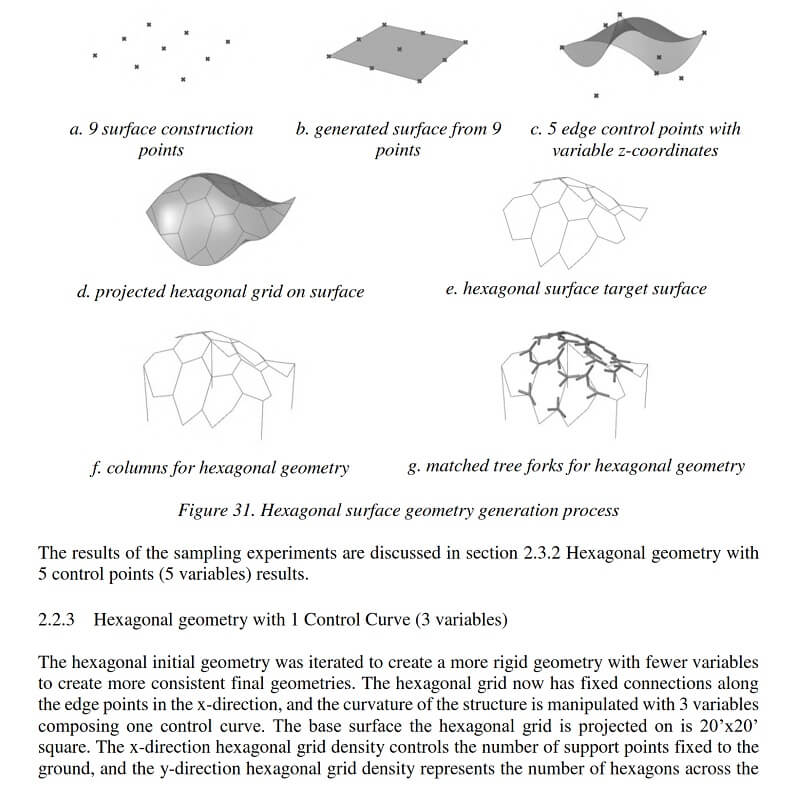
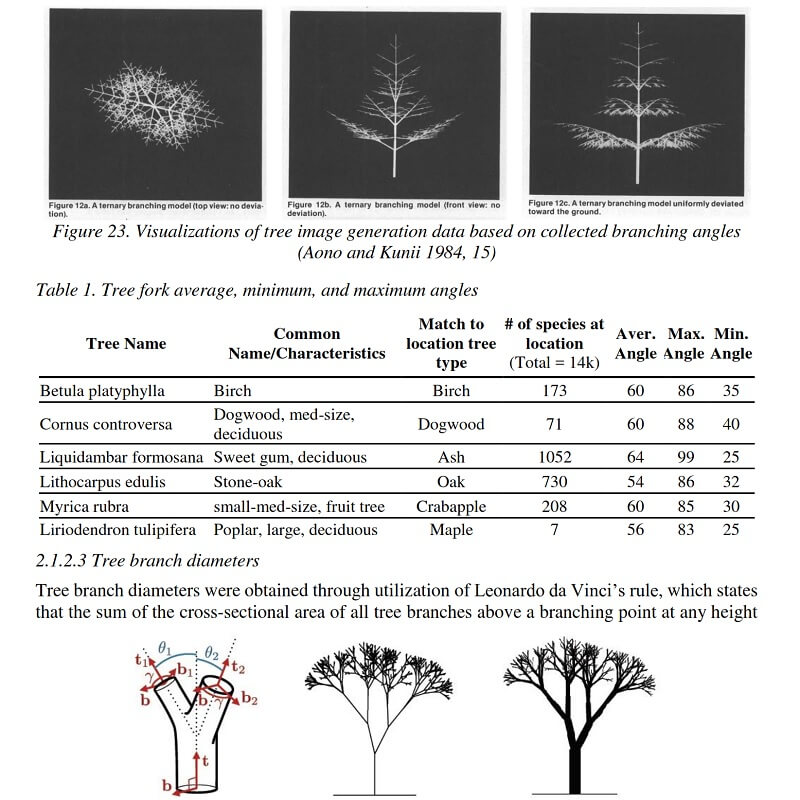 First, the paper establishes a flexible matching-based methodology for designing structures with a pre-existing library of tree fork nodes (based on actual available materials from salvaged trees, for example), balancing an initial target design, node matching quality, and structural performance. The methodology uses a combination of Iterative Closest Point and Hungarian Algorithms as a real-time computational approach for matching nodes in the library to nodes in the design.
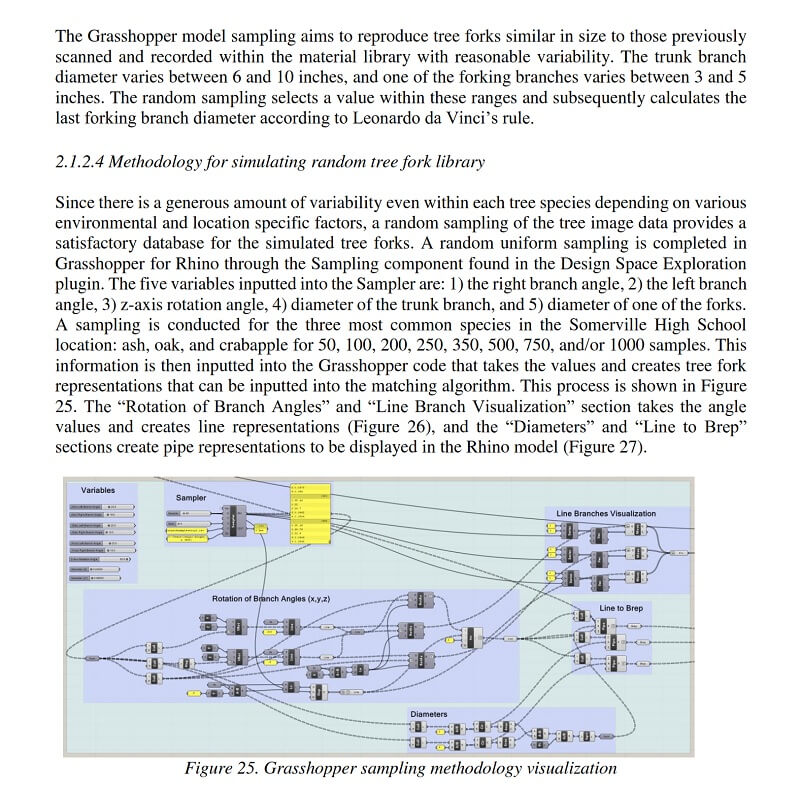
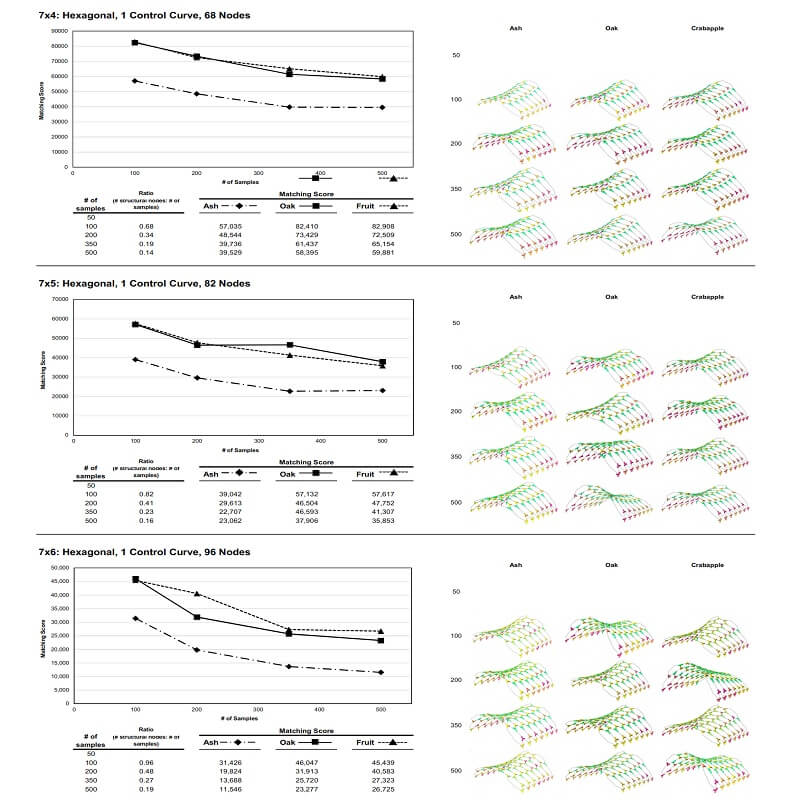
The thesis presents results that systematically test this methodology by studying how matching quality varies depending on the number and species of tree forks available in the library and relates this back to the mechanical properties of tree branches found through physical testing.
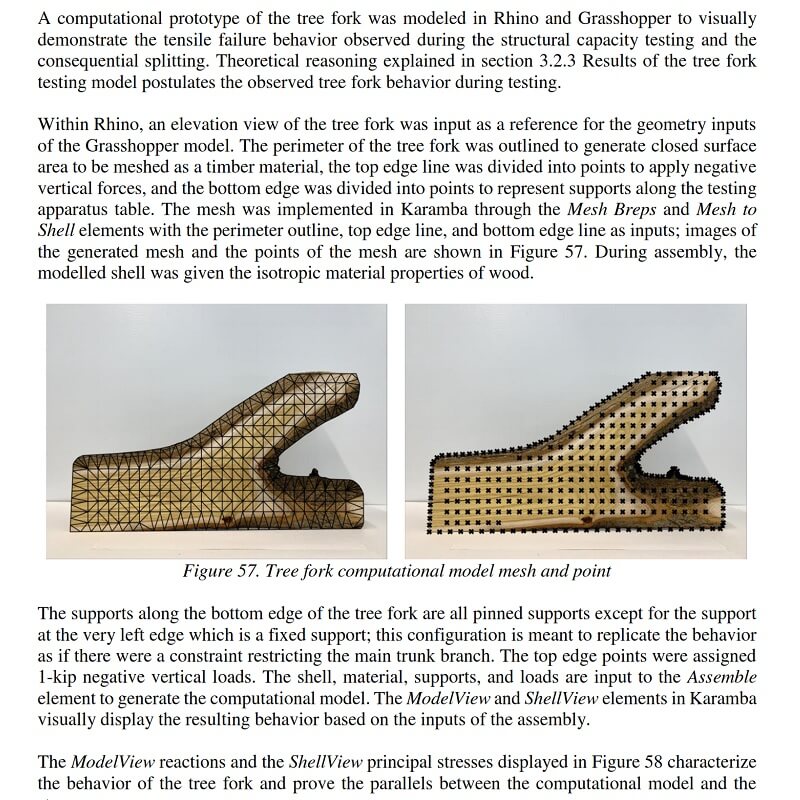
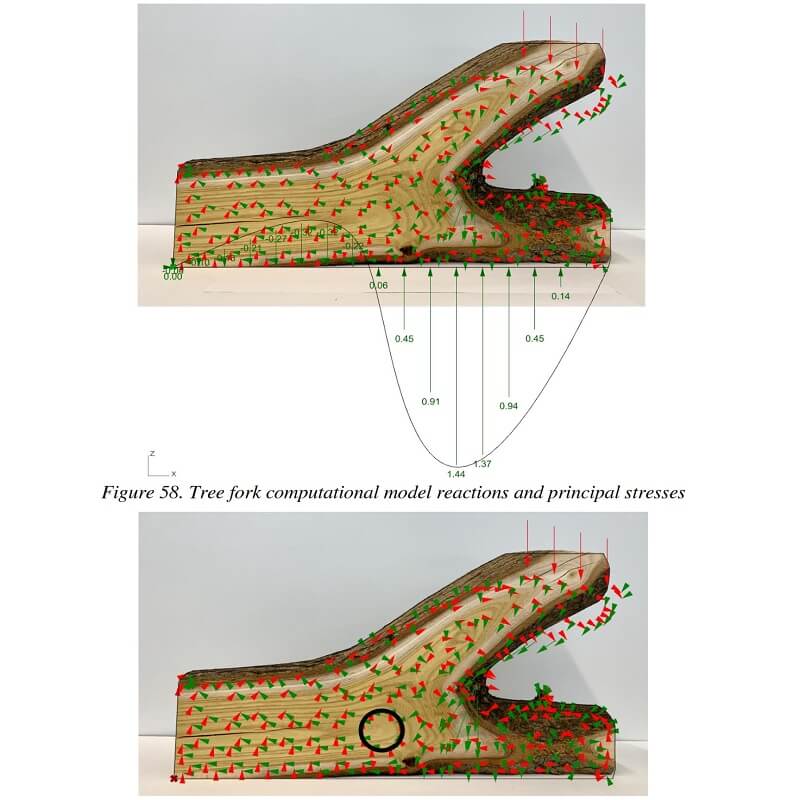
 Second, mechanical laboratory testing of tree fork nodes of various tree species (available locally in the area) is presented to quantify the structural capacity of these connections and observe the behavior under tree fork load transfers.
 A structural score is developed to characterize the tolerance of tree fork nodes to imperfect matches in terms of structural capacity; these resulting geometries are compared to the previous matching-based scoring system.
 The resulting approach is projected forward as a framework for a more general computational approach for designing with existing material systems and geometries that can also be expanded beyond tree forks.
String Art Generator by Yiran is a grasshopper plugin which generates a string art sequence based on an input image. You can

This paper by Alessandro Liuti, Sofia Colabella, and Alberto Pugnale, presents the construction of Airshell, a small timber gridshell prototype erected by employing a pneumatic formwork.

In this paper by Gregory Charles Quinn, Chris J K Williams, and Christoph Gengnagel, a detailed comparison is carried out between established as well as novel erection methods for strained grid shells by means of FE simulations and a 3D-scanned scaled physical model in order to evaluate key performance criteria such as bending stresses during erection and the distance between shell nodes and their spatial target geometry.

In this paper by Frederic Tayeb, Olivier Baverel, Jean-François Caron, Lionel du Peloux, ductility aspects of a light-weight composite gridshell are developed.