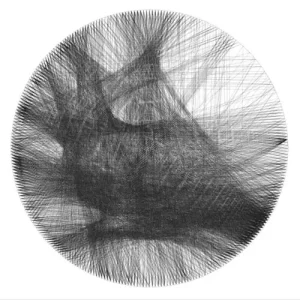
String Art Generator
String Art Generator by Yiran is a grasshopper plugin which generates a string art sequence based on an input image. You can
Application of Robotic Technologies for the Fabrication Of Traditional Chinese Timber Joints
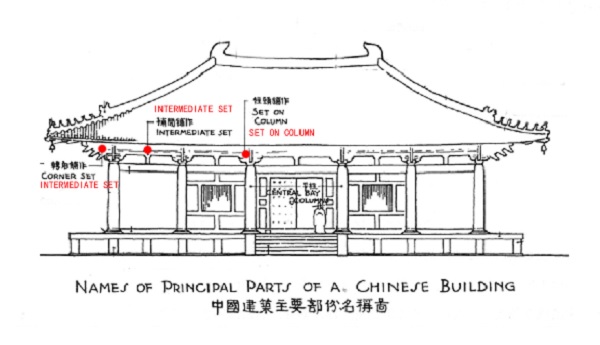
The traditional Chinese building design was influenced by the climate and the sociogeographical conditions of the different regions in China.
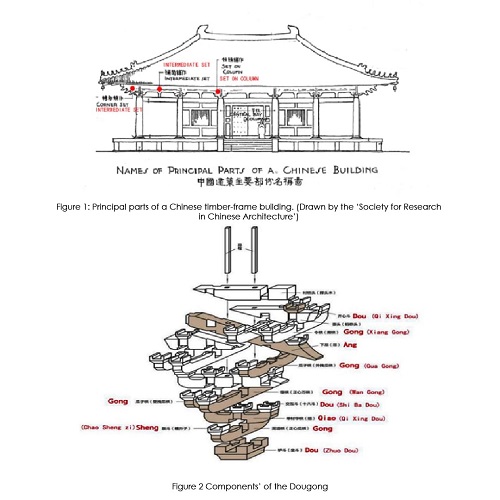
They were usually constructed out of wood relying on timber-joint based construction systems. Amongst the wide variety of the structural elements, the Dougong (bucket arch) is one of the most common components of traditional wooden framework buildings, presenting a high level of complexity.
Parametric design and robotic technology enable new possibilities regarding its fabrication and application in contemporary architecture.
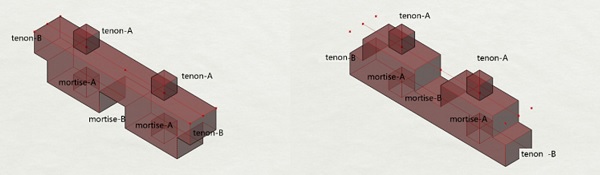
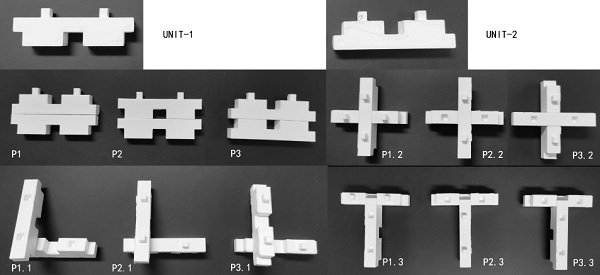
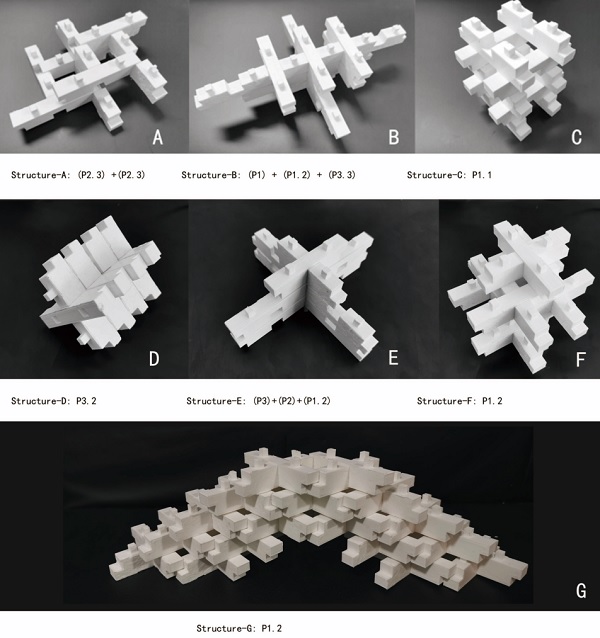
Our paper will explore how the Dougong components could be reinvented through the use of parametric tools and robotic fabrication methods and thus applied to contemporary architectural structures.
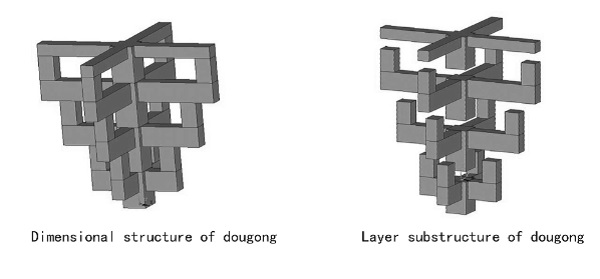
We will analyse and compare the properties of the original Dougong with the reinvented unit by using finite element analysis and digital optimization tools.
Our findings will provide an insight into the traditional construction principles of the joint and how these can inform a design and fabrication framework for its application in contemporary buildings.
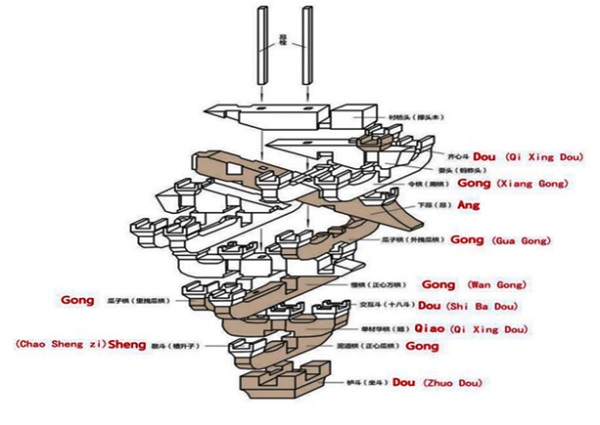
The Dougong bucket arch is an independent category, withing the traditional Chinese timber framework systems. It consists of many different types of Dou (square load-bearing member) and Gong (arch load-bearing member), (Liang, 2005). During the Qing dynasty, there were even specialised Dougong making craftsmen, called Dougong carpenters (Pan, 2011).
Historically, the main structure of traditional Chinese buildings is a load-bearing timber framework while the walls are part of the building.
The roof’s structural load is transferred from the beam purlin to the pillar into the structural system. There is a complex component named Dougong, which is a transition component between the beam purlin and the pillar. It has been a unique element of Chinese architecture for thousands of years.
The earliest Dou appeared during the bronze age of the Shang and Zhou Dynasties, and the appearance of Gong followed later (Pan, 2011).
According to Yang Hongxun’s ’Architectural Archaeology Study of Tomb Buildings, Murals and Burial Artefacts, the structure of Dougong had been widely used and achieved its mature stage since the Han dynasty, 206 BC-220 AD, (Liu, 1982).
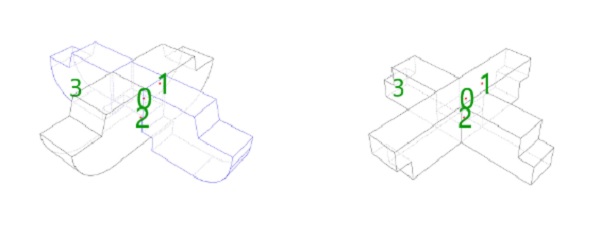
The proportions and the name of the Dougong components before the Song Dynasty (960-1279) are difficult to retrieve since there are not related sources to refer to. However, two important historic rulebooks the Yin Zhao Fa Shi and the Gongchen Zuofa Zeli provide both standards and structural regulations for buildings and building components.
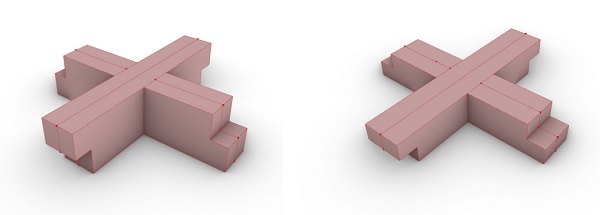
The first was completed by Li Jie in the Song Dynasty (960-1279) while the second was published by the Ministry of Construction of the Qing Dynasty in 1734.
In this paper, we mainly focus on studying the Dougong developed during the Qing dynasty (1636- 1911) as a large number of buildings from this period have been preserved and can provide a reliable database for analysis.
String Art Generator by Yiran is a grasshopper plugin which generates a string art sequence based on an input image. You can

This paper by Alessandro Liuti, Sofia Colabella, and Alberto Pugnale, presents the construction of Airshell, a small timber gridshell prototype erected by employing a pneumatic formwork.

In this paper by Gregory Charles Quinn, Chris J K Williams, and Christoph Gengnagel, a detailed comparison is carried out between established as well as novel erection methods for strained grid shells by means of FE simulations and a 3D-scanned scaled physical model in order to evaluate key performance criteria such as bending stresses during erection and the distance between shell nodes and their spatial target geometry.

In this paper by Frederic Tayeb, Olivier Baverel, Jean-François Caron, Lionel du Peloux, ductility aspects of a light-weight composite gridshell are developed.