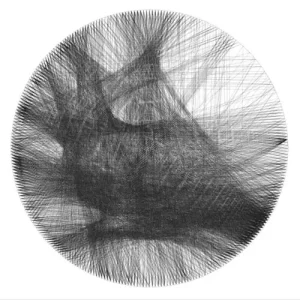
String Art Generator
String Art Generator by Yiran is a grasshopper plugin which generates a string art sequence based on an input image. You can
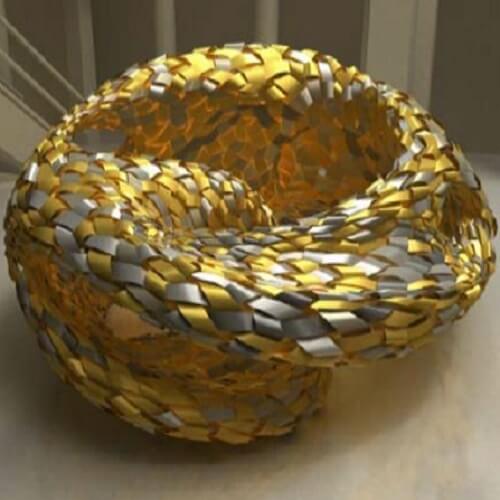
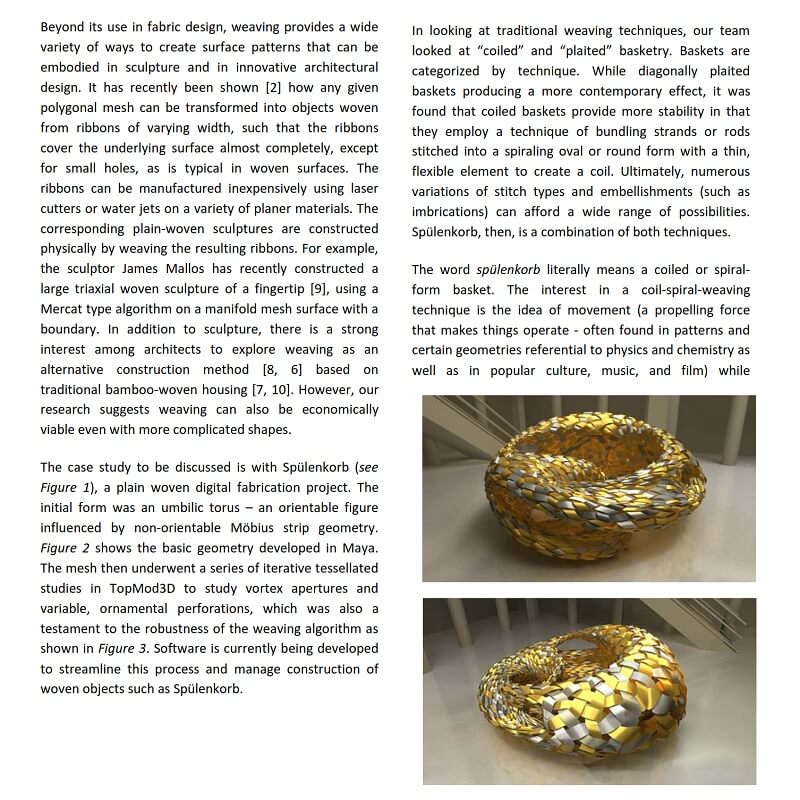
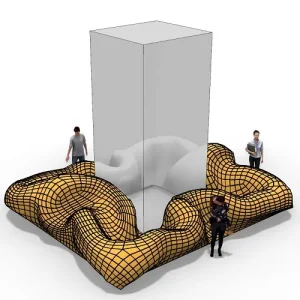
In an effort to investigate surface logics consisting of highly porous, irregularly defined weaving systems a series of investigative strategies were employed. This paper by Qing Xing, Gabriel Esquivel, Ryan Collier, Michael Tomaso and Ergun Akleman, discusses certain modes of research and their derivatives through a case study, Spülenkorb, as an entry into a digital fabrication competition by Texfab, in which the project received honorable mention.
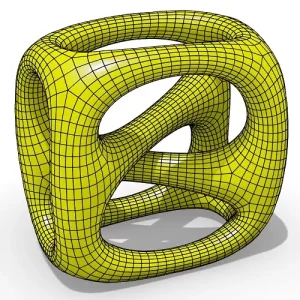
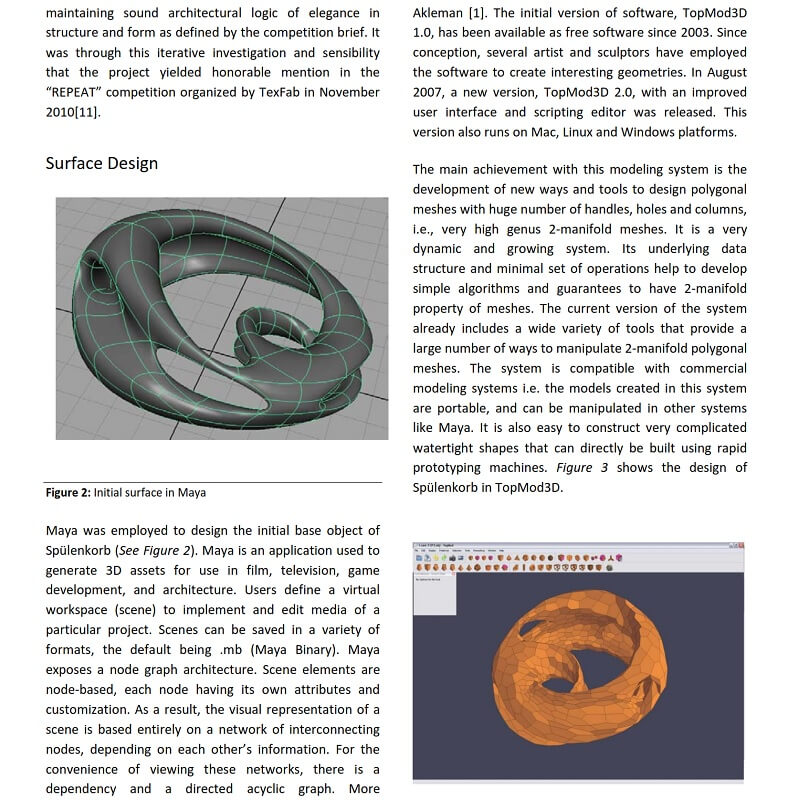 The initial form is conceived as a Möbius band, a geometrical variant of the pure mathematical “strip”. The base mesh of the initial form is developed using the software TopMod3D and Maya. This base mesh is then processed into a woven object using internally developed weaving software.
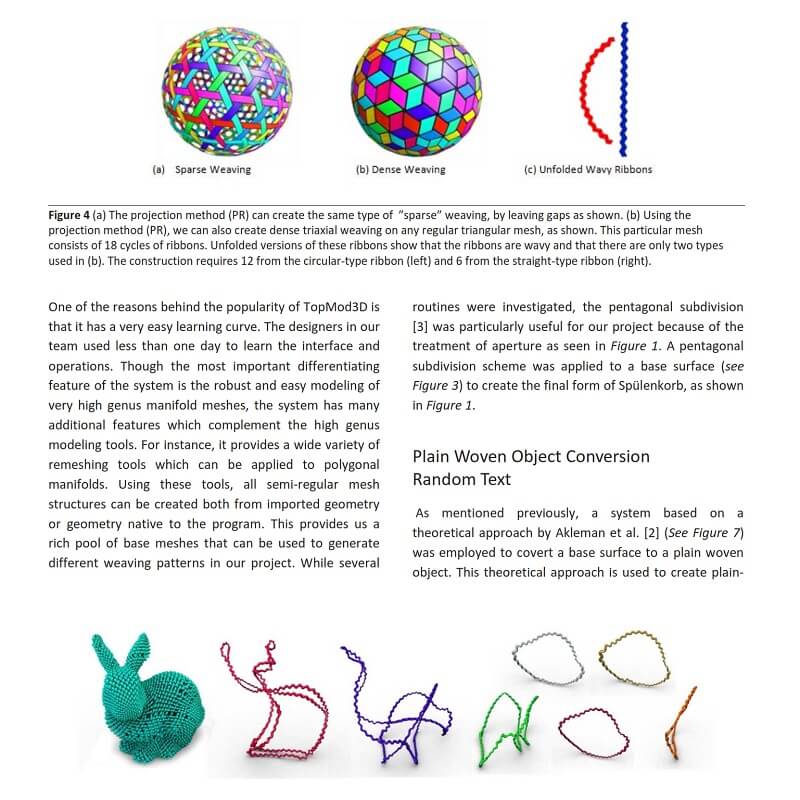 Knots and links are interesting structures that are widely used for tying objects together and for creating interesting shapes such as woven baskets. To topologists, a knot is a 3D embedding of a circle and a link is a 3D embedding of more than one circle.
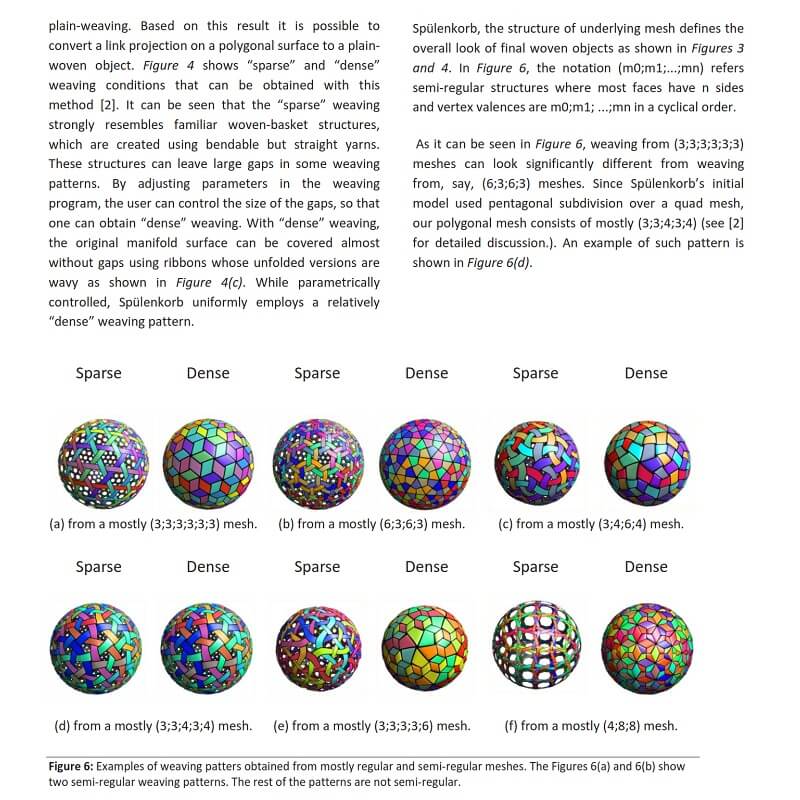 Authors prefer to use the general term link, since each component of a link is also a knot. Mathematical links can be used to represent weaving structures such as a fabric, a cloth, or a basket. While there are a wide variety of weaving methods, the most popular is plain-weaving, which consists of threads that are interlaced so that a traversal of each thread alternately goes over and under the other threads (or itself) as it crosses them.
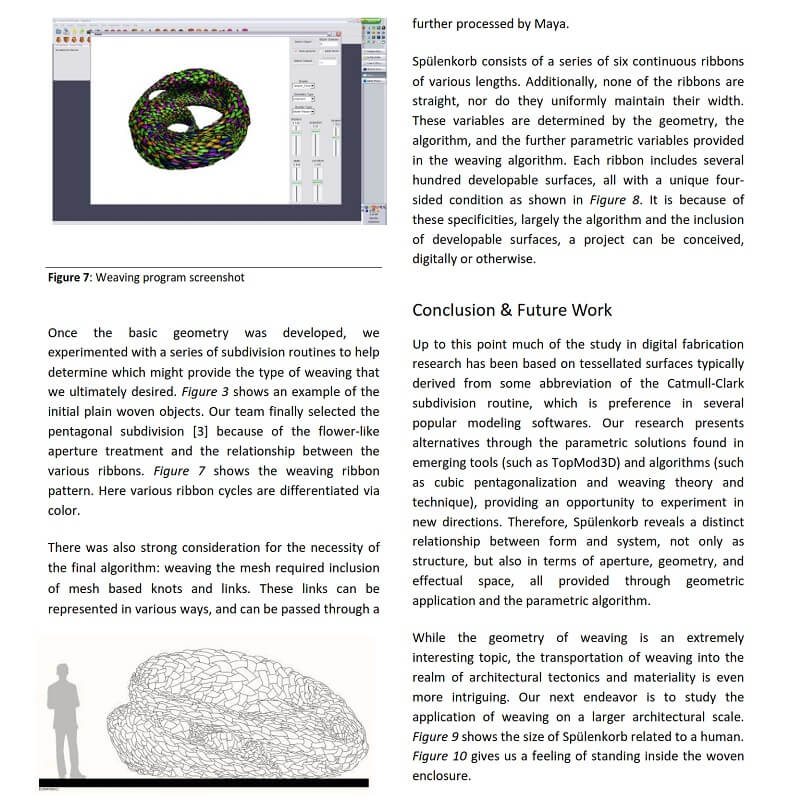
String Art Generator by Yiran is a grasshopper plugin which generates a string art sequence based on an input image. You can

This paper by Alessandro Liuti, Sofia Colabella, and Alberto Pugnale, presents the construction of Airshell, a small timber gridshell prototype erected by employing a pneumatic formwork.

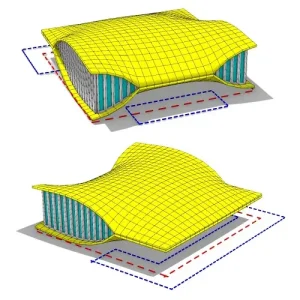
In this paper by Gregory Charles Quinn, Chris J K Williams, and Christoph Gengnagel, a detailed comparison is carried out between established as well as novel erection methods for strained grid shells by means of FE simulations and a 3D-scanned scaled physical model in order to evaluate key performance criteria such as bending stresses during erection and the distance between shell nodes and their spatial target geometry.

In this paper by Frederic Tayeb, Olivier Baverel, Jean-François Caron, Lionel du Peloux, ductility aspects of a light-weight composite gridshell are developed.