Design for Deconstruction
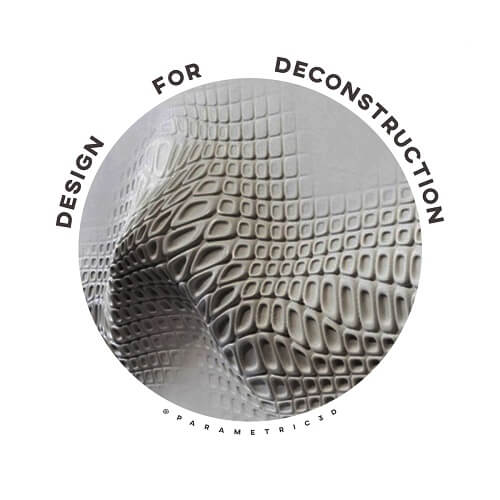
This Master’s thesis by Anastasios Kokkos is focused on the ambiguous topic concept of Designing for Deconstruction and its application within the construction industry with a computational approach.
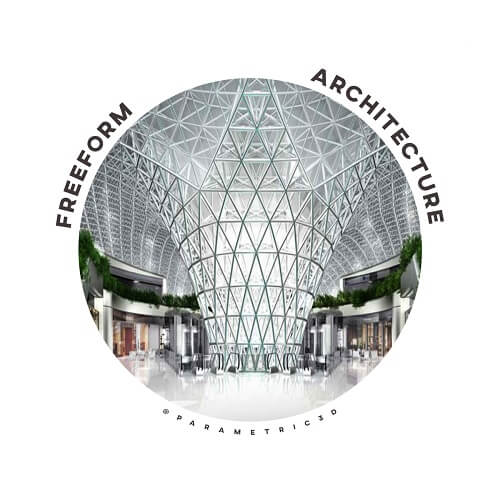
In this study by Viktoria Henriksson and Maria Hult, rationalization in terms of different surface discretization methods has been a main focus. It also explores multi-objective optimization. The structure is designed parametrically in the Rhinoceros plugin Grasshopper and structurally analysed with the FE add-on Karamba.
The aim of this thesis by Robert Vierlinger is the development of basic structures for a flexible generation and optimization framework for practical use in the sense of a continuously accompanying design explorer, in which parameterization is adaptable and objective functions are changeable at any time during the design process.
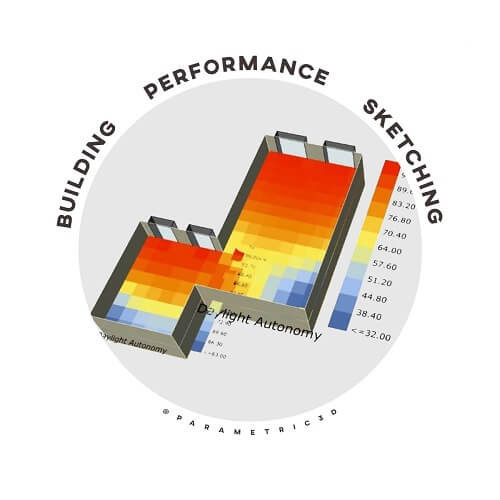
This study by Elzine Braasch investigated the question of whether the distributed model method (DMM) could be perceived by the New Zealand building industry’s architects and engineers as overcoming barriers which prevent them from implementing building performance sketching within their design processes.
This thesis by Roland Hudson is aimed at establishing a detailed understanding of the tasks related to parametric design and to develop a set of considerations that should be made when undertaking tasks related to this field. The position of the parametric designer in architectural practice presents new opportunities in the design process this thesis also aims to capture these.
This publication is an elaboration of exercises provided in Andrew Payne and Rajaa Issa’s Grasshopper Primer. In addition, lessons outlined in Algorithmic Modeling with Grasshopper by Zubin Khabazi, are referenced as well as scripts written during Professor Kyle Talbott’s Microcosm Studio.
The interest of this research by Francesco di Niccolo focuses on the dynamics and the potential of computational design, in particular through the parametric design and writing algorithms. The research has attempted to outline the main design methodologies in the vast panorama of computational design.
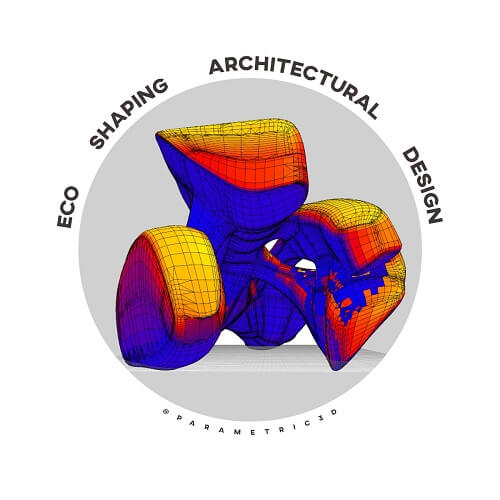
This paper by Zhao Jingtao proposes the theoretical framework of Eco-shaping Architectural Design Approach, explains its work flow and verifies the effectiveness in one architectural design practice.
‘Generative Algorithms’ by Zubin Khabazi which published on-line, was aimed to bring forward subjects and concepts on geometrical issues related to architectural design and some basic experiments using parametric modeling and algorithmic approach with Grasshopper.
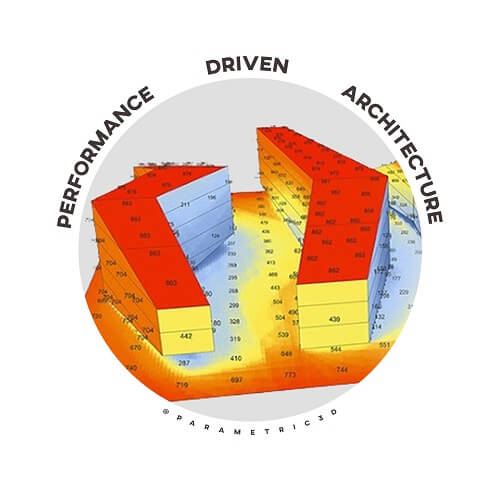
Performance-driven architectural design by Xing Shi and Wenjie Yang, emphasizes on comprehensive optimization of various quantifiable performances of buildings. As the leading profession of a project team, architects play a vital role in conducting the performance-driven design.
The idea behind the ‘Generative Algorithms, Concepts and Experiments’ by Zubin Khabazi is to explore design and algorithmic solutions through experiments rather than pure geometrical/algorithmic subjects.
Master in parametric design introduces you to parametric design and digital manufacturing in the fields of Product Design, Architecture, Landscape, Digital Fabrication.
Grasshopper Learning Material by Woojae Sung explains the basic concepts of Grasshopper as a graphical algorithm editor. It works on real 2D/3D geometries with Rhino. And with Grasshopper, on the algorithm behind those real geometries.
PanelingTools helps designers create paneling solutions from concept to fabrication. PanelingTools facilitates conceptual and detailed design of paneling patterns using NURBS and mesh geometry. PanelingTools is closely integrated with the Rhinoceros environment using standard Rhino geometry.
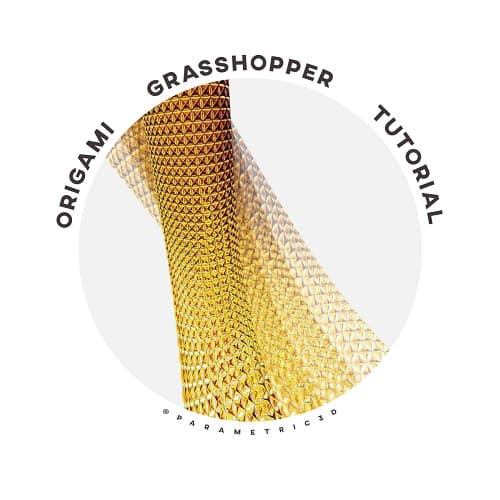
The purpose of this tutorial by Ivo A. Semerdjiev is to create a folding origami skin based on parametric principles. The first step is to make a square grided surface based on one convex and concave curves. Their z-axis planars are aligned and then arrayed.
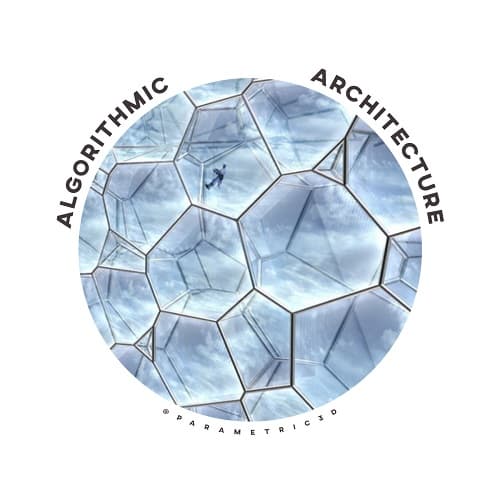
Algorithmic Architecture by Dr. Tony Kotnik discusses subjects like computational design and digital architecture. Recent theories of form in architecture have focused on computational methods of formal exploration and expression.
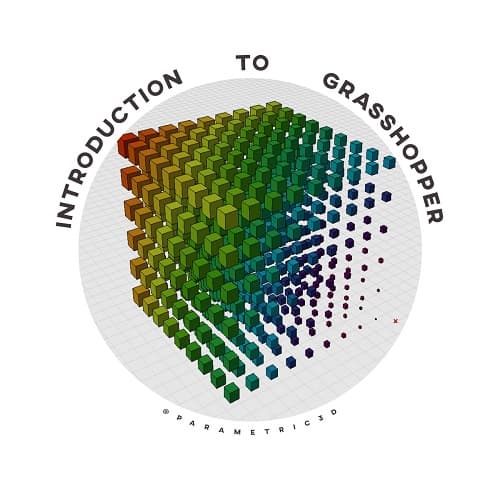
Introduction to Grasshopper for Rhinoceros by Maria Mingallon contains examples that explain Data Storage: Objects, Scalars, Data Trees, Vectors. Curves (NURBS): Definition & type of curves Curve Analysis (Curve Domain), Surfaces (NURBS): Definition & Surface Analysis Surface Domain & Evaluate Surface and Manipulation of Curves & Surfaces.
This is the third edition of the ‘Generative Algorithms’ by Zubin Khabazi which has been tried to be updated with most of the features in Grasshopper 0.8.0066. The book now has more to offer for those who like to learn designing with algorithms.
Main goal of this project by woo jae sung is to make successive bridge-like structures based on parametric idea. The first step is to make a single component that reacts to the user inputs. The second step is to replicate the single component to get multiple components which behave under the same logic.
This is the second edition of grasshopper primer by Andrew Payne and Rajaa Issa. Rajaa is a developer at Robert McNeel and Associates and is the author of several other Rhino plugins including ArchCut and the ever popular PanelingTools.