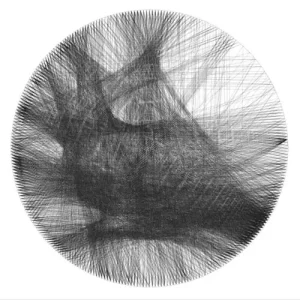
String Art Generator
String Art Generator by Yiran is a grasshopper plugin which generates a string art sequence based on an input image. You can
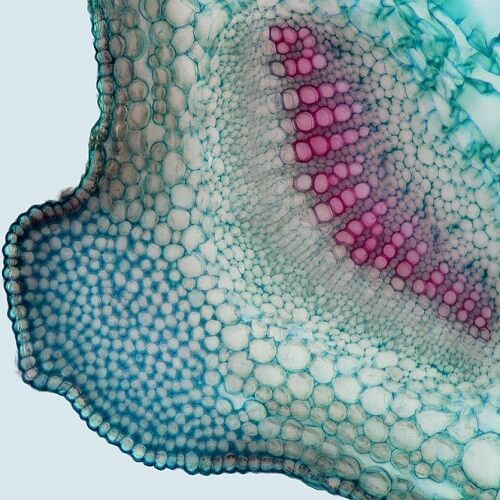
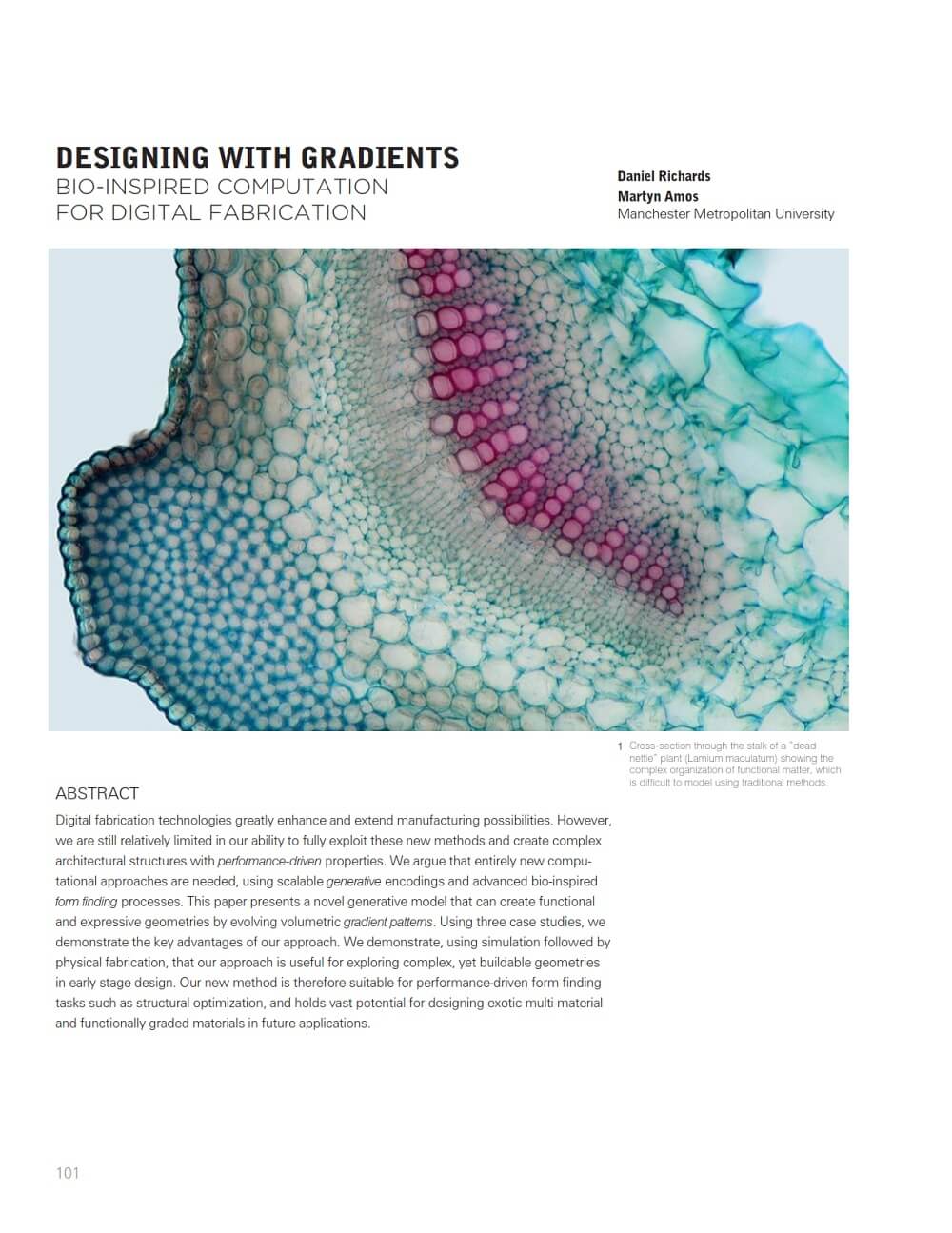
Digital fabrication technologies greatly enhance and extend manufacturing possibilities. However, the ability to fully exploit these new methods and create complex architectural structures with performance-driven properties are still relatively limited. In this paper by Daniel Richards and Martyn Amos, authors argue that entirely new computational approaches are needed, using scalable generative encodings and advanced bio-inspired form finding processes.
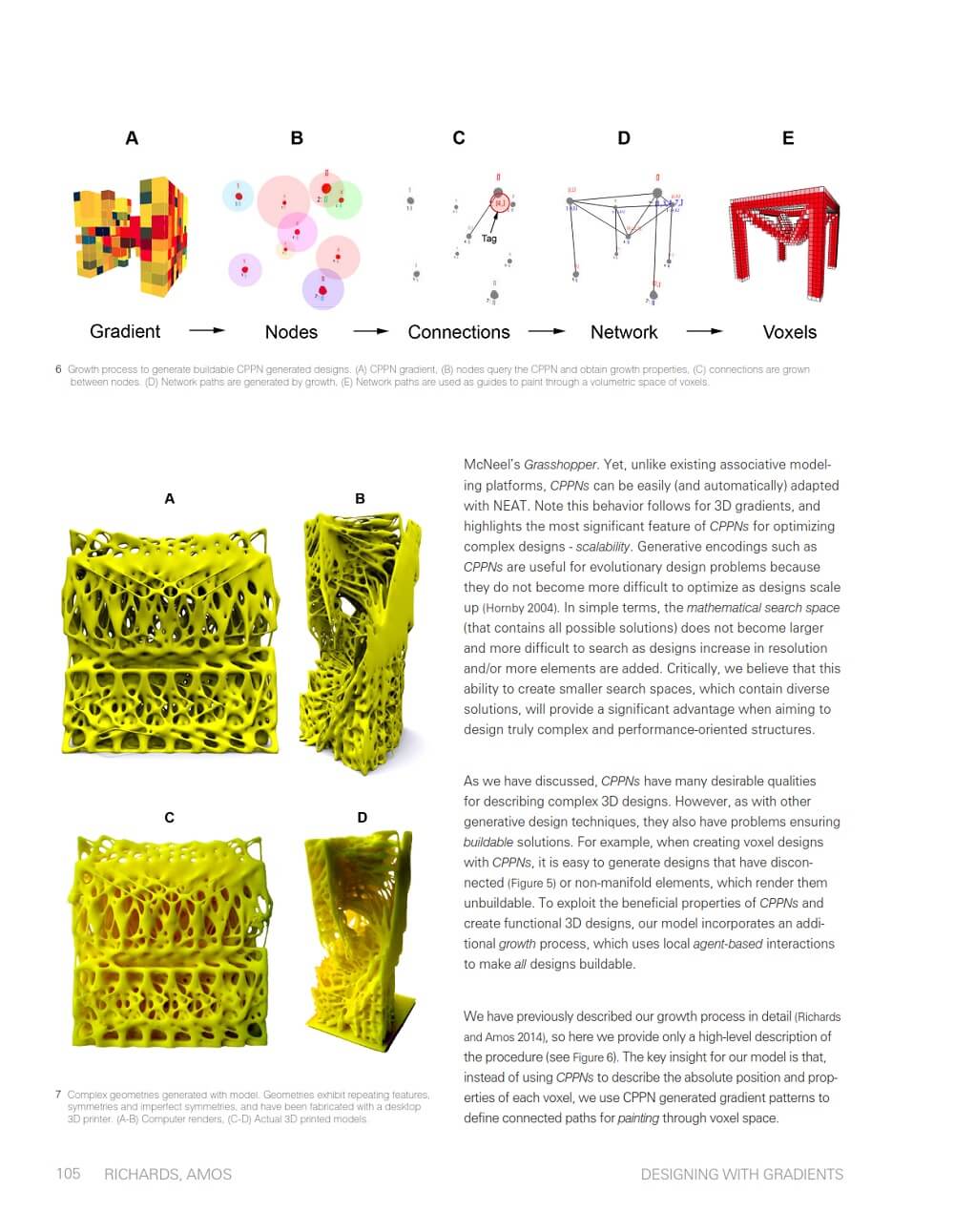
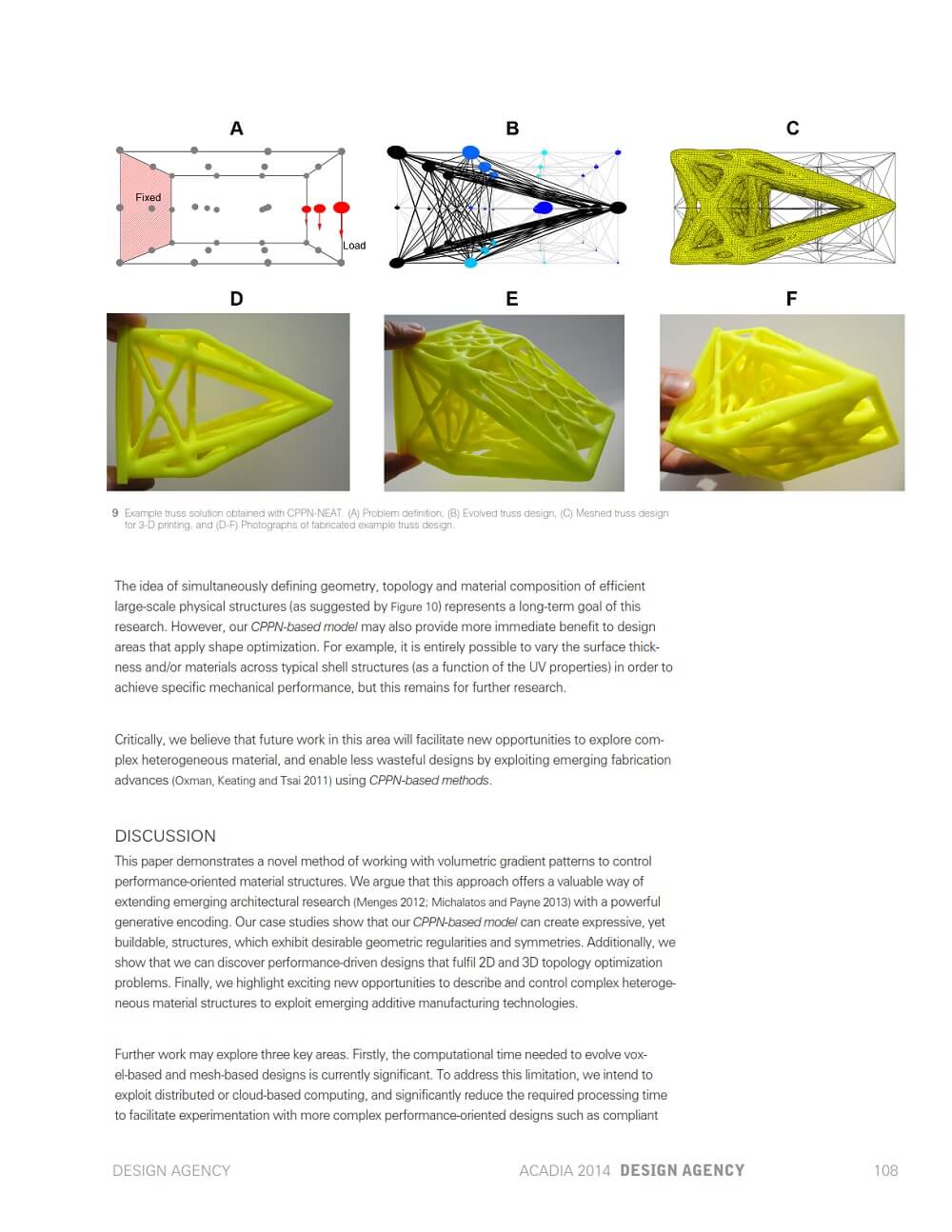
The paper presents a novel generative model that can create functional and expressive geometries by evolving volumetric gradient patterns. Using three case studies, authors demonstrate the key advantages of their approach. They demonstrate, using simulation followed by physical fabrication, that their approach is useful for exploring complex, yet buildable geometries in early stage design. Their new method is therefore suitable for performance-driven form finding tasks such as structural optimization, and holds vast potential for designing exotic multi-material and functionally graded materials in future applications.
String Art Generator by Yiran is a grasshopper plugin which generates a string art sequence based on an input image. You can

This paper by Alessandro Liuti, Sofia Colabella, and Alberto Pugnale, presents the construction of Airshell, a small timber gridshell prototype erected by employing a pneumatic formwork.

In this paper by Gregory Charles Quinn, Chris J K Williams, and Christoph Gengnagel, a detailed comparison is carried out between established as well as novel erection methods for strained grid shells by means of FE simulations and a 3D-scanned scaled physical model in order to evaluate key performance criteria such as bending stresses during erection and the distance between shell nodes and their spatial target geometry.

In this paper by Frederic Tayeb, Olivier Baverel, Jean-François Caron, Lionel du Peloux, ductility aspects of a light-weight composite gridshell are developed.