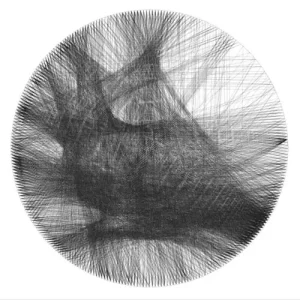
String Art Generator
String Art Generator by Yiran is a grasshopper plugin which generates a string art sequence based on an input image. You can
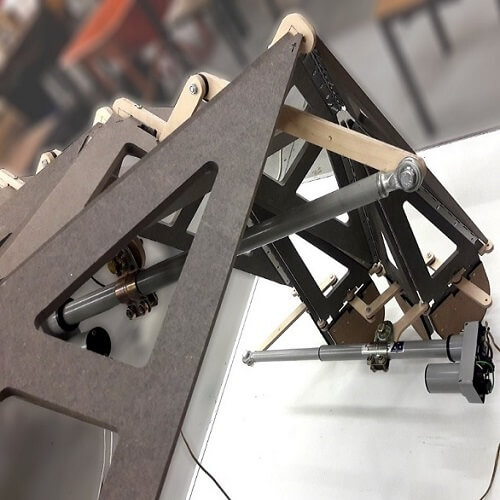
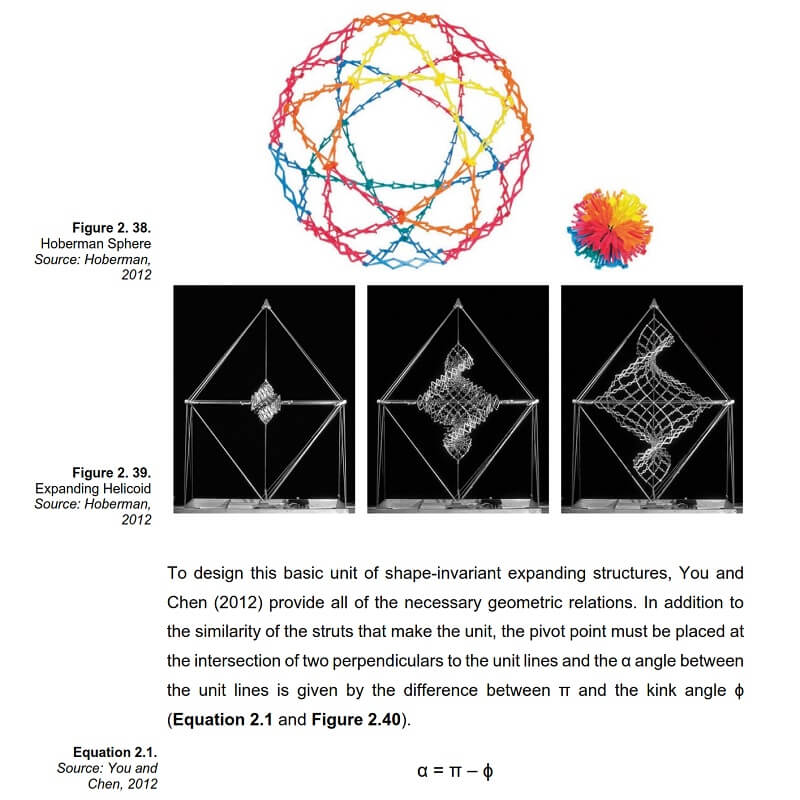
This thesis departs from the conviction that spaces that can change their formal configuration through movement may endow buildings of bigger versatility. Through kinetic architecture may be possible to generate adaptable buildings able to respond to different functional solicitations in terms of the used spaces.
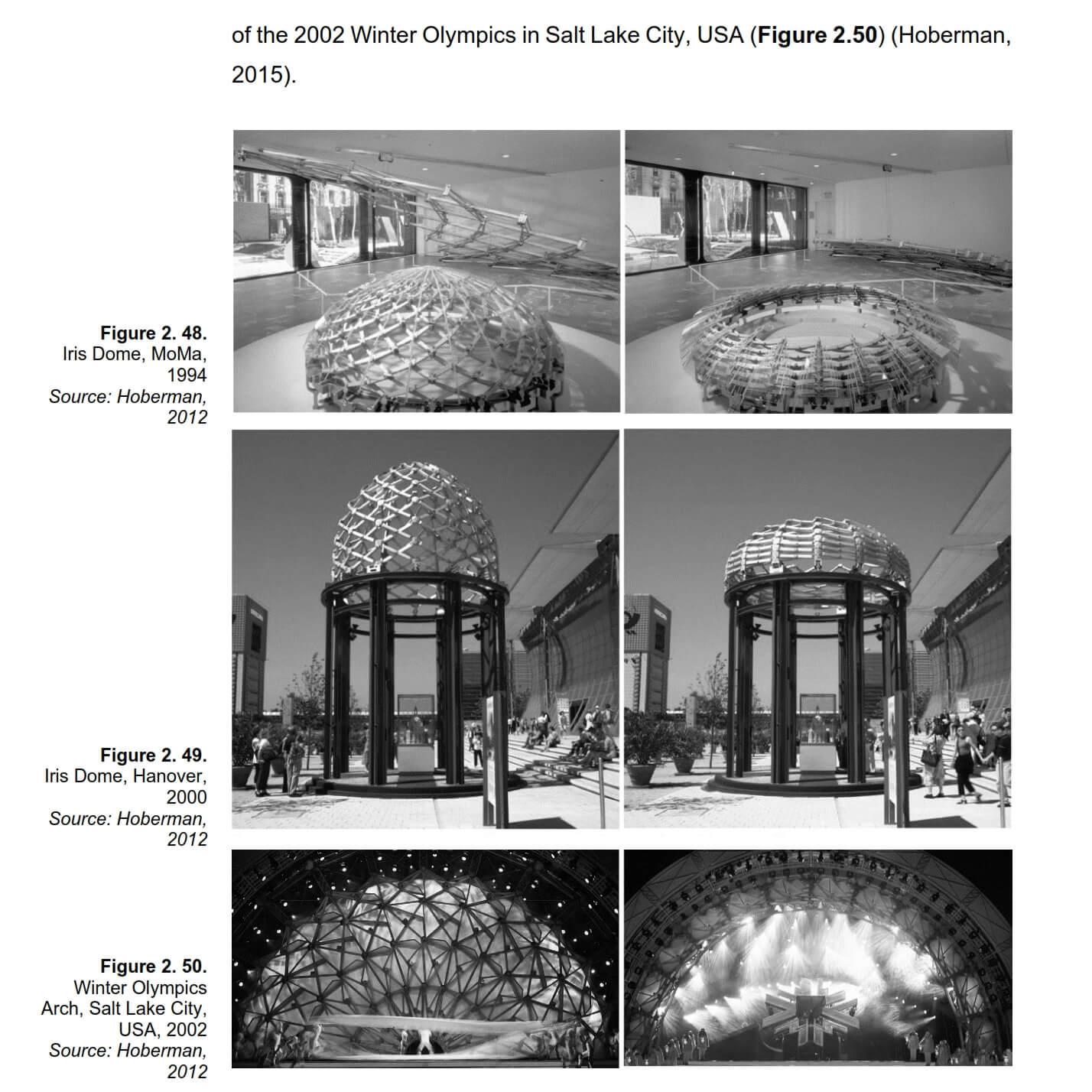 This research by Filipa Peres Frangolho Crespo Osório, proposes the exploration of rigidly folding origami surfaces as the means to materialize reconfigurable spaces through motion.
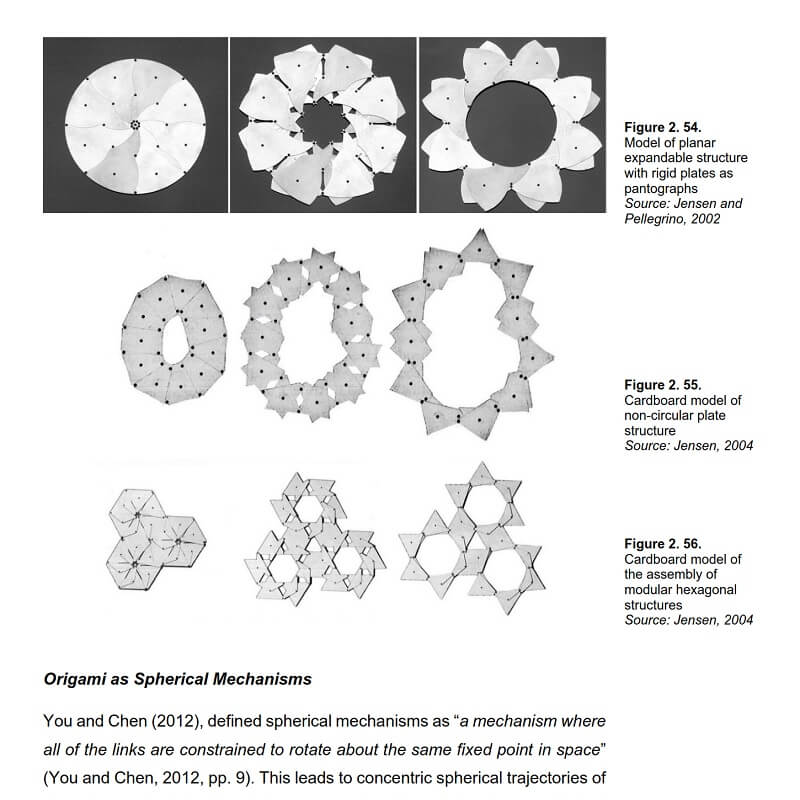
This specific kind of tessellated surfaces are the result of the transformation of a flat element, without any special structural skill, into a self-supporting element through folds in the material, which gives them the aptitude to undertake various configurations depending on the crease pattern design and welldefined rules for folding according to rigid kinematics.
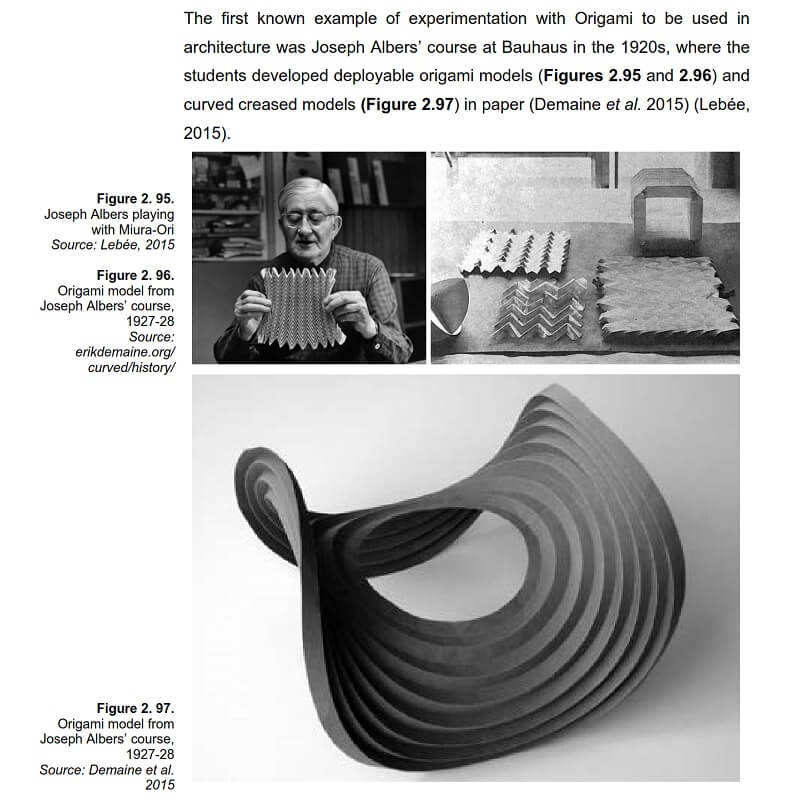 The research follows a methodology based on multidisciplinary, practical experiments supported on digital tools for formal exploration and simulation. The developed experiments allow to propose a workflow, from concept to fabrication, of kinetic structures made through rigidly folding regular origami surfaces.
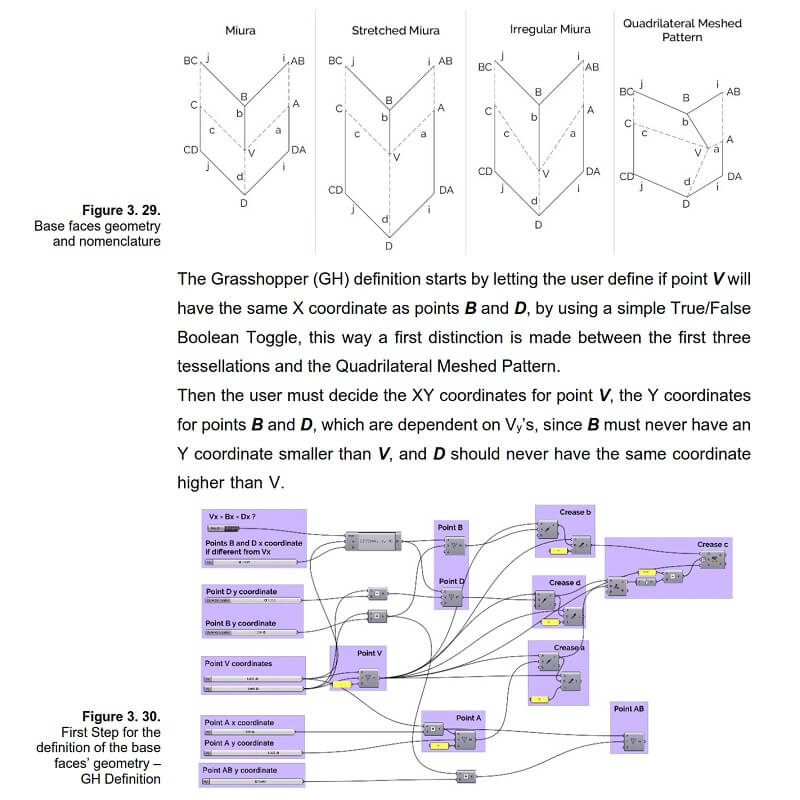 The workflow is a step-by-step process that allows to take a logical path which passes through the main involved areas, namely origami geometry and parameterization, materials and digital fabrication and mechanisms and control.
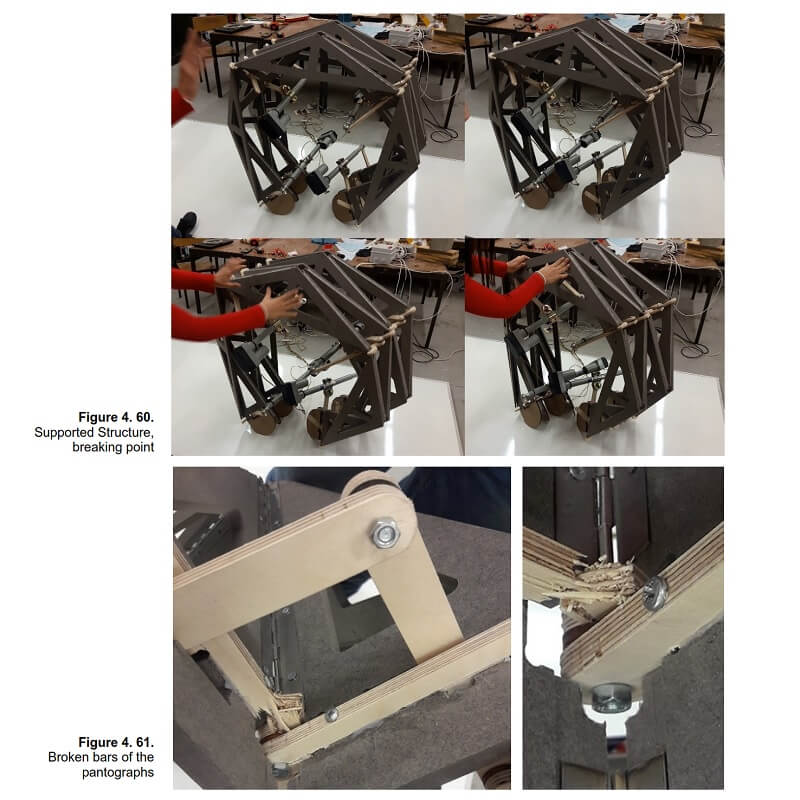
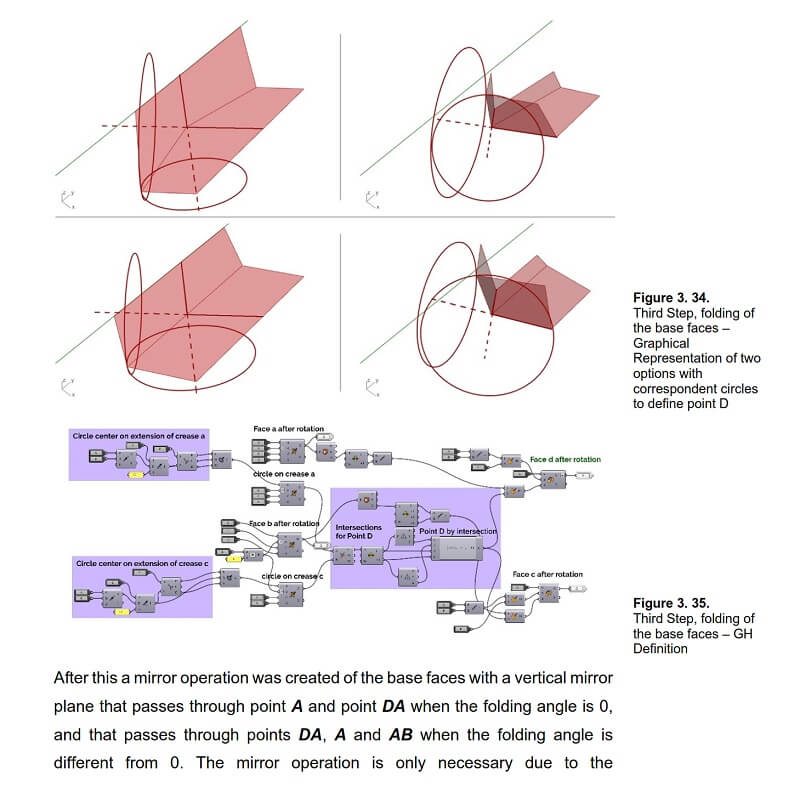 The investigation demonstrates that rigidly folding origami surfaces can be used as dynamic structures to materialize reconfigurable spaces at different scales and also that the use of pantographic systems as a mechanism associated to specific parts of the origami surface permits the achievement of synchronized motion and possibility of locking the structure at specific stages of the folding.
String Art Generator by Yiran is a grasshopper plugin which generates a string art sequence based on an input image. You can

This paper by Alessandro Liuti, Sofia Colabella, and Alberto Pugnale, presents the construction of Airshell, a small timber gridshell prototype erected by employing a pneumatic formwork.

In this paper by Gregory Charles Quinn, Chris J K Williams, and Christoph Gengnagel, a detailed comparison is carried out between established as well as novel erection methods for strained grid shells by means of FE simulations and a 3D-scanned scaled physical model in order to evaluate key performance criteria such as bending stresses during erection and the distance between shell nodes and their spatial target geometry.

In this paper by Frederic Tayeb, Olivier Baverel, Jean-François Caron, Lionel du Peloux, ductility aspects of a light-weight composite gridshell are developed.