Exclusive Lifetime Example Files

These example files are designed to give you more hands-on practice and help you develop your own ideas in parametric design. As a lifetime member, you’ll get access to a growing library of curated examples that support deeper learning through experimentation and exploration.

Latest Examples

Examples

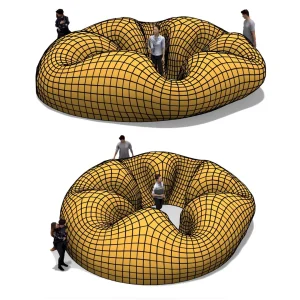
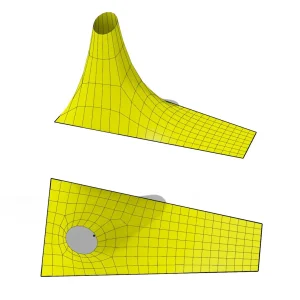
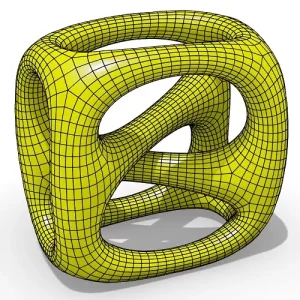
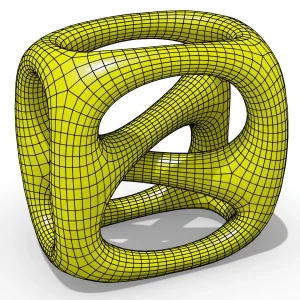
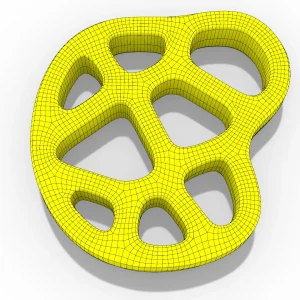
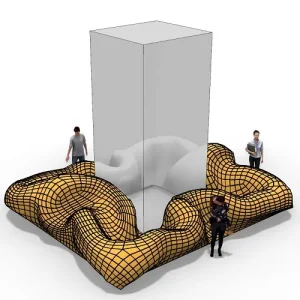
Blob Mesh from Curves

In this Grasshopper Kangaroo tutorial, you will learn how to generate a smooth mesh around a boundary curve and an internal hole by using colliding points within the mesh.

Roof Shell

In this Grasshopper example file, you can model a roof shell with randomly oriented openings using Kangaroo and dynamic relaxation method.

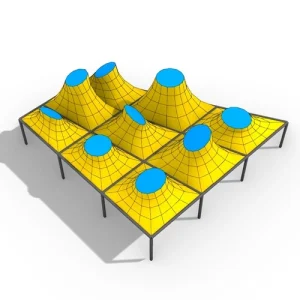
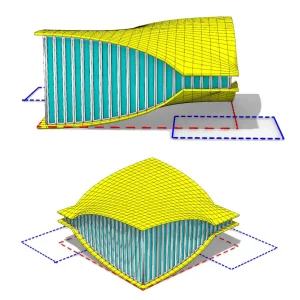
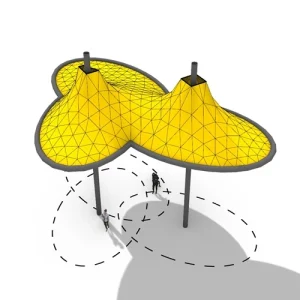
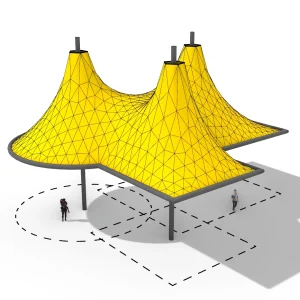
Polygon to Tensile

In this Grasshopper Kangaroo example file, you can design a tensile structure by simply defining the polygon as the base and the center of the hole, and controlling the height of the upper hole and its rotation along the X and Y axes.

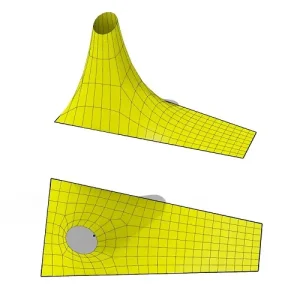
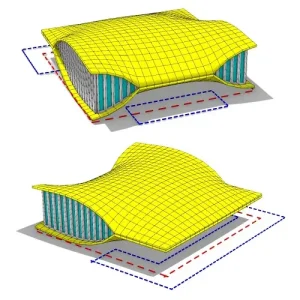
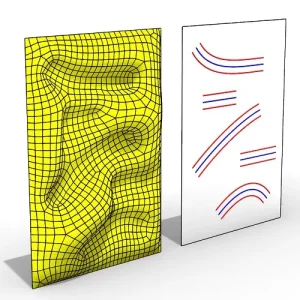
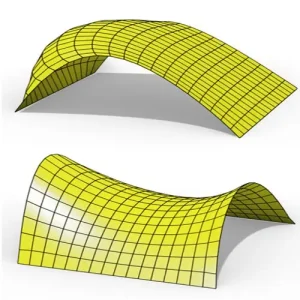
Kangaroo Roof

In this Grasshopper Kangaroo example file, you can design a parametric roof by defining boundary curves and also closed curves to define where is fixed and where can deform.

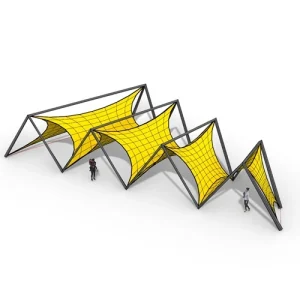
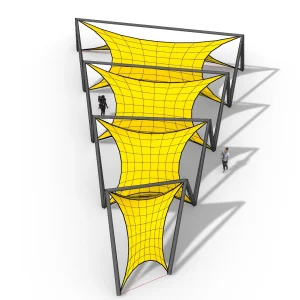
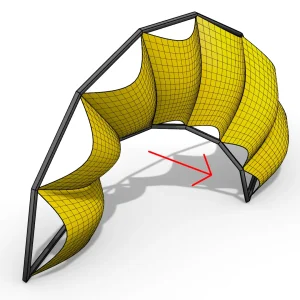
Zigzag Corridor

In this Grasshopper example file, you’ll learn how to model and simulate a zigzag tensile entrance/corridor using Kangaroo and dynamic relaxation method.

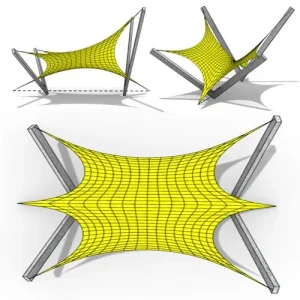
Tensile canopy

In this Grasshopper example file, you’ll learn how to model a tensile canopy with irregular plan shape using Kangaroo and dynamic relaxation method.

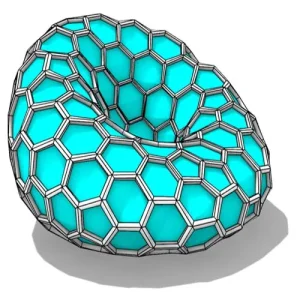
Inflate Mesh

In this Grasshopper Kangaroo tutorial, you’ll learn how to generate an inflated mesh around a network of interconnected lines using physical simulation.

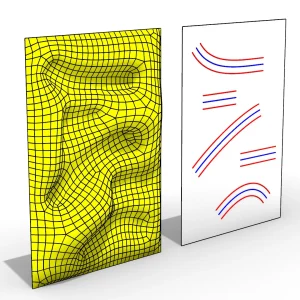
Inflate Curves

In this Grasshopper Kangaroo tutorial, you’ll learn how to inflate a mesh by defining boundary curves and specifying fixed curve locations on the mesh using an offset distance.

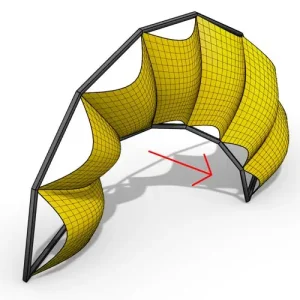
Tensile Corridor

In this Grasshopper Kangaroo tutorial, you’ll learn how to create a series of tensile structures between two profile curves and control both the amount and direction of wind force.

Ngon Mesh

In this Grasshopper tutorial, you’ll learn how to create a parametric form by defining a base polygon and converting it into an n-gon, quad, or triangular mesh. You’ll then extract the floor levels and turn the mesh edges into structural frames and window openings.
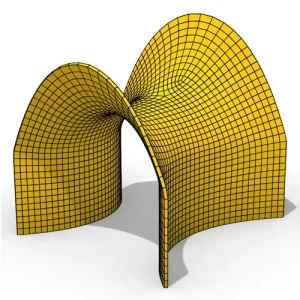
Minimal Surface

In this Grasshopper tutorial, you’ll learn how to create a minimal surface generated from a series of catenary curves using the Kangaroo plugin.

Wind Pavilion

In this Grasshopper Kangaroo tutorial, you’ll learn how to create a parametric mesh and deform it using wind forces and plastic anchors to gain more control over the edges and overall form.

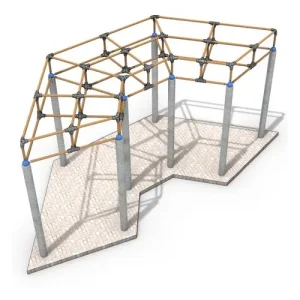
Space Frame

In this Grasshopper tutorial, you’ll learn how to create a simple two-layer Vierendeel space frame structure by defining any four-sided polygon directly in Rhino.

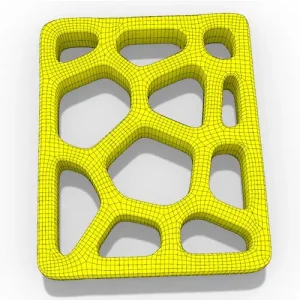
Voronoi Mesh

In this Grasshopper Voronoi tutorial, you’ll learn how to create a parametric mesh generated from random or controllable Voronoi cells within a closed boundary.

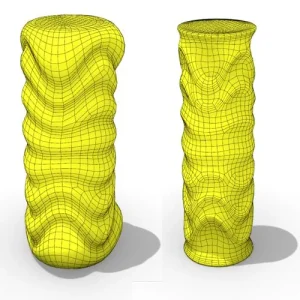
Inflated Mesh

In this Grasshopper tutorial, you’ll learn how to create a dynamic parametric mesh using section curves and Kangaroo physics to inflate it from within or compress it outward.

Tensile Structure

In this Grasshopper Kangaroo tutorial, you’ll learn how to model a parametric tensile structure by defining anchor points, the direction control line, or a polygonal mesh boundary.