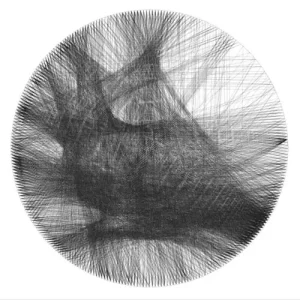
String Art Generator
String Art Generator by Yiran is a grasshopper plugin which generates a string art sequence based on an input image. You can
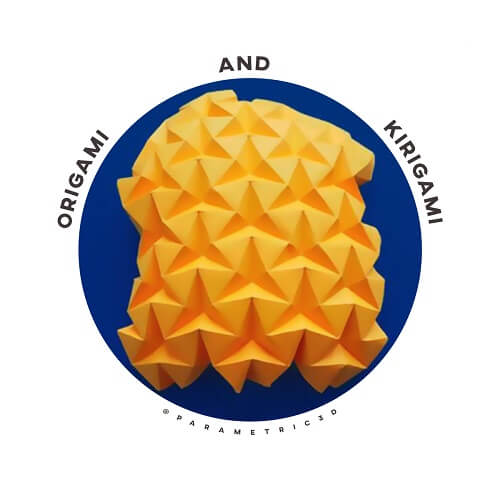
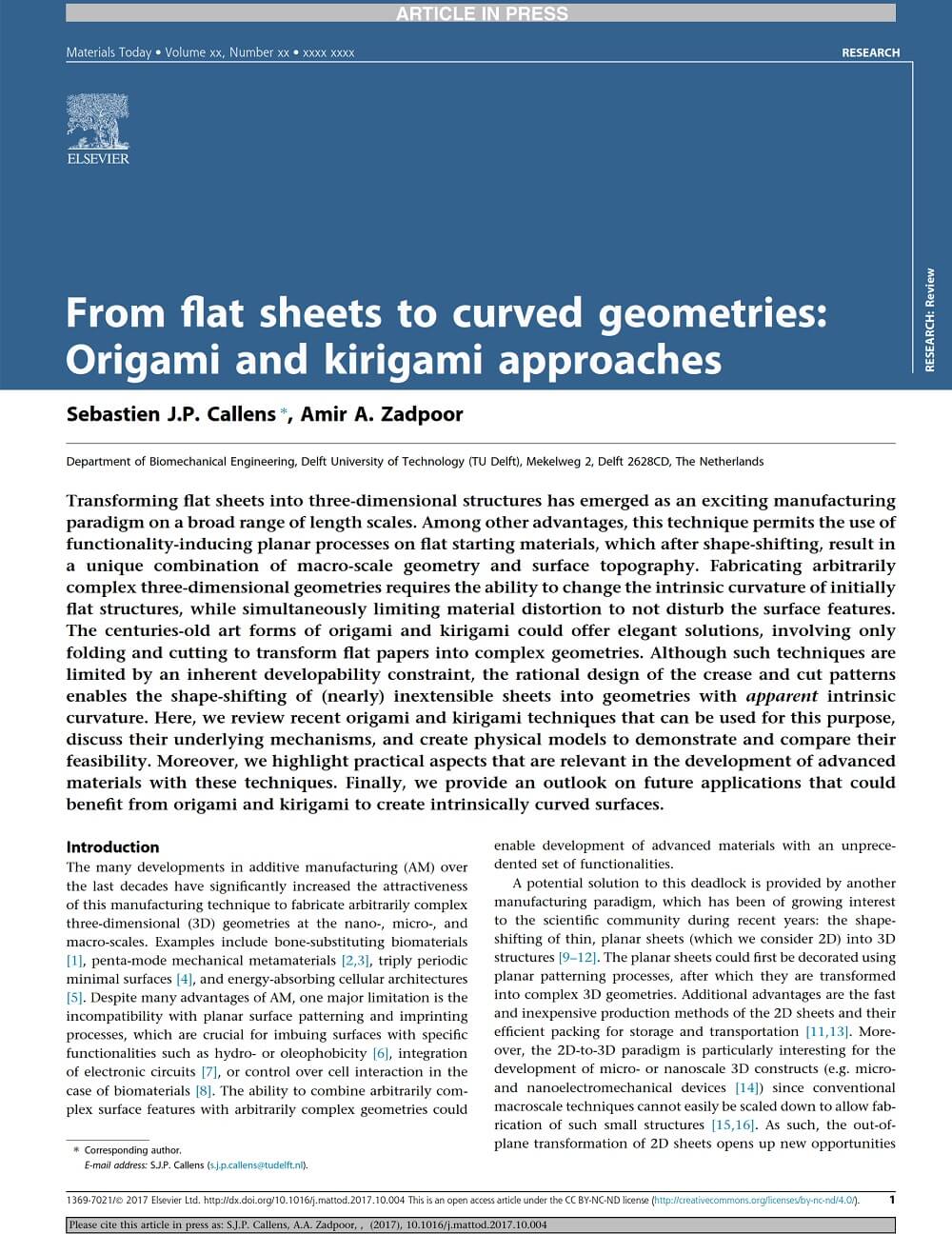
Transforming flat sheets into three-dimensional structures has emerged as an exciting manufacturing paradigm on a broad range of length scales. Among other advantages, this technique permits the use of functionality-inducing planar processes on flat starting materials, which after shape-shifting, result in a unique combination of macro-scale geometry and surface topography. Fabricating arbitrarily complex three-dimensional geometries requires the ability to change the intrinsic curvature of initially flat structures, while simultaneously limiting material distortion to not disturb the surface features.
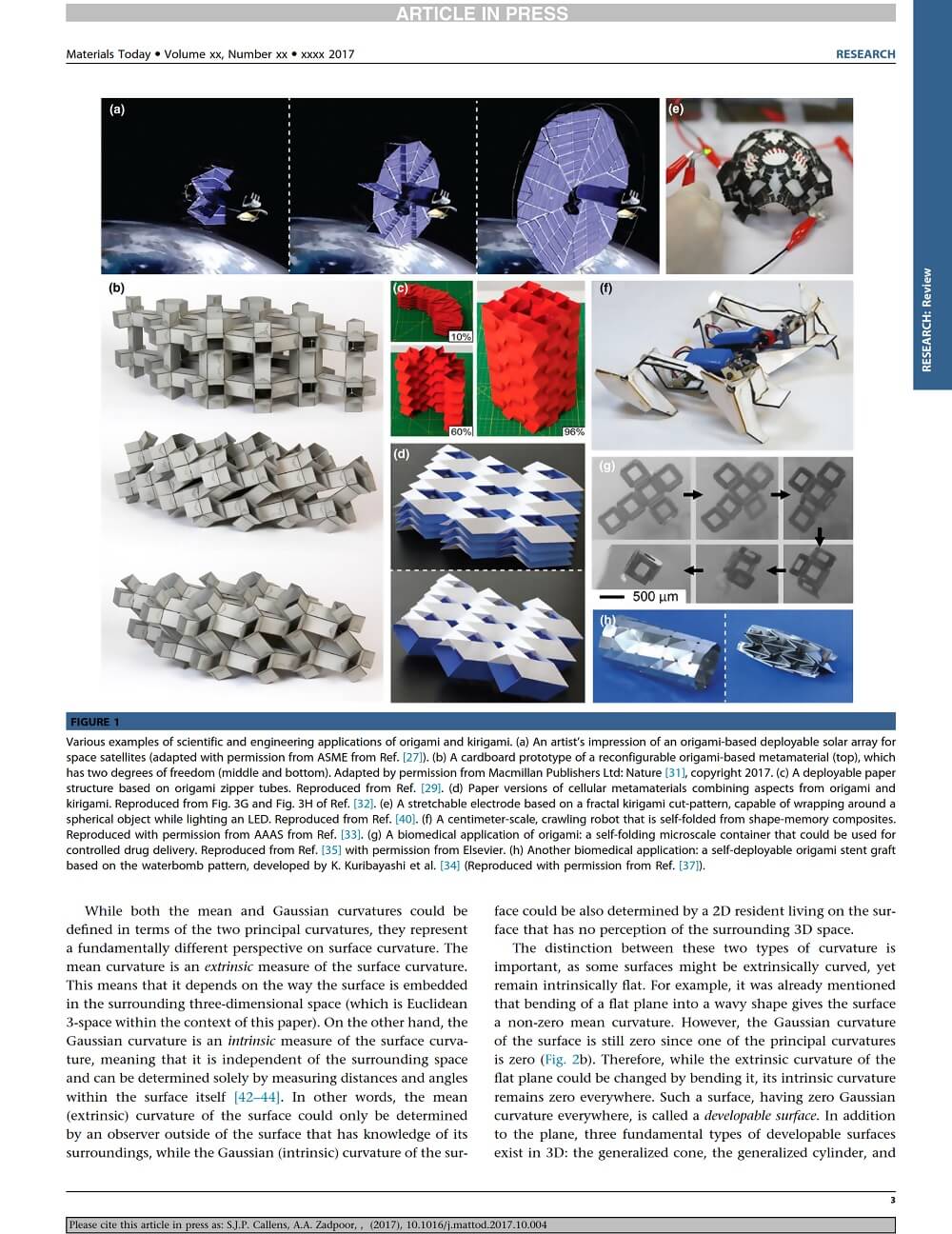
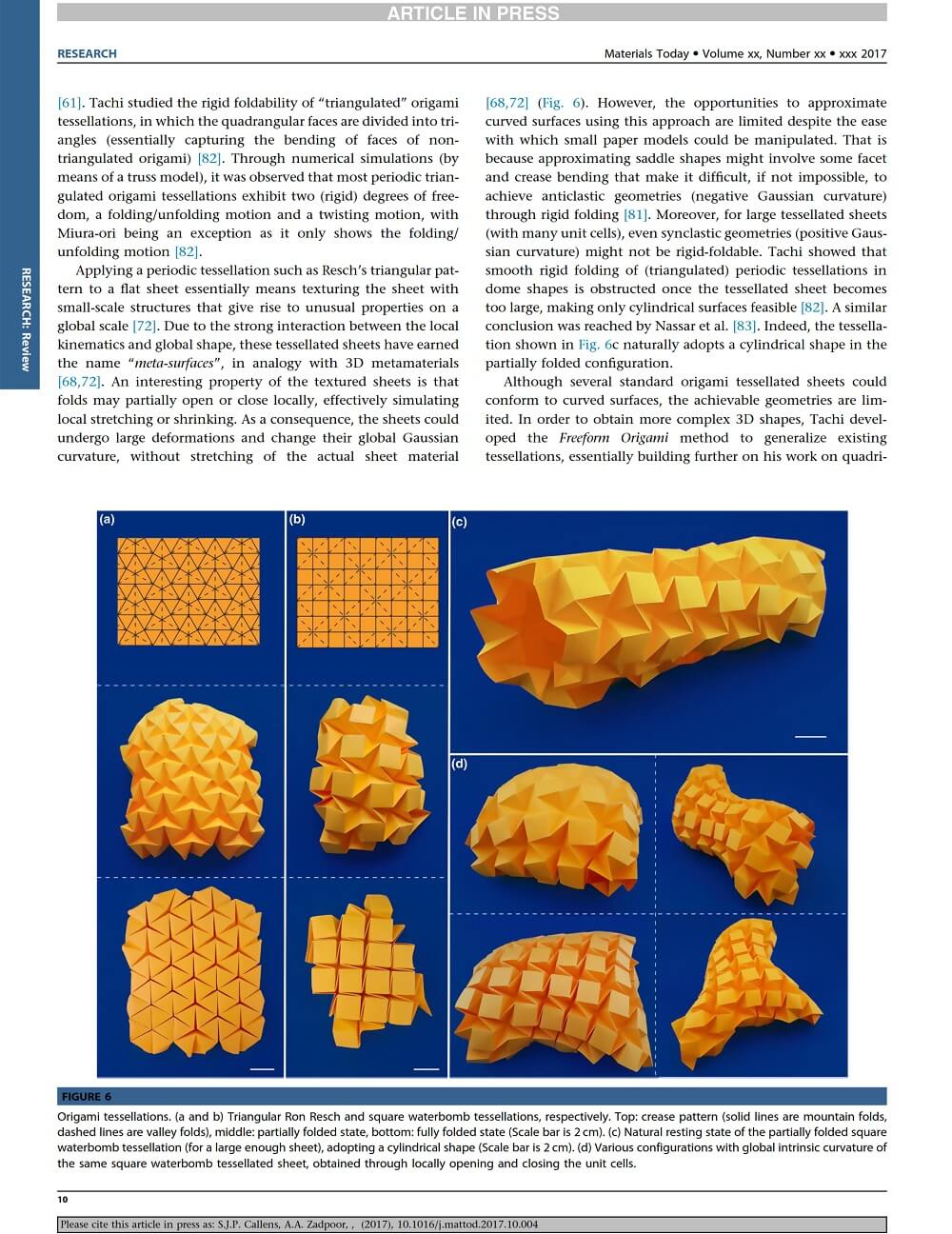
The centuries-old art forms of origami and kirigami could offer elegant solutions, involving only folding and cutting to transform flat papers into complex geometries. Although such techniques are limited by an inherent developability constraint, the rational design of the crease and cut patterns enables the shape-shifting of (nearly) inextensible sheets into geometries with apparent intrinsic curvature. Here, the authors review recent origami and kirigami techniques that can be used for this purpose, discuss their underlying mechanisms, and create physical models to demonstrate and compare their feasibility.
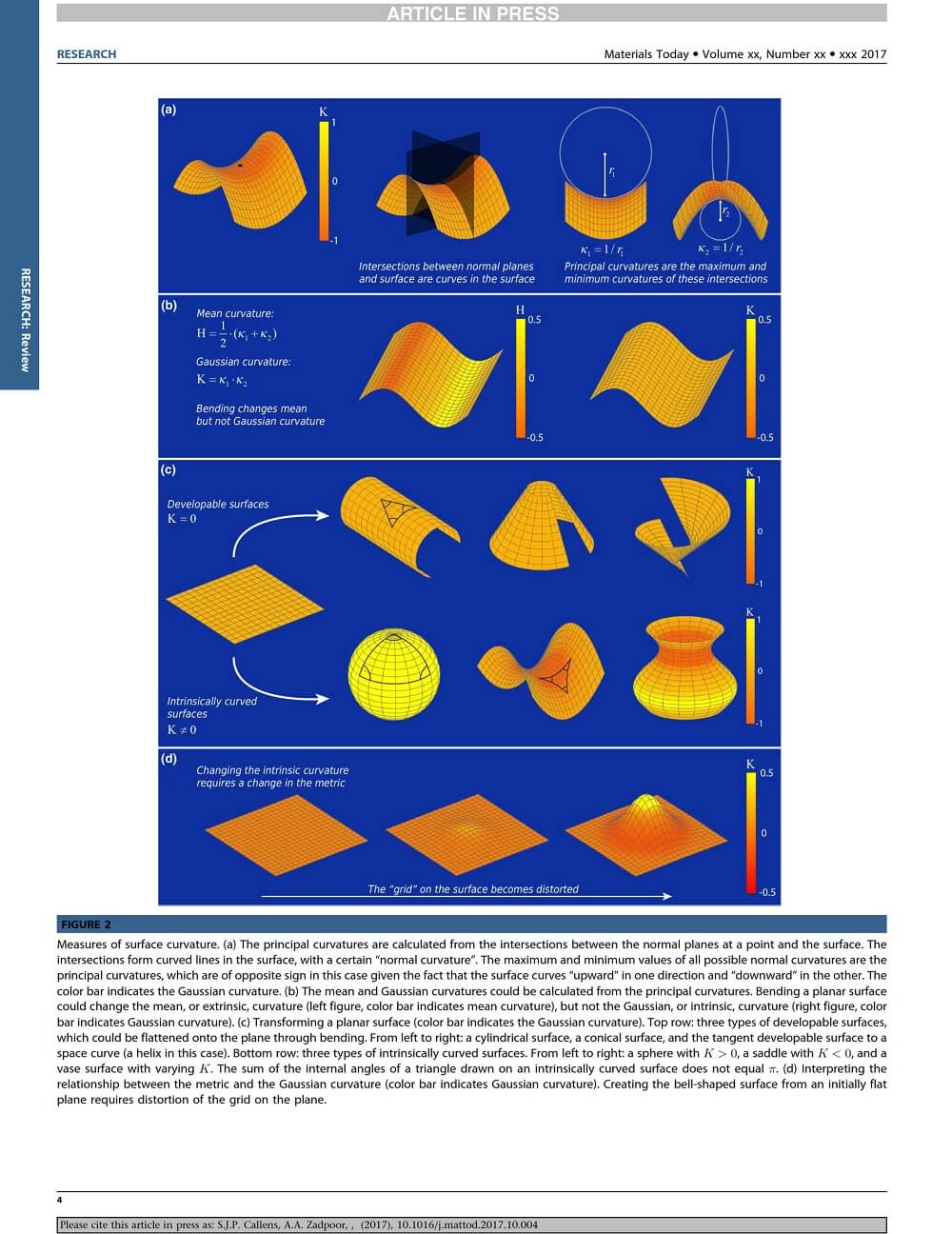
Moreover, they highlight practical aspects that are relevant in the development of advanced materials with these techniques. Finally, they provide an outlook on future applications that could benefit from origami and kirigami to create intrinsically curved surfaces.
String Art Generator by Yiran is a grasshopper plugin which generates a string art sequence based on an input image. You can

This paper by Alessandro Liuti, Sofia Colabella, and Alberto Pugnale, presents the construction of Airshell, a small timber gridshell prototype erected by employing a pneumatic formwork.

In this paper by Gregory Charles Quinn, Chris J K Williams, and Christoph Gengnagel, a detailed comparison is carried out between established as well as novel erection methods for strained grid shells by means of FE simulations and a 3D-scanned scaled physical model in order to evaluate key performance criteria such as bending stresses during erection and the distance between shell nodes and their spatial target geometry.

In this paper by Frederic Tayeb, Olivier Baverel, Jean-François Caron, Lionel du Peloux, ductility aspects of a light-weight composite gridshell are developed.