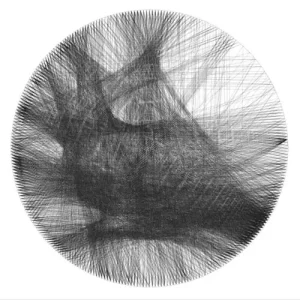
String Art Generator
String Art Generator by Yiran is a grasshopper plugin which generates a string art sequence based on an input image. You can
POLYBRICK 2.0: Bio-Integrative Load Bearing Structures
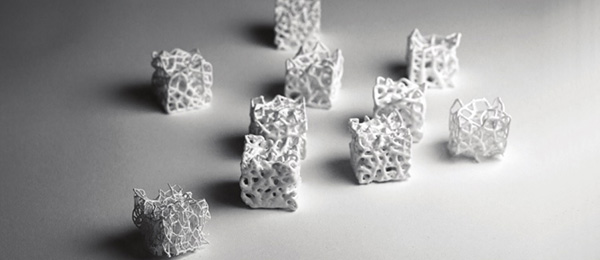
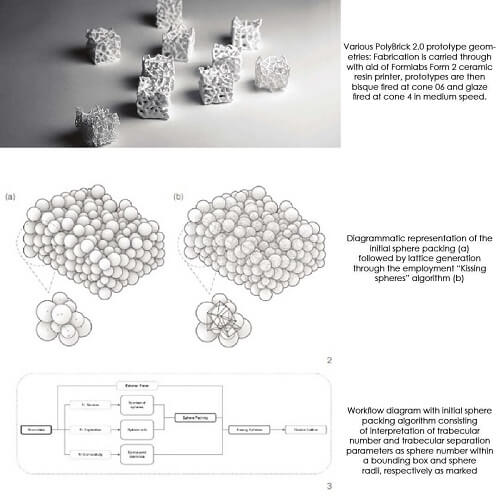
Natural load bearing structures are characterized by aspects of specialized morphology, lightweight, adaptability, and a regenerative life cycle. PolyBrick 2.0 aims to learn from and apply these characteristics in the pursuit of revitalizing ceramic load bearing structures. For this, algorithmic design processes are employed, whose physical manifestations are realized through available clay/porcelain additive manufacturing technologies (AMTs).
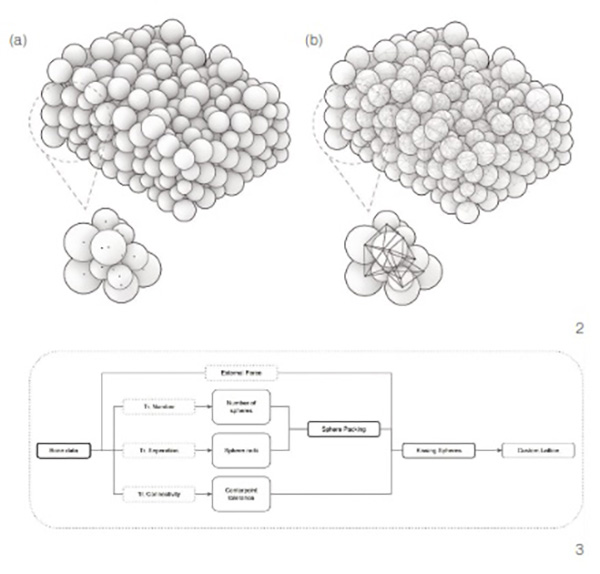
By integrating specialized expertise across disciplines of architecture, engineering, and material science, our team proposes an algorithmic toolset to generate PolyBrick geometries that can be applied to various architectural typologies.
Additionally, comparative frameworks for digital and physical performance analyses are outlined. Responding to increasing urgencies of material efficiency and environmental sensibility, this project strives to provide for designers a toolset for environmentally responsive, case-specific design, characterized by the embedded control qualities derived from the bone and its adaptability to specific loading conditions.
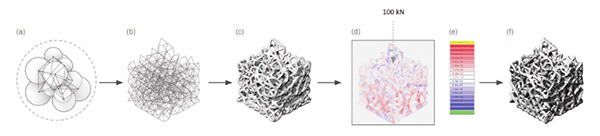
Various approaches to brick tessellation and assembly are proposed and architectural possibilities are presented. As an outcome of this research, PolyBrick 2.0 is effectively established as a Grasshopper plug-in, “PolyBrick” to be further explored by designers.
“Ceramic modules of standard measurement have been used as a building block […] for many centuries” (Sabin 2014). With rapid developments in the area of clay additive manufacturing, there is an emerging possibility to reintroduce non-standard clay building blocks in load bearing applications.
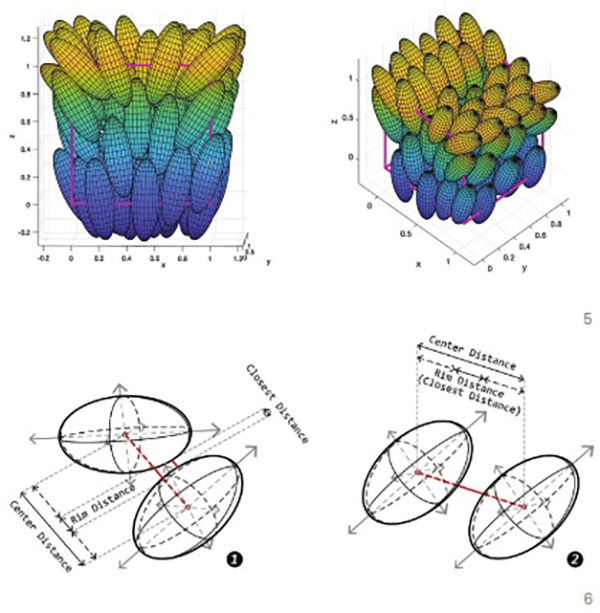
The motivation for such research trajectories comprise of “a qualitative, design driven desire for novel forms, or an aspiration for the quantitative improvement of building performance metrics” (Seibold et al. 2018). However, literature outlining expansive utilization of these technologies within comprehensive processes of algorithmic generation, manufacturing, digital and physical evaluation, and architectural application remains lacking.
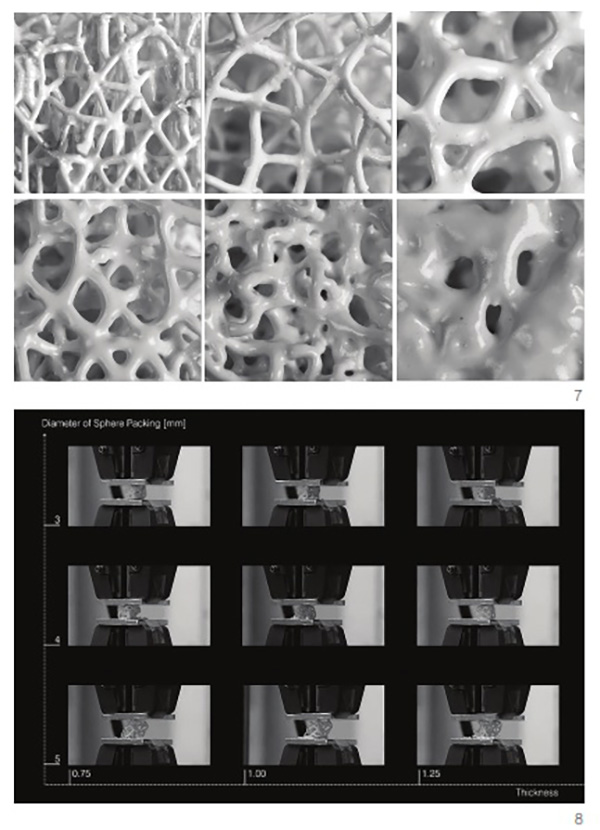
As part of comprehensive workflow for PolyBrick 2.0, novel algorithmic processes are developed, fabrication methods are outlined, prototype performances are evaluated, and architectural applications are envisioned. Hence, PolyBrick 2.0 suggests a complete methodology in continuing PolyBrick’s ubiquitous aim to “bridge digital processes with the production and design of nonstandard ceramic building blocks in architecture” (Sabin et al. 2014).
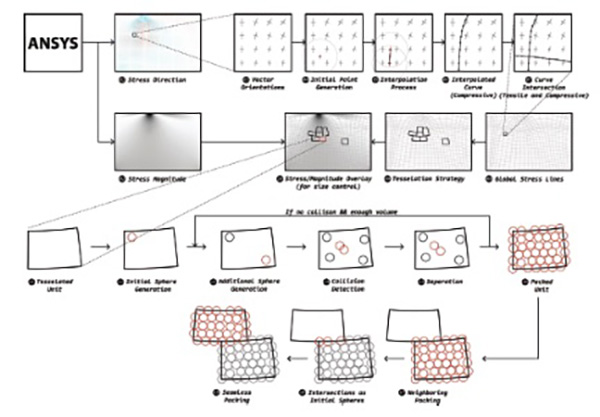
Within this process the role of “non-standard” components in load bearing applications is addressed and the duality of solidity and porosity in relation to structural performance is explored.
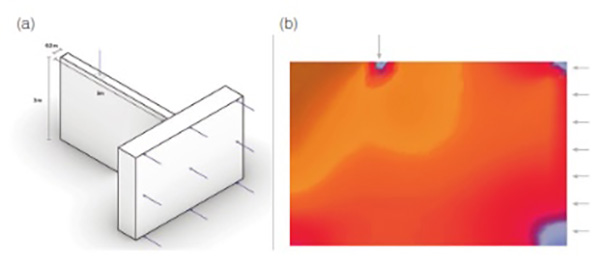
We expand upon pursuits to implement additive manufacturing tools (AMTs) in revitalizing ceramic load bearing structures in more materially efficient and responsive contexts. A precise and complete workflow is outlined and formalized as a Grasshopper plug-in, “PolyBrick,” accompanied by a custom C# tessellation algorithm is established for further implementation by users and designers.
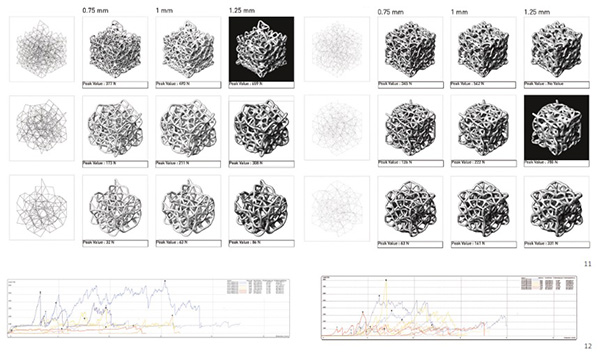
The trajectory of the research introduces a design process emphasizing adaptability and lightweight, with various potential strategies that relate to environmental responsiveness and programmatic concerns.
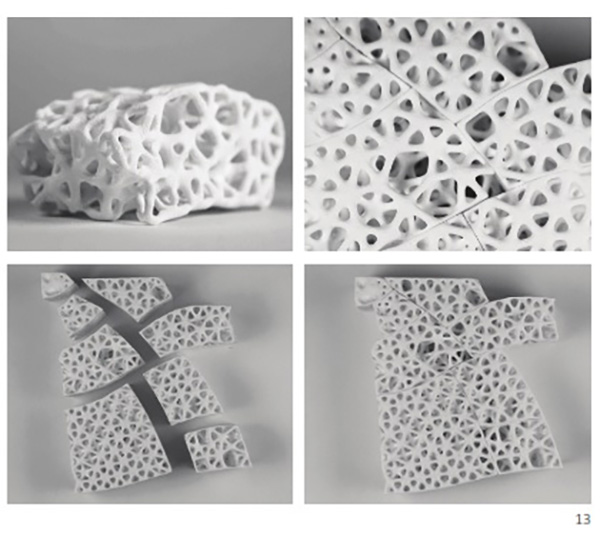
We follow a rigorous process of performance analysis with potential to be implemented in future workflows incorporating AMTs. Outlined processes of evaluation strengthen the argument for the implementation of non-standard, porous ceramic building components as a viable material for load bearing/architectural application.
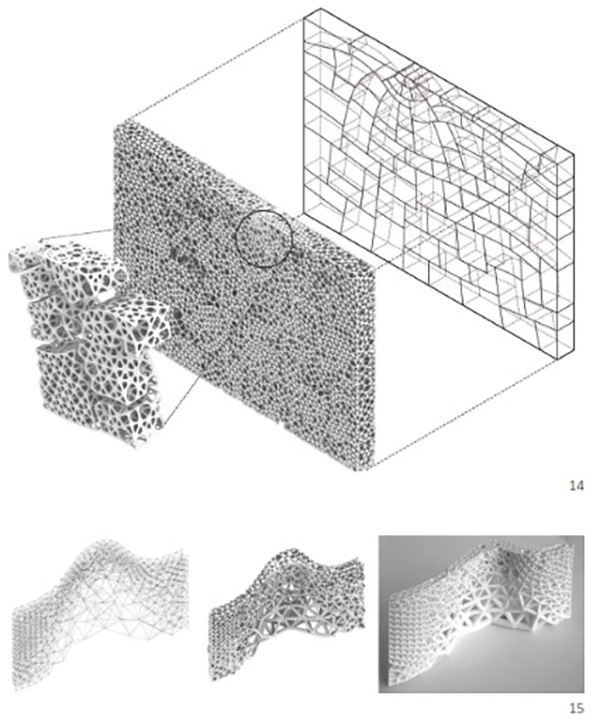
Hence, PolyBrick offers a non-standard, light weight, and efficient load bearing material system alternative to current construction methodologies. The integral role of porosity opens up potential for further design exploration and integration of additional material systems.
String Art Generator by Yiran is a grasshopper plugin which generates a string art sequence based on an input image. You can

This paper by Alessandro Liuti, Sofia Colabella, and Alberto Pugnale, presents the construction of Airshell, a small timber gridshell prototype erected by employing a pneumatic formwork.

In this paper by Gregory Charles Quinn, Chris J K Williams, and Christoph Gengnagel, a detailed comparison is carried out between established as well as novel erection methods for strained grid shells by means of FE simulations and a 3D-scanned scaled physical model in order to evaluate key performance criteria such as bending stresses during erection and the distance between shell nodes and their spatial target geometry.

In this paper by Frederic Tayeb, Olivier Baverel, Jean-François Caron, Lionel du Peloux, ductility aspects of a light-weight composite gridshell are developed.