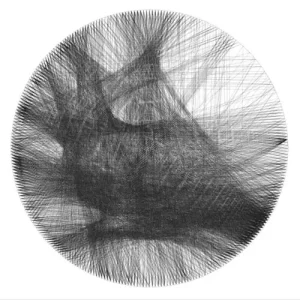
String Art Generator
String Art Generator by Yiran is a grasshopper plugin which generates a string art sequence based on an input image. You can

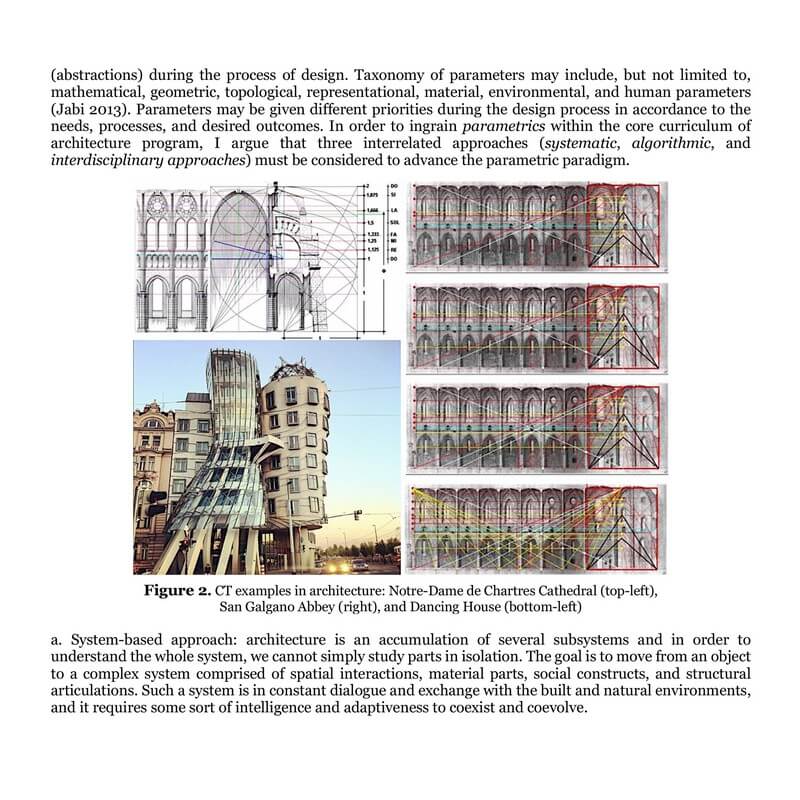
In alignment with the rapid advancement of cyber-physical technologies in an information age, we are faced with complex problems that go beyond the kinds of challenges that designers had to deal with in the past. For many of these challenges we do not have established theories, methods, or tools to solve the problems. Therefore, it is critical for architects to not only have expertise in established design methods, but also to be able to rapidly and creatively develop new theories, skills, and technologies.
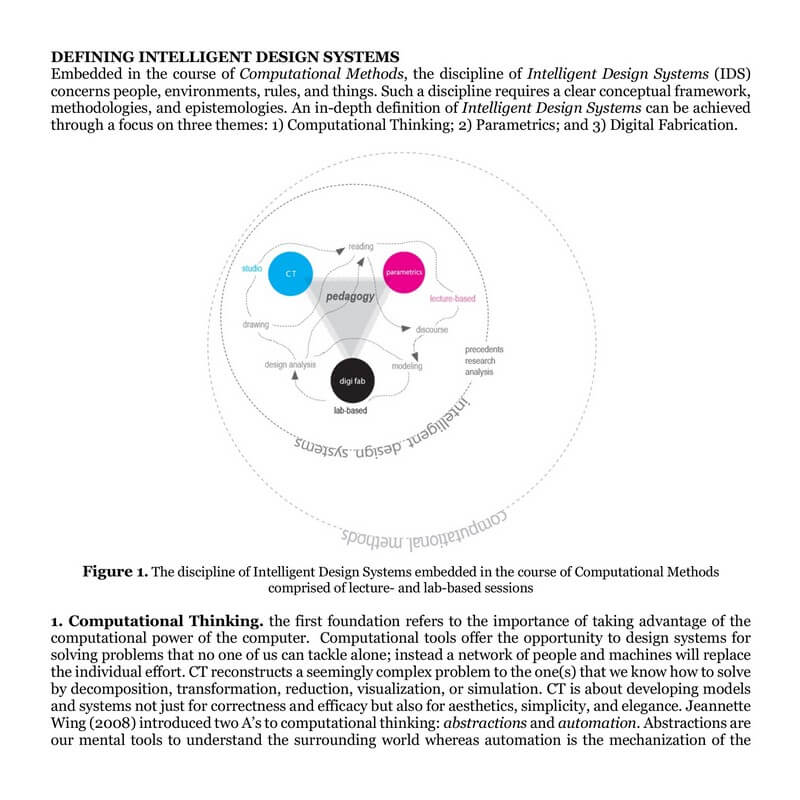
This paper by Arash Soleimani, seeks to contribute to the core curriculum of architecture programs by exploring opportunities that benefit from advancements in computation as an innovative approach to teaching digital tools. The paper explores how computational thinking can be used in design as a new way of thinking, making, solving problems, and developing techniques and technologies to nurture creative processes, practices, and design outcomes.
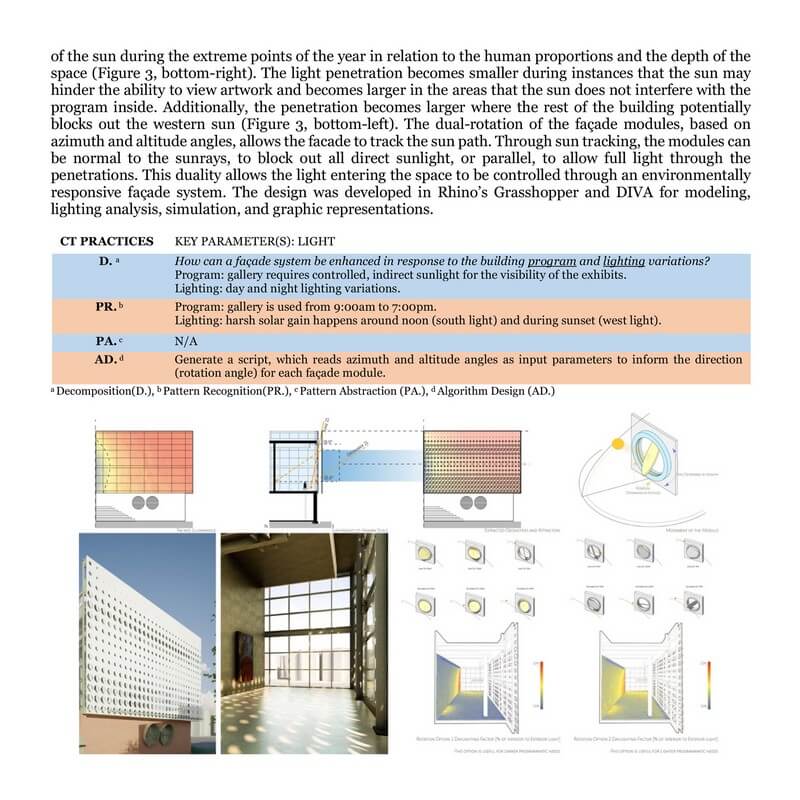
This paper presents how advancements in technology and computation may change the process of design. Intelligent Design Systems are introduced as a successful example of teaching “Computational Methods” by Dr. Arash Soleimani in several architecture schools’ core sequences in the United States.

Computational Methods introduces students to computational thinking and fundamental concepts of computation through explorations with generative and analytical technologies. The goal of the course is to explore and elaborate the potential of computation and the role it can play as a part of one’s design process; not as a collection of specific tools, but as a way of thinking about design.

String Art Generator by Yiran is a grasshopper plugin which generates a string art sequence based on an input image. You can

This paper by Alessandro Liuti, Sofia Colabella, and Alberto Pugnale, presents the construction of Airshell, a small timber gridshell prototype erected by employing a pneumatic formwork.

In this paper by Gregory Charles Quinn, Chris J K Williams, and Christoph Gengnagel, a detailed comparison is carried out between established as well as novel erection methods for strained grid shells by means of FE simulations and a 3D-scanned scaled physical model in order to evaluate key performance criteria such as bending stresses during erection and the distance between shell nodes and their spatial target geometry.

In this paper by Frederic Tayeb, Olivier Baverel, Jean-François Caron, Lionel du Peloux, ductility aspects of a light-weight composite gridshell are developed.