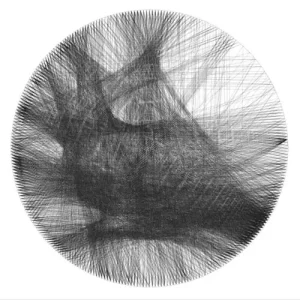
String Art Generator
String Art Generator by Yiran is a grasshopper plugin which generates a string art sequence based on an input image. You can
Form, Force, Performance: Multi-Parametric Structural Design
In the 20th century, the classification of structures according to defined building typologies was central to engineering design. Here Professor Klaus Bollinger, Professor Manfred Grohmann and Oliver Tessmann of design engineers Bollinger + Grohmann challenge this preconception.
By considering each structure as an individual case in point with inherently complex behaviour, they move away from the notion of a building being a variant of an established type.
They further discuss this mode of working, in relation to their own recent projects, in terms of relevant methods and generative techniques, as well as the respective consequences that it has had on the relationship between force, form and structural performance.
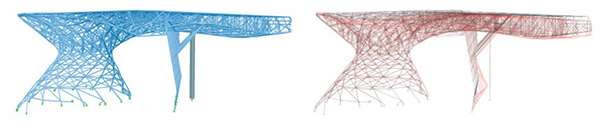
Bollinger + Grohmann conceive of structure as an integral part of architecture. The overall performance of an architectural project results from negotiating and balancing a complex network of multifaceted, interrelated requirements.
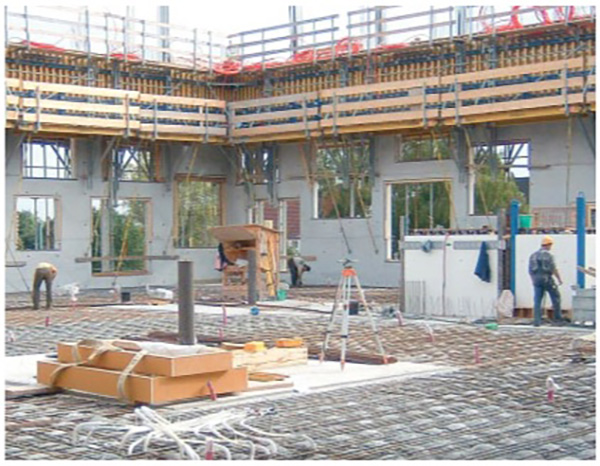
As the design of structure is just one aspect within such a network of manifold relations, the appropriate structural systems cannot be found through single-parameter optimisation. The specific forms derived through such a multiparametric design process need to be analysed in order to identify zones of favourable structural performance.
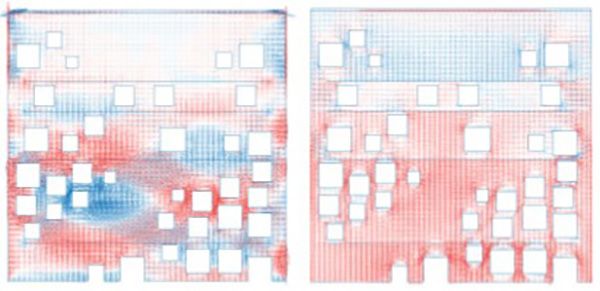
The related structures adapt their load-bearing capacities to the form and its particular local forces. Thus the resultant structures are highly specific, differentiated systems rather than variations of a defined typology.
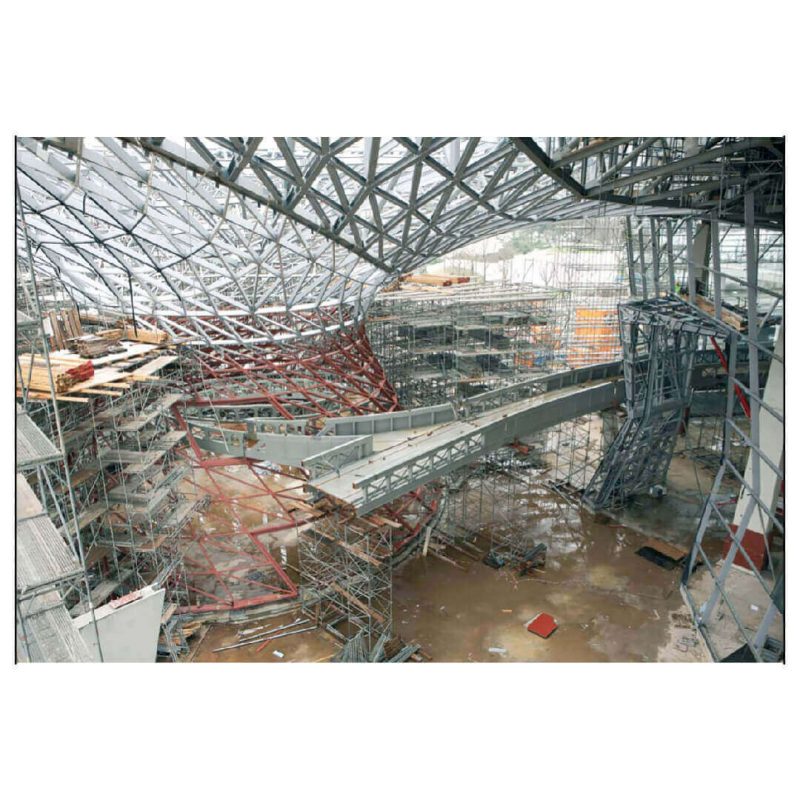
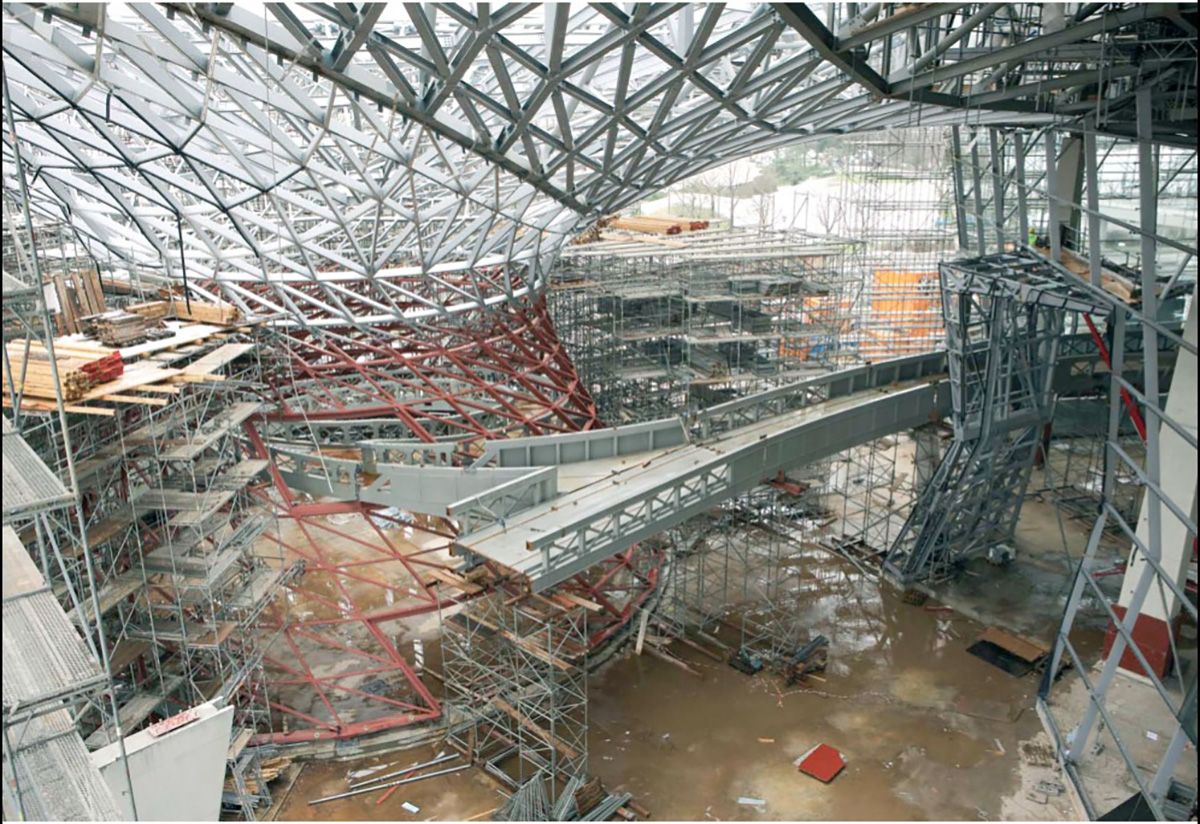
The structures we develop do not need to adhere to idealised typologies, which are usually in conflict with the architect’s concepts anyway. Rather they result from a multiparty design process. In the BMW Welt project by Coop Himmelb(l)au, which is located right next to the Olympic quarter and adjacent to the BMW head office and plants in Munich, the complex roof structure was designed in a collaborative process.
From a structural engineering perspective one particular challenge proved to be the geometric complexity of building elements and their interaction, as each local change had consequences on the global scale of the system.
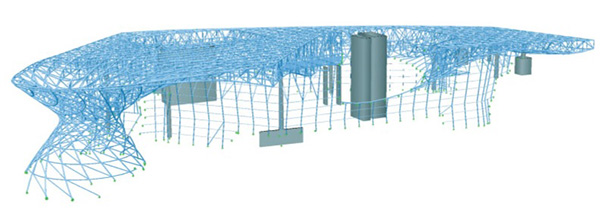
This high level of interdependency needed to be integrated in the analytical models of the structure, which required, for example, the set up of an extensive model of the complete roof structure including all load-bearing elements.
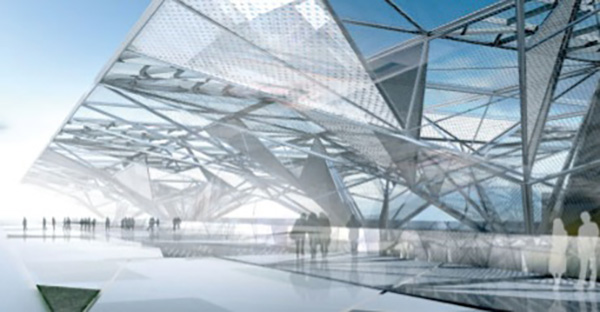
Any significant change to the stiffness of one of the cores, for instance, had considerable repercussions for the overall behaviour of the structure necessitating the re-evaluation and recalculation of the overall system. Consequently, this elaborate, iterative design process depended entirely on intense collaboration with the architects and related, clearly defined protocols of data exchange.
Bollinger + Grohmann focus on integrating material capacities and anticipated forces within the digital design setup, replacing merely geometric description with models that represent the dynamic equilibrium of a network of building services, and structural and architectural parameters.
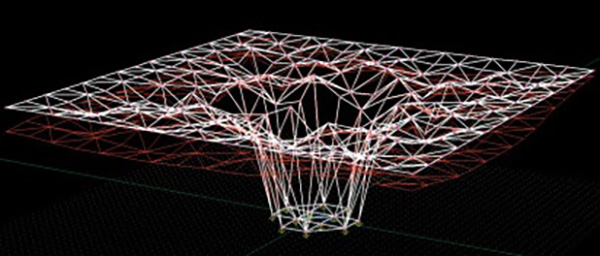
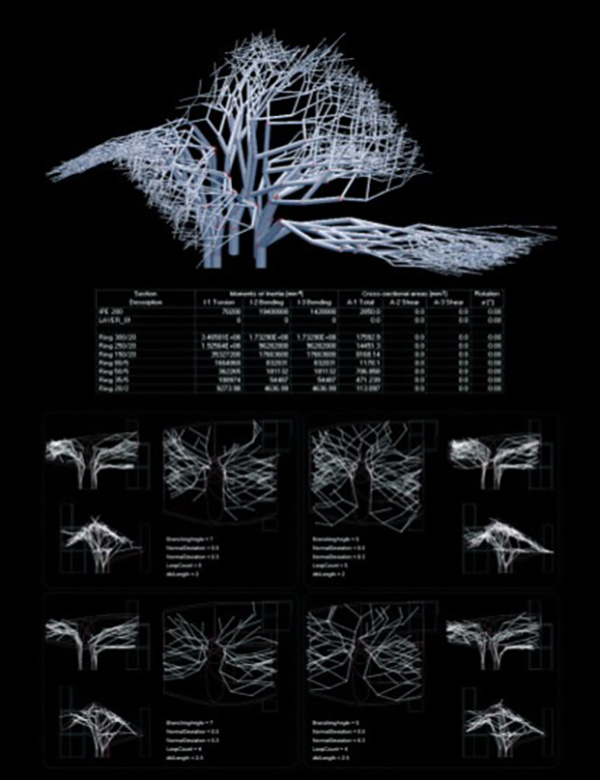
The Lakehouse Patagonia project by architects ArchiGlobe is an extension of an existing house in Argentina. The design process focused on developing spatial articulation through a roof structure that intrgrated functional and load-bearing characteristics.
Based on Lindenmayer systems, a scriptdriven procedure generates a tree structure in response to the specific design context. The growth of the structure reacts to architectural criteria such as spatial volumes and views, and to structural aspects.
The structure’s gradual change in density interacts with the open space to create varied spatial qualities and atmospheres. The algorithmic process is implemented in the architect’s design environment as a generative tool capable of deriving a large number of design iterations. Variation is driven by random modifications to parameters that influence the branching angle and branch length.
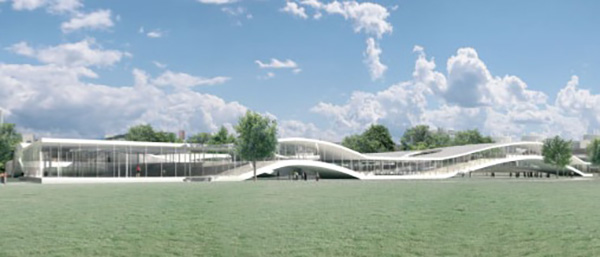
Computational processes enable us to generate and evaluate a large number of possible structural articulations. During the design study for an underground station roof at Piazza Garibaldi in Naples by Dominique Perrault, entire populations of structures were evolved and individuals were selected through predefined architectural and structural fitness criteria. These processes evolved articulations in response to specific criteria without relapsing into a priori defined typologies.
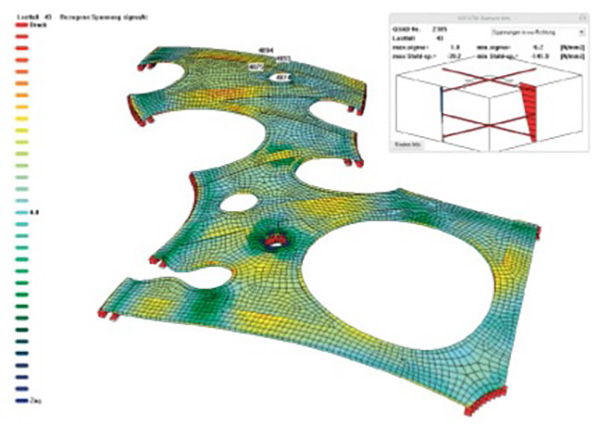
These evolutionary strategies depend on the fitness ranking, as selection constitutes the only control mechanism to direct the development. In nature individual fitness is evaluated on the phenotypic level as the likeliness for further reproduction.7 Likewise, in digital processes each individual structure needs to be fully defined and modelled in order to be evaluated. Each evolved structure is based on the genetic information of a previous generation and has undergone further adaptation.
Thus the definition of the fitness criteria is critical for the quality of the building and its structure in that they control the direction of the evolving process. Our goal is the integration of such criteria for many different nodes within the complex network of requirements, to achieve performative and differentiated buildings and structures.
String Art Generator by Yiran is a grasshopper plugin which generates a string art sequence based on an input image. You can

This paper by Alessandro Liuti, Sofia Colabella, and Alberto Pugnale, presents the construction of Airshell, a small timber gridshell prototype erected by employing a pneumatic formwork.

In this paper by Gregory Charles Quinn, Chris J K Williams, and Christoph Gengnagel, a detailed comparison is carried out between established as well as novel erection methods for strained grid shells by means of FE simulations and a 3D-scanned scaled physical model in order to evaluate key performance criteria such as bending stresses during erection and the distance between shell nodes and their spatial target geometry.

In this paper by Frederic Tayeb, Olivier Baverel, Jean-François Caron, Lionel du Peloux, ductility aspects of a light-weight composite gridshell are developed.