Parametric Urbanism
This research by Mohamed Mostafa Ibrahim Mohamed Saleh explores the use of computers in the urban design process and the techniques and mechanisms of the computational approach to the environmental urban morphology.
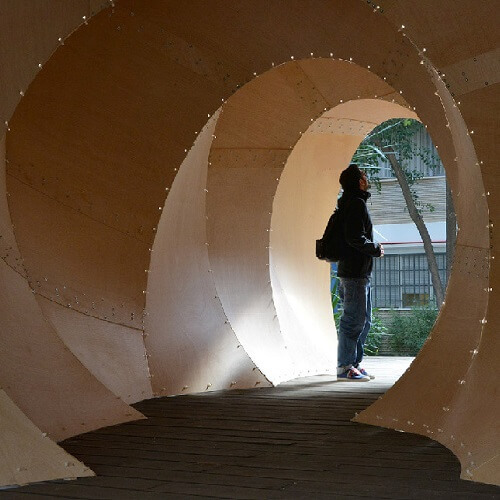
This study by Fay Al Khalifa investigates using a spatial installation project on the ability of fourth-year architecture students to understand and recall complex philosophical ideas related to architecture and urbanism.
It is the intent of this dissertation by Naim Korqa to study changes in the traditional workflow of the architect in the design process using the generative design approach and also propose new design methods that take advantage of this approach.
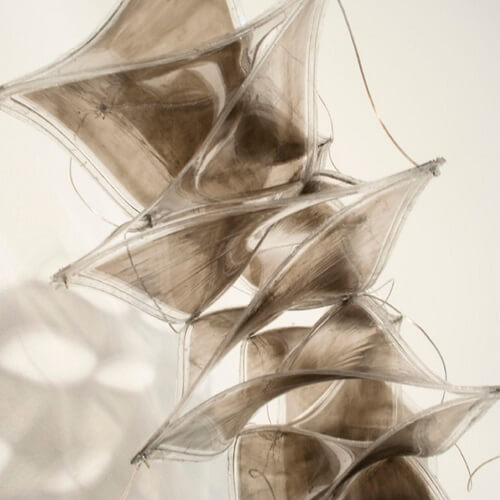
This paper by Manuel Kretzer questions the current use of materials in architecture, which furthers the preference of surface and form over inherent material properties. It then investigates recent advancements towards the notion of a Digital Materiality.
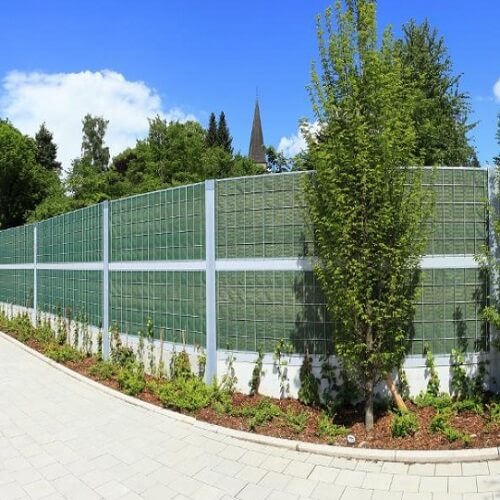
The objective of the thesis by Jawad Mohamad is to achieve fast modeling and algorithmic automation solutions which provide engineers with a strong and efficient tool to experiment with different solutions of complex noise barriers.
The use of certain quadratic surface theorems has mainly been associated in architecture with the design of classical vaults, domes and piping. The work presented here is intended to explore the potential of these theorems
This thesis by Michael Patrick Makris, describes the development, testing, and findings of a Rhino-Grasshopper toolset developed to encourage real-time parametric design form experimentation through immediate integrated structural analysis feedback.
In this paper by Sabri Gokmen a morphogenetic approach will be introduced that looks at Goethean morphology and leaf venation patterns.
This study by Harri Humppi examines a new approach to Computer-Aided Design (CAD). In this study, this new approach is called Algorithm-Aided Building Information Modeling (AAB).
In this article by Heike Matcha, Ante Ljubas and Harun Gueldemet, authors present and discuss an exploration of the possibilities and properties of 3D printing with a printing space of 1 cubic meter, and how those can be integrated into architectural education.
In this thesis by Chin-Yi Cheng, author proposes a framework and a toolkit for designers to interact with Al algorithms. Following this framework, designers with moderate programming ability should be able to embed Al algorithms into their design.
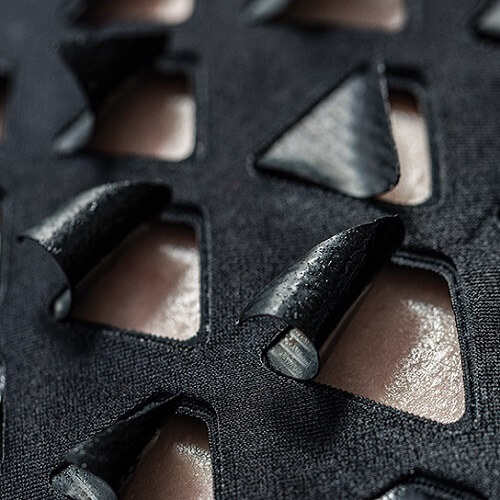
In this paper by Hülya Oral and Gülen Çağdaş, the changes on the bodies of color and form changing living organisms are implemented to the building envelope as a dynamic process of adapting to the environment in terms of interaction.
This research by Nixon Wonoto examines the implementation of structural optimization in the architectural schematic design phase; investigate the accessibility and usability of existing architectural structural optimization tools.
In this article by Maria João Sammer and António Leitão, Authors discuss, explore, and implement Visual Input Mechanisms (VIMs) in Khepri, a new textual programming tool for architecture.
In this thesis by Mahmoud Islam Abdelhay Gadelhak a simplified framework and design decision support tool was developed to aid designers and architects in the domain of multidimensional optimization of building facades
In this paper by Chi-Li Cheng and June-Hao Hou, authors attempt to develop a construction process which is suitable for all-terrain construction robot in the future. This construction process is inspired by beavers’ construction.
This research by Renaud Aleis Pierre Emile Danhaive combines interactive evolutionary optimization and parametric modeling to develop a new computational strategy for creative and high-performance conceptual structural design.
This study by Helle Stam Faugstad and Øyvind Sunnvoll Rognes focuses on developing connections in timber gridshells. With a flexible digital workflow, the user can automatically generate structurally valid gridshell connections.
This thesis by Jennifer Jacobs describes her work in developing a set of software tools that attempt to make the practice of algorithmic craft accessible for novice programmers.
Minimal Surface Creator by Cerver is a grasshopper plugin that generates minimal surfaces from boundary curves or do a minimal relaxation on a mesh.