Structure as Architecture
The purpose of this thesis by Louise Pedersen and Jonas Täljsten is to make a connection between architect students and engineers, to find the differences between them and to try to collaborate.
This research proposes optimal daylight performance for the facade of an existing building, which helps designers improve daylight generating optimized design options and understand the relationships between design variables and performance metrics.
This thesis by Huei-Sheng Yu /Carl demonstrates a design strategy for physical parametric design that embeds knowledge from simulation tools and helps parametric design still keep variations after final model.
The purpose of this research by Shahab Din Rahimzadeh is to assess daylight performance of buildings with climatic responsive envelopes with complex geometry that integrates shading devices in the façade.
the main focus of this work by Seiichi Suzuki is to develop a comprehensive approach for enabling topologic transformations with real-time physics named topology-driven form-finding.
In this study by Rana Ahmed Bahaa El-Dabaa, a parametric script is developed for Kinetic facades to enhance daylight performance. Parametric Daylight simulation was performed through Rhino software using plugins Grasshopper and Diva.
The present work by Robin Oval introduces topology finding for efficient search across the topological design space. This thesis builds on three strategies for topology finding of singularities in quad-mesh patterns.
The objective of this thesis by Mateus de Sousa van Stralen was to explore possible ways of designing dynamic architectural systems involving both users and their environment in a mutual, continuous, and circular design process.
This research by Mohamed Mostafa Ibrahim Mohamed Saleh explores the use of computers in the urban design process and the techniques and mechanisms of the computational approach to the environmental urban morphology.
It is the intent of this dissertation by Naim Korqa to study changes in the traditional workflow of the architect in the design process using the generative design approach and also propose new design methods that take advantage of this approach.
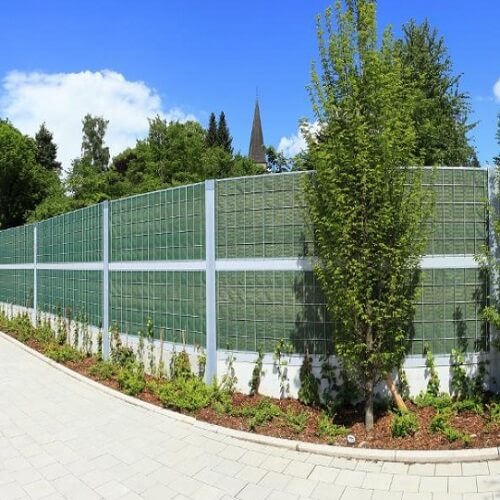
The objective of the thesis by Jawad Mohamad is to achieve fast modeling and algorithmic automation solutions which provide engineers with a strong and efficient tool to experiment with different solutions of complex noise barriers.
This thesis by Michael Patrick Makris, describes the development, testing, and findings of a Rhino-Grasshopper toolset developed to encourage real-time parametric design form experimentation through immediate integrated structural analysis feedback.
This study by Harri Humppi examines a new approach to Computer-Aided Design (CAD). In this study, this new approach is called Algorithm-Aided Building Information Modeling (AAB).
In this thesis by Chin-Yi Cheng, author proposes a framework and a toolkit for designers to interact with Al algorithms. Following this framework, designers with moderate programming ability should be able to embed Al algorithms into their design.
This research by Nixon Wonoto examines the implementation of structural optimization in the architectural schematic design phase; investigate the accessibility and usability of existing architectural structural optimization tools.
In this thesis by Mahmoud Islam Abdelhay Gadelhak a simplified framework and design decision support tool was developed to aid designers and architects in the domain of multidimensional optimization of building facades
This research by Renaud Aleis Pierre Emile Danhaive combines interactive evolutionary optimization and parametric modeling to develop a new computational strategy for creative and high-performance conceptual structural design.
This study by Helle Stam Faugstad and Øyvind Sunnvoll Rognes focuses on developing connections in timber gridshells. With a flexible digital workflow, the user can automatically generate structurally valid gridshell connections.
This thesis by Jennifer Jacobs describes her work in developing a set of software tools that attempt to make the practice of algorithmic craft accessible for novice programmers.
This research by Tessa Rouwenhorst is aiming to extend the period in which the passive systems are used within the building management system in order to minimize the energy consumption while improving the comfort conditions.