Computational Design Technologies
Among the wide landscape of digital design tools, the computational ones emerge as those that can promote non-standard design approaches to architectural conception, development and construction.
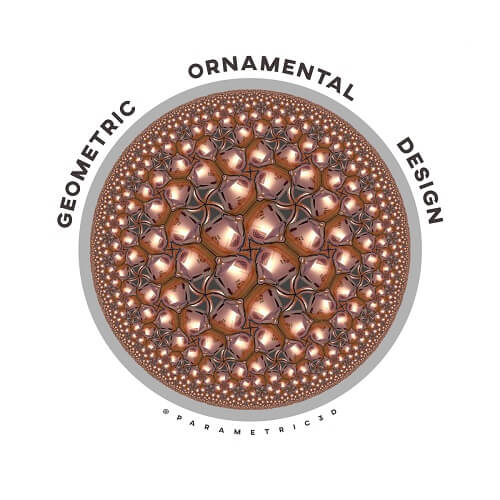

In this dissertation by Craig S. Kaplan, author present his research in the area of computer-generated geometric art and ornament. He focused on two projects in particular. First he developed a collection of tools and methods for producing traditional Islamic star patterns. Then he examined the tesselations of M. C. Escher.
With this document edited by Anne Louise Bang, Jacob Buur, Irene Alma Lønne and Nithikul Nimkulrat, authors wish to explore different ways in which experiential knowledge through materials can be given more appropriate consideration within the framework of research.
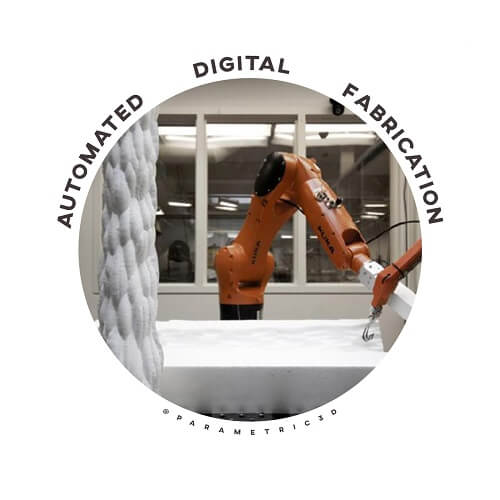
Within this thesis by Judah Hook is the investigation and development of an alternative fabrication concept that utilises an inexpensive, reusable “pin board” mould that is autonomously set to various CAD derived surface geometries by a 6-axis robotic arm manipulator.
This thesis by Stuart Mackenzie Jones gives an overview of parametric tools and parametric thinking, and describes how parametric tools are being applied to the design of the built environment and landscape systems.
This research by Steven Robert Janssen catalogues robotic construction technology currently being used by architects and discusses the motivations that drive architects to use this technology. This catalogue includes an interview with architect Dr Simon Weir and investigates his motivation for using robotic construction technologies.
This thesis by Yassin Salah El-Din Ashour presents a workflow called the ‘creative optimization workflow’ using a Multi-Objective Optimization (MOO) engine called Octopus that runs within Grasshopper3D, a parametric modeling tool, and multiple simulation software.
This thesis by Andrea Minuto will introduce you to a vision called Smart Material Interfaces (SMIs), which takes advantage of the new generation of engineered materials. They are capable of changing their physical properties, such as shape, size, and color, and can be controlled by using certain stimuli.
The present thesis by Daniel Akesson aims to integrate structural feedback with geometric modeling. The user interfaces of conceptual design tools should be interactive and agile enough to follow the designer’s iterative workflow.
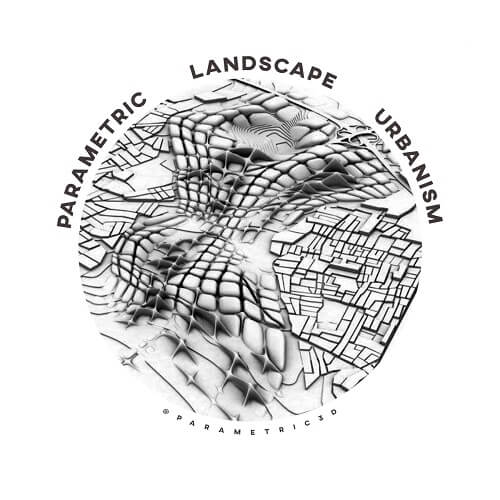
This thesis by Sadik Deniz Akman discusses the emerging approaches in landscape urbanism from a methodological perspective and discusses the emerging techniques applied in the recent design and research projects in landscape urbanism. The study mainly focuses on design tools and techniques applied in the field.
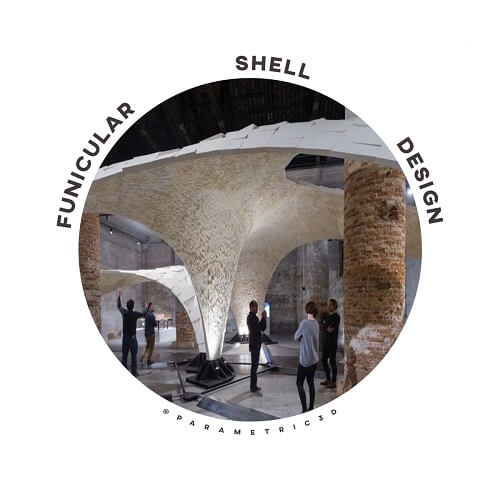
Addressing both architects and engineers, this dissertation by Matthias Rippmann presents a new framework for the form finding and design of fabrication geometry of discrete, funicular structures in the early design phase. It introduces a new methodology for structurally-informed design of curved surface architecture.
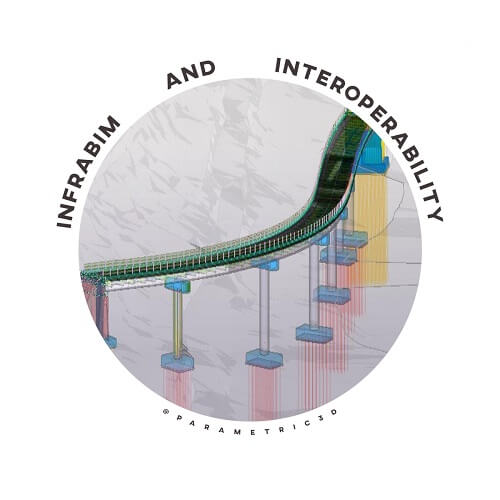
This project by Paulina Tovo is a concrete application of BIM methodology focused on the implementation of Maintenance Plan and on a collaborative work. The thesis development was based on Variante di Demonte project, which is a real case that it has not yet been built.
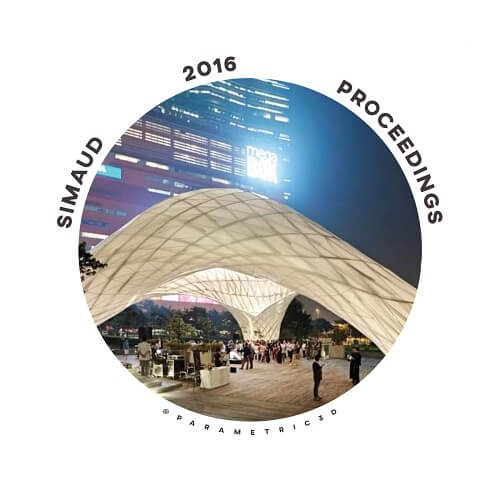
This document edited by Ramin Attar, Angelos Chronis, Sean Hanna and Michela Turrin includes subjects presented in SimAUD 2016 like building simulation, daylighting, urban networks & analysis, agent base modeling, data driven design, urban data, design decision support, design computation & methods, fabrication and form finding
This thesis by Reka Sarkozi examined parametric architecture and its applications on numerous ways. Author researched and classified the parametric design tools and she also assigned its connections to traditional architectural design. She created a plug-in for Grasshopper, the parametric software she primarily use.
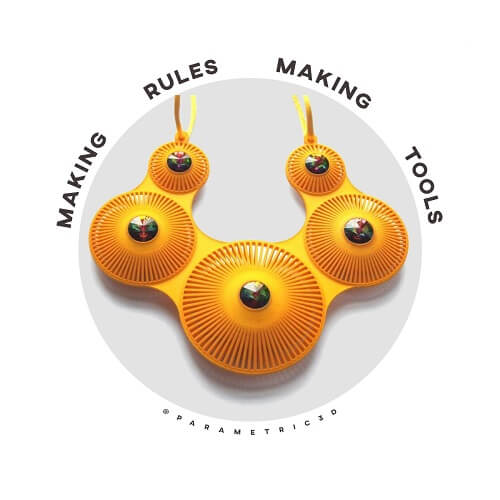
The first part of the thesis by Lynne Maclachlan examines shape grammar theory as a method of modelling designer-maker creative episodes, to inform designer practice. Evidence was gathered from interviews with designer-makers, observations from a design process carried out by the author and other literature on designer-makers.
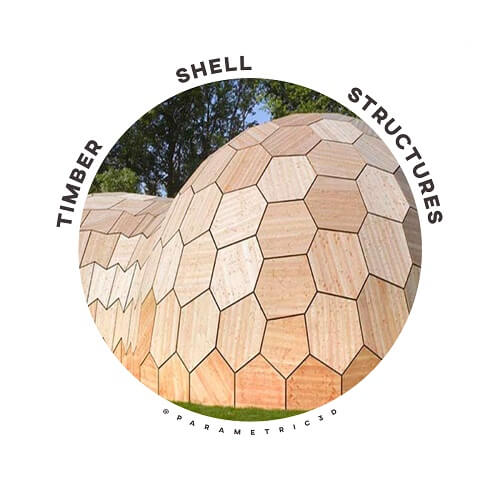
This master thesis by Sebastian de Wit is the result of a graduation project where research is conducted on parametric design of segmental timber shell structures. Throughout this report, the design process as well as the development of a parametric model to design, analyze and fabricate segmental timber shell structures is described.
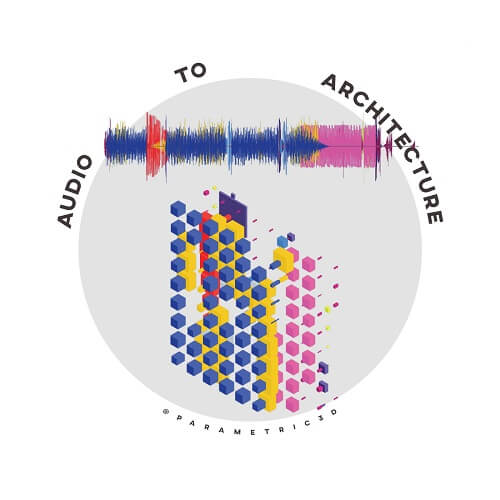
Polina Timchenko in her thesis “Audio to Architecture: House Music as a Form Generator” is going to explore the idea that every house music component can be translated into geometry with the use of parametric design techniques.
This thesis by Alexandra Adelle Hinkel Cheng presents an example of a project executed in a co-rationalized manner through architectural and structural collaboration, using both digitally-integrated and analog models, for the design and construction of solid timber shells structures.
This thesis by Renata Alves Castelo Branco aims to explore the advantages an algorithmic approach can bring to the design process, and investigate, at the same time, how to bridge the gap between the different tools with which architecture currently operates
The aim of the thesis by Daniel Wallin and Martin Wasberg was to investigate if the use of parametric design tools from both architects and structural engineers could be a way of making the design process more effective. This thesis also include testing the structural plug-ins of the parametric design tools.