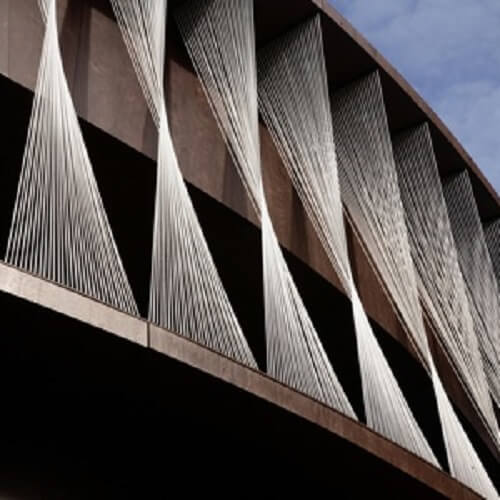
Periodic Minimal Surface
The triply periodic minimal surfaces have a great potential for architecture. How to make architecture to be highly moduliable and replicable is always a main concern for architects.
The Serpentine Gallery Pavilion 2007, designed by the internationally acclaimed artist Olafur Eliasson and the award-winning Norwegian architect Kjetil Thorsen, of the architectural practice Snøhetta, opened on 24 August and remained on site until 11 November 2007.
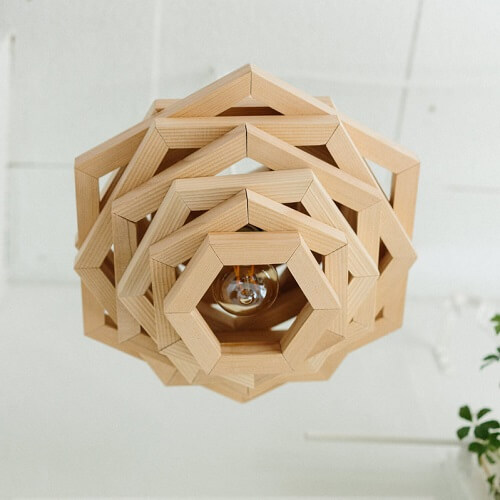
The goal of this project by Kirsten Dunn was to create a light fixture that functioned as another light source but she also wanted it to be really versatile, rather than custom-built for one specific place in her home.
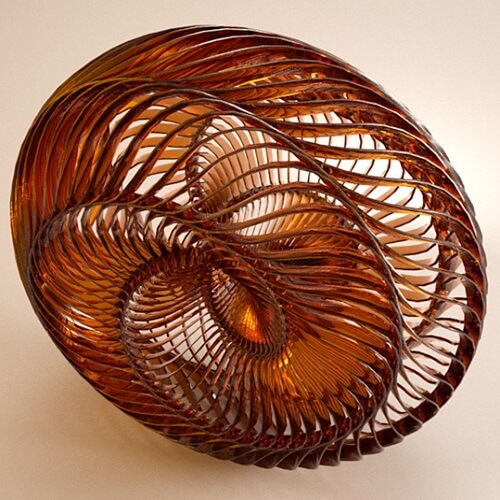
Ipsen is one of the most important ceramists of his generation. Even his most ambitious experiments and changes in direction invariably show a sure hand, an eye for potential, and a profound knowledge of materials and technique.
Artisans in Indonesia handcraft this unique and nature-inspired wall art. They cut, shape, and place each teak wood segment to create a one-of-a-kind pattern with depth and movement.
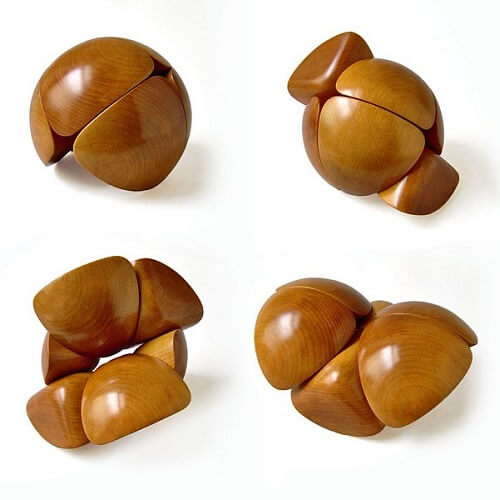
Mutable by Nikolaus Weiler is a collection of three-dimensional kinetic sculptures. Every appearance of a mutable is a momentary equilibrium, a three-dimensional structure that only appears to be constant and is already changing to a different shape.
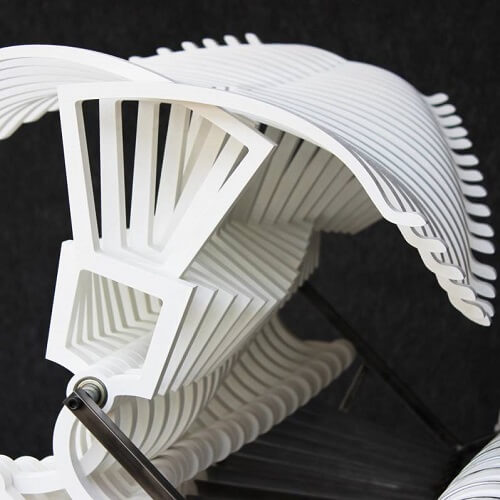
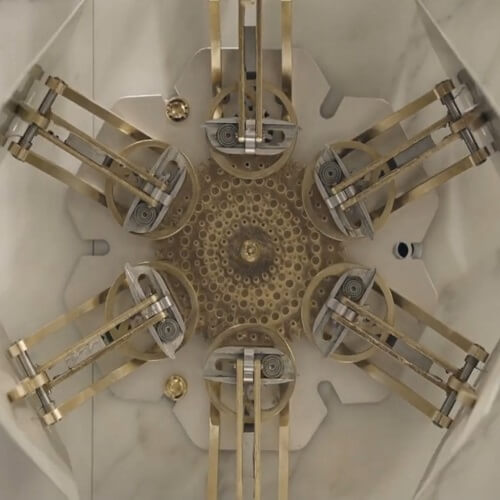
Bussola by Jennifer Townley is named after the Italian word for ‘compass’, as this sculpture is inspired on one of Leonardo da Vinci’s designs for such a drawing tool dating from 1514. The three dimensional machine is built up from identical instruments.
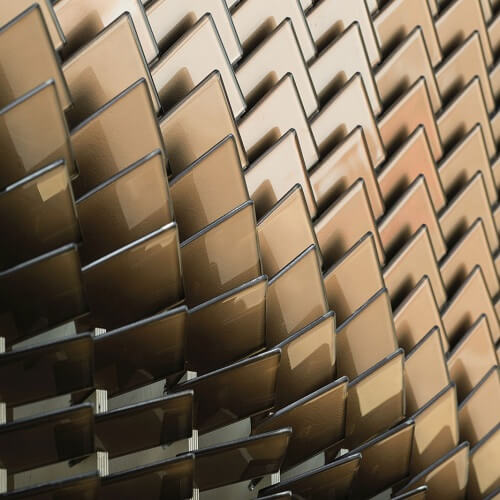
Giles Miller Studio has created a series of four glass-tile sculptures to help visitors navigate Clerkenwell Design Week 2016. The London-based studio created the pieces, collectively named Billboards, for the new layout of Clerkenwell Design Week.
Inspirational Printer Artists who use sophisticated computer software to create designs so complex that they can only be made by 3D printing.
Designed by Frei+ Saarinen Architekten, the aim of the Lignum Pavilion is to inform the public about the possibilities of wood applications in the construction field.
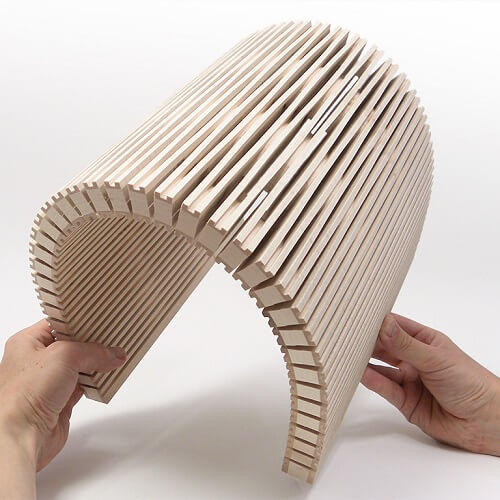
dukta semi-finished boards are based on a patented process for making wood and wood-based materials flexible. The boards can be cut on one or both sides and are very pliable and transparent, allowing a great deal of freedom in designing.
The Frsh pavilion appears to result from a series of explorations addressing alternative approaches, techniques and methodologies in the arts and applied sciences realm.
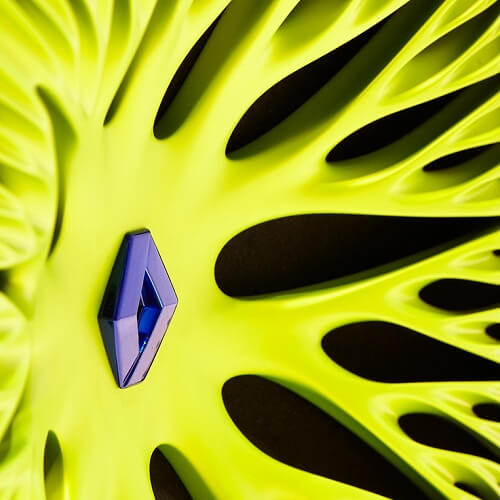
The Twin-Z car in collaboration with Renault sets out to explore opportunities of shape and geometry to seamlessly integrate a variety of different functions and elements within a continuous form.
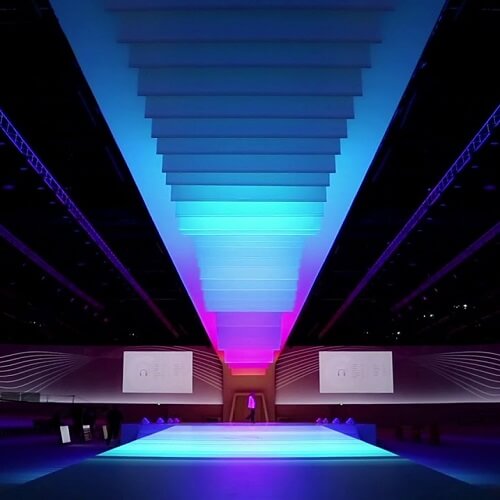
“The Paper Wave” is one of the longest Kinetic Lights installation so far. A 65m-long array of Kinetic Lights hovers above the car runway. The installation looks like a delicate wave and is made of paper-thin sheets that smoothly change colors and positions.
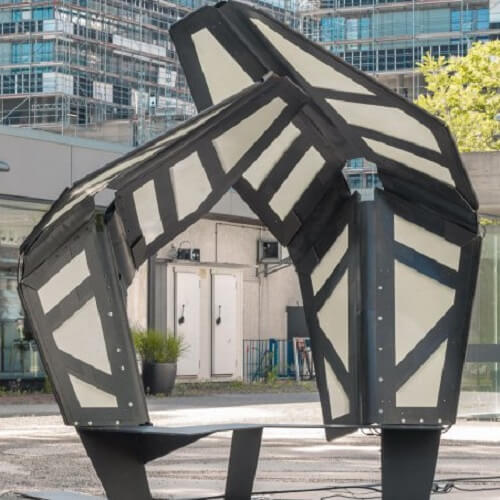
This three-meter-tall pavilion is composed of two adaptive folding elements, which have been programmed to open and close like the wings of a ladybird. collaboratively conceived and fabricated by three institutes at the university of stuttgart.
The “Armadillo” pavilion is the result of a commission made to the students of the subject of Parametric Architecture and Digital Manufacturing , at the School of Architecture of the University of the Basque Country (UPV / EHU).
“Heaven Bloom” by WHYIXD is located in the lobby of a building which is constructed by GoldenJade development corp. Along with the international architecture team from Singapore, WOHA, this mansion was designed with concept of nature.
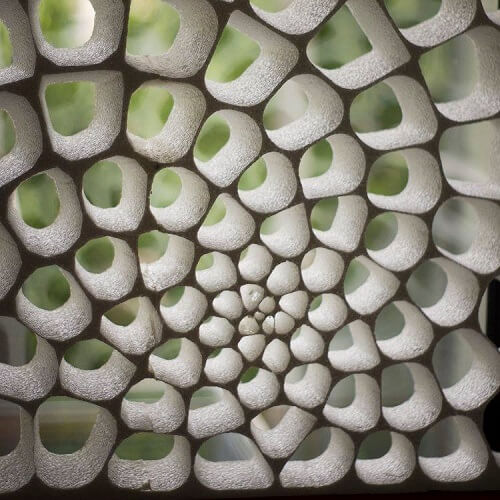
Porosity by Digital Design Center presents a research into the integrated design and fabrication approach of porous surfaces in architecture. The structure is fabricated out of foamed polystyrene by removing portions of its volume.
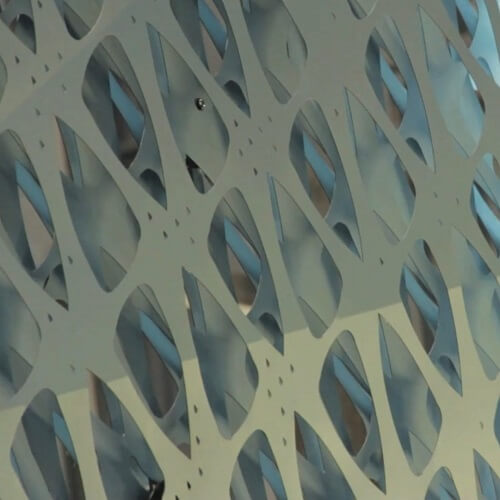
A multidisciplinary team has joined together to implement Tessellate™ technology – a dynamic perforated screen system that regulates light and solar gain – on its first-ever major building.
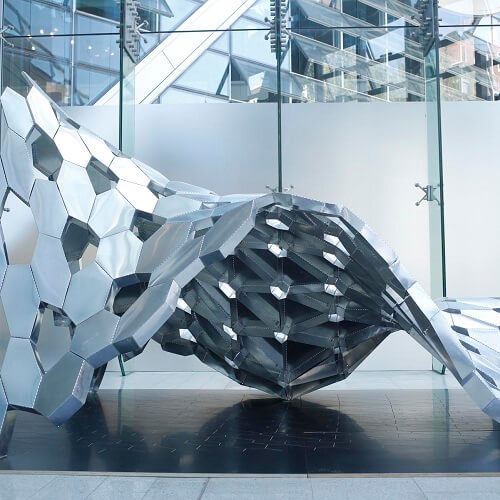
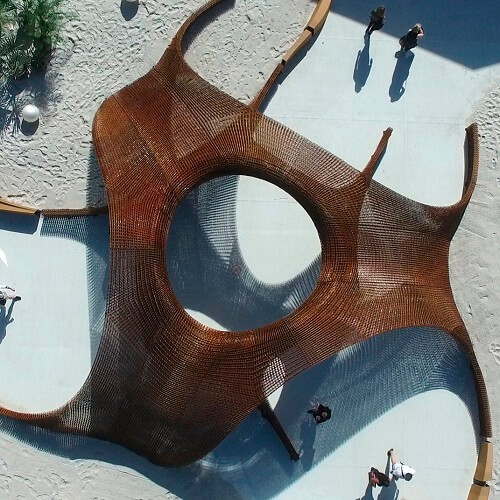
These large-scale pavilions form an immersive entry environment to the 2016 Design Miami Exhibition. After SHoP Architects was awarded the 2016 Design Miami Visionary Award with an invitation to design the entry, the firm quickly reached out to Branch Technology