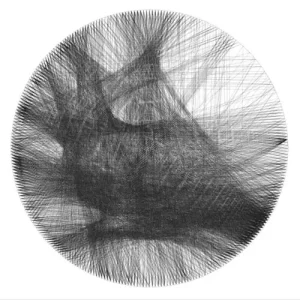
String Art Generator
String Art Generator by Yiran is a grasshopper plugin which generates a string art sequence based on an input image. You can
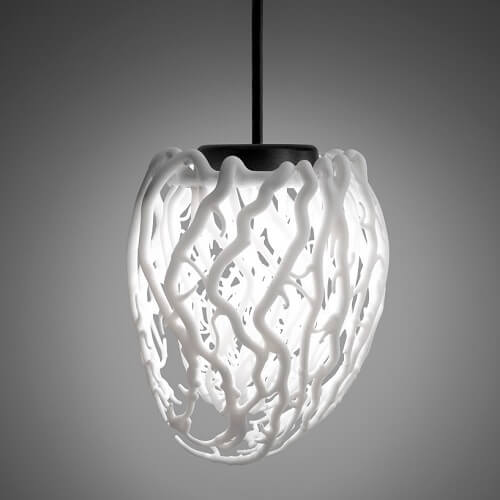
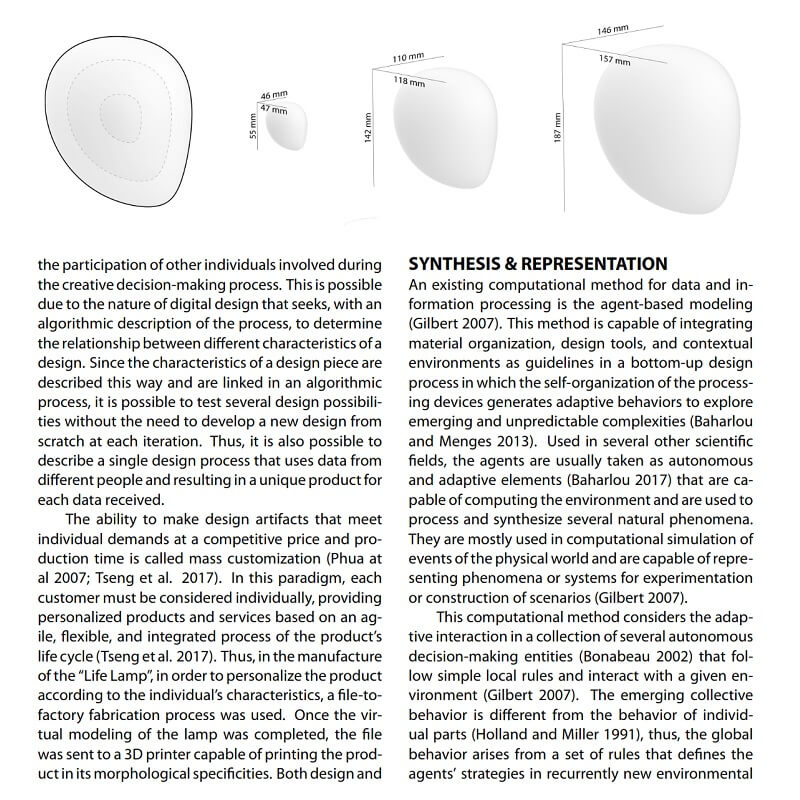
Nowadays it is possible to use technology to achieve emotion-oriented products related to the user experience. The aim of this paper by Daniel Nunes Locatelli, Leonardo Prazeres Veloso de Souza, Guilherme Giantini, Vitor Curti and Carlos Augusto Joly Requena, is to address a design exploration that combines the use of algorithmic modeling in order to create a design that seeks to express meaning through emotional bonds with people.
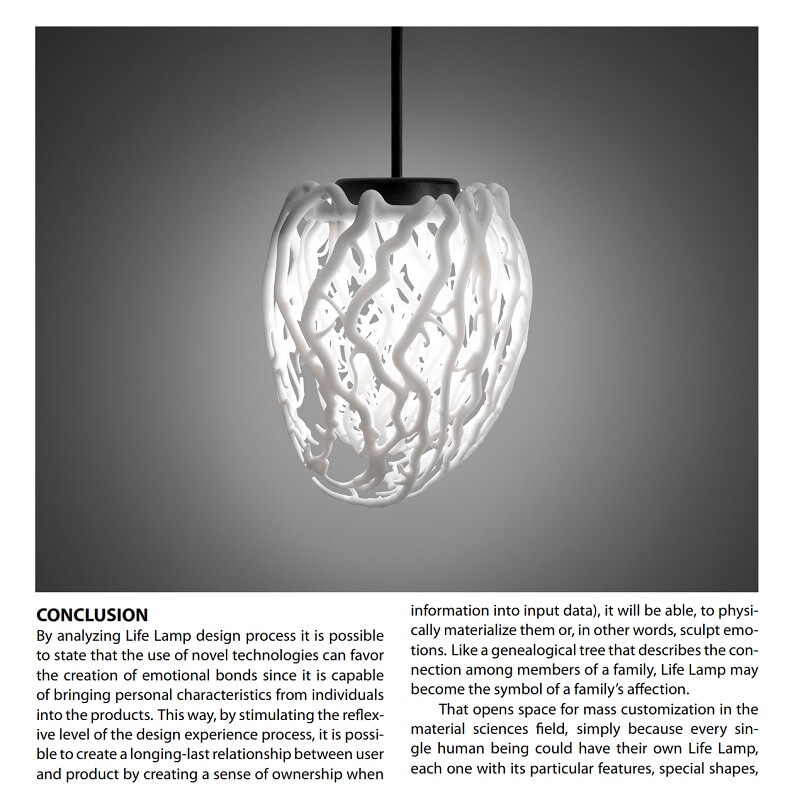
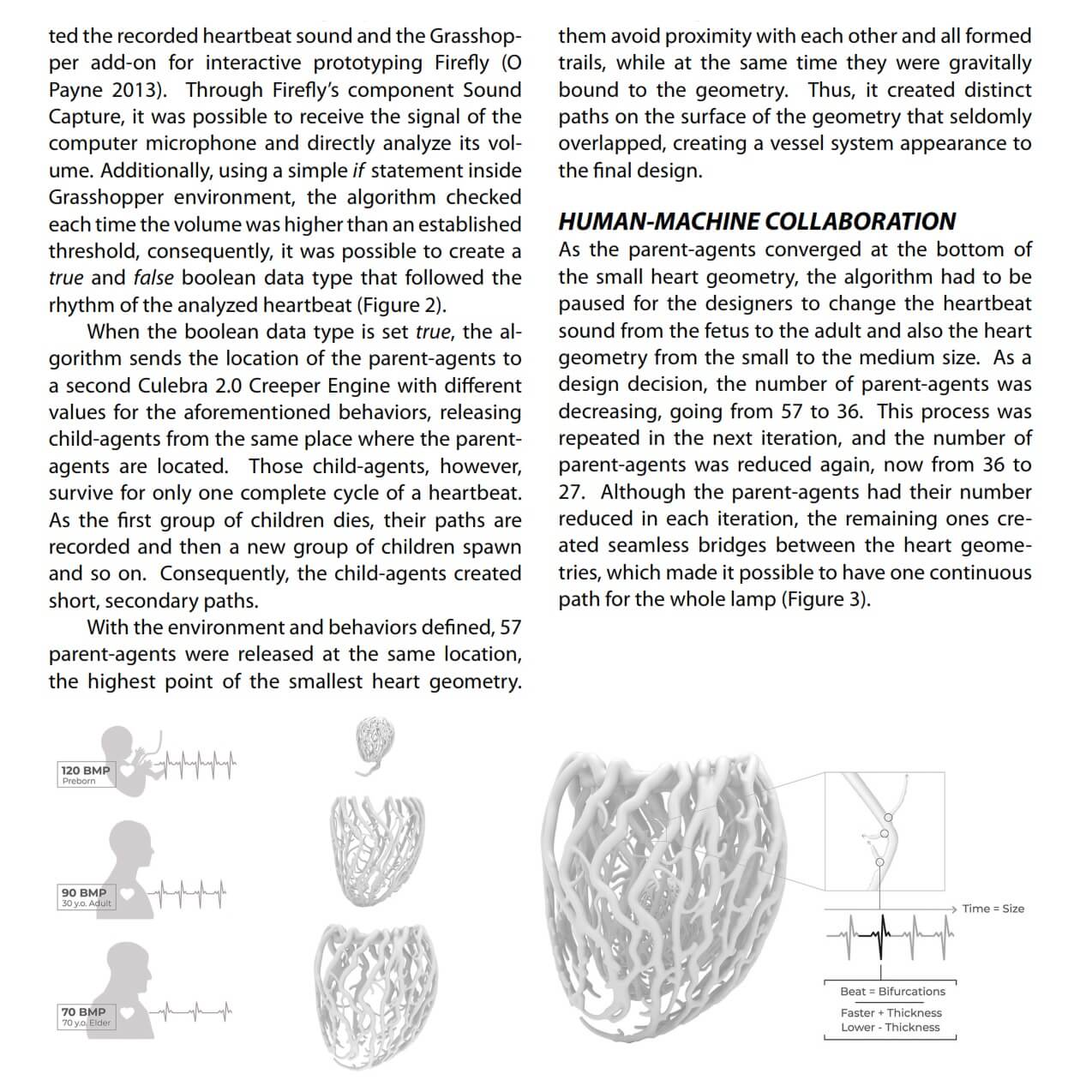 Life Lamp was created to represent a life cycle as a sensitive object consisting of three layers and a unique shade that produces a complex image, expressing the paths and surprises of our existence. The design process is a hybrid between top-down and bottom-up approaches.
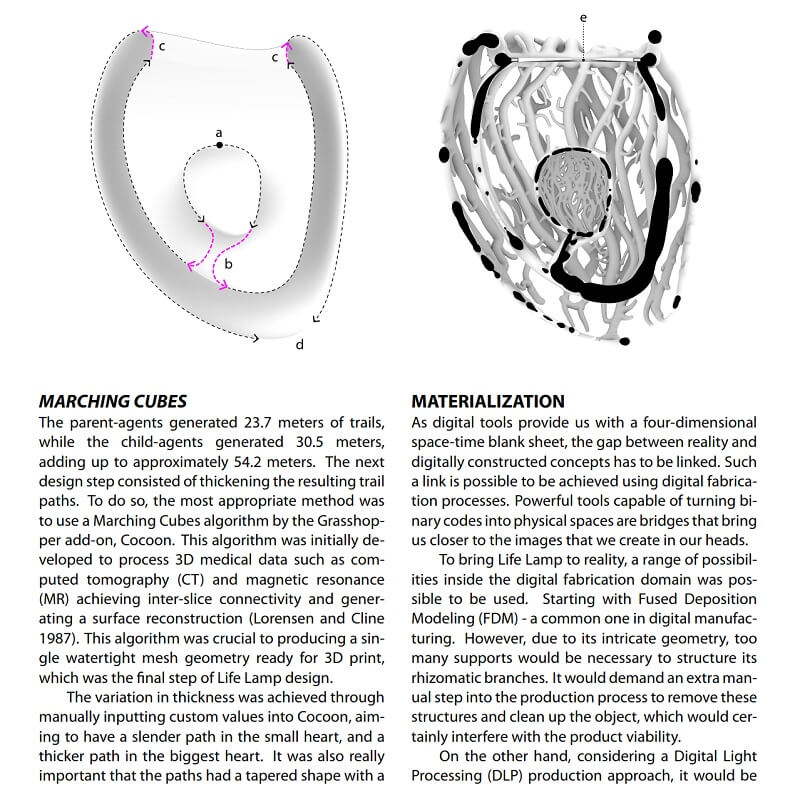 The designers worked both with a predefined heart-like 3D model as the design base and with agent-based modeling, widely explored by Craig Reynolds in the 1980s. Life lamp is a product that emerged as a result of Estudio Guto Requena’s research that investigates the impact of digital culture through design by seeking to merge technology and affection.
String Art Generator by Yiran is a grasshopper plugin which generates a string art sequence based on an input image. You can

This paper by Alessandro Liuti, Sofia Colabella, and Alberto Pugnale, presents the construction of Airshell, a small timber gridshell prototype erected by employing a pneumatic formwork.

In this paper by Gregory Charles Quinn, Chris J K Williams, and Christoph Gengnagel, a detailed comparison is carried out between established as well as novel erection methods for strained grid shells by means of FE simulations and a 3D-scanned scaled physical model in order to evaluate key performance criteria such as bending stresses during erection and the distance between shell nodes and their spatial target geometry.

In this paper by Frederic Tayeb, Olivier Baverel, Jean-François Caron, Lionel du Peloux, ductility aspects of a light-weight composite gridshell are developed.