Kinetic Architecture
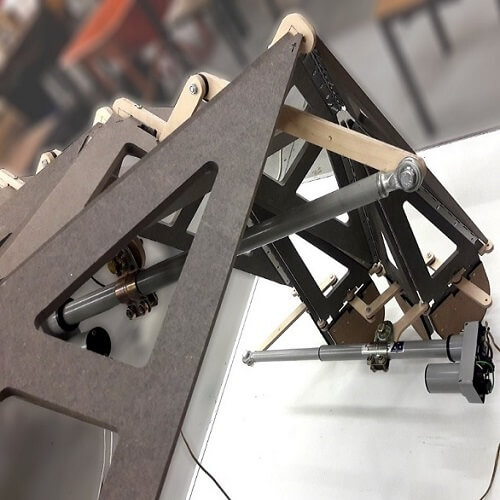
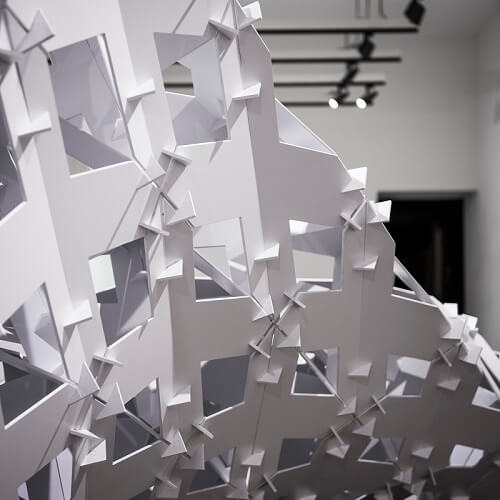
This research by Filipa Peres Frangolho Crespo Osório, proposes the exploration of rigidly folding origami surfaces as the means to materialize reconfigurable spaces through motion.
This paper by Pablo Baquero, Victor Calixto, Affonso Orciuoli and Charles C Vincent explains how parametric methods are informed by simulation and prototyping, methods that were deployed during some series of digital fabrication workshops.
This doctoral thesis by Jonas Runberger is situated within the digital design field of architecture, and is a continuation of the licentiate thesis Architectural Prototypes: Modes of Design Development and Architectural Practice.
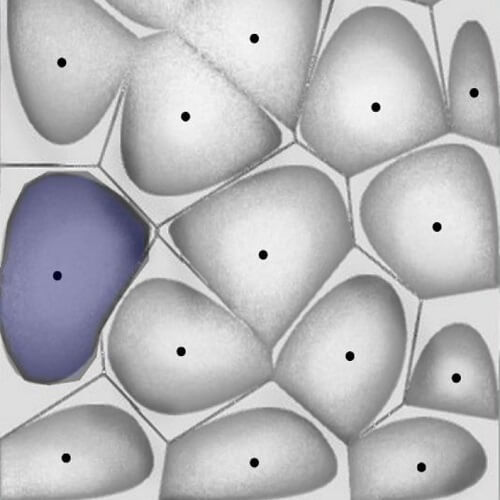
Super Delaunay plugin by Daniel González Abaldeallows you to compute the power diagram on a set of weighted points and returns: weighted voronoi, minimum spanning tree, relative neighbourhood graph, nearest neighbor graph…
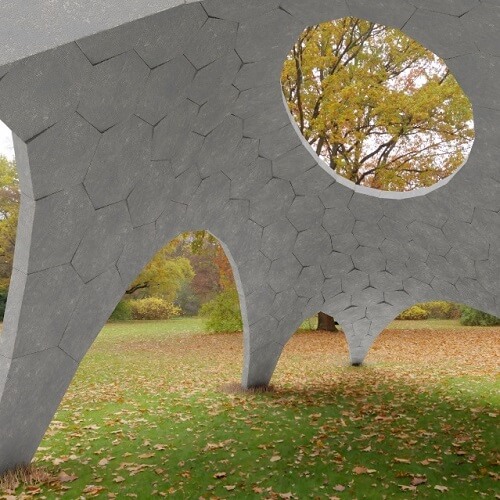
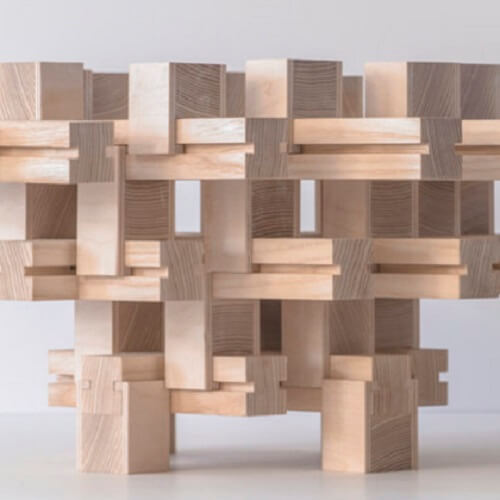
A renewed interest in stereotomy, narrowly entwined with digital technologies, has allowed for the recovery and proposal of new techniques and expressions in this building approach.
String Art Generator by Yiran is a grasshopper plugin which generates a string art sequence based on an input image. You can use this plug-in to make your own string art.
This dissertation shows how the design of constrained structural systems is better solved by an inverse form-finding process, where the parameters and initial conditions of the direct form-finding process are automatically adjusted to match the design intent.
This paper will explore how the Dougong components could be reinvented through the use of parametric tools and robotic fabrication methods and thus applied to contemporary architectural structures.
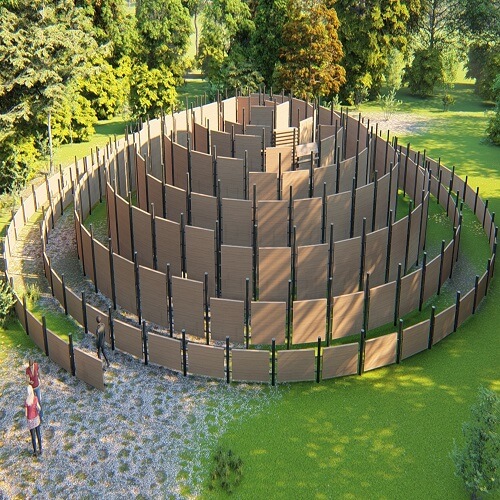
In this paper an `Interactionist’ model of cognizant architecture is proposed as a method of investigating the development process by inverting the conventional concept of maze design.
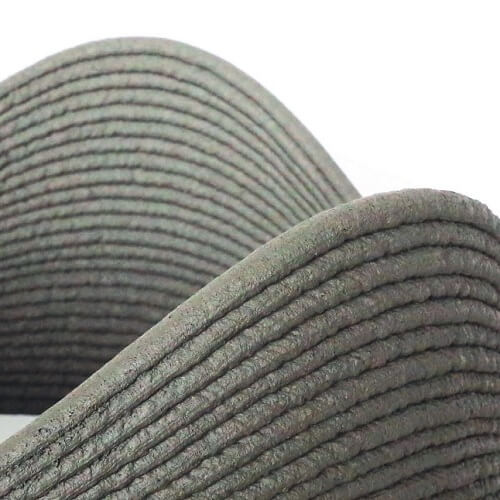
This paper presents a customised computational design tool developed for exploring the novel design space of Concrete Extrusion 3D Printing (CE3DP), enabling a reinterpretation of the concrete column building typology.
This thesis by Magnus Larsson is an investigation into how meta-heuristic multi-objective optimisation processes (genetic algorithms driven by evolutionary solvers) can bring about materials-related advantages in architectural performance.
This research study by Waleed Hussein Ali Hussein focuses on parametric design as a leading global trend in many fields, including simulation, locomotion, industrial design and, most importantly, architecture and urbanism.
This thesis by Orn Erlendsson investigates the design of atria for daylighting in large scale buildings. A three dimensional test building with a central atrium was constructed and various parameters of the atrium altered.
Cellular Complexity “EVOLVE” is an installation, which exhibits the potential of cellular geometries at a spatial architectural scale. The complex, twisted geometry was generatively designed and digitally fabricated.
This research by Ramon Elias Weber aims to create architectural geometries that are driven by performance — in light, energy, and structure.
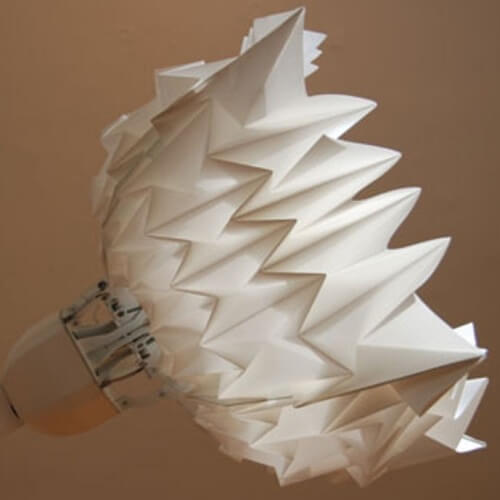
Oribotics is a field of research concerned with the aesthetic, biomechanic, and morphological connections among nature, origami, and robotics. In this research by Matthew Gardiner, the focus is on the actuation of fold- programmed materials such as paper and synthetic fabrics.
The objective of this study by Christine Pedersen is to investigate the efficiencies of using ‘parametric design’ for landscape designs and in the practice of landscape architecture.
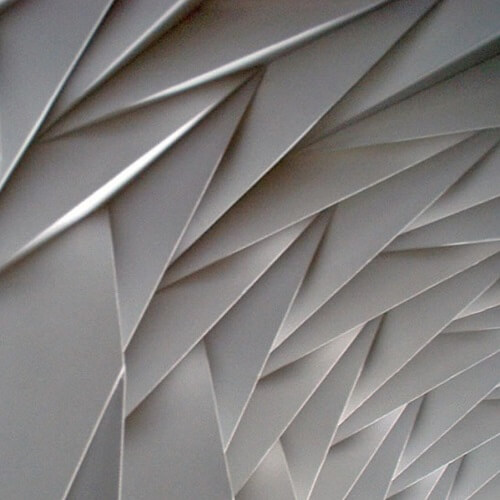
This paper focuses on the impact and possibilities of folding principles from origami for the digital design process in using parametric software to generate integral and adaptive systems within an experimental and intuitive design approach.
This thesis by Grace Melcher considers the design of a topology optimized hemisphere, a hemispherical continuous shell, and a hemispherical grid shell, and compares the structural performance of these three shells under asymmetric loads.
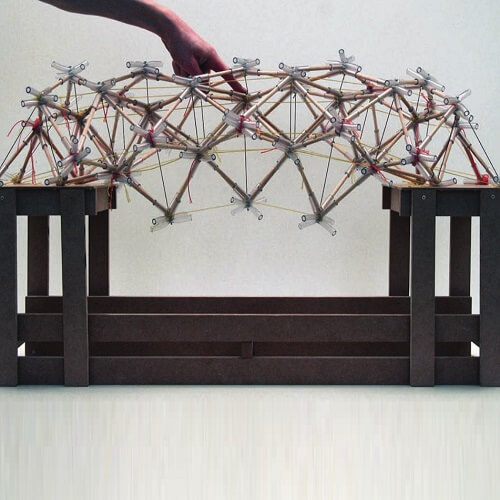
To make a way toward the design of transformable structure for temporary applications, the authors have developed a new type of adaptable structures according to natural forms.