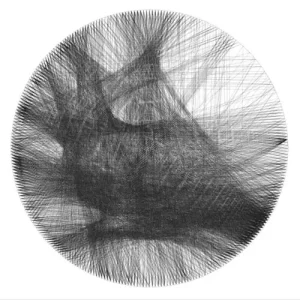
String Art Generator
String Art Generator by Yiran is a grasshopper plugin which generates a string art sequence based on an input image. You can
The contemplation of contemporary architectural designs shows an increasing demand for the development of more adaptable, flexible and transformable structures. This type of structures can adapt with different environmental conditions and meet different functions.
 This can help in reducing environmental waste and pollution associated with many buildings and above all can save on cost and time. Natural systems have inspired human being, since they began to build and design. Architects and designers have utilized nature as one of the main resources of information for the creation of innovative architectural spaces.
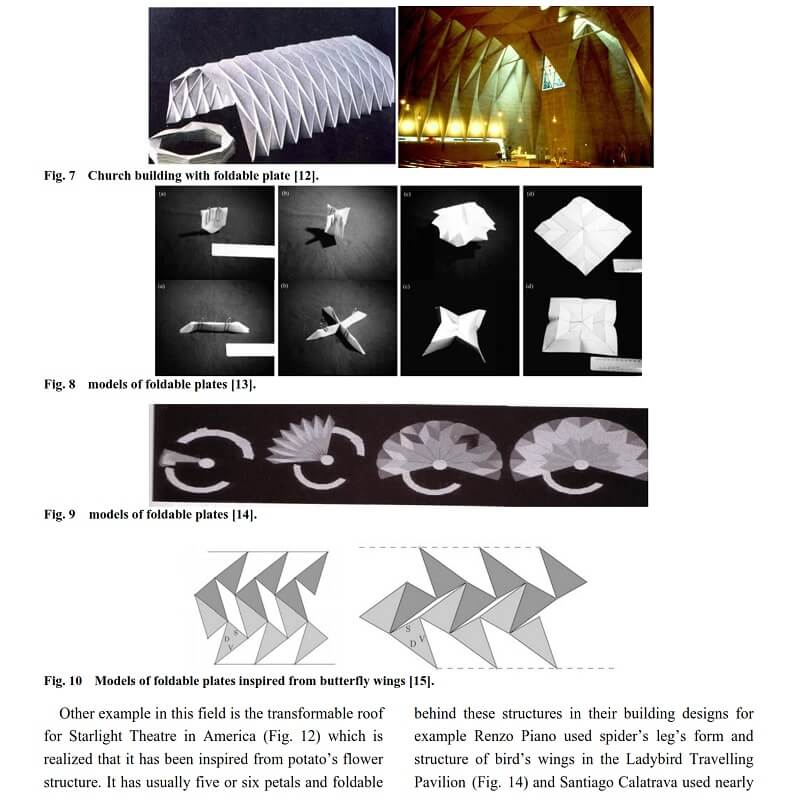 One of the unique features of natural structures is the way that their components open and close in order to respond to a particular requirement or the environmental changes. This aspect has inspired many designers for the development of transformable architectural structures that can change their shape and geometry to be able to adapt with specific conditions.
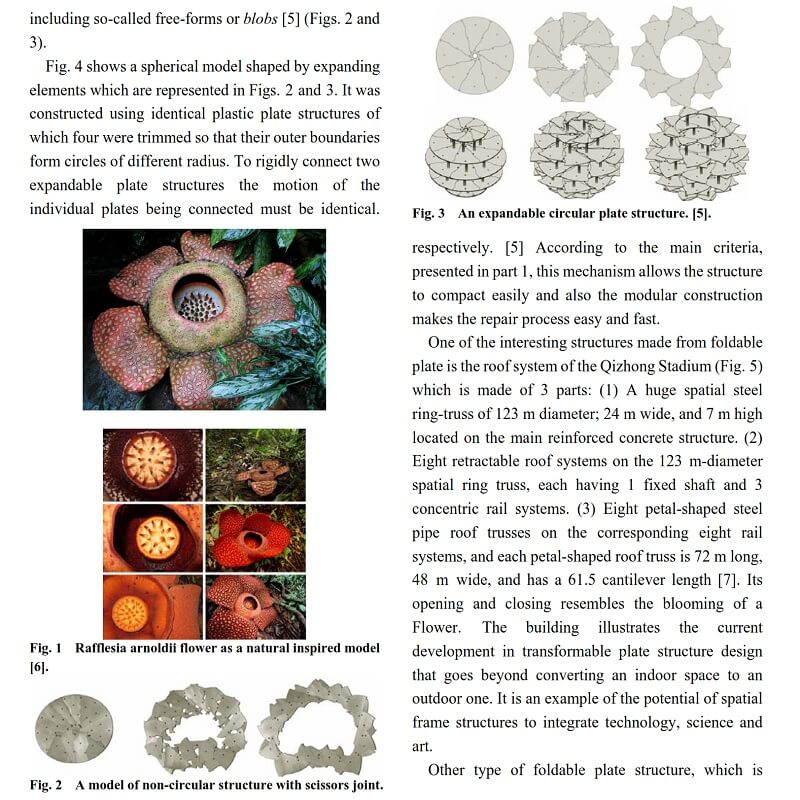
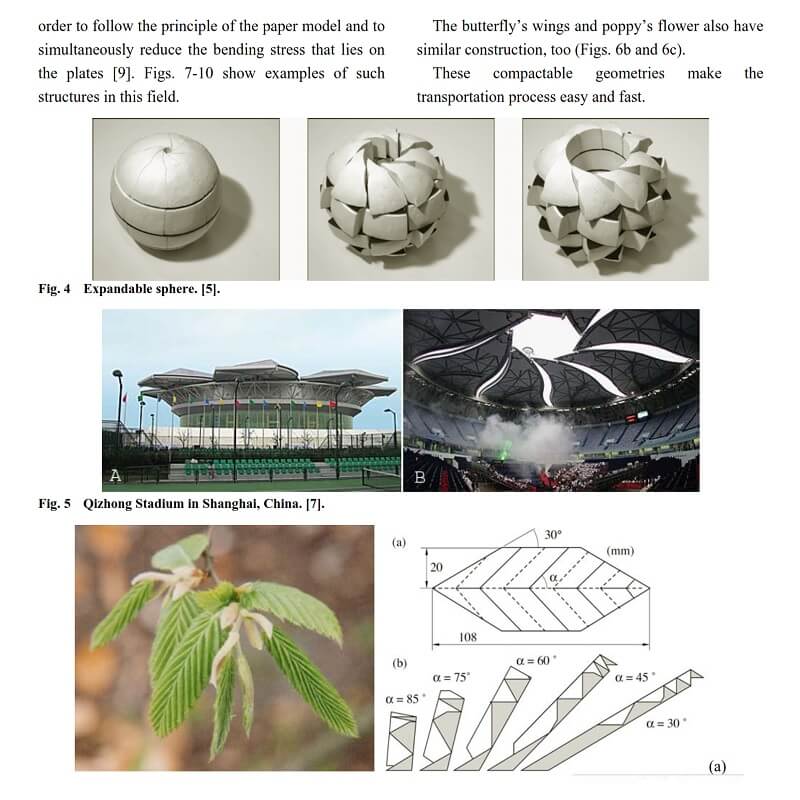
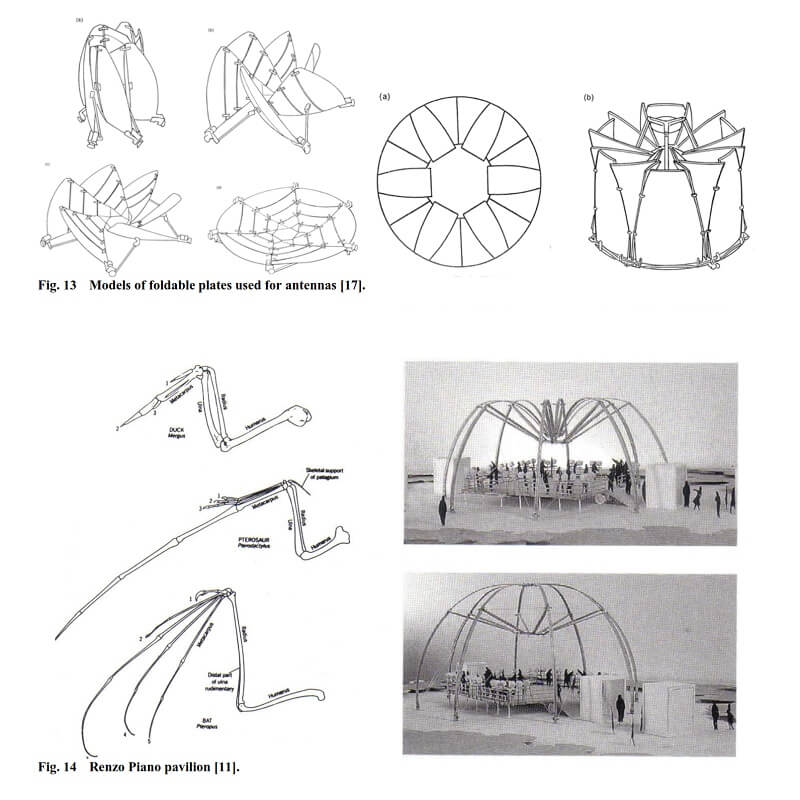
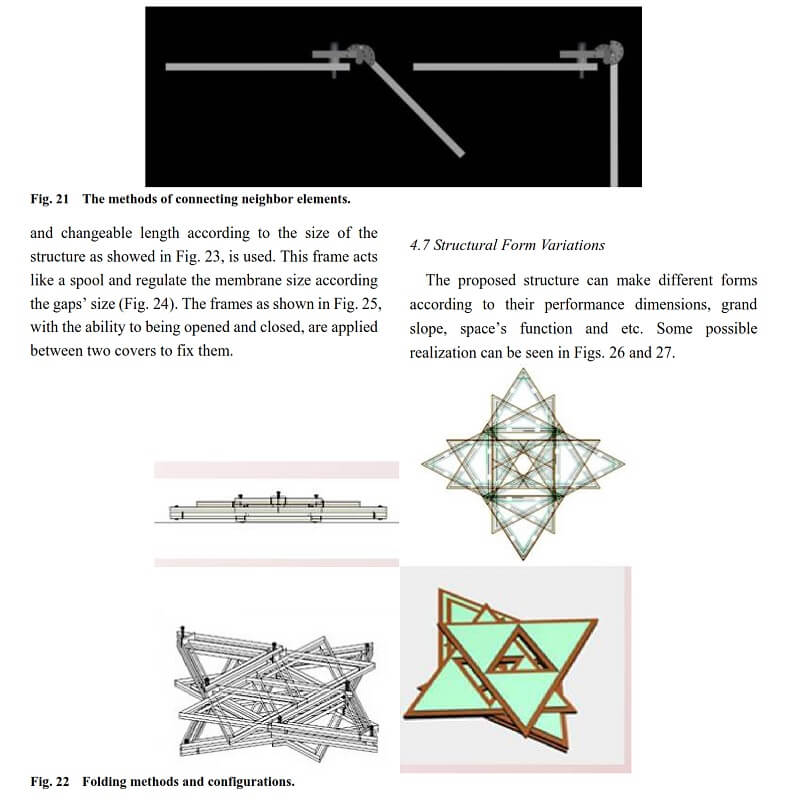
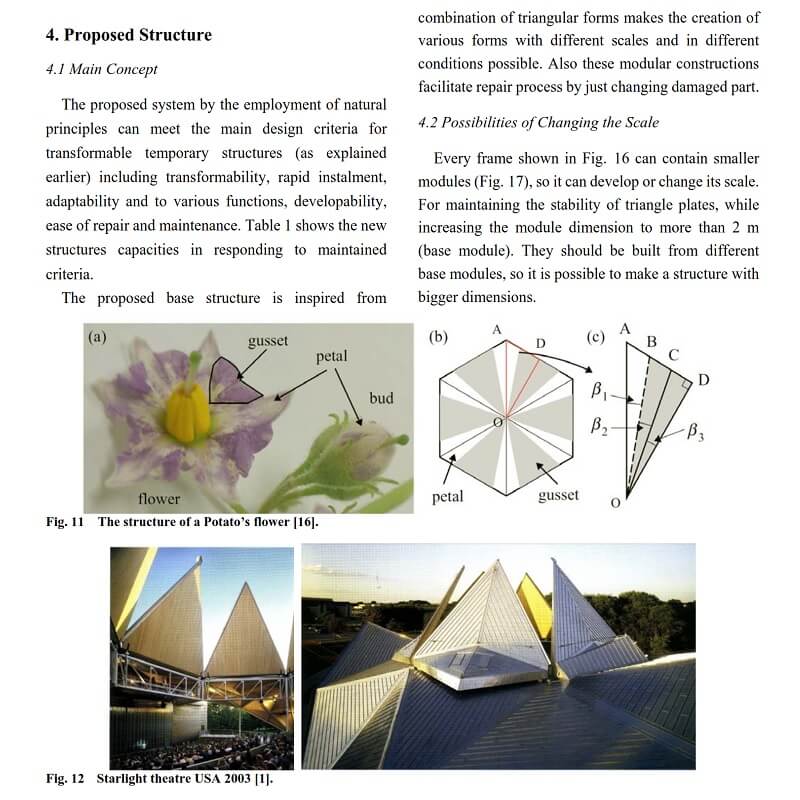 To make a way toward the design of transformable structure for temporary applications, the authors have developed a new type of adaptable structures according to natural forms. The proposed design applies the transformation principles that exist in potato’s flower and the movement mechanisms used in a spider’s leg.
 The design is able to fit to different topographies and have a potential to be folded to a very compact state in a very short period of time. The detailed design and the different configurations of the system applications will be presented in this paper. The result of the study shows that using modular triangular plates can create a changeable module that is not only able to respond to different functions and environmental changes but it is also able to shape different configuration to be able to respond to different user’s ambitions.
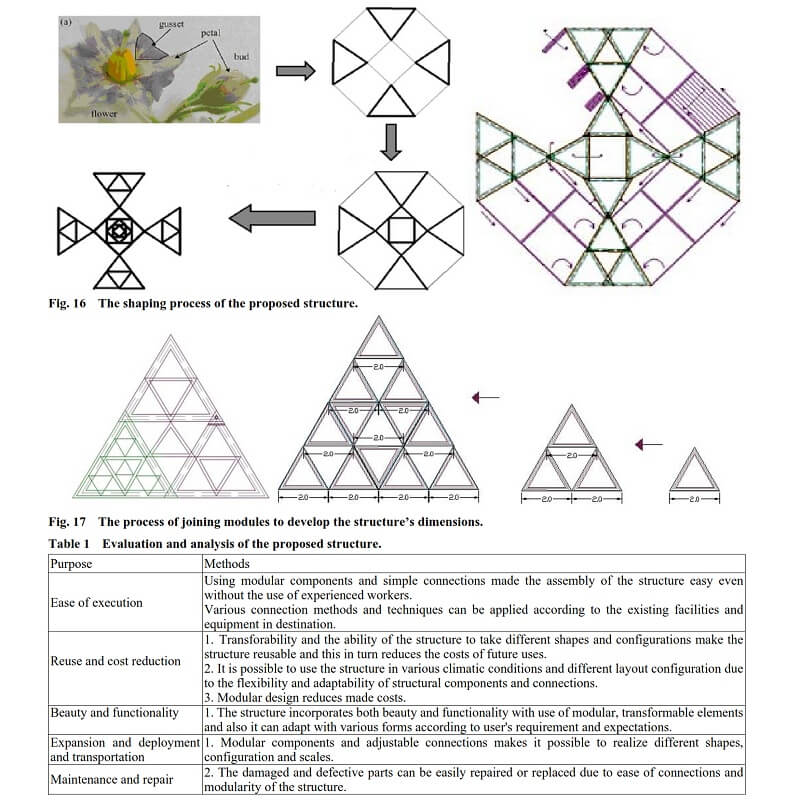 The compactability of this structure into 1/3 of its base dimensions; makes its transportation fast and with minimum costs. These capabilities make this structure suitable for temporary buildings such as exhibitions, temporary settlements or hospital in damaged areas.
String Art Generator by Yiran is a grasshopper plugin which generates a string art sequence based on an input image. You can

This paper by Alessandro Liuti, Sofia Colabella, and Alberto Pugnale, presents the construction of Airshell, a small timber gridshell prototype erected by employing a pneumatic formwork.

In this paper by Gregory Charles Quinn, Chris J K Williams, and Christoph Gengnagel, a detailed comparison is carried out between established as well as novel erection methods for strained grid shells by means of FE simulations and a 3D-scanned scaled physical model in order to evaluate key performance criteria such as bending stresses during erection and the distance between shell nodes and their spatial target geometry.

In this paper by Frederic Tayeb, Olivier Baverel, Jean-François Caron, Lionel du Peloux, ductility aspects of a light-weight composite gridshell are developed.