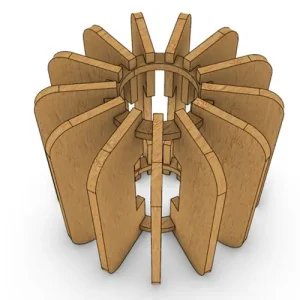
Curved-Line Folding

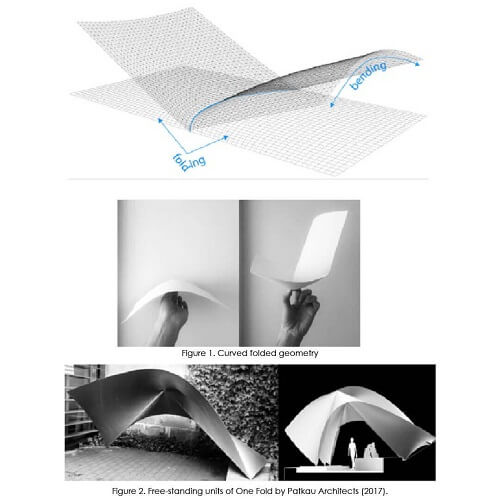
Curved-line folding is the act of folding a flat sheet of material along a curved crease pattern in order to create a three-dimensional shape. It is a creative and innovative way to produce lightweight and geometrically stiff components using only sheet materials.

Continue reading

Curve-Crease Folded Panels

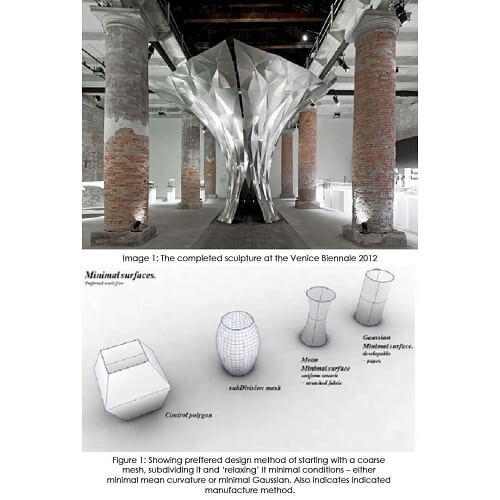
The research incorporated in the paper stems from the design and fabrication of a self-supporting, multi-panel installation for the Venice Biennale 2012 and operates against the backdrop of the exciting potentials that the field of curved-crease folding offers in the development of curved surfaces that can be manufactured from sheet material.

Continue reading

Parametric Industrial Products

The main contents of this paper are the parametric design and its applications in industrial design, taking the ergonomic chair as the main design research carrier, conducting the experimental study, and explored the parametric industrial product design procedures and methods based on personalized design notion of “Form follows behaviors”.

Continue reading

Matrix Architecture

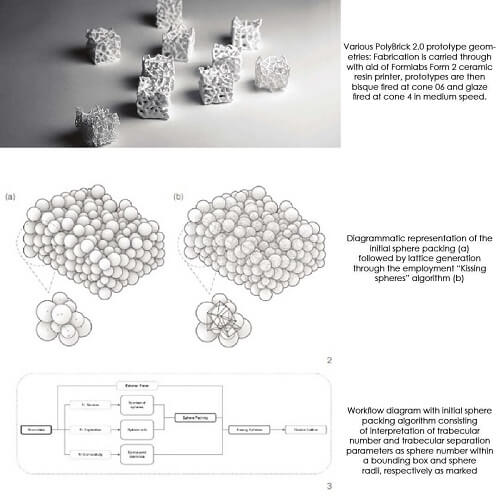
This endeavor demands a closer look at the formal interplay between code and context. Biology provides useful systems-based models for architects to study to understand how context specifies form, function, and structure. While the end goals may differ in science and architecture, there is a driving necessity in both disciplines to spatialize, model, and fabricate complex, emergent, and self-organized systems.

Continue reading

Lumen

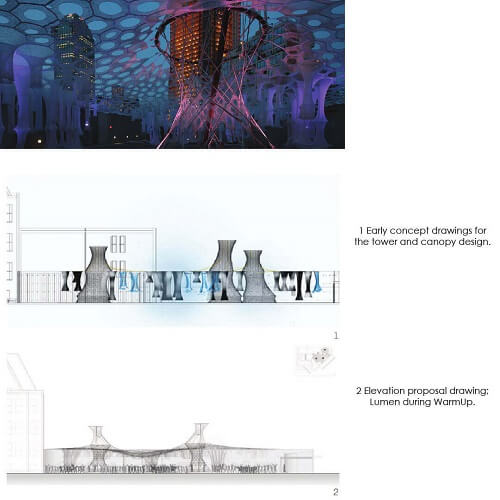
This paper by Jenny E.Sabin, Dillon Prager, Clayton Binkley, Kristan Strobel, Jingyang (Leo) Liu, documents the computational design methods, digital fabrication strategies, and generative design process for Lumen, winner of MoMA & MoMA PS1’s 2017 Young Architects Program.

Continue reading

Bio-Integrative Structure

Responding to increasing urgencies of material efficiency and environmental sensibility, this project strives to provide for designers a toolset for environmentally responsive, case-specific design, characterized by the embedded control qualities derived from the bone and its adaptability to specific loading conditions.

Continue reading

Kinetic Facade Design

This paper by Seyed Morteza Hosseini, Masi Mohammadi, Torsten Schroder, Olivia Guerra-Santin , explores for the first time, the possibility of coupling a kinetic façade with colored glasses to improve the daylight performance. This research builds on a combination of relevant literature and parametric simulation to investigate the development of integration of colored glass from Orosi with interactive kinetic façades, triggered by sun timing and occupants’ positions.

Continue reading

Digital Fabrication

This book is edited by Neils Martin, Larsen Og, Anne Mette Boye. It brings together contributions from the seminar on digital fabrication in tomorrows architecture and discusses about digital fabrication and digital form generation that can change the way different professions interact in relation to the development and construction of architecture.

Continue reading

Free-Form Geometries

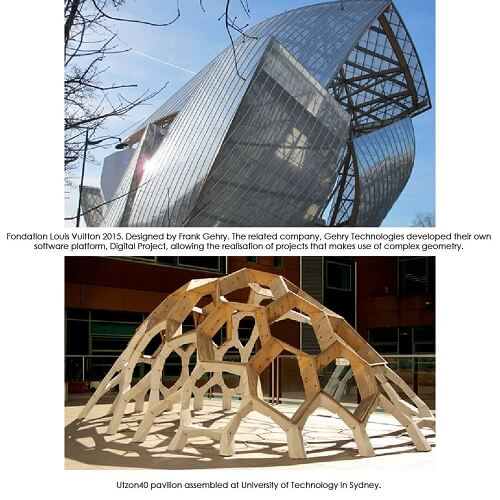
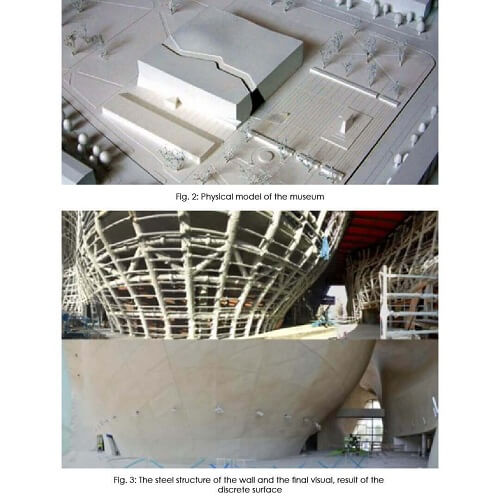
this paper by Anas Hameed Majeed, Huda Al-Alwan, Nazar Oukaili, aims to establish a theoretical framework to determine dimensional rules as formation techniques and utilize them as tools in designing processes, to finally benefit to attain several free-form geometries in architecture now and in the future.

Continue reading

Parametric Architecture

This paper by A. Heidari, S. Sahebzadeh, M. Sadeghfar, B. Erfanian Taghvaei, seeks to illustrate the evolution history of Parametric Architecture and describe the reasons why parametric architecture, in its second phase of evolution, called “Parametricism 2.0”, is showing promising abilities in solving more and more intricate socio-environmental problems.

Continue reading

Urban Elements

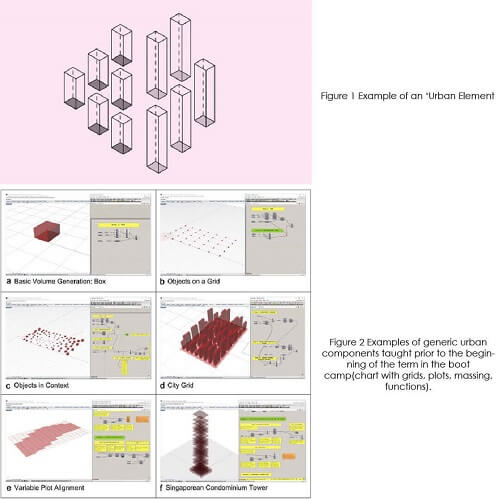
The article by Aurel von Richthofen, Katja Knecht, Yufan Miao, and Reinhard König, proposes a method for teaching advanced urban design to working professionals in Singapore. The article aims to expand the discourse on parametric urban design education by introducing ‘Urban Elements’ as conceptual urban design instruments with an inherent rule based logic, which can help to bridge gaps in teaching parametric urban design thinking.

Continue reading

Tailoring Self-Formation

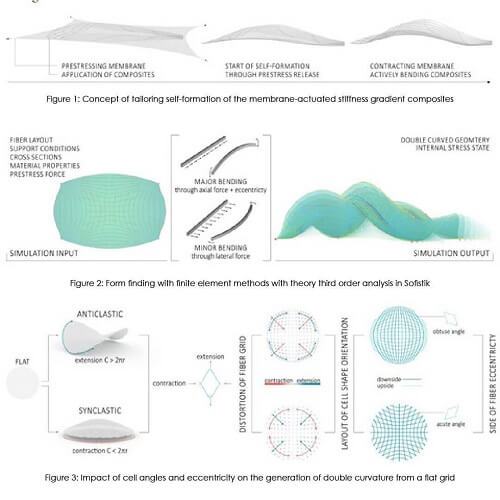
This paper by Lotte Aldinger, Georgia Margariti, Axel Körner, Seiichi Suzuki, Jan Knippers, presents a design to fabrication framework for the mold-less construction of double curved composite lattice surfaces based on inherent material behavior.

Continue reading

Agent-Based Framework

In this paper byAbel Groenewolt, Tobias Schwinn, Long Nguyen, and Achim Menges, they focus on subsequent developments in our research on agent-based modeling and present a framework for agent-based architectural design and planning that integrates a large range of planning aspects (such as structural analysis and life cycle analysis, as well as prefabrication planning).

Continue reading

Spatial Deployment

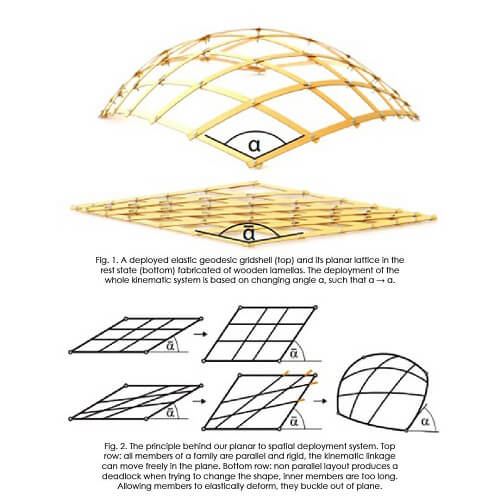
This paper is by Stefan Pillwein, Kurt Leiler, Michael Birsak, and Przemyslaw Musialski. Their approach aims at the approximation of freeform surfaces with spatial grids of bent lamellas which can be deployed from a planar configuration using a simple kinematic mechanism.

Continue reading