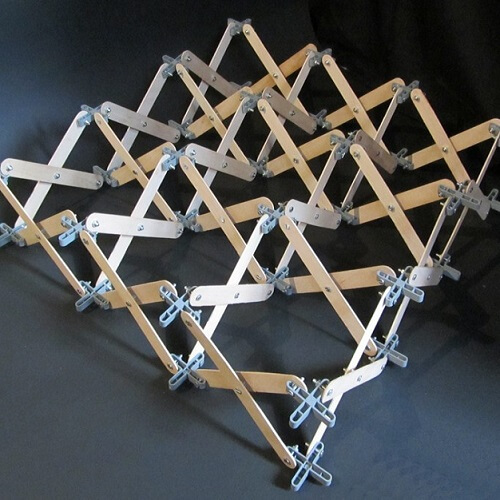
Symmetrical Scissors
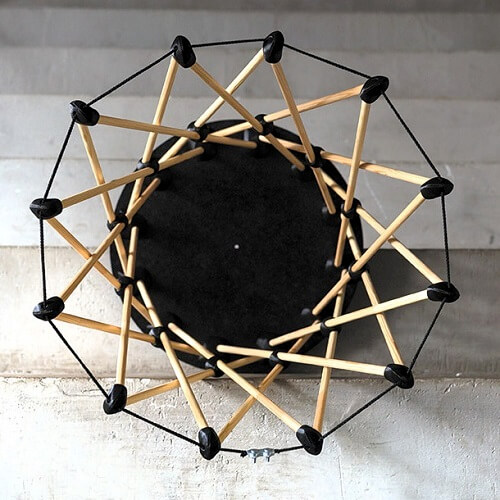
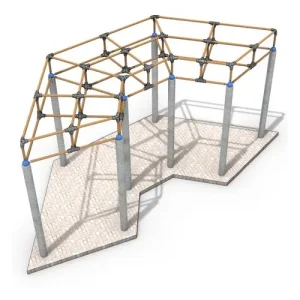
The central topic of this work by SMiA Research Group is the explanation of the making process of a scale model, which makes a spatial grouping of symmetrical straight scissors.
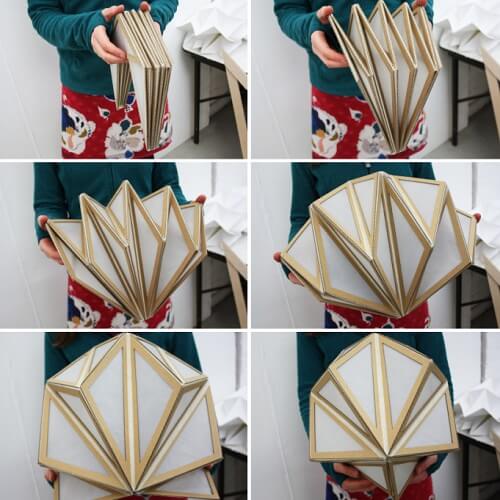
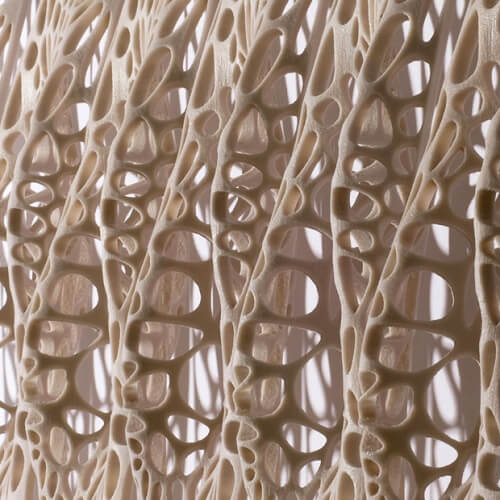
Origami Shelter by Hannah Imlach (birch plywood, ripstop nylon and cotton webbing, 2011) investigates subtle changes in natural light. The sculpture is a portable, foldable space, large enough to fit two adults lying comfortably inside.
French for “single shell,” Monocoque by Neri Oxman stands for a construction technique that supports structural load using an object’s external skin. This approach promotes heterogeneity and differentiation of material properties.
At the start of 2018, the Higher Technical School of Construction Engineering at the University of Seville launched an ambitious project to build an experimental pavilion – the “Bubble Pavilion” – using plywood panels as the raw material.
O-STRIP Pavilion is one of the projects in Tongji University’s Fabrication workshop that aims to bring back the liveliness of the place. The site is located at a sinking space of the teaching building, which connected with an indoor exhibition hall.
Harmen Design group designed and digitally fabricated this interior setting for the LPD office in Toronto, using Rhino3d and it’s plugin Grasshopper3d.
Iridescence Print by Gramazio Kohler Research is the first large-scale architectural installation to be automatically printed by robotic machines.
Knit Necklace is an extension to Knit Series of earrings and bangles by Monocircus. The design accentuates the unique ‘knitted’ structure resulting in a fascinating one-of-a-kind necklace.
Pavilion Number 2 designed by MSA team at the University of Mazandaran in December 2017 which is now hosted in Kermanshah Iran.
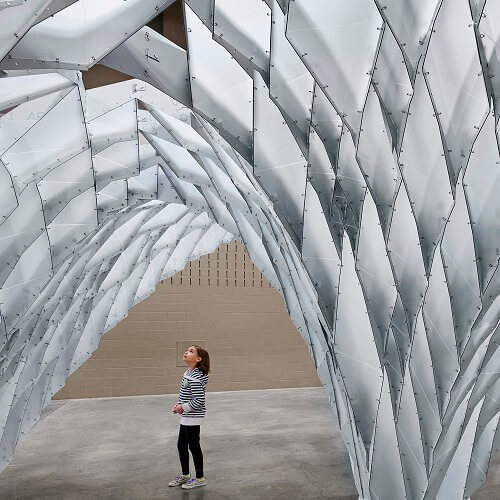
This pavilion is a 11-foot, steel vaulting structure known as Caret 6. Designed by OTA+ principle Kory Bieg and his 2013 design-build studio from the University of Texas’ (UT) Austin School of Architecture…
The shukhov stool by Anna Strupinskaya & Alexey Ivashkevich celebrates the visual style of the heritage Radio tower known as the Shukhov Tower in Moscow.
The Asterism projects by PATHfab serve as working prototypes for adapting any number of geometries into architectural, structural or furniture systems through the use of parametric strategies.
BHP pavilion by Matsys Design, is composed of 22 concrete “petals” that form a network of vaults that provide shade and direct the flow of rainwater into an underground cistern used for the park’s irrigation.
Designed in collaboration with Layer/Benjamin Hubert and Materialise, the GO was the result of two years of research, a wheelchair designed with a 3D-printed resin seat and TPU suspension sitting upon an aluminum insert.
Adam Friedman combined the comfort of upholstery with the durability and cleanliness of wood. Small compressed lumber blocks form the seats of chairs and benches, and the individual interlocking elements gently mold to the body.
‘Lasercut wood on leather‘ boots by Tineke Gysel was presented at the ‘Watch Our Steps’ exhibition, an exhibition that showcases the graduation works of promising Footwear designers from around the world.
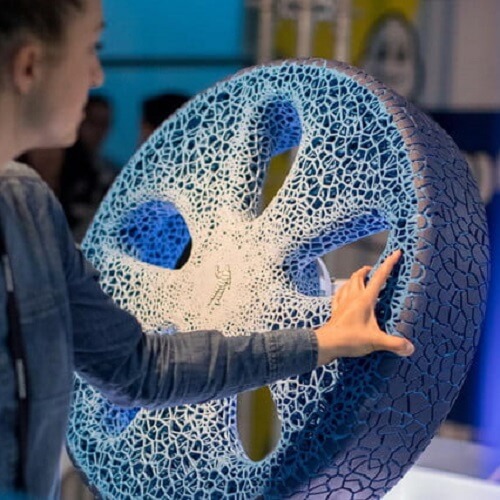
Well known tire manufacturer Michelin introduces an airless, 3D printed tire made from recycled biodegradable like natural rubber, bamboo, paper, tin cans, wood, and plastic, which means it can be totally recycled after its life cycle.
Lorenzo Capanna is a young architect who designs sculptural furniture, one of a kind. The material he uses is wood, a more than contemporary choice, capable of looking to the future, maintaining a deep bond with tradition.
After a 5-day intensive workshop training in Grasshopper and Rhinoceros, a Russian group has created plywood hand assembled form. The object is reminiscent of an aquatic creature.
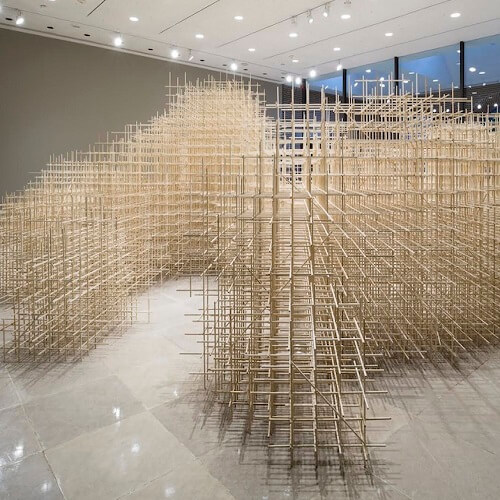
Unbounded, Ben Butler’s installation on display at Rice University Gallery in Houston, Texas, uses elaborate systems produced by ant colonies by assembling over 10,000 pieces of poplar wood into a matrix-like structure.