
Additive Manufacturing
-
By
Admin
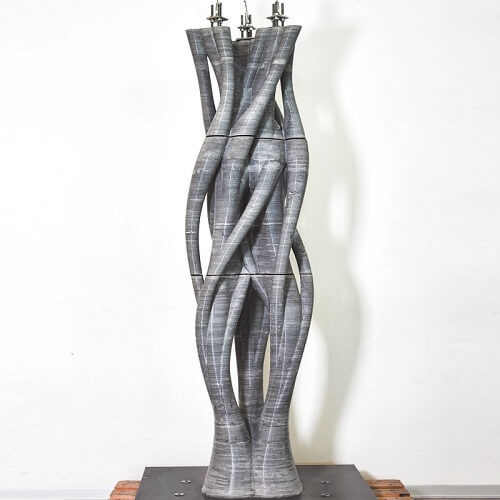
The limitations of additive manufacturing of ceramics are quickly evolving and will soon create new potentials for architectural products and applications. This paper offers an overview of these limitations that are tested and examined through a case study.
Ice Textures
-
By
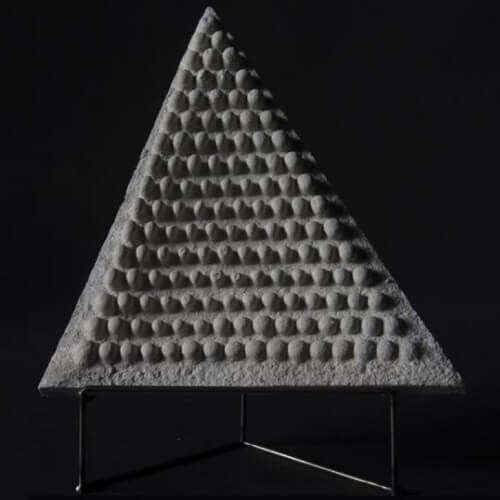
This research, explores the use of ice formwork textures on complex concrete architectural elements. The use of ice formwork, allows the production of architectural elements with complex geometries in a highly controlled offsite production process.
Ice Formwork
-
By
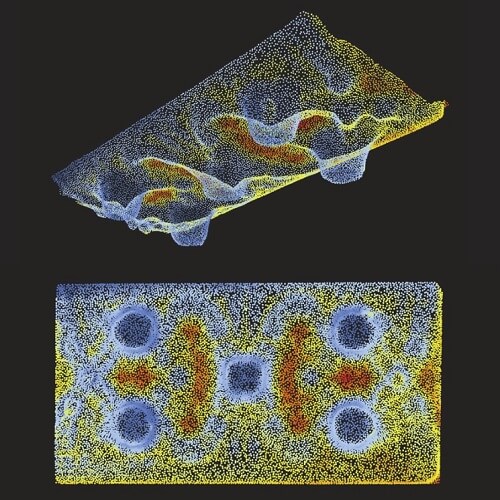
This document by Enrico Pontello, Martin Tamke and Vasily Sitnikov, focuses on the exploration of casting complex concrete architectural elements with ice formwork.
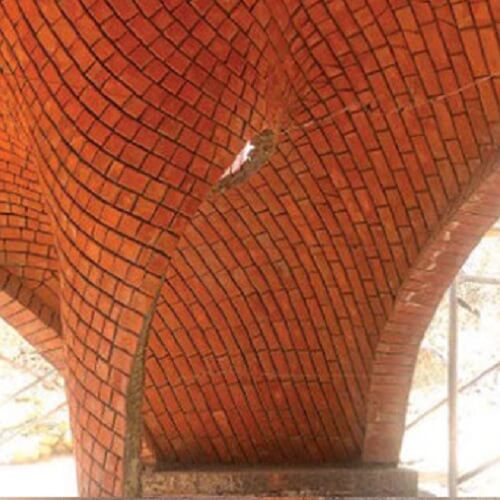
Bridging the Gaps
-
By
This paper presents a craft-based approach to computation and its contribution to support artisans’ development in India. It is demonstrated through ongoing research on customising bricks and utilization of computationally generated asymmetrical Catalan vault.
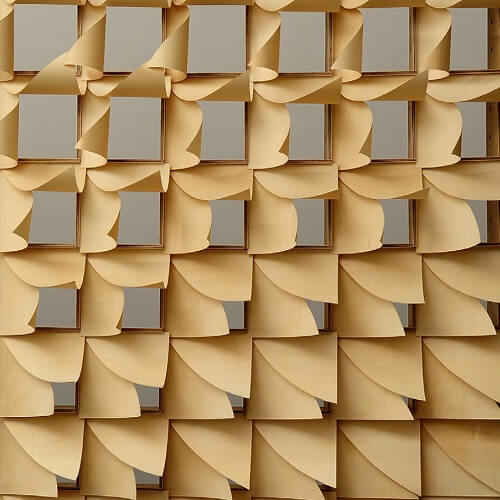
Meteorosensitive Architecture
-
By
In this paper by Steffen Reichert, Achim Menges and David Correa, the authors present research into autonomously responsive architectural systems that adapt to environmental changes using hygroscopic material properties.
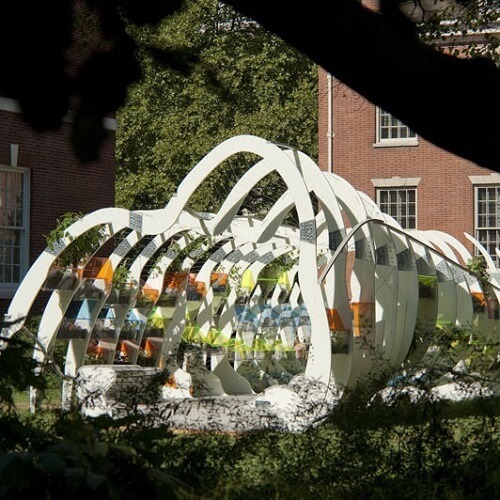
The Greenhouse
-
By
The Greenhouse and Cabinet of Future Fossils was commissioned by the American Philosophical Society Museum, funded by Heritage Philadelphia Program, a program of The Pew Center for Arts & Heritage.
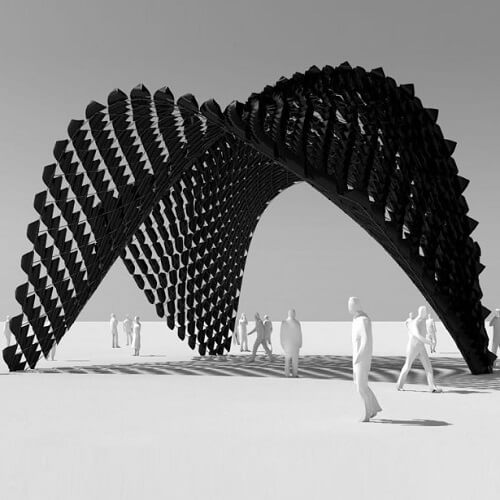
Woven Compliant Composites
-
By
In this paper by Olga Mesa, Saurabh Mhatre and Martin Bechthold, Simple fabrication and economic actuation principles are proposed to transform planar fabrics into three-dimensional configurations without using expensive molds.
Prestressed Gridshells
-
By
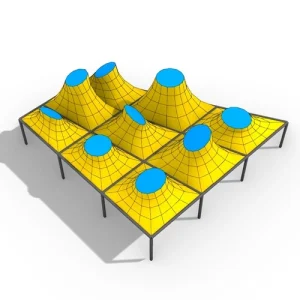
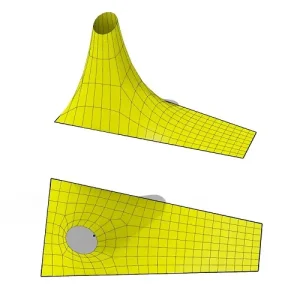
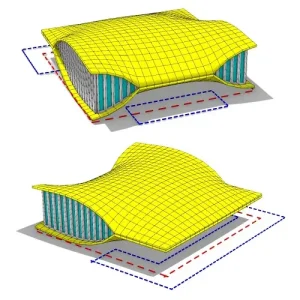
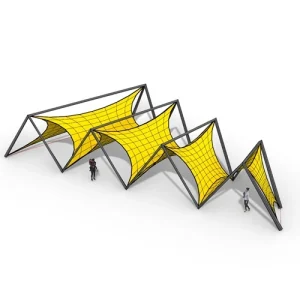
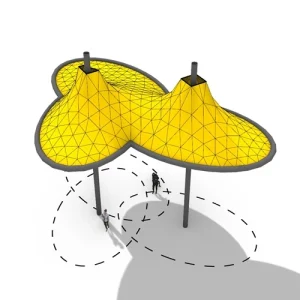
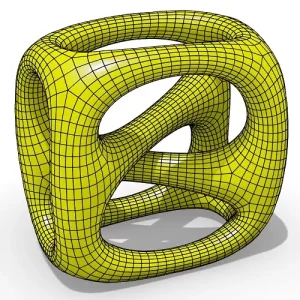
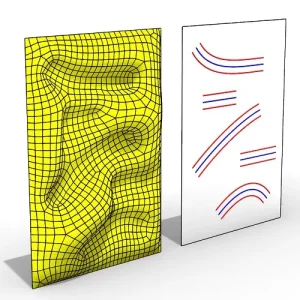
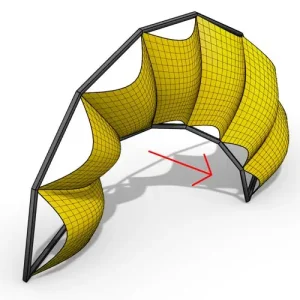
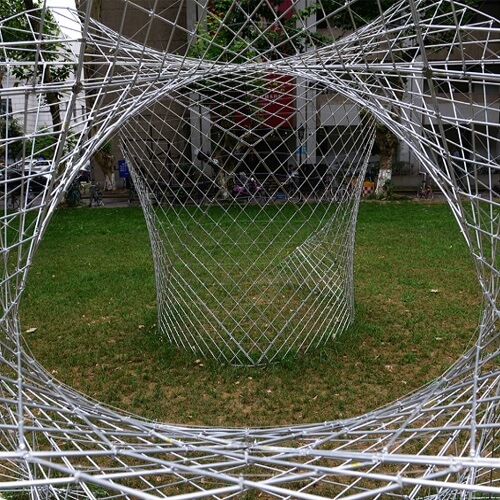
This article, demonstrates the design potentials of a recently developed approach for generating smooth poly-hypar surfaces, freeform surfaces made of combinations of hyperbolic paraboloids (hypars).

Bodies in Formation
-
By
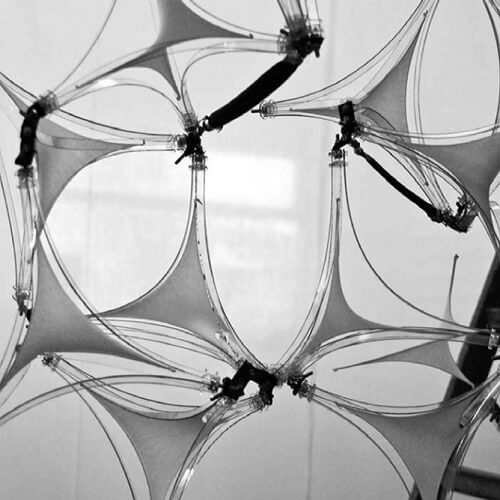
Borne from the complex negotiation between liquid mass and tensile constraint, flexible formwork castings are resonant with material energy. Hard as stone, yet visually supple and fluid, the pre- cast architectural assemblies produced using flexible formwork techniques.
Environmental Feedback
-
By
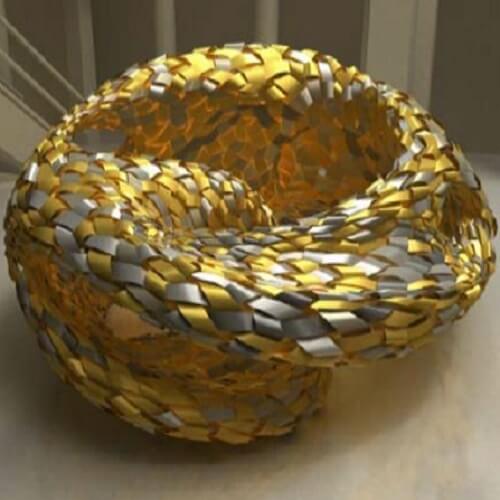
This paper by Isak Worre Foged and Esben Skouboe Poulsen, illustrates responsive systems, which focus on the implementation of multi-objective adaptive design prototypes from sensored environments.
Weaving Methods
-
By
This paper discusses certain modes of research and their derivatives through a case study, Spülenkorb, as an entry into a digital fabrication competition by Texfab, in which the project received honorable mention.
3D Printed Wall
-
By
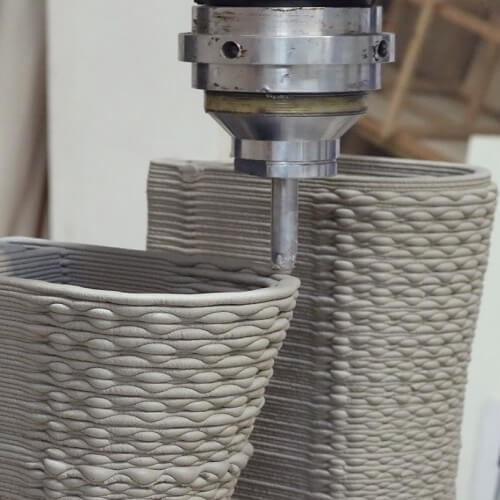
This paper investigates the development of “3D printed ceramic green wall”, a technological Nature Based Solution (NBS) aimed at regenerating urban areas by improving spatial quality and sustainability through clean and autonomous energy production.
Nonlinear Systems
-
By
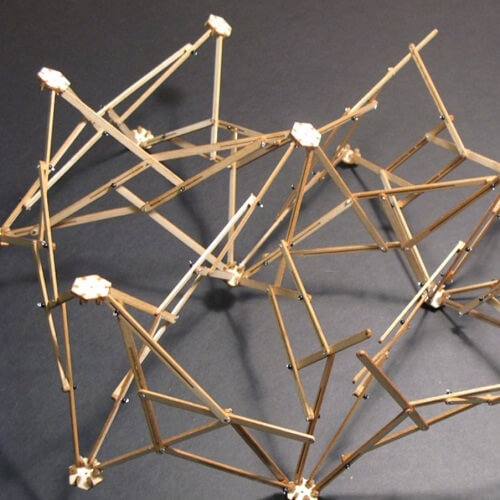
The intent of this paper by Jenny E. Sabin and Peter Lloyd Jones, is to jointly investigate fundamental processes in living systems, their potential application in the novel design of responsive surfaces and spatial structures, and their applicability in biomedicine.
Timber Folded Plate
-
By
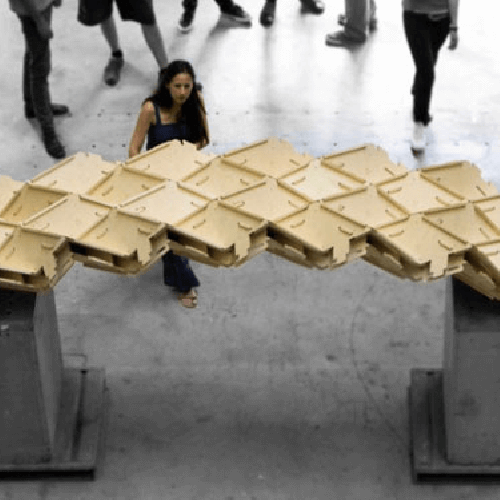
This paper introduces double through tenon joints, which allow for the rapid, precise and fully integral assembly of doubly-curved folded surface structures with two inter- connected layers of cross-laminated engineered wood panels.
ROBOSENSE 2.0
-
By
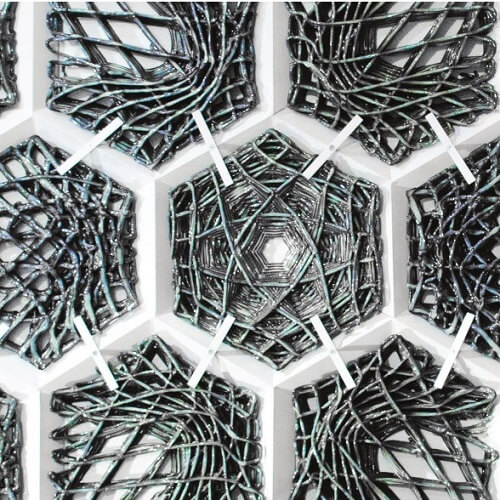
By integrating responsive sensing systems, this paper demonstrates real-time feedback loops that consider the spontaneous agency and intuition of the architect (or craftsperson) rather than the execution of static or predetermined designs.
Kinetic Shadings
-
By
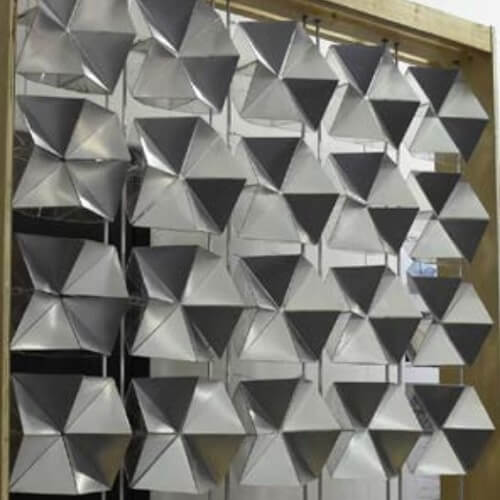
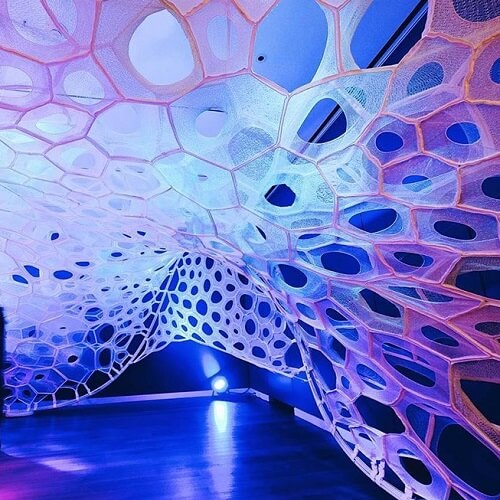
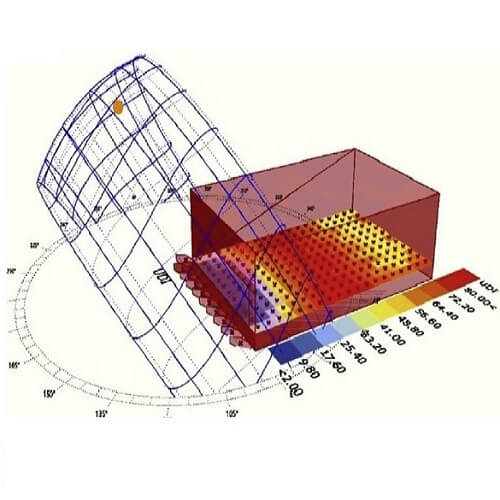
In this research, daylight inside a building was improved by designing a kinetic shading system with independent units parametrically responding to sunlight through 3D rotation (around the centers of the units) and 2D movement (on the surface of the shading system).
Digital Girih
-
By
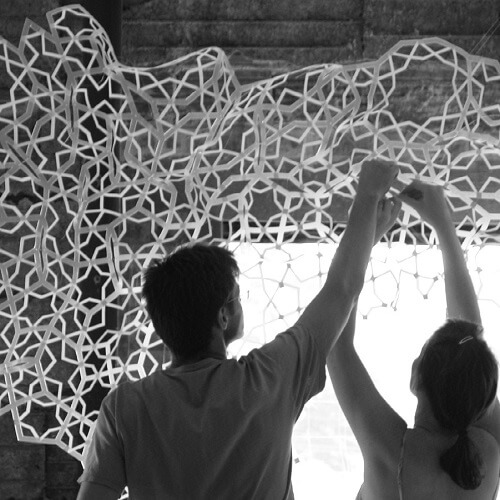
This paper by Gernot Riether and Daniel Baerlecken, will provide a different thinking of the relationship of massing and texture in Islamic Architecture from a digital point of view. An analysis of Islamic patterns challenged this relationship in Islamic architecture.