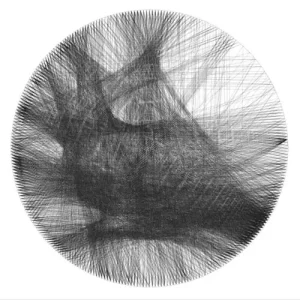
String Art Generator
String Art Generator by Yiran is a grasshopper plugin which generates a string art sequence based on an input image. You can
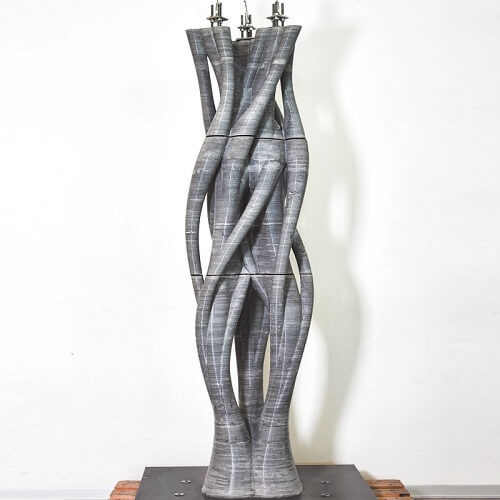
Concrete is a material favored by architects and builders alike due to its high structural strength and its ability to take almost any form. However, to shape concrete structures, heavy-duty formwork is usually necessary to support the fresh concrete while curing. To expand geometrical freedom, three-dimensional (3D) printed concrete formwork has emerged as a field of research.
 This article by Joris Burger, Ena Lloret-Fritschi, Fabio Scotto, Thibault Demoulin, Lukas Gebhard,
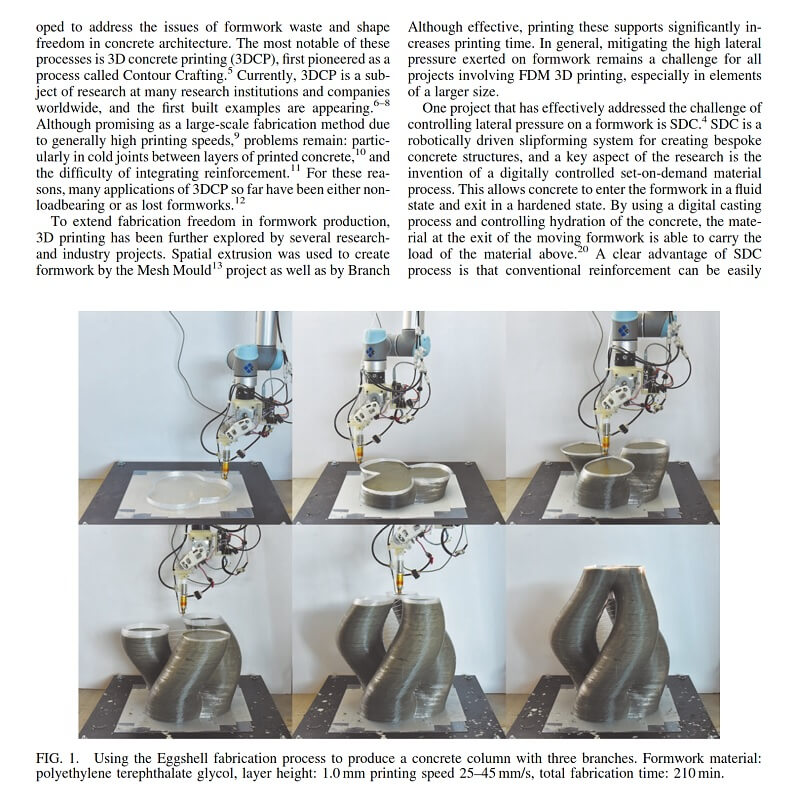
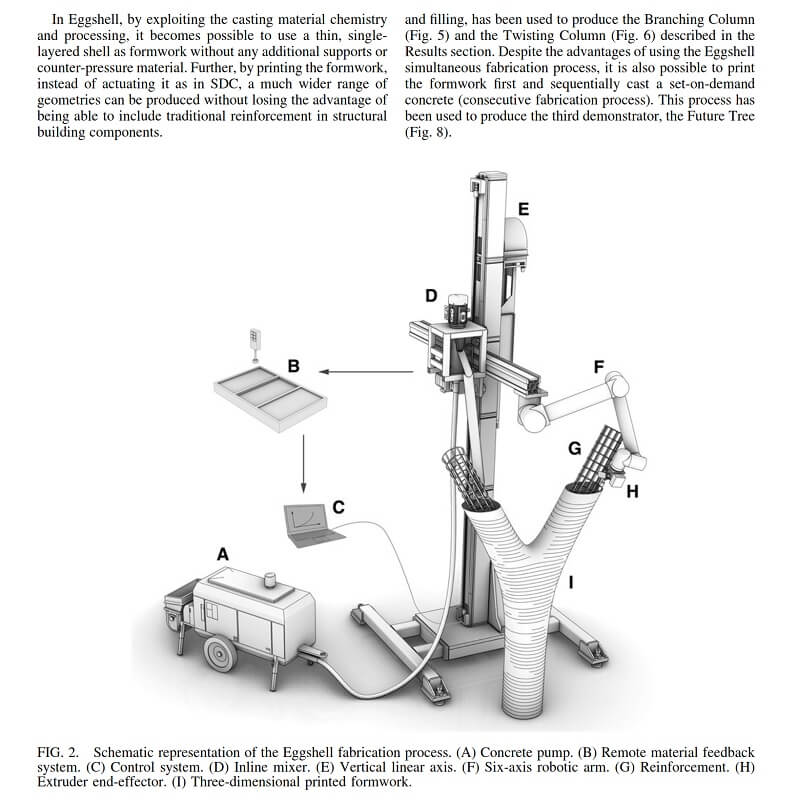
Jaime Mata-Falcon, Fabio Gramazio, Matthias Kohler, and Robert J. Flatt, presents one possible application, a novel fabrication process that combines large-scale robotic fused deposition modeling 3D printing with simultaneous casting of a fast-hardening, set-on-demand concrete.
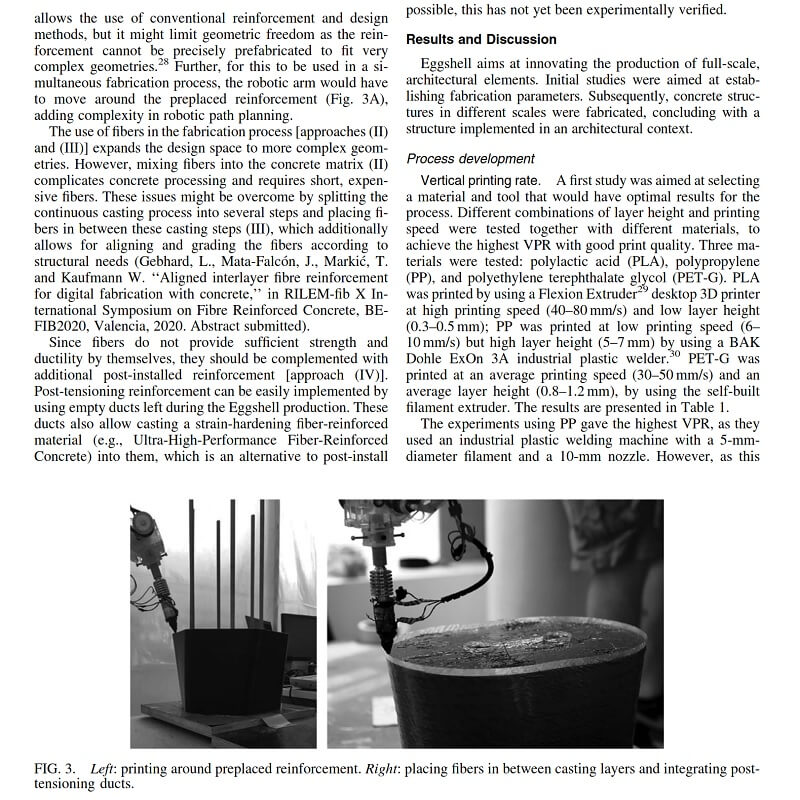 This fabrication process, known as ‘‘Eggshell,’’ enables the production of nonstandard concrete structures in a material-efficient process. By casting a fast-hardening concrete in a continuous process, lateral pressure exerted by the fresh concrete is kept to a minimum. In this way, a 1.5-mm-thin thermoplastic shell can be used as a formwork, without any additional support.
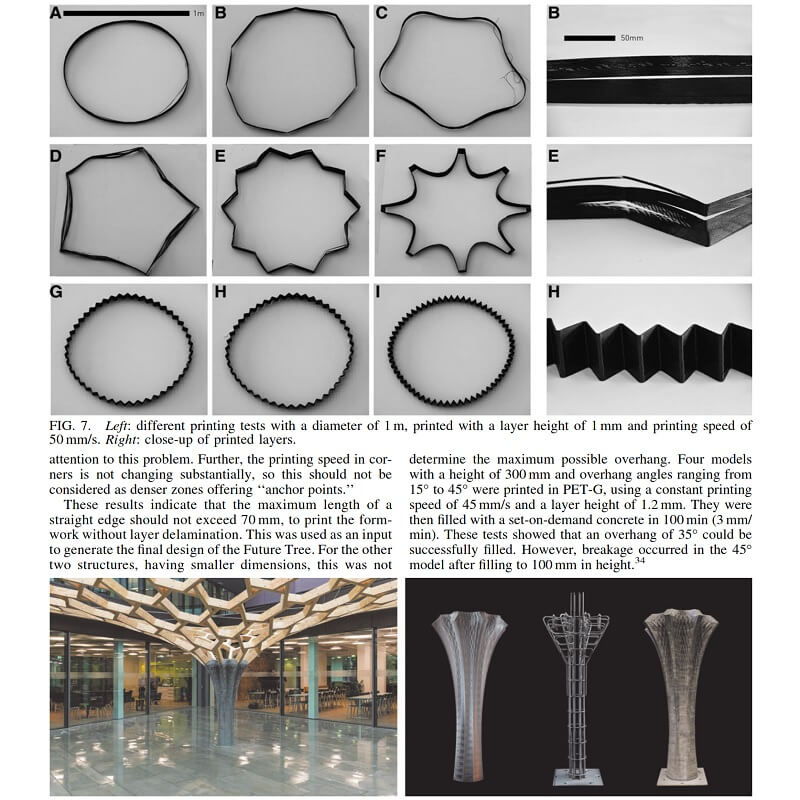
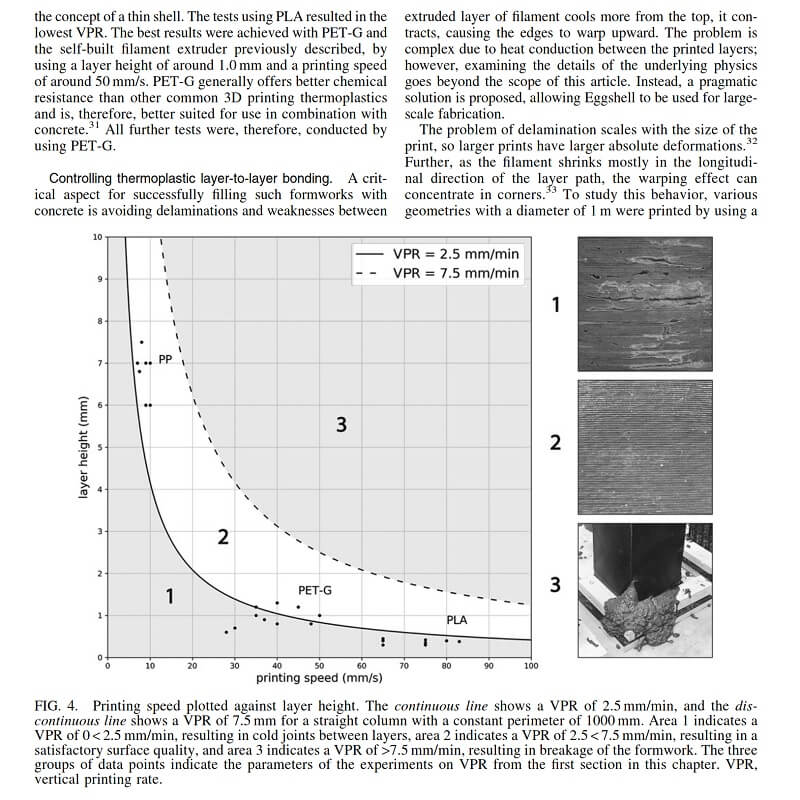 Geometries of different scales are tested in this article to evaluate the feasibility of the Eggshell fabrication process in an architectural context. An array of printing materials are also tested, and several different reinforcement concepts are analyzed.
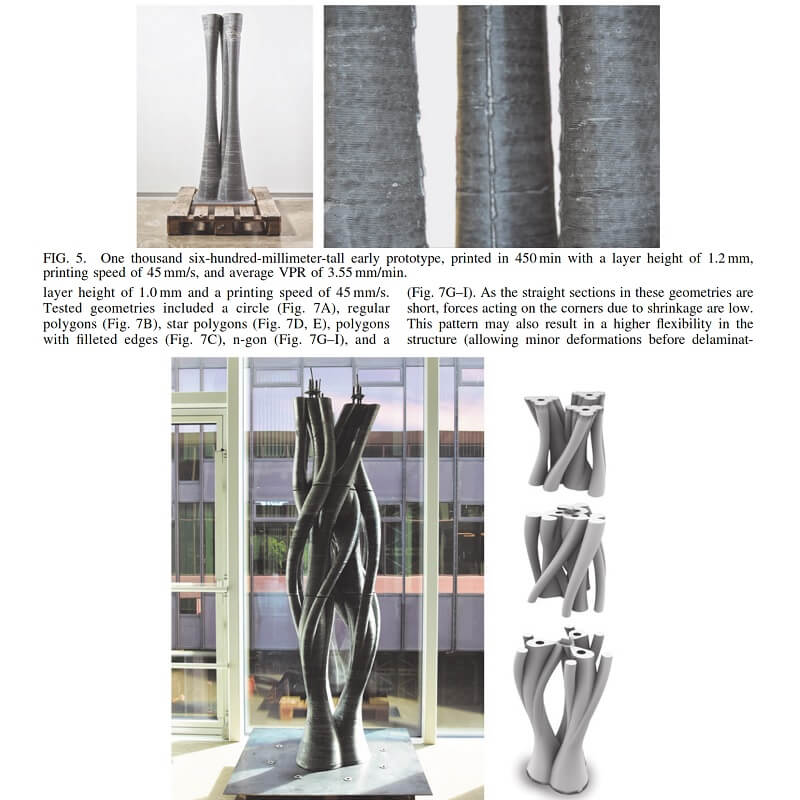 The findings are used to produce a full-scale architectural demonstrator project. This article shows that a wide range of concrete geometries can be produced in a material-efficient fabrication process, paving the way toward mass customization and structural optimization within concrete architecture.
String Art Generator by Yiran is a grasshopper plugin which generates a string art sequence based on an input image. You can

This paper by Alessandro Liuti, Sofia Colabella, and Alberto Pugnale, presents the construction of Airshell, a small timber gridshell prototype erected by employing a pneumatic formwork.

In this paper by Gregory Charles Quinn, Chris J K Williams, and Christoph Gengnagel, a detailed comparison is carried out between established as well as novel erection methods for strained grid shells by means of FE simulations and a 3D-scanned scaled physical model in order to evaluate key performance criteria such as bending stresses during erection and the distance between shell nodes and their spatial target geometry.

In this paper by Frederic Tayeb, Olivier Baverel, Jean-François Caron, Lionel du Peloux, ductility aspects of a light-weight composite gridshell are developed.