RhinoRstab – Plugin for Grasshopper3D
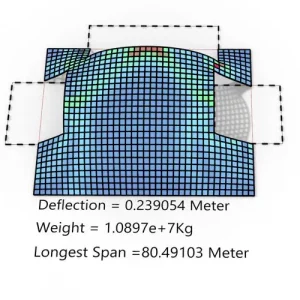
This paper by Sebastian Charles Dietrich presents a new open-source structural analysis plugin for Grasshopper – RhinoRstab. The plugin bridges data between Rhinoceros3d and RSTAB.
The purpose of this article by Mohammed Akazaf is to throw light on the mathematical and philosophical foundations that have opened architecture to the hegemony of digital technologies.
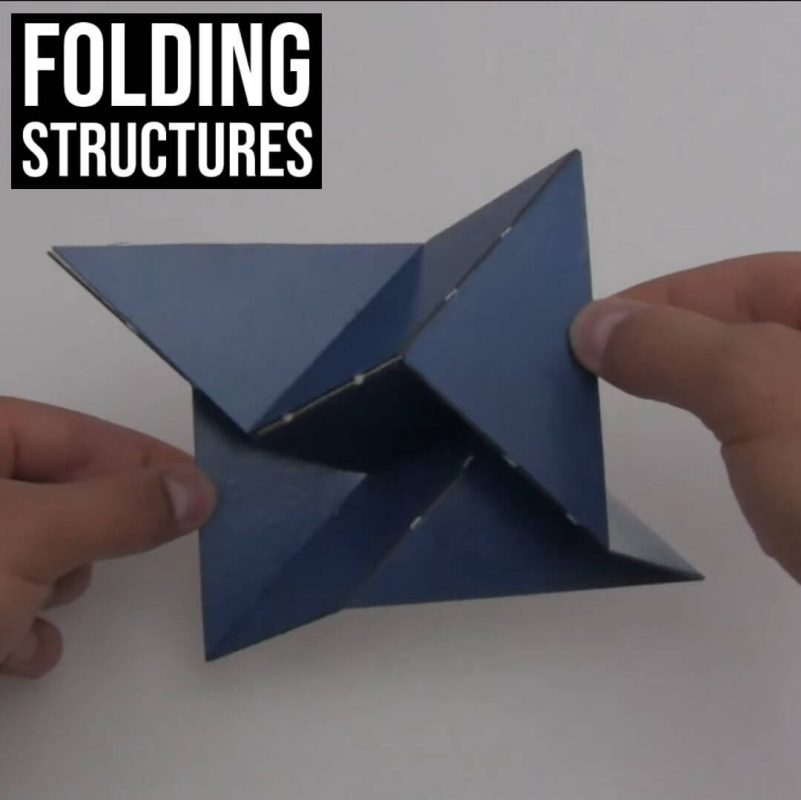
This paper by Evgueni T. Filipov, Tomohiro Tachi and Glaucio H. Paulino, describes thin sheets that have long been known to experience an increase in stiffness when they are bent, buckled, or assembled into smaller interlocking structures.
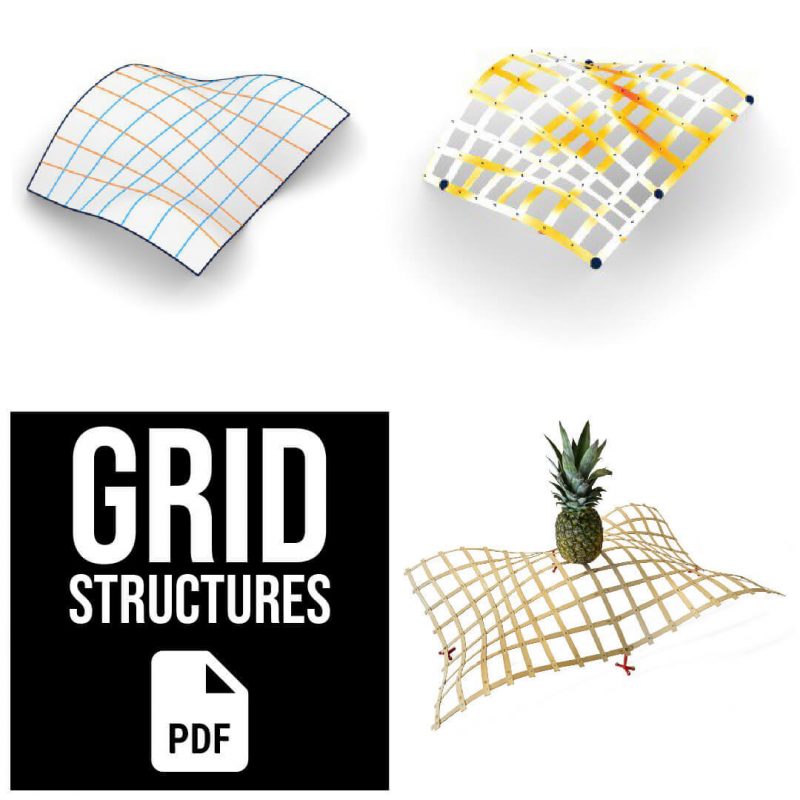
This paper by Stefan Pillwein, Johanna Kübert, Florian Rist and Przemyslaw Musialski, describe a method for generating a layout to implement Elastic geodesic grids (EGG) structures that can provide free-form surfaces.
This paper by Haoyu Yang, Ruiwei Liu, Ani Luo, Heping Liu and Chuanyang Li, describes a mathematical model of lightweight single-layer tensegrity structures on the basis of their geometric parameters.
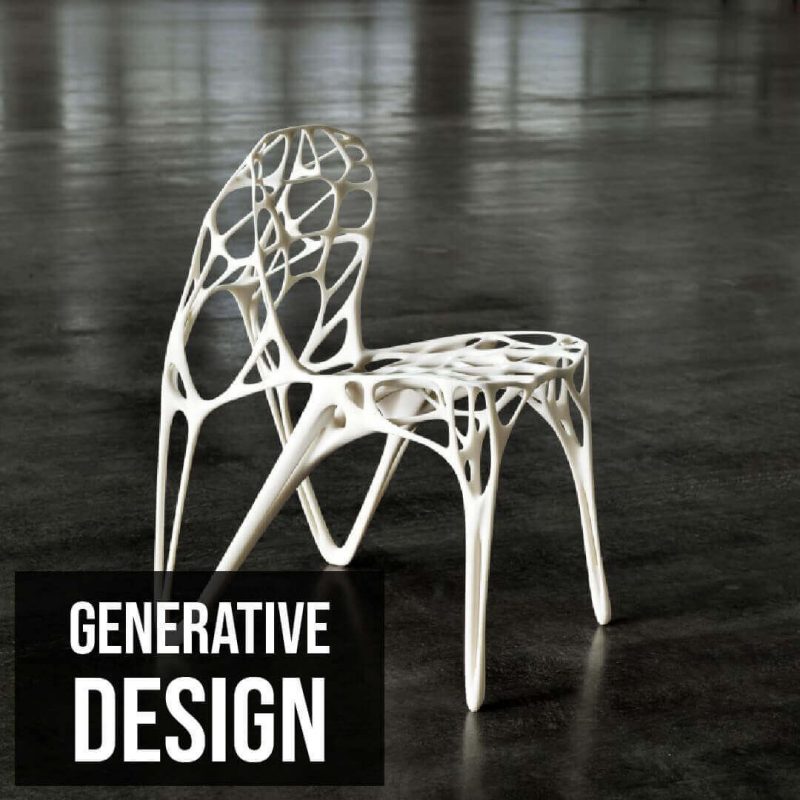
This paper by Marco Hemmerling, discusses a case study for a seating element that takes into account human factors as well as aspects of structural performance, material properties and production parameters within an integrative design approach.
This paper by Mostafa Zahri present a new model for simulating an interesting class of Islamic design. Based on periodic sequences on the one-dimensional manifolds, and from emerging numbers, we construct closed graphs with edges on the unit circle.
This Paper by Mark Beecroft of the Manchester Metropolitan University School of Art, has been exploring the potential of 3D printing in industrial knitting.
This Paper by Dr.-Ing Martin TRAUTZ presents a method of developing the folding plate principles on spatial structures also with irregular and freeform geometries.
This paper was edited by Berfu Ayhan, is about the use of crystal metaphor traces, a discontinuous emergence at the intersections between humanity- natural history and architectural thought, where nature has been accepted to develop human experience in creating arts.
This paper was edited by Rudi Stouffs and Sevil Sariyildiz, aims to investigate the use of building performance simulation tools as a method of informing the design decision of NZEBs.
This exhibition was curated by Michael Stacey, explores the relationship between architecture, manufacturing techniques and digital technology.
This paper by Kas Oosterhuis, is about a pavilion for the world horticultural exhibition Floriade 2002 designed by ONL. The pavilion is a spaceship, a closed autonomous object that landed on the Floriade. Architecturally, there is no distinguishable difference between wall, floor or ceiling.
This essay by Nikolas Patsavos and Yannis Zavoleas, present working collaboratively on the role and nature of architecture theory in the discipline of architecture, gathered in Chania in the summer of 2010, in order to focus on the collateral relations between digital/material and depth/surface.
This article that guest-edited by Rivka Oxman and Robert Oxman, announces a new order in design and construction.
This article by Ajla Aksamija, John Haymaker and Abbas Aminmansour, explores interdisciplinary approaches that address advanced materials, building technologies, environmental and energy concerns, computational design, automation in construction and design delivery methods.
This thesis by Constantin Spiridonidis and Maria Voyatzaki, present the meaning of innovation in architecture. All architectural development in time is based upon the critical questioning of some aspects of the preexistent and established formal expressions and of their underlying values and principles. There can be no architectural creation without overcoming the existent, without remodeling, reorganizing or reconstructing, to a certain extent, the established; that is to say, there is no architecture without innovation.
This thesis by Sabin -Cristian ȘERBAN, will examine in what manner and to what degree do two specific instances of the concept of language overlap in this digital age of architectural production: the artificial and perfectly logical machine-language, and the language of architectural form.
This thesis by Elizaveta D Edemskaya, explores the advantages and shortcomings of standardized and non-standardized design and construction techniques relating to architectural double-curvature metal frame constructions through a discussion of some examples from the pre- and post-computational eras.
This thesis by Neal Panchuk, represents an investigation into biomimicry and includes the development of a design method based on biomimetic principles that is applied to the design of curved building surfaces whose derived integral structure lends itself to ease of manufacture and construction.