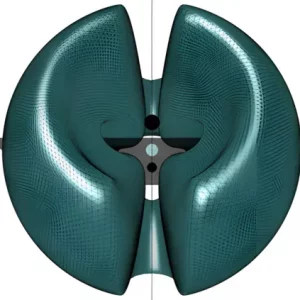
Crystallon
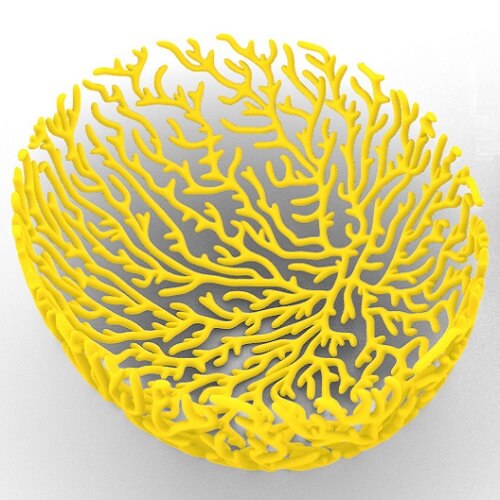
Crystallon by aporterfield is an open source project for creating lattice structures using Rhino and Grasshopper3D. Each tool is left as a cluster which can be opened and modified at will, in the spirit of open source.
This paper by Jane Scott describes the framework behind the development of a series of knitted prototypes inspired by the biomimetic model of the hygromorph. Three moisture responsive pieces are described which use properties of wood veneer.
This paper by Pamela Dychengbeng Chua and Lee Fu Hui presents an innovative approach to the design and fabrication of three-dimensional objects from single-piece flat sheets, inspired by the origami technique of twist-closing.
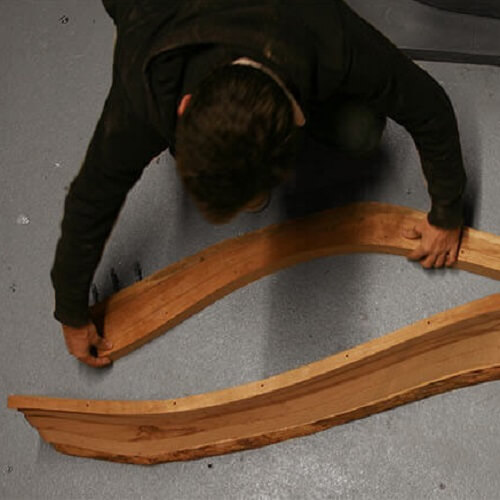
This article by Ryan Luke Johns and Nicholas Foley, illustrates a materially efficient technique for designing and fabricating freeform surfaces within the constraints of irregular wood flitches. The process utilizes a robotically operated bandsaw.
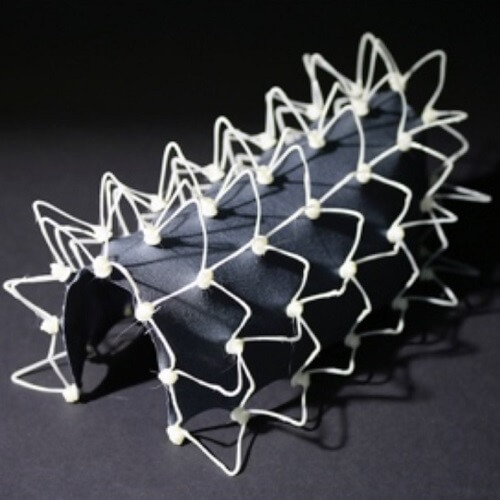
This paper by Jorge Christie introduces a novel approach for generating self-forming textile hybrid structures based on the actuation of pre-stressed textiles with in-space robotic 3D printing.
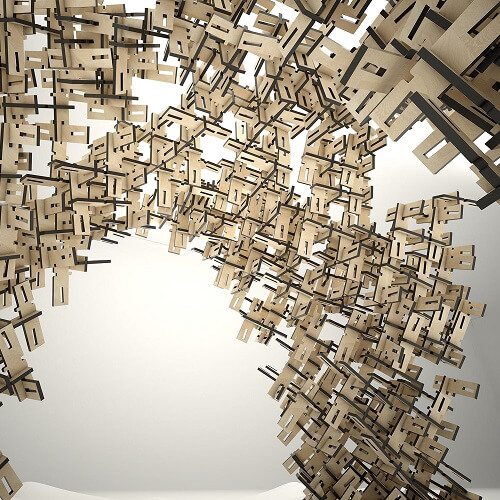
Fox by petras_vestartas includes series of algorithms for Graphs, Aggregations, Iso-surfaces. It was developed for Aggregation and Graph-Based Modelling Workshop at Vilnius Academy of Arts (VAA).
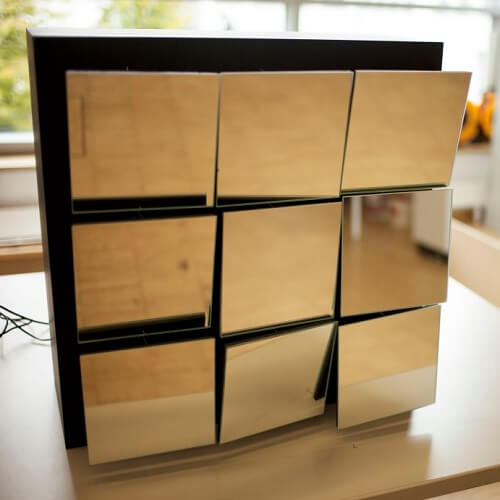
This paper by Ying Wang and and Florian Heinzelmann demonstrates the work on a kinetic mirror façade, which is able to reflect the daylight via mirrors in order to convey messages.
The focus of this project by Evelina Kourteva and Dermott Mc Meel is to investigate ‘digital design’ through the juxtaposition of a human driven and digitally supported creative process.
This paper by Andrew Payne proposes the use of a new set of software tools, called Firefly, paired with a low-cost five-axis robotic motion controller. This serves as a new means for customized tool path creation and realtime evaluation of parametric designs.
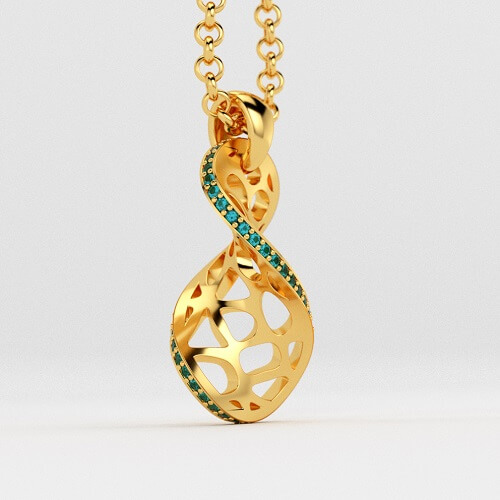
Panther by Panther Technologies combines the most versatile Jewelry Builders with an Interactive Gallery bringing premeditated parts to go into construction of a complete final piece.
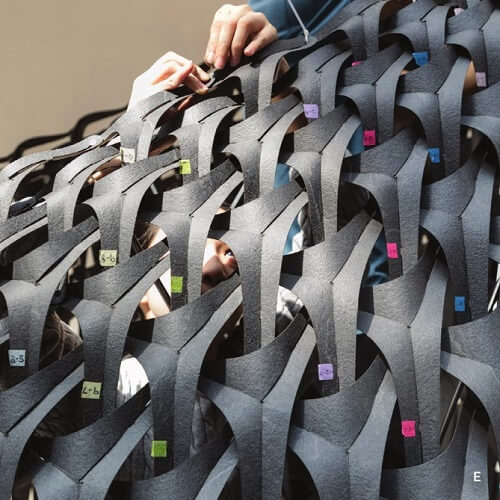
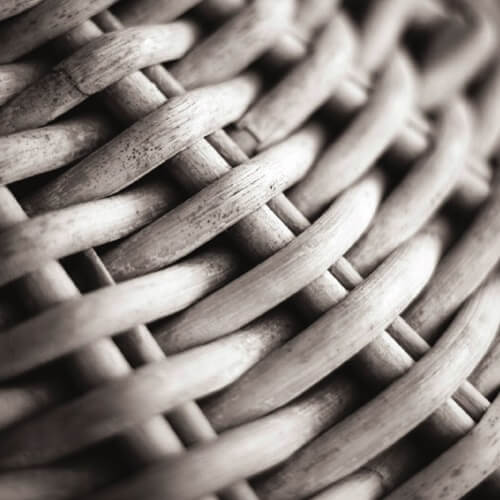
This paper by Roberto Naboni and Luca Breseghello presents a computationally based methodology arising from the application of weaving techniques for the design and construction of an experimental architectural system, Weaving Enclosure.
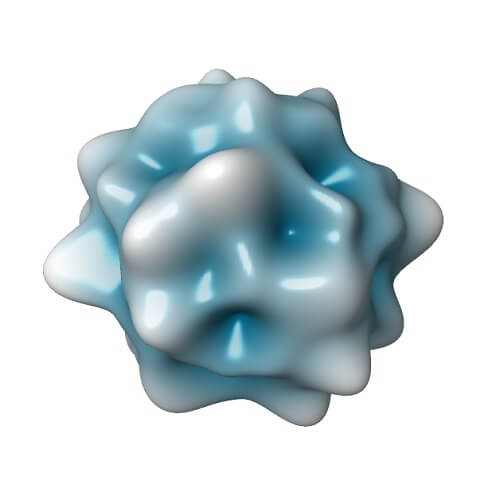
4D Noise component by giulio@mcneel.com creates Perlin and Simplex noise. This add-on forms smooth 4D Perlin noise and Simlex noise, two very well-known smooth noise functions investigated by Ken Perlin.
This article by Simon Schleicher, Andrew Rastetter, Riccardo La Magna, Andreas Schönbrunner, Nicola Haberbosch and Jan Knippers, investigates the form-finding and design potentials of bending-active plate structures.
The aim of this study by Jolanta Dzwierzynska and Aleksandra Prokopska is to develop an original, methodical and practical approach to the early stages of parametric design of roof shells formed by repetitive modules of Catalan surfaces.
This paper by Jan-Ruben Fischer describes which adjustments to the original design were required to take the step from “digital physicality” to “physical digitality” to realize a constructive and economically successful implementation.
Parakeet by Esmaeil is a collection of components focusing in Algorithmic Pattern Generation; it offers a Unique and easy-to-use approach that Generates Geometrical and Natural Patterns/Networks.
This paper by Christian Lange and Donn Holohan attempts to revitalize the material system of the brick special through the development of an intelligent 3d printing method that works in conjunction with a layman assembly procedure for self-supporting brick structures.
Performance Software Approaches for Kinetic Architecture: Programmable Matter Based Simulations by Nelson Montás Laracuente is an investigation concerning kinetic architecture design software support that will be used to simulate behavior of shape memory materials.
Wallacei (which includes Wallacei Analytics and Wallacei X) is an evolutionary multi-objective optimization engine that allows users to run evolutionary simulations in Grasshopper 3D.
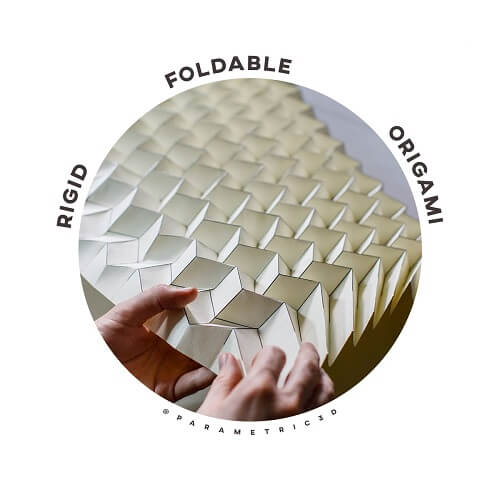
The purpose of this paper by Giulia Curletto is to provide a guideline to design Origami structures using parametric methodology and to describe drawing and structural analysis steps applied to two specific cases: Waterbomb and Yoshimura Origami.