
Computational Environments
-
By
Admin
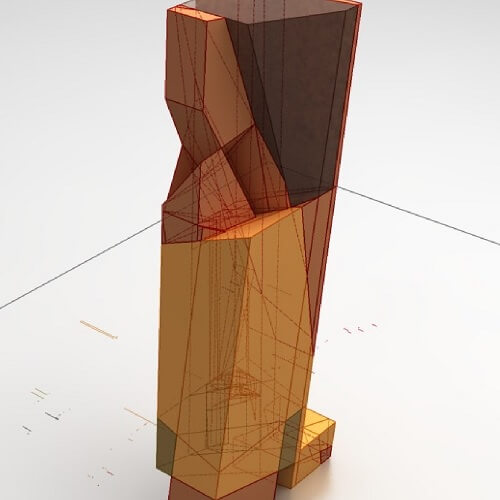
This article by Ajla Aksamija and Ivanka Iordanova discusses interaction between multimodal representations of architectural design knowledge, particularly focusing on relating explicit and implicit types of information.

Material & Space
-
By
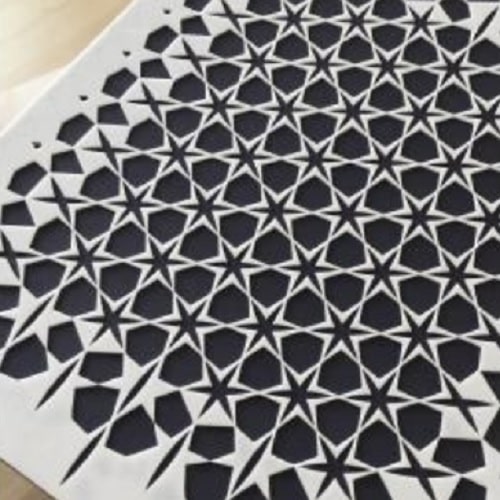
Material & Space, a paper by Sean Ahlquist and Sean Ahlquist proposes synthesis strategies based on
evolutionary developmental biology. A material system can be defined as a set of self-organized materials, defining a certain spatial arrangement.
Coding in Architecture
-
By
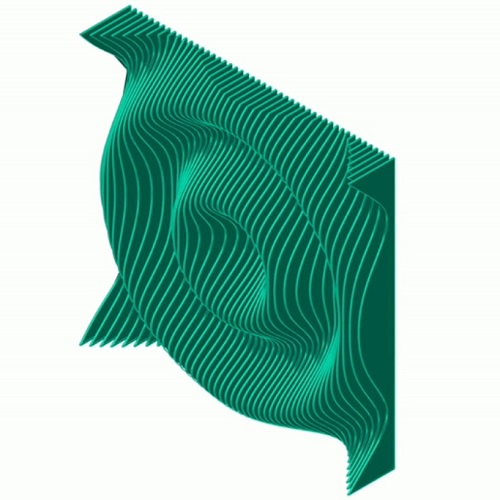
In this study by Asli Agirbas an elective undergraduate course is considered in the context of design and to yield a versatile thinking strategy while learning the language of visual programming.

Interactive Brickworks Design
-
By
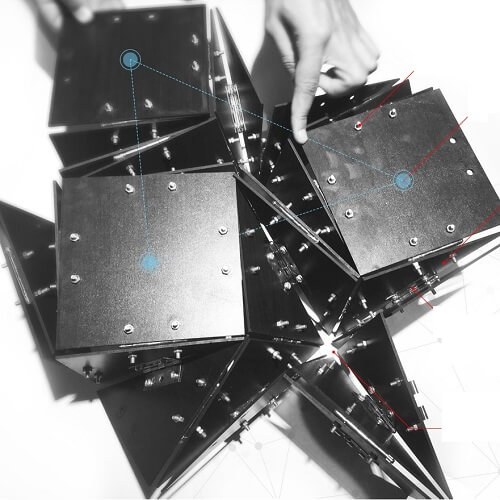
This research by Kereshmeh Afsari et al. looks into the parametric techniques that can be applied to create different kinds of patterns on brick walls. It discusses a methodology for an interactive brickwork design within generative techniques.
Responsive Architectural Skins
-
By
This paper by Sherif Abdelmohsen, Passaint Massoud and Ahmed Elshafei describes the process of designing a prototype for a soft responsive system for a kinetic building facade.
Algorithmic-Based BIM
-
By
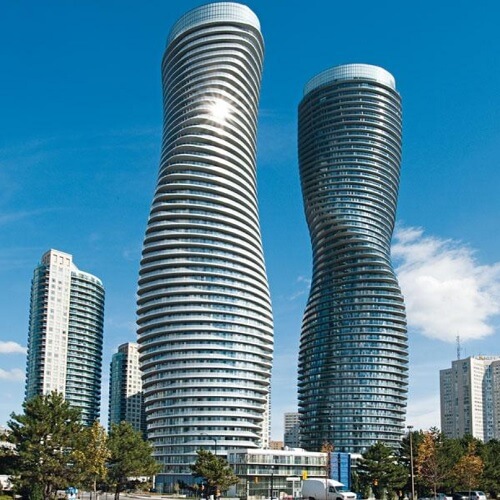
In this thesis, author defines, explores and evaluates A-BIM in the context of architectural design. Through a case study, she compares A-BIM to two other design approaches, namely an algorithmic approach to geometry-based CAD and a manual BIM approach.
Emergence and Autonomy
-
By
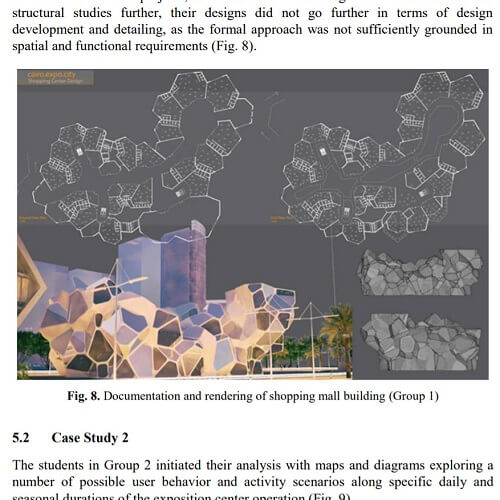
This paper reports on the process and outcomes of a digital design studio that integrates parametric design and generative systems in architectural and urban design projects. It explores the interrelationship between the emergence of innovative formal representations using parametric design systems on the one hand, and design autonomy;
3D Graphic Statics
-
By
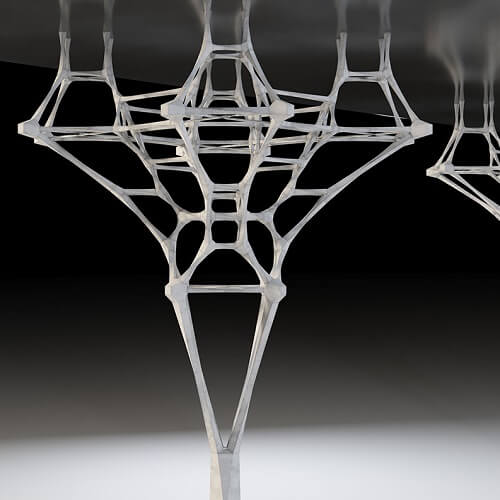
3D Graphic Statics by Ognjen Graovac is a structural form-finding method for generating compression-only spatial forms. The static equilibrium is described by using two reciprocal diagrams – form and force.
Adaptive Parameterisation
-
By
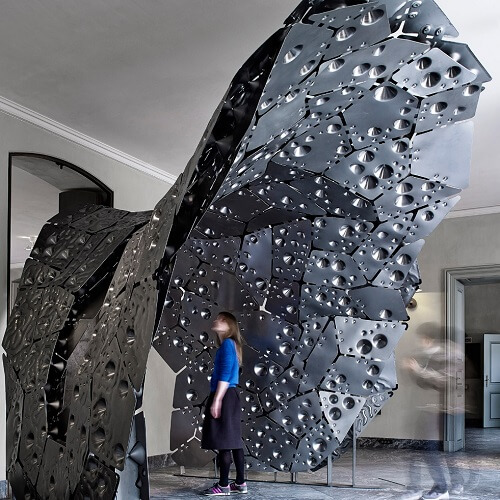
This thesis by David Stasiuk presents adaptive parameterisation as a method for formulating and developing complex computational design modelling systems, where open-ended design systems may be activated.

Curved-Crease Origami
-
By
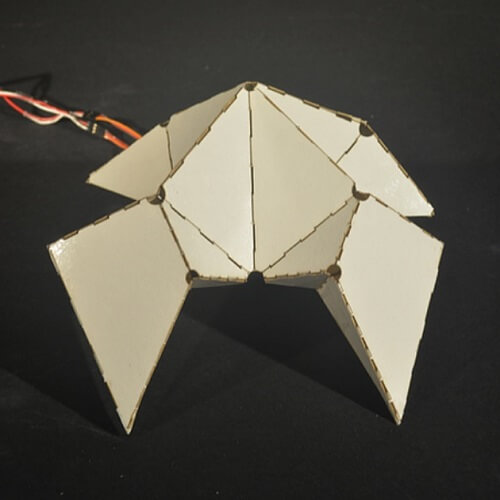
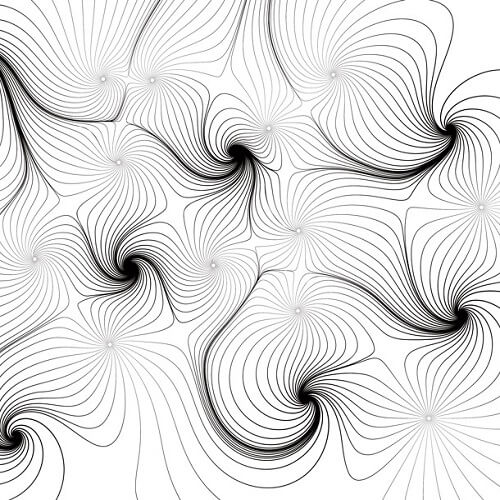
This thesis by Ting-Uei Lee explored the design of elastically-bent curved-crease origami by developing a set of curved-crease patterns with interaction between material elastic bending energy behaviours and origami developability constraints.
Unprintable Forms
-
By
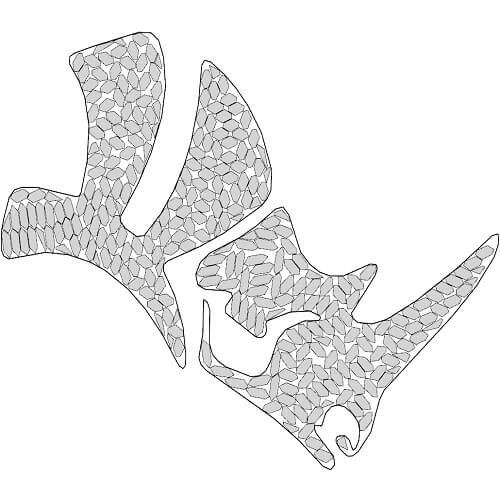
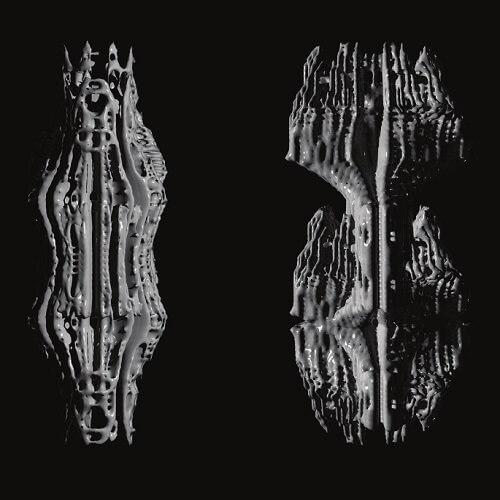
This paper by Yota Adilenidou et al. presents a 3D Concrete Printing (3DCP) experiment at the full scale of virtual architectural bodies developed through a computational technique based on the use of Cellular Automata (CA).
Foam Shell Structures
-
By
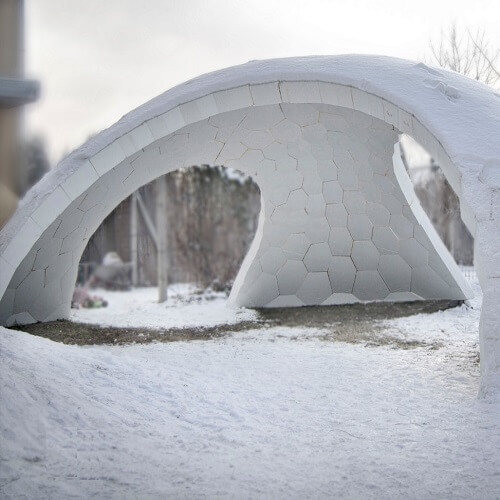
This research by Marko Jovanovic et al. proposed an alternative approach based on implementation of expanded polystyrene (EPS), a non-standard material for shells, in the process of industrial robot fabrication that enables fast and precise cutting.
Combinatorial Design
-
By
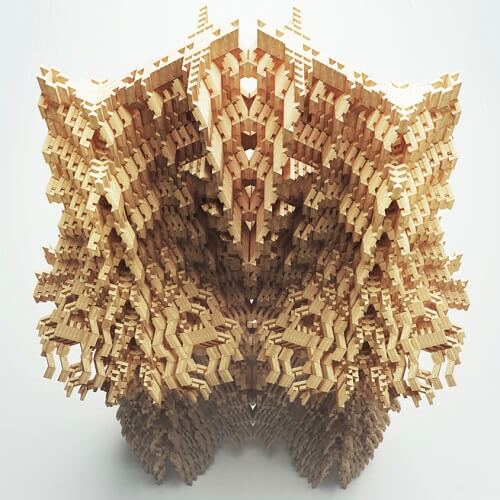
This paper by Jose Sanchez outlines a framework and conceptualization of combinatorial design. Combinatorial design is a term coined to describe non-parametric design strategies that focus on the permutation and patterning of discrete units.
Robotic Fabrication in Wood
-
By
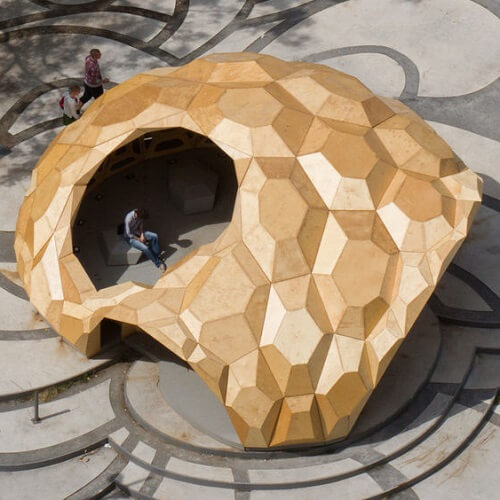
This paper by Oliver David Krieg and Achim Menges presents current research into architectural potentials of robotic fabrication in wood construction based on elastically bent timber sheets with robotically fabricated finger joints.