
23
Feb
Highly Flexible Structure
-
By
Admin
In the following thesis, an extensive review on different transformable systems used in architecture and civil engineering is given.
Admin
In the following thesis, an extensive review on different transformable systems used in architecture and civil engineering is given.
 Admin
Admin
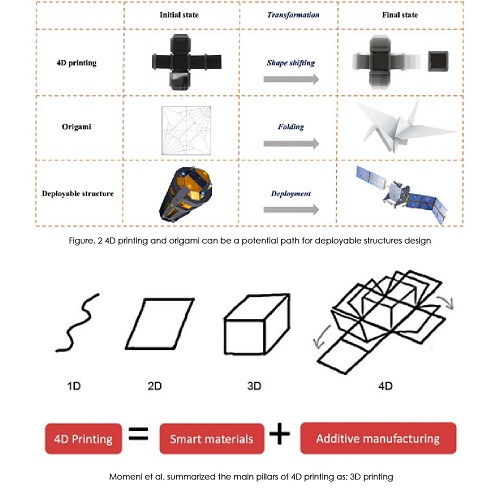
In this paper presents additive manufacturing (AM) technology (also known as 3D printing) that has been recognized globally as one of the leading forms of manufacturing process for advanced components, providing great prospects for complex part manufacturing, rapid prototyping and distributed digital manufacturing.
 Admin
Admin
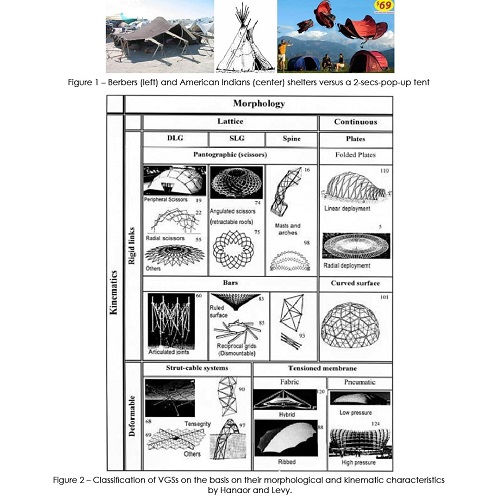
In this paper the focus is mostly on kinematics, consequently such structures, according to their process of transformation, can be distinguished into only two main categories.
 Admin
Admin
This paper brings the analysis of the classifications by different authors. Deployable lightweight structures are studied in the disciplines of architecture, civil engineering, aerospace engineering, mechanical engineering and other fields of their application.
 Admin
Admin
This study shows that designing a space layout helps to reduce energy demands for heating, cooling and lighting, and also provides a reference for other researchers and designers to optimise space layout with improved energy performance.
 Admin
Admin
This paper aims to illustrate research driven form finding and fabrication methods that are interdisciplinary in nature and the computational methodology to integrate bottom up design process in current architectural practice within the constraints of real-world construction industry.
 Admin
Admin
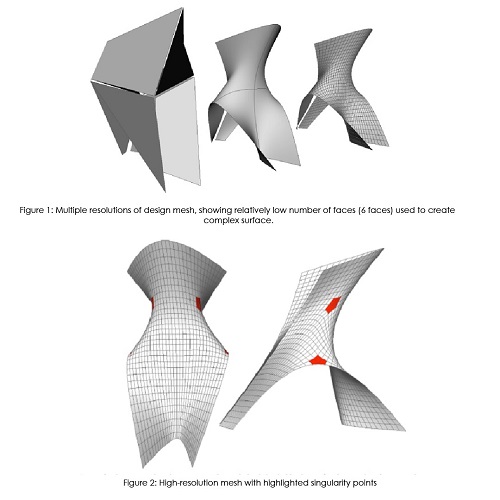
The research presented in this paper explores curved-crease tessellations to manufacture freeform geometries for architectural and industrial design.
 Admin
Admin
This research aims to Identify what effects the implementation of digital technology has on society and our different perception of space.
 Admin
Admin
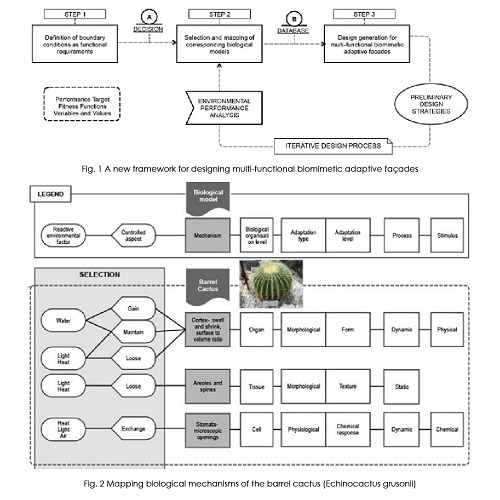
The study demonstrates the performance potential of design generation from mechanisms in nature in the development of multi-functional adaptable facades.
 Admin
Admin
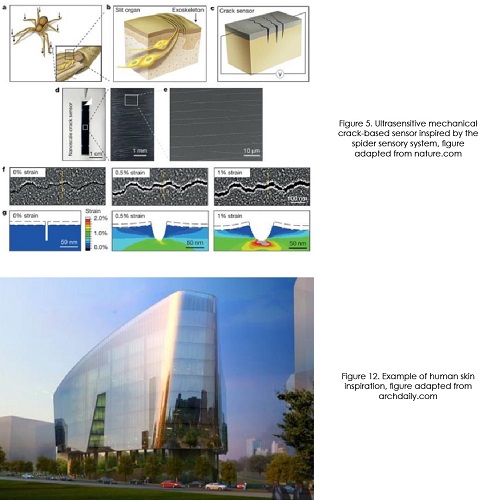
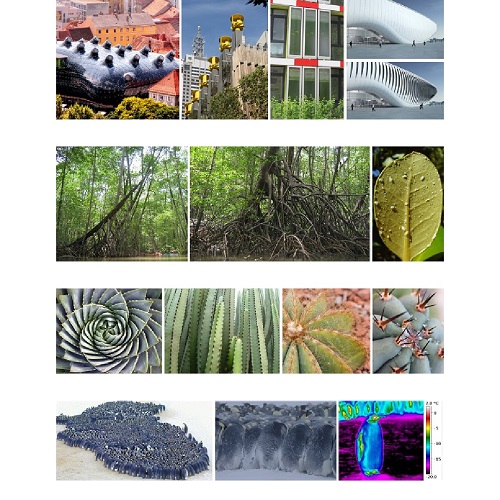
The purpose of this research is exploring how smart materials can be used to mimic nature in architecture, showing its impact on contemporary and future architecture.
 Admin
Admin
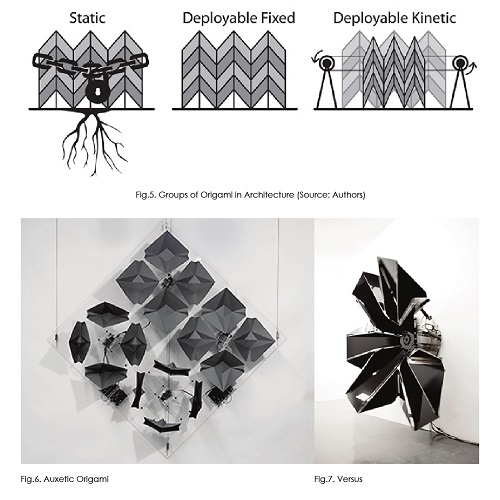
This article describes the current state of an ongoing research that proposes the use of kinetic Rigid Origami foldable surfaces to be used as roofs for spaces with big spans and the practical contribution that the Design Studio Surfaces INPLAY has brought to it.
 Admin
Admin
This paper presents the proliferation of radically new forms which expansion of structural possibilities – mirroring the endless forms of nature – is congenial with the requirements of contemporary architectural design where a much higher degree of versatility is required to meet the challenges of a much more complex society.
 Admin
Admin
This paper presents a biomimetic approach to facilitate the generation of design concepts, and enhance the development of building envelopes that are better suited to their environments.
 Admin
Admin
This paper focus on the discipline’s acquisition of new, sui generis design capacities in distinction to the mere automation of prior ways of design.
 Admin
Admin
This paper aim to extend the rich legacy of form-finding to adequately represent the complexities of scale, digital design systems and delivery mechanisms of contemporary architectural practice.
 Admin
Admin
The research presented in this paper is focused on developing preliminary construction strategies for architectural-scale deployable tensegrity structures that use low-pressure air-struts.
 Admin
Admin
This research hypothesis revisits a retro mode of tessellating, the geometry that originates in Origami, the ancient Japanese art of paper folding, in the context of the evolving computational design and fabrication methods.
 Admin
Admin
This paper describes areas of consideration for the most straightforward of the origami-based design cases: when the final design resembles the origami model on which it is based.
 Admin
Admin
The subject of this book is how architectural design integrates and negotiates the digital; in our contemporary context, this is nothing short of reciprocal innovation. This book surveys the rapidly evolving landscape of projects and trends that are finally catching up with the past.
 Admin
Admin
This design-led research investigates the development of self-forming wearable composite structures by 3D printing semi-elastic embossed patterns out of semi elastic Thermoplastic Polyurethane 95 (TPU95) filament on pre-stretched textiles and releasing the stress after the printing has been completed.